
Analiza danych
Dario Radečić
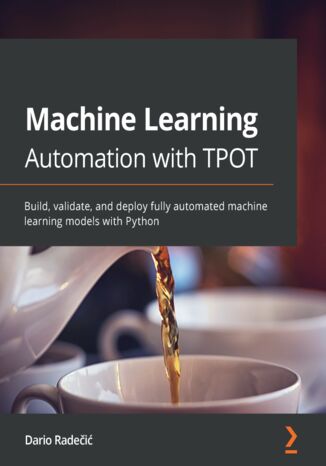
The automation of machine learning tasks allows developers more time to focus on the usability and reactivity of the software powered by machine learning models. TPOT is a Python automated machine learning tool used for optimizing machine learning pipelines using genetic programming. Automating machine learning with TPOT enables individuals and companies to develop production-ready machine learning models cheaper and faster than with traditional methods.With this practical guide to AutoML, developers working with Python on machine learning tasks will be able to put their knowledge to work and become productive quickly. You'll adopt a hands-on approach to learning the implementation of AutoML and associated methodologies. Complete with step-by-step explanations of essential concepts, practical examples, and self-assessment questions, this book will show you how to build automated classification and regression models and compare their performance to custom-built models. As you advance, you'll also develop state-of-the-art models using only a couple of lines of code and see how those models outperform all of your previous models on the same datasets.By the end of this book, you'll have gained the confidence to implement AutoML techniques in your organization on a production level.
Rodolfo Bonnin
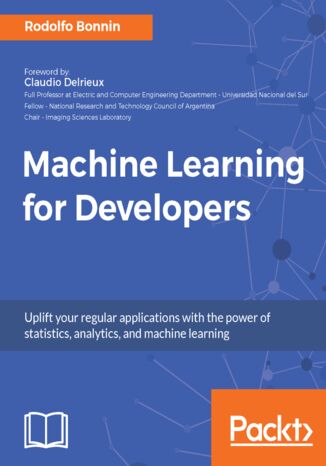
Most of us have heard about the term Machine Learning, but surprisingly the question frequently asked by developers across the globe is, “How do I get started in Machine Learning?”. One reason could be attributed to the vastness of the subject area because people often get overwhelmed by the abstractness of ML and terms such as regression, supervised learning, probability density function, and so on. This book is a systematic guide teaching you how to implement various Machine Learning techniques and their day-to-day application and development. You will start with the very basics of data and mathematical models in easy-to-follow language that you are familiar with; you will feel at home while implementing the examples. The book will introduce you to various libraries and frameworks used in the world of Machine Learning, and then, without wasting any time, you will get to the point and implement Regression, Clustering, classification, Neural networks, and more with fun examples. As you get to grips with the techniques, you’ll learn to implement those concepts to solve real-world scenarios for ML applications such as image analysis, Natural Language processing, and anomaly detections of time series data. By the end of the book, you will have learned various ML techniques to develop more efficient and intelligent applications.
Machine Learning for the Web. Gaining insight and intelligence from the internet with Python
Steve Essinger, Andrea Isoni
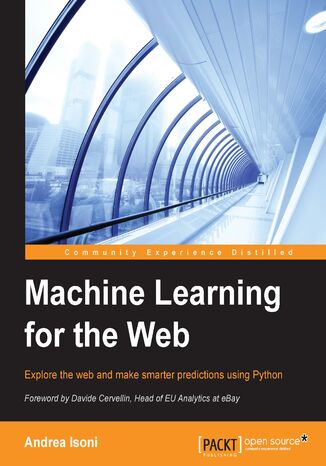
Python is a general purpose and also a comparatively easy to learn programming language. Hence it is the language of choice for data scientists to prototype, visualize, and run data analyses on small and medium-sized data sets. This is a unique book that helps bridge the gap between machine learning and web development. It focuses on the difficulties of implementing predictive analytics in web applications. We focus on the Python language, frameworks, tools, and libraries, showing you how to build a machine learning system. You will explore the core machine learning concepts and then develop and deploy the data into a web application using the Django framework. You will also learn to carry out web, document, and server mining tasks, and build recommendation engines. Later, you will explore Python’s impressive Django framework and will find out how to build a modern simple web app with machine learning features.
Stefan Jansen
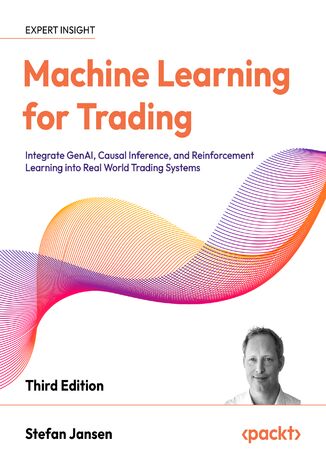
The rapid rise of AI and the growing complexity of financial markets have transformed quantitative trading into a data-driven, process-oriented discipline. This third edition provides a comprehensive blueprint for designing, validating, and deploying systematic trading strategies powered by modern machine learning. It introduces the 7 stage ML4T Workflow, a professional framework that unites data engineering, model development, validation, and live deployment into one cohesive process. It demonstrates how to turn raw market, fundamental, and alternative data into predictive signals and robust, production-ready trading systems. You’ll learn to build advanced pipelines for feature engineering, model evaluation, and portfolio optimization using libraries such as Polars, LightGBM, PyTorch, and Optuna. Practical notebooks illustrate every stage of the workflow, from factor testing and backtesting with zipline reloaded to live deployment with MLOps tools such as MLflow, Feast, and Prometheus. Additional coverage of synthetic data generation, Graph Neural Networks, and Reinforcement Learning extends the toolkit for building resilient, adaptive strategies that thrive in dynamic markets. By the end of this book, you’ll be proficient to build your own industrial-grade “alpha factory.
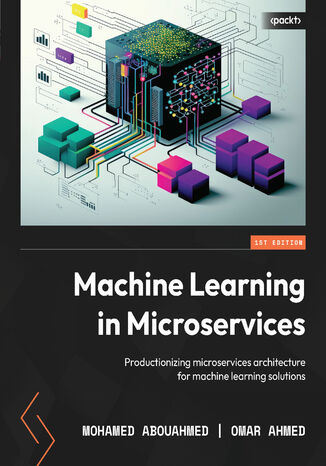
Mohamed Osam Abouahmed, Omar Ahmed
With the rising need for agile development and very short time-to-market system deployments, incorporating machine learning algorithms into decoupled fine-grained microservices systems provides the perfect technology mix for modern systems. Machine Learning in Microservices is your essential guide to staying ahead of the curve in this ever-evolving world of technology.The book starts by introducing you to the concept of machine learning microservices architecture (MSA) and comparing MSA with service-based and event-driven architectures, along with how to transition into MSA. Next, you’ll learn about the different approaches to building MSA and find out how to overcome common practical challenges faced in MSA design. As you advance, you’ll get to grips with machine learning (ML) concepts and see how they can help better design and run MSA systems. Finally, the book will take you through practical examples and open source applications that will help you build and run highly efficient, agile microservices systems.By the end of this microservices book, you’ll have a clear idea of different models of microservices architecture and machine learning and be able to combine both technologies to deliver a flexible and highly scalable enterprise system.
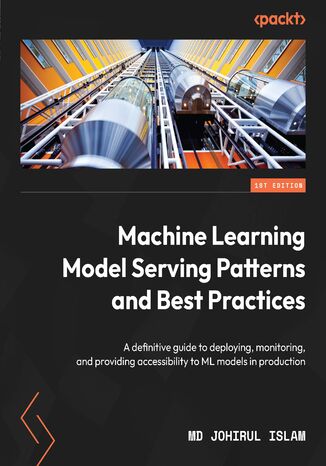
Johirul Islam
Serving patterns enable data science and ML teams to bring their models to production. Most ML models are not deployed for consumers, so ML engineers need to know the critical steps for how to serve an ML model. This book will cover the whole process, from the basic concepts like stateful and stateless serving to the advantages and challenges of each. Batch, real-time, and continuous model serving techniques will also be covered in detail. Later chapters will give detailed examples of keyed prediction techniques and ensemble patterns. Valuable associated technologies like TensorFlow severing, BentoML, and RayServe will also be discussed, making sure that you have a good understanding of the most important methods and techniques in model serving. Later, you’ll cover topics such as monitoring and performance optimization, as well as strategies for managing model drift and handling updates and versioning. The book will provide practical guidance and best practices for ensuring that your model serving pipeline is robust, scalable, and reliable. Additionally, this book will explore the use of cloud-based platforms and services for model serving using AWS SageMaker with the help of detailed examples. By the end of this book, you'll be able to save and serve your model using state-of-the-art techniques.
Rahul Kumar
Machine learning makes it possible to learn about the unknowns and gain hidden insights into your datasets by mastering many tools and techniques. This book guides you to do just that in a very compact manner.After giving a quick overview of what machine learning is all about, Machine Learning Quick Reference jumps right into its core algorithms and demonstrates how they can be applied to real-world scenarios. From model evaluation to optimizing their performance, this book will introduce you to the best practices in machine learning. Furthermore, you will also look at the more advanced aspects such as training neural networks and work with different kinds of data, such as text, time-series, and sequential data. Advanced methods and techniques such as causal inference, deep Gaussian processes, and more are also covered.By the end of this book, you will be able to train fast, accurate machine learning models at your fingertips, which you can easily use as a point of reference.
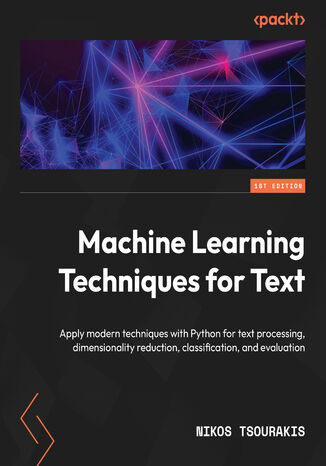
Nikos Tsourakis
With the ever-increasing demand for machine learning and programming professionals, it's prime time to invest in the field. This book will help you in this endeavor, focusing specifically on text data and human language by steering a middle path among the various textbooks that present complicated theoretical concepts or focus disproportionately on Python code.A good metaphor this work builds upon is the relationship between an experienced craftsperson and their trainee. Based on the current problem, the former picks a tool from the toolbox, explains its utility, and puts it into action. This approach will help you to identify at least one practical use for each method or technique presented. The content unfolds in ten chapters, each discussing one specific case study. For this reason, the book is solution-oriented. It's accompanied by Python code in the form of Jupyter notebooks to help you obtain hands-on experience. A recurring pattern in the chapters of this book is helping you get some intuition on the data and then implement and contrast various solutions.By the end of this book, you'll be able to understand and apply various techniques with Python for text preprocessing, text representation, dimensionality reduction, machine learning, language modeling, visualization, and evaluation.