
Uczenie maszynowe
Uczenie maszynowe (ang. machine learning) zajmuje się teorią i praktycznym zastosowaniem algorytmów analizujących dane — stanowi najciekawszą dziedzinę informatyki. Żyjemy w czasach przetwarzania olbrzymiej ilości informacji; za pomocą samouczących się algorytmów będących częścią uczenia maszynowego informacje te są przekształcane w rzeczywistą wiedzę. Dzięki licznym i potężnym bibliotekom o jawnym kodzie źródłowym, które powstały w ostatnich latach, prawdopodobnie teraz jest najlepszy czas, aby zainteresować się uczeniem maszynowym i nauczyć się wykorzystywać potężne algorytmy do wykrywania wzorców w przetwarzanych danych oraz prognozować przyszłe zdarzenia. Przykładami zastosowania Machine Learning są np. mechanizmy wyszukiwarek internetowych, GPS, autokorekta w edytorze tekstu czy boty w komunikatorach. Jedną z dziedzin uczenia maszynowego jest deep learning, podczas którego komputer uczy się procesów naturalnych dla ludzkiego mózgu (tworzy sieci neuronowe). Technologia ta jest wykorzystywana np. przy identyfikacji głosu i obrazów.
Alok Malik, Bradford Tuckfield
Starting with the basics, Applied Unsupervised Learning with R explains clustering methods, distribution analysis, data encoders, and features of R that enable you to understand your data better and get answers to your most pressing business questions. This book begins with the most important and commonly used method for unsupervised learning - clustering - and explains the three main clustering algorithms - k-means, divisive, and agglomerative. Following this, you'll study market basket analysis, kernel density estimation, principal component analysis, and anomaly detection. You'll be introduced to these methods using code written in R, with further instructions on how to work with, edit, and improve R code. To help you gain a practical understanding, the book also features useful tips on applying these methods to real business problems, including market segmentation and fraud detection. By working through interesting activities, you'll explore data encoders and latent variable models. By the end of this book, you will have a better understanding of different anomaly detection methods, such as outlier detection, Mahalanobis distances, and contextual and collective anomaly detection.
Zsolt Nagy
Machine learning and neural networks are pillars on which you can build intelligent applications. Artificial Intelligence and Machine Learning Fundamentals begins by introducing you to Python and discussing AI search algorithms. You will cover in-depth mathematical topics, such as regression and classification, illustrated by Python examples.As you make your way through the book, you will progress to advanced AI techniques and concepts, and work on real-life datasets to form decision trees and clusters. You will be introduced to neural networks, a powerful tool based on Moore's law.By the end of this book, you will be confident when it comes to building your own AI applications with your newly acquired skills!
Denis Rothman, Nicolas GUET, Jérémie ROTHMAN
Artificial intelligence has the potential to replicate humans in every field. Artificial Intelligence By Example serves as a starting point for you to understand how AI is built, with the help of intriguing examples and case studies.Artificial Intelligence By Example will make you an adaptive thinker and help you apply concepts to real-life scenarios. Using some of the most interesting AI examples, right from a simple chess engine to a cognitive chatbot, you will learn how to tackle the machine you are competing with. You will study some of the most advanced machine learning models, understand how to apply AI to blockchain and IoT, and develop emotional quotient in chatbots using neural networks.You will move on to designing AI solutions in a simple manner rather than get confused by complex architectures and techniques. This comprehensive guide will be a starter kit for you to develop AI applications on your own.By the end of this book, you will have understood the fundamentals of AI and worked through a number of case studies that will help you develop your business vision.
Artificial Intelligence. Ethical, social, and security impacts for the present and the future
IT Governance Publishing, Dr. Julie E. Mehan
This book offers an in-depth exploration of Artificial Intelligence (AI), from its origins to the ethical and societal challenges it presents today. It provides a comprehensive understanding of AI’s impact on human interaction, collaboration, privacy, and security. Through analyzing both opportunities and risks, the book emphasizes the ethical concerns surrounding AI, such as bias, privacy violations, and security threats.Chapters explore AI’s transformative role in cybersecurity, misinformation, and human-machine collaboration, highlighting its implications for job markets and human relationships. Real-world examples illustrate how AI can drive progress or cause harm. The ethical dilemmas around AI, including its use in surveillance and decision-making, are thoroughly examined, presenting challenges central to modern technology.Looking ahead, the book offers a forward-thinking perspective on AI’s future, discussing emerging trends and the need for responsible policy-making. It concludes by addressing how society can prepare for AI’s continued growth, offering strategies for navigating the evolving landscape. With practical insights and deep analysis, this book helps readers grasp AI’s profound implications for our future.
Anand Deshpande, Manish Kumar, Albenzo Coletta, Giancarlo...
In this age of big data, companies have larger amount of consumer data than ever before, far more than what the current technologies can ever hope to keep up with. However, Artificial Intelligence closes the gap by moving past human limitations in order to analyze data.With the help of Artificial Intelligence for big data, you will learn to use Machine Learning algorithms such as k-means, SVM, RBF, and regression to perform advanced data analysis. You will understand the current status of Machine and Deep Learning techniques to work on Genetic and Neuro-Fuzzy algorithms. In addition, you will explore how to develop Artificial Intelligence algorithms to learn from data, why they are necessary, and how they can help solve real-world problems.By the end of this book, you'll have learned how to implement various Artificial Intelligence algorithms for your big data systems and integrate them into your product offerings such as reinforcement learning, natural language processing, image recognition, genetic algorithms, and fuzzy logic systems.
Francis X. Govers III
Artificial Intelligence for Robotics starts with an introduction to Robot Operating Systems (ROS), Python, robotic fundamentals, and the software and tools that are required to start out with robotics. You will learn robotics concepts that will be useful for making decisions, along with basic navigation skills.As you make your way through the chapters, you will learn about object recognition and genetic algorithms, which will teach your robot to identify and pick up an irregular object. With plenty of use cases throughout, you will explore natural language processing (NLP) and machine learning techniques to further enhance your robot. In the concluding chapters, you will learn about path planning and goal-oriented programming, which will help your robot prioritize tasks.By the end of this book, you will have learned to give your robot an artificial personality using simulated intelligence.
Adnan Masood
Every machine learning engineer deals with systems that have hyperparameters, and the most basic task in automated machine learning (AutoML) is to automatically set these hyperparameters to optimize performance. The latest deep neural networks have a wide range of hyperparameters for their architecture, regularization, and optimization, which can be customized effectively to save time and effort.This book reviews the underlying techniques of automated feature engineering, model and hyperparameter tuning, gradient-based approaches, and much more. You'll discover different ways of implementing these techniques in open source tools and then learn to use enterprise tools for implementing AutoML in three major cloud service providers: Microsoft Azure, Amazon Web Services (AWS), and Google Cloud Platform. As you progress, you’ll explore the features of cloud AutoML platforms by building machine learning models using AutoML. The book will also show you how to develop accurate models by automating time-consuming and repetitive tasks in the machine learning development lifecycle.By the end of this machine learning book, you’ll be able to build and deploy AutoML models that are not only accurate, but also increase productivity, allow interoperability, and minimize feature engineering tasks.
Trenton Potgieter
AWS provides a wide range of solutions to help automate a machine learning workflow with just a few lines of code. With this practical book, you'll learn how to automate a machine learning pipeline using the various AWS services.Automated Machine Learning on AWS begins with a quick overview of what the machine learning pipeline/process looks like and highlights the typical challenges that you may face when building a pipeline. Throughout the book, you'll become well versed with various AWS solutions such as Amazon SageMaker Autopilot, AutoGluon, and AWS Step Functions to automate an end-to-end ML process with the help of hands-on examples. The book will show you how to build, monitor, and execute a CI/CD pipeline for the ML process and how the various CI/CD services within AWS can be applied to a use case with the Cloud Development Kit (CDK). You'll understand what a data-centric ML process is by working with the Amazon Managed Services for Apache Airflow and then build a managed Airflow environment. You'll also cover the key success criteria for an MLSDLC implementation and the process of creating a self-mutating CI/CD pipeline using AWS CDK from the perspective of the platform engineering team.By the end of this AWS book, you'll be able to effectively automate a complete machine learning pipeline and deploy it to production.
Luis Sobrecueva
AutoKeras is an AutoML open-source software library that provides easy access to deep learning models. If you are looking to build deep learning model architectures and perform parameter tuning automatically using AutoKeras, then this book is for you.This book teaches you how to develop and use state-of-the-art AI algorithms in your projects. It begins with a high-level introduction to automated machine learning, explaining all the concepts required to get started with this machine learning approach. You will then learn how to use AutoKeras for image and text classification and regression. As you make progress, you'll discover how to use AutoKeras to perform sentiment analysis on documents. This book will also show you how to implement a custom model for topic classification with AutoKeras. Toward the end, you will explore advanced concepts of AutoKeras such as working with multi-modal data and multi-task, customizing the model with AutoModel, and visualizing experiment results using AutoKeras Extensions.By the end of this machine learning book, you will be able to confidently use AutoKeras to design your own custom machine learning models in your company.
Dennis Sawyers
Automated Machine Learning with Microsoft Azure will teach you how to build high-performing, accurate machine learning models in record time. It will equip you with the knowledge and skills to easily harness the power of artificial intelligence and increase the productivity and profitability of your business. Guided user interfaces (GUIs) enable both novices and seasoned data scientists to easily train and deploy machine learning solutions to production. Using a careful, step-by-step approach, this book will teach you how to use Azure AutoML with a GUI as well as the AzureML Python software development kit (SDK).First, you'll learn how to prepare data, train models, and register them to your Azure Machine Learning workspace. You'll then discover how to take those models and use them to create both automated batch solutions using machine learning pipelines and real-time scoring solutions using Azure Kubernetes Service (AKS). Finally, you will be able to use AutoML on your own data to not only train regression, classification, and forecasting models but also use them to solve a wide variety of business problems.By the end of this Azure book, you'll be able to show your business partners exactly how your ML models are making predictions through automatically generated charts and graphs, earning their trust and respect.
Somanath Nanda, Weslley Moura
The AWS Certified Machine Learning Specialty (MLS-C01) exam evaluates your ability to execute machine learning tasks on AWS infrastructure. This comprehensive book aligns with the latest exam syllabus, offering practical examples to support your real-world machine learning projects on AWS. Additionally, you'll get lifetime access to supplementary online resources, including mock exams with exam-like timers, detailed solutions, interactive flashcards, and invaluable exam tips, all accessible across various devices—PCs, tablets, and smartphones.Throughout the book, you’ll learn data preparation techniques for machine learning, covering diverse methods for data manipulation and transformation across different variable types. Addressing challenges such as missing data and outliers, the book guides you through an array of machine learning tasks including classification, regression, clustering, forecasting, anomaly detection, text mining, and image processing, accompanied by requisite machine learning algorithms essential for exam success. The book helps you master the deployment of models in production environments and their subsequent monitoring.Equipped with insights from this book and the accompanying mock exams, you'll be fully prepared to achieve the AWS MLS-C01 certification.
Somanath Nanda, Weslley Moura
The AWS Certified Machine Learning Specialty exam tests your competency to perform machine learning (ML) on AWS infrastructure. This book covers the entire exam syllabus using practical examples to help you with your real-world machine learning projects on AWS.Starting with an introduction to machine learning on AWS, you'll learn the fundamentals of machine learning and explore important AWS services for artificial intelligence (AI). You'll then see how to prepare data for machine learning and discover a wide variety of techniques for data manipulation and transformation for different types of variables. The book also shows you how to handle missing data and outliers and takes you through various machine learning tasks such as classification, regression, clustering, forecasting, anomaly detection, text mining, and image processing, along with the specific ML algorithms you need to know to pass the exam. Finally, you'll explore model evaluation, optimization, and deployment and get to grips with deploying models in a production environment and monitoring them.By the end of this book, you'll have gained knowledge of the key challenges in machine learning and the solutions that AWS has released for each of them, along with the tools, methods, and techniques commonly used in each domain of AWS ML.
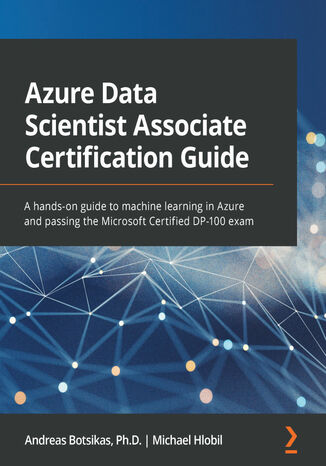
Andreas Botsikas , Michael Hlobil
The Azure Data Scientist Associate Certification Guide helps you acquire practical knowledge for machine learning experimentation on Azure. It covers everything you need to pass the DP-100 exam and become a certified Azure Data Scientist Associate.Starting with an introduction to data science, you'll learn the terminology that will be used throughout the book and then move on to the Azure Machine Learning (Azure ML) workspace. You'll discover the studio interface and manage various components, such as data stores and compute clusters.Next, the book focuses on no-code and low-code experimentation, and shows you how to use the Automated ML wizard to locate and deploy optimal models for your dataset. You'll also learn how to run end-to-end data science experiments using the designer provided in Azure ML Studio.You'll then explore the Azure ML Software Development Kit (SDK) for Python and advance to creating experiments and publishing models using code. The book also guides you in optimizing your model's hyperparameters using Hyperdrive before demonstrating how to use responsible AI tools to interpret and debug your models. Once you have a trained model, you'll learn to operationalize it for batch or real-time inferences and monitor it in production.By the end of this Azure certification study guide, you'll have gained the knowledge and the practical skills required to pass the DP-100 exam.
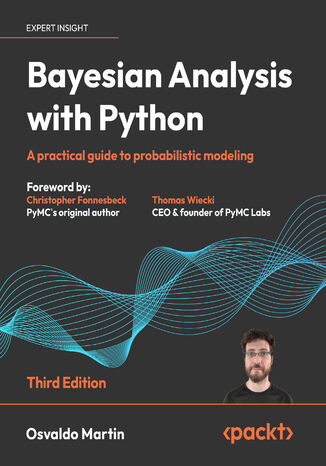
Bayesian Analysis with Python. A practical guide to probabilistic modeling - Third Edition
Osvaldo Martin, Christopher Fonnesbeck, Thomas Wiecki
The third edition of Bayesian Analysis with Python serves as an introduction to the main concepts of applied Bayesian modeling using PyMC, a state-of-the-art probabilistic programming library, and other libraries that support and facilitate modeling like ArviZ, for exploratory analysis of Bayesian models; Bambi, for flexible and easy hierarchical linear modeling; PreliZ, for prior elicitation; PyMC-BART, for flexible non-parametric regression; and Kulprit, for variable selection.In this updated edition, a brief and conceptual introduction to probability theory enhances your learning journey by introducing new topics like Bayesian additive regression trees (BART), featuring updated examples. Refined explanations, informed by feedback and experience from previous editions, underscore the book's emphasis on Bayesian statistics. You will explore various models, including hierarchical models, generalized linear models for regression and classification, mixture models, Gaussian processes, and BART, using synthetic and real datasets.By the end of this book, you’ll understand probabilistic modeling and be able to design and implement Bayesian models for data science, with a strong foundation for more advanced study.*Email sign-up and proof of purchase required
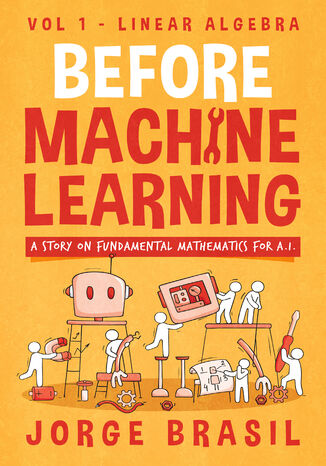
Jorge Brasil
In this book, you'll embark on a comprehensive journey through the fundamentals of linear algebra, a critical component for any aspiring machine learning expert. Starting with an introductory overview, the course explains why linear algebra is indispensable for machine learning, setting the stage for deeper exploration. You'll then dive into the concepts of vectors and matrices, understanding their definitions, properties, and practical applications in the field.As you progress, the course takes a closer look at matrix decomposition, breaking down complex matrices into simpler, more manageable forms. This section emphasizes the importance of decomposition techniques in simplifying computations and enhancing data analysis. The final chapter focuses on principal component analysis, a powerful technique for dimensionality reduction that is widely used in machine learning and data science. By the end of the course, you will have a solid grasp of how PCA can be applied to streamline data and improve model performance.This course is designed to provide technical professionals with a thorough understanding of linear algebra's role in machine learning. By the end, you'll be well-equipped with the knowledge and skills needed to apply linear algebra in practical machine learning scenarios.
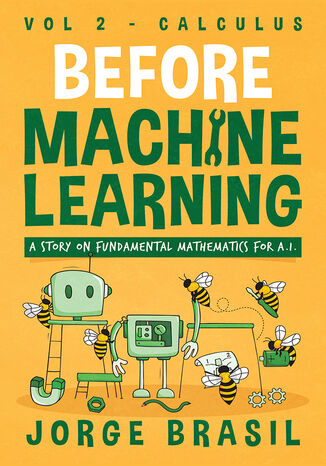
Jorge Brasil
This book takes readers on a structured journey through calculus fundamentals essential for AI. Starting with “Why Calculus?” it introduces key concepts like functions, limits, and derivatives, providing a solid foundation for understanding machine learning.As readers progress, they will encounter practical applications such as Taylor Series for curve fitting, gradient descent for optimization, and L'Hôpital’s Rule for managing undefined expressions. Each chapter builds up from core calculus to multidimensional topics, making complex ideas accessible and applicable to AI.The final chapters guide readers through multivariable calculus, including advanced concepts like the gradient, Hessian, and backpropagation, crucial for neural networks. From optimizing models to understanding cost functions, this book equips readers with the calculus skills needed to confidently tackle AI challenges, offering insights that make complex calculus both manageable and deeply relevant to machine learning.
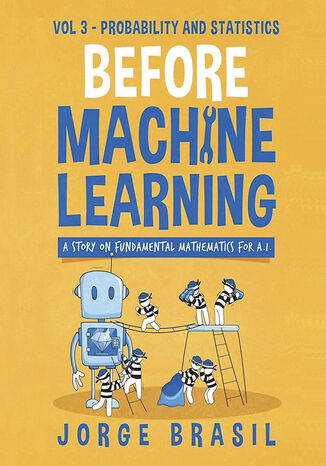
Jorge Brasil
Delve into the importance of probability and statistics in AI, beginning with fundamental measures like mean, median, and variance. This book takes you on a journey through the basics of probability theory, introducing key concepts such as central tendency, variance, and probability distributions. It emphasizes the role of statistical measures in understanding and analyzing data.Building on these foundations, the book explores hypothesis testing, Bayesian inference, and statistical distributions in-depth. Readers will gain practical insights into essential techniques for model evaluation, maximum likelihood estimation, and the interpretation of data in the context of AI applications. Each concept is illustrated with practical examples and case studies to ensure clarity and application.Finally, advanced topics like Markov processes, hierarchical Bayesian models, and multivariate distributions are introduced. The book addresses critical areas like variance, correlation, and hypothesis testing, equipping readers with the skills to tackle real-world challenges in AI and machine learning. Whether you're a student, professional, or AI enthusiast, this book offers the essential statistical tools and knowledge to excel in the field.
Beginning Swift. Master the fundamentals of programming in Swift 4
Rob Kerr, Kare Morstol
Take your first foray into programming for Apple devices with Swift.Swift is fundamentally different from Objective-C, as it is a protocol-oriented language. While you can still write normal object-oriented code in Swift, it requires a new way of thinking to take advantage of its powerful features and a solid understanding of the basics to become productive.
Big data, nauka o danych i AI bez tajemnic. Podejmuj lepsze decyzje i rozwijaj swój biznes!
David Stephenson
Koncepcja big data zmieniła zasady gry w biznesie. Wiele osób z kadry zarządczej nie rozumie specyfiki tego rodzaju danych: ogromnych, szybko narastających, często niepasujących do tradycyjnej struktury. Są one zasadniczo różne od konwencjonalnych danych, zarówno pod względem wielkości, jak i złożoności. Rzucają nowe wyzwania, stwarzają nowe możliwości, zacierają tradycyjne granice konkurencji i zmuszają do zmiany paradygmatów pozyskiwania wartości z danych. Big data i data science wraz z uczeniem maszynowym radykalnie zmieniają ekosystem biznesu. Aby przetrwać tę rewolucję, trzeba dostosować się do nowych warunków. Ta książka jest przystępnym wprowadzeniem do koncepcji big data i data science. Pozwoli na uzyskanie wiedzy niezbędnej do oceny, czy korzyści z tych technologii są warte kosztów i wysiłku związanych z wdrożeniem w firmie. Poszczególne techniki zostały dokładnie i przejrzyście opisane. Przedstawiono zasady tworzenia odpowiednich strategii. Wyjaśniono, jakich zasobów i jakich ludzi potrzeba do przeprowadzenia transformacji w kierunku zbierania, analizy i wykorzystywania danych, a także omówiono związane z tym ryzyko. Ważnym elementem książki są praktyczne wskazówki i podpowiedzi. W tej książce: podstawy big data, data science i sztucznej inteligencji praktyczne zastosowanie big data w technikach analitycznych przegląd podstawowych rodzajów analityki i dobór technologii przygotowanie firmy do wdrożenia projektów big data i data science wymagania prawne i ochrona danych a korzystanie z narzędzi big data Big data: łatwiejsze, niż myślisz, skuteczniejsze, niż marzysz!
Michele Usuelli
A recommendation system performs extensive data analysis in order to generate suggestions to its users about what might interest them. R has recently become one of the most popular programming languages for the data analysis. Its structure allows you to interactively explore the data and its modules contain the most cutting-edge techniques thanks to its wide international community. This distinctive feature of the R language makes it a preferred choice for developers who are looking to build recommendation systems.The book will help you understand how to build recommender systems using R. It starts off by explaining the basics of data mining and machine learning. Next, you will be familiarized with how to build and optimize recommender models using R. Following that, you will be given an overview of the most popular recommendation techniques. Finally, you will learn to implement all the concepts you have learned throughout the book to build a recommender system.
David Millán Escrivá, Prateek Joshi, Vinícius G....
OpenCV is one of the best open source libraries available and can help you focus on constructing complete projects on image processing, motion detection, and image segmentation.This Learning Path is your guide to understanding OpenCV concepts and algorithms through real-world examples and activities. Through various projects, you'll also discover how to use complex computer vision and machine learning algorithms and face detection to extract the maximum amount of information from images and videos. In later chapters, you'll learn to enhance your videos and images with optical flow analysis and background subtraction. Sections in the Learning Path will help you get to grips with text segmentation and recognition, in addition to guiding you through the basics of the new and improved deep learning modules. By the end of this Learning Path, you will have mastered commonly used computer vision techniques to build OpenCV projects from scratch. This Learning Path includes content from the following Packt books:•Mastering OpenCV 4 - Third Edition by Roy Shilkrot and David Millán Escrivá•Learn OpenCV 4 By Building Projects - Second Edition by David Millán Escrivá, Vinícius G. Mendonça, and Prateek Joshi
Dan Meador
You might already know that there's a wealth of data science and machine learning resources available on the market, but what you might not know is how much is left out by most of these AI resources. This book not only covers everything you need to know about algorithm families but also ensures that you become an expert in everything, from the critical aspects of avoiding bias in data to model interpretability, which have now become must-have skills.In this book, you'll learn how using Anaconda as the easy button, can give you a complete view of the capabilities of tools such as conda, which includes how to specify new channels to pull in any package you want as well as discovering new open source tools at your disposal. You’ll also get a clear picture of how to evaluate which model to train and identify when they have become unusable due to drift. Finally, you’ll learn about the powerful yet simple techniques that you can use to explain how your model works.By the end of this book, you’ll feel confident using conda and Anaconda Navigator to manage dependencies and gain a thorough understanding of the end-to-end data science workflow.
Luis Pedro Coelho, Willi Richert , Matthieu...
Machine learning enables systems to make predictions based on historical data. Python is one of the most popular languages used to develop machine learning applications, thanks to its extensive library support. This updated third edition of Building Machine Learning Systems with Python helps you get up to speed with the latest trends in artificial intelligence (AI).With this guide’s hands-on approach, you’ll learn to build state-of-the-art machine learning models from scratch. Complete with ready-to-implement code and real-world examples, the book starts by introducing the Python ecosystem for machine learning. You’ll then learn best practices for preparing data for analysis and later gain insights into implementing supervised and unsupervised machine learning techniques such as classification, regression and clustering. As you progress, you’ll understand how to use Python’s scikit-learn and TensorFlow libraries to build production-ready and end-to-end machine learning system models, and then fine-tune them for high performance.By the end of this book, you’ll have the skills you need to confidently train and deploy enterprise-grade machine learning models in Python.
Laura Funderburk
Modern LLM applications often break in production due to brittle pipelines, loose tool definitions, and noisy context. This book shows you how to build production-ready, context-aware systems using Haystack and LangGraph. You’ll learn to design deterministic pipelines with strict tool contracts and deploy them as microservices. Through structured context engineering, you’ll orchestrate reliable agent workflows and move beyond simple prompt-based interactions. You'll start by understanding LLM behavior—tokens, embeddings, and transformer models—and see how prompt engineering has evolved into a full context engineering discipline. Then, you'll build retrieval-augmented generation (RAG) pipelines with retrievers, rankers, and custom components using Haystack’s graph-based architecture. You’ll also create knowledge graphs, synthesize unstructured data, and evaluate system behavior using Ragas and Weights & Biases. In LangGraph, you’ll orchestrate agents with supervisor-worker patterns, typed state machines, retries, fallbacks, and safety guardrails. By the end of the book, you’ll have the skills to design scalable, testable LLM pipelines and multi-agent systems that remain robust as the AI ecosystem evolves.*Email sign-up and proof of purchase required