
Uczenie maszynowe
Hari Manassery Koduvely
Bayesian Inference provides a unified framework to deal with all sorts of uncertainties when learning patterns form data using machine learning models and use it for predicting future observations. However, learning and implementing Bayesian models is not easy for data science practitioners due to the level of mathematical treatment involved. Also, applying Bayesian methods to real-world problems requires high computational resources. With the recent advances in computation and several open sources packages available in R, Bayesian modeling has become more feasible to use for practical applications today. Therefore, it would be advantageous for all data scientists and engineers to understand Bayesian methods and apply them in their projects to achieve better results.Learning Bayesian Models with R starts by giving you a comprehensive coverage of the Bayesian Machine Learning models and the R packages that implement them. It begins with an introduction to the fundamentals of probability theory and R programming for those who are new to the subject. Then the book covers some of the important machine learning methods, both supervised and unsupervised learning, implemented using Bayesian Inference and R.Every chapter begins with a theoretical description of the method explained in a very simple manner. Then, relevant R packages are discussed and some illustrations using data sets from the UCI Machine Learning repository are given. Each chapter ends with some simple exercises for you to get hands-on experience of the concepts and R packages discussed in the chapter.The last chapters are devoted to the latest development in the field, specifically Deep Learning, which uses a class of Neural Network models that are currently at the frontier of Artificial Intelligence. The book concludes with the application of Bayesian methods on Big Data using the Hadoop and Spark frameworks.
Leif Larsen Henning Larsen
Take your app development to the next level with Learning Microsoft Cognitive Services. Using Leif's knowledge of each of the powerful APIs, you'll learn how to create smarter apps with more human-like capabilities. ? Discover what each API has to offer and learn how to add it to your app ? Study each AI using theory and practical examples ? Learn current API best practices
Leif Larsen Henning Larsen
Microsoft has revamped its Project Oxford to launch the all new Cognitive Services platform-a set of 30 APIs to add speech, vision, language, and knowledge capabilities to apps.This book will introduce you to 24 of the APIs released as part of Cognitive Services platform and show you how to leverage their capabilities. More importantly, you'll see how the power of these APIs can be combined to build real-world apps that have cognitive capabilities. The book is split into three sections: computer vision, speech recognition and language processing, and knowledge and search.You will be taken through the vision APIs at first as this is very visual, and not too complex. The next part revolves around speech and language, which are somewhat connected. The last part is about adding real-world intelligence to apps by connecting them to Knowledge and Search APIs.By the end of this book, you will be in a position to understand what Microsoft Cognitive Service can offer and how to use the different APIs.
Leif Larsen
Microsoft Cognitive Services is a set of APIs for integrating artificial intelligence in your applications to solve logical business problems. If you’re new to developing applications with AI, Learning Microsoft Cognitive Services will give you a comprehensive introduction to Microsoft’s AI stack and get you up-to-speed in no time.The book introduces you to 24 APIs, including Emotion, Language, Vision, Speech, Knowledge, and Search. Using Visual Studio, you can develop applications with enhanced capabilities for image processing, speech recognition, text processing, and much more. Moving forward, you will work with datasets that enable your applications to process various data in the form of image, video, or text.By the end of the book, you’ll be able to confidently explore Cognitive Services APIs for building intelligent applications that can be deployed for real-world business uses.
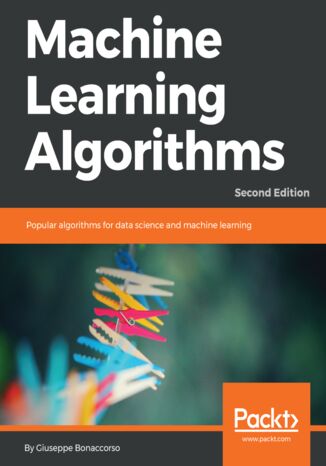
Giuseppe Bonaccorso
Machine learning has gained tremendous popularity for its powerful and fast predictions with large datasets. However, the true forces behind its powerful output are the complex algorithms involving substantial statistical analysis that churn large datasets and generate substantial insight.This second edition of Machine Learning Algorithms walks you through prominent development outcomes that have taken place relating to machine learning algorithms, which constitute major contributions to the machine learning process and help you to strengthen and master statistical interpretation across the areas of supervised, semi-supervised, and reinforcement learning. Once the core concepts of an algorithm have been covered, you’ll explore real-world examples based on the most diffused libraries, such as scikit-learn, NLTK, TensorFlow, and Keras. You will discover new topics such as principal component analysis (PCA), independent component analysis (ICA), Bayesian regression, discriminant analysis, advanced clustering, and gaussian mixture.By the end of this book, you will have studied machine learning algorithms and be able to put them into production to make your machine learning applications more innovative.
Gregory Keys, David Whiting
H2O is an open source, fast, and scalable machine learning framework that allows you to build models using big data and then easily productionalize them in diverse enterprise environments.Machine Learning at Scale with H2O begins with an overview of the challenges faced in building machine learning models on large enterprise systems, and then addresses how H2O helps you to overcome them. You’ll start by exploring H2O’s in-memory distributed architecture and find out how it enables you to build highly accurate and explainable models on massive datasets using your favorite ML algorithms, language, and IDE. You’ll also get to grips with the seamless integration of H2O model building and deployment with Spark using H2O Sparkling Water. You’ll then learn how to easily deploy models with H2O MOJO. Next, the book shows you how H2O Enterprise Steam handles admin configurations and user management, and then helps you to identify different stakeholder perspectives that a data scientist must understand in order to succeed in an enterprise setting. Finally, you’ll be introduced to the H2O AI Cloud platform and explore the entire machine learning life cycle using multiple advanced AI capabilities.By the end of this book, you’ll be able to build and deploy advanced, state-of-the-art machine learning models for your business needs.
Dario Radečić
The automation of machine learning tasks allows developers more time to focus on the usability and reactivity of the software powered by machine learning models. TPOT is a Python automated machine learning tool used for optimizing machine learning pipelines using genetic programming. Automating machine learning with TPOT enables individuals and companies to develop production-ready machine learning models cheaper and faster than with traditional methods.With this practical guide to AutoML, developers working with Python on machine learning tasks will be able to put their knowledge to work and become productive quickly. You'll adopt a hands-on approach to learning the implementation of AutoML and associated methodologies. Complete with step-by-step explanations of essential concepts, practical examples, and self-assessment questions, this book will show you how to build automated classification and regression models and compare their performance to custom-built models. As you advance, you'll also develop state-of-the-art models using only a couple of lines of code and see how those models outperform all of your previous models on the same datasets.By the end of this book, you'll have gained the confidence to implement AutoML techniques in your organization on a production level.
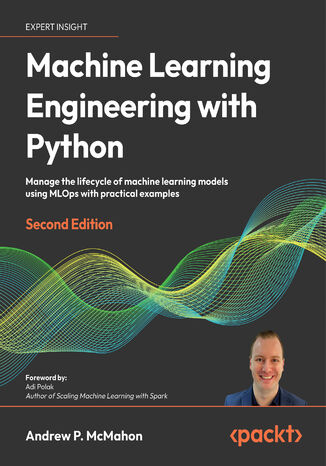
Andrew P. McMahon
The Second Edition of Machine Learning Engineering with Python is the practical guide that MLOps and ML engineers need to build solutions to real-world problems. It will provide you with the skills you need to stay ahead in this rapidly evolving field.The book takes an examples-based approach to help you develop your skills and covers the technical concepts, implementation patterns, and development methodologies you need. You'll explore the key steps of the ML development lifecycle and create your own standardized model factory for training and retraining of models. You'll learn to employ concepts like CI/CD and how to detect different types of drift.Get hands-on with the latest in deployment architectures and discover methods for scaling up your solutions. This edition goes deeper in all aspects of ML engineering and MLOps, with emphasis on the latest open-source and cloud-based technologies. This includes a completely revamped approach to advanced pipelining and orchestration techniques.With a new chapter on deep learning, generative AI, and LLMOps, you will learn to use tools like LangChain, PyTorch, and Hugging Face to leverage LLMs for supercharged analysis. You will explore AI assistants like GitHub Copilot to become more productive, then dive deep into the engineering considerations of working with deep learning.