
Uczenie maszynowe
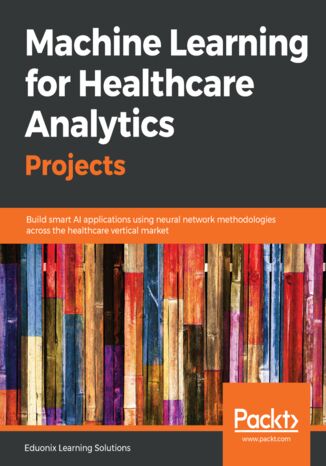
Eduonix Learning Solutions
Machine Learning (ML) has changed the way organizations and individuals use data to improve the efficiency of a system. ML algorithms allow strategists to deal with a variety of structured, unstructured, and semi-structured data. Machine Learning for Healthcare Analytics Projects is packed with new approaches and methodologies for creating powerful solutions for healthcare analytics.This book will teach you how to implement key machine learning algorithms and walk you through their use cases by employing a range of libraries from the Python ecosystem. You will build five end-to-end projects to evaluate the efficiency of Artificial Intelligence (AI) applications for carrying out simple-to-complex healthcare analytics tasks. With each project, you will gain new insights, which will then help you handle healthcare data efficiently. As you make your way through the book, you will use ML to detect cancer in a set of patients using support vector machines (SVMs) and k-Nearest neighbors (KNN) models. In the final chapters, you will create a deep neural network in Keras to predict the onset of diabetes in a huge dataset of patients. You will also learn how to predict heart diseases using neural networks.By the end of this book, you will have learned how to address long-standing challenges, provide specialized solutions for how to deal with them, and carry out a range of cognitive tasks in the healthcare domain.
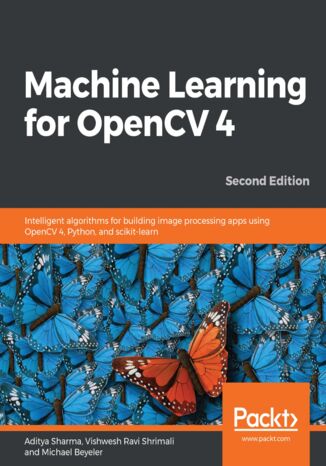
Aditya Sharma, Michael Beyeler (USD), Vishwesh Ravi...
OpenCV is an opensource library for building computer vision apps. The latest release, OpenCV 4, offers a plethora of features and platform improvements that are covered comprehensively in this up-to-date second edition.You'll start by understanding the new features and setting up OpenCV 4 to build your computer vision applications. You will explore the fundamentals of machine learning and even learn to design different algorithms that can be used for image processing. Gradually, the book will take you through supervised and unsupervised machine learning. You will gain hands-on experience using scikit-learn in Python for a variety of machine learning applications. Later chapters will focus on different machine learning algorithms, such as a decision tree, support vector machines (SVM), and Bayesian learning, and how they can be used for object detection computer vision operations. You will then delve into deep learning and ensemble learning, and discover their real-world applications, such as handwritten digit classification and gesture recognition. Finally, you’ll get to grips with the latest Intel OpenVINO for building an image processing system.By the end of this book, you will have developed the skills you need to use machine learning for building intelligent computer vision applications with OpenCV 4.
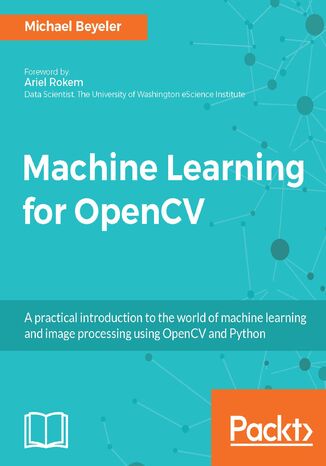
Machine Learning for OpenCV. Intelligent image processing with Python
Michael Beyeler, Michael Beyeler (USD)
Machine learning is no longer just a buzzword, it is all around us: from protecting your email, to automatically tagging friends in pictures, to predicting what movies you like. Computer vision is one of today's most exciting application fields of machine learning, with Deep Learning driving innovative systems such as self-driving cars and Google’s DeepMind.OpenCV lies at the intersection of these topics, providing a comprehensive open-source library for classic as well as state-of-the-art computer vision and machine learning algorithms. In combination with Python Anaconda, you will have access to all the open-source computing libraries you could possibly ask for.Machine learning for OpenCV begins by introducing you to the essential concepts of statistical learning, such as classification and regression. Once all the basics are covered, you will start exploring various algorithms such as decision trees, support vector machines, and Bayesian networks, and learn how to combine them with other OpenCV functionality. As the book progresses, so will your machine learning skills, until you are ready to take on today's hottest topic in the field: Deep Learning.By the end of this book, you will be ready to take on your own machine learning problems, either by building on the existing source code or developing your own algorithm from scratch!
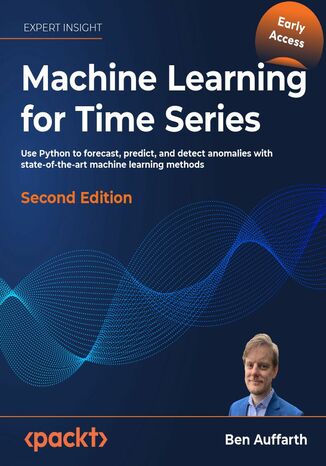
Ben Auffarth
The Python time-series ecosystem is a huge and challenging topic to tackle, especially for time series since there are so many new libraries and models. Machine Learning for Time Series, Second Edition, aims to deepen your understanding of time series by providing a comprehensive overview of popular Python time-series packages and helping you build better predictive systems.This fully updated second edition starts by re-introducing the basics of time series and then helps you get to grips with traditional autoregressive models as well as modern non-parametric models. By observing practical examples and the theory behind them, you will gain a deeper understanding of loading time-series datasets from any source and a variety of models, such as deep learning recurrent neural networks, causal convolutional network models, and gradient boosting with feature engineering. This book will also help you choose the right model for the right problem by explaining the theory behind several useful models. New updates include a chapter on forecasting and extracting signals on financial markets and case studies with relevant examples from operations management, digital marketing, and healthcare.By the end of this book, you should feel at home with effectively analyzing and applying machine learning methods to time series.
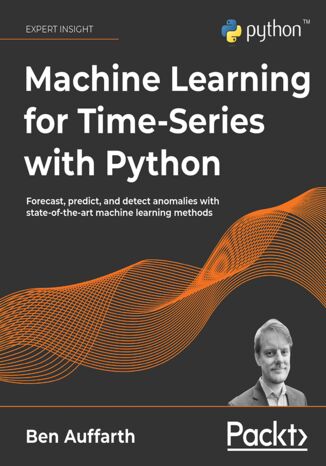
Ben Auffarth
The Python time-series ecosystem is huge and often quite hard to get a good grasp on, especially for time-series since there are so many new libraries and new models. This book aims to deepen your understanding of time series by providing a comprehensive overview of popular Python time-series packages and help you build better predictive systems.Machine Learning for Time-Series with Python starts by re-introducing the basics of time series and then builds your understanding of traditional autoregressive models as well as modern non-parametric models. By observing practical examples and the theory behind them, you will become confident with loading time-series datasets from any source, deep learning models like recurrent neural networks and causal convolutional network models, and gradient boosting with feature engineering.This book will also guide you in matching the right model to the right problem by explaining the theory behind several useful models. You’ll also have a look at real-world case studies covering weather, traffic, biking, and stock market data.By the end of this book, you should feel at home with effectively analyzing and applying machine learning methods to time-series.
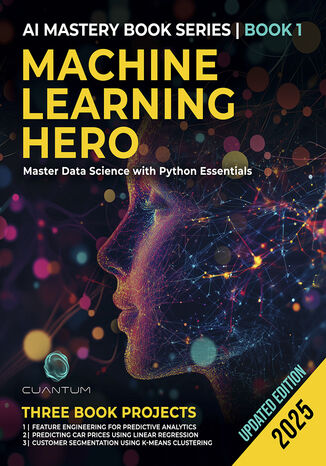
Machine Learning Hero. Master Data Science with Python Essentials
Cuantum Technologies LLC
This book takes you on a journey through the world of machine learning, beginning with foundational concepts such as supervised and unsupervised learning, and progressing to advanced topics like feature engineering, hyperparameter tuning, and dimensionality reduction. Each chapter blends theory with practical exercises to ensure a deep understanding of the material.The book emphasizes Python, introducing essential libraries like NumPy, Pandas, Matplotlib, and Scikit-learn, along with deep learning frameworks like TensorFlow and PyTorch. You’ll learn to preprocess data, visualize insights, and build models capable of tackling complex datasets. Hands-on coding examples and exercises reinforce concepts and help bridge the gap between knowledge and application.In the final chapters, you'll work on real-world projects like predictive analytics, clustering, and regression. These projects are designed to provide a practical context for the techniques learned and equip you with actionable skills for data science and AI roles. By the end, you'll be prepared to apply machine learning principles to solve real-world challenges with confidence.
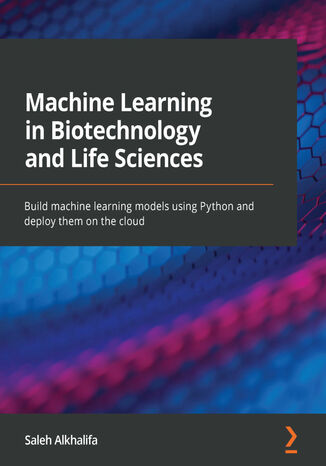
Saleh Alkhalifa
The booming fields of biotechnology and life sciences have seen drastic changes over the last few years. With competition growing in every corner, companies around the globe are looking to data-driven methods such as machine learning to optimize processes and reduce costs. This book helps lab scientists, engineers, and managers to develop a data scientist's mindset by taking a hands-on approach to learning about the applications of machine learning to increase productivity and efficiency in no time.You’ll start with a crash course in Python, SQL, and data science to develop and tune sophisticated models from scratch to automate processes and make predictions in the biotechnology and life sciences domain. As you advance, the book covers a number of advanced techniques in machine learning, deep learning, and natural language processing using real-world data.By the end of this machine learning book, you'll be able to build and deploy your own machine learning models to automate processes and make predictions using AWS and GCP.
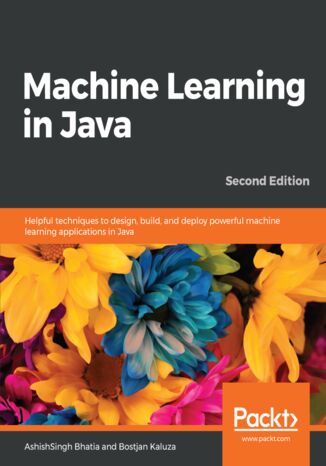
AshishSingh Bhatia, Bostjan Kaluza
As the amount of data in the world continues to grow at an almost incomprehensible rate, being able to understand and process data is becoming a key differentiator for competitive organizations. Machine learning applications are everywhere, from self-driving cars, spam detection, document search, and trading strategies, to speech recognition. This makes machine learning well-suited to the present-day era of big data and Data Science. The main challenge is how to transform data into actionable knowledge.Machine Learning in Java will provide you with the techniques and tools you need. You will start by learning how to apply machine learning methods to a variety of common tasks including classification, prediction, forecasting, market basket analysis, and clustering. The code in this book works for JDK 8 and above, the code is tested on JDK 11.Moving on, you will discover how to detect anomalies and fraud, and ways to perform activity recognition, image recognition, and text analysis. By the end of the book, you will have explored related web resources and technologies that will help you take your learning to the next level.By applying the most effective machine learning methods to real-world problems, you will gain hands-on experience that will transform the way you think about data.