
Python
W kategorii Python zostały zebrane podręczniki poruszające tematykę programowania z zastosowaniem praktycznie niezależnego sprzętowo, dostępnego na licencji Open Source języka. Książki przedstawią Wam wszechstronności i elastyczności Pythona a także różne typy tworzenia kodu poprzez programowanie strukturalne, obiektowe czy funkcjonalne.
Nauczycie się tworzyć aplikacje sieciowe o dowolnym przeznaczeniu, komunikujące się z systemami operacyjnymi, lub korzystające z baz danych. Techniki analizy składni, przetwarzanie tekstu czy rozłożenie obciążenia programu na wiele wątków i procesów przestanie być problematyczne.
Emmanuel Tsukerman
Organizations today face a major threat in terms of cybersecurity, from malicious URLs to credential reuse, and having robust security systems can make all the difference. With this book, you'll learn how to use Python libraries such as TensorFlow and scikit-learn to implement the latest artificial intelligence (AI) techniques and handle challenges faced by cybersecurity researchers.You'll begin by exploring various machine learning (ML) techniques and tips for setting up a secure lab environment. Next, you'll implement key ML algorithms such as clustering, gradient boosting, random forest, and XGBoost. The book will guide you through constructing classifiers and features for malware, which you'll train and test on real samples. As you progress, you'll build self-learning, reliant systems to handle cybersecurity tasks such as identifying malicious URLs, spam email detection, intrusion detection, network protection, and tracking user and process behavior. Later, you'll apply generative adversarial networks (GANs) and autoencoders to advanced security tasks. Finally, you'll delve into secure and private AI to protect the privacy rights of consumers using your ML models. By the end of this book, you'll have the skills you need to tackle real-world problems faced in the cybersecurity domain using a recipe-based approach.
Ben Auffarth
The Python time-series ecosystem is huge and often quite hard to get a good grasp on, especially for time-series since there are so many new libraries and new models. This book aims to deepen your understanding of time series by providing a comprehensive overview of popular Python time-series packages and help you build better predictive systems.Machine Learning for Time-Series with Python starts by re-introducing the basics of time series and then builds your understanding of traditional autoregressive models as well as modern non-parametric models. By observing practical examples and the theory behind them, you will become confident with loading time-series datasets from any source, deep learning models like recurrent neural networks and causal convolutional network models, and gradient boosting with feature engineering.This book will also guide you in matching the right model to the right problem by explaining the theory behind several useful models. You’ll also have a look at real-world case studies covering weather, traffic, biking, and stock market data.By the end of this book, you should feel at home with effectively analyzing and applying machine learning methods to time-series.
Hyatt Saleh
As machine learning algorithms become popular, new tools that optimize these algorithms are also developed. Machine Learning Fundamentals explains you how to use the syntax of scikit-learn. You'll study the difference between supervised and unsupervised models, as well as the importance of choosing the appropriate algorithm for each dataset. You'll apply unsupervised clustering algorithms over real-world datasets, to discover patterns and profiles, and explore the process to solve an unsupervised machine learning problem.The focus of the book then shifts to supervised learning algorithms. You'll learn to implement different supervised algorithms and develop neural network structures using the scikit-learn package. You'll also learn how to perform coherent result analysis to improve the performance of the algorithm by tuning hyperparameters.By the end of this book, you will have gain all the skills required to start programming machine learning algorithms.
Machine Learning Hero. Master Data Science with Python Essentials
Cuantum Technologies LLC
This book takes you on a journey through the world of machine learning, beginning with foundational concepts such as supervised and unsupervised learning, and progressing to advanced topics like feature engineering, hyperparameter tuning, and dimensionality reduction. Each chapter blends theory with practical exercises to ensure a deep understanding of the material.The book emphasizes Python, introducing essential libraries like NumPy, Pandas, Matplotlib, and Scikit-learn, along with deep learning frameworks like TensorFlow and PyTorch. You’ll learn to preprocess data, visualize insights, and build models capable of tackling complex datasets. Hands-on coding examples and exercises reinforce concepts and help bridge the gap between knowledge and application.In the final chapters, you'll work on real-world projects like predictive analytics, clustering, and regression. These projects are designed to provide a practical context for the techniques learned and equip you with actionable skills for data science and AI roles. By the end, you'll be prepared to apply machine learning principles to solve real-world challenges with confidence.
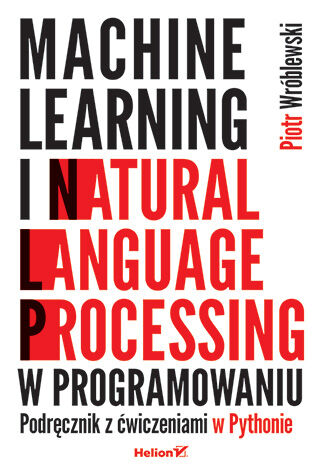
Machine learning i natural language processing w programowaniu. Podręcznik z ćwiczeniami w Pythonie
Piotr Wróblewski
Wejdź na nowy poziom programowania z ML i NLP Sztuczna inteligencja stale się rozwija. Właściwie codziennie słyszymy o jej rosnących możliwościach, nowych osiągnięciach i przyszłości, jaką nam przyniesie. Jednak w tej książce skupiamy się nie na przyszłości, a na teraźniejszości i praktycznym obliczu AI - na usługach, które świadczy już dziś. Większość najciekawszych zastosowań sztucznej inteligencji bazuje na ML (uczenie maszynowe, ang. machine learning), NLP (przetwarzanie języka naturalnego, ang. natural language processing) i architekturze RAG (ang. retrieval augmented generation) zwiększającej możliwości tzw. dużych modeli językowych (LLM, ang. large language model). Stanowią one podwaliny budowy systemów AI, bez których te systemy często wcale nie mogłyby powstać. Do niedawna ML i NLP pozostawały domeną badaczy i specjalistów - znajdowały się poza zasięgiem praktyków programowania. Aktualnie jest inaczej, szybkie komputery, pojemne pamięci RAM i zaawansowane procesory pozwalają stosować te technologie w codziennej pracy programisty. Szczególnie programisty języka Python, do którego są one niemal "naturalnie" przypisane. Mało tego, od kodujących w Pythonie coraz częściej wręcz wymaga się umiejętności znajomości obszaru AI. Tym bardziej warto sięgnąć po ten podręcznik z ćwiczeniami, dzięki któremu między innymi: Dowiesz się, jak używać Pythona do rozwiązywania problemów AI Poznasz tajniki analizy tekstów, analizy sentymentu Zrozumiesz, jak skutecznie używać algorytmów klasyfikacji, regresji i grupowania do rozwiązywania problemów biznesowych Pokonwersujesz z ChatGPT - i to bez wchodzenia na stronę internetową tego serwisu
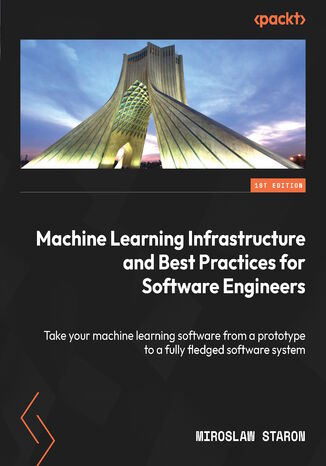
Miroslaw Staron
Although creating a machine learning pipeline or developing a working prototype of a software system from that pipeline is easy and straightforward nowadays, the journey toward a professional software system is still extensive. This book will help you get to grips with various best practices and recipes that will help software engineers transform prototype pipelines into complete software products.The book begins by introducing the main concepts of professional software systems that leverage machine learning at their core. As you progress, you’ll explore the differences between traditional, non-ML software, and machine learning software. The initial best practices will guide you in determining the type of software you need for your product. Subsequently, you will delve into algorithms, covering their selection, development, and testing before exploring the intricacies of the infrastructure for machine learning systems by defining best practices for identifying the right data source and ensuring its quality.Towards the end, you’ll address the most challenging aspect of large-scale machine learning systems – ethics. By exploring and defining best practices for assessing ethical risks and strategies for mitigation, you will conclude the book where it all began – large-scale machine learning software.
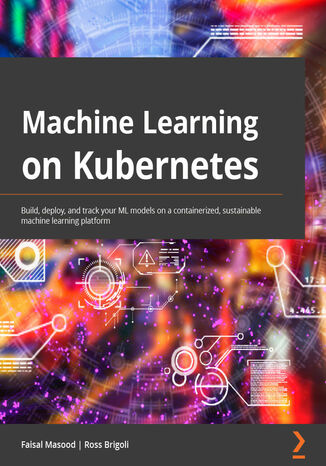
Faisal Masood, Ross Brigoli
MLOps is an emerging field that aims to bring repeatability, automation, and standardization of the software engineering domain to data science and machine learning engineering. By implementing MLOps with Kubernetes, data scientists, IT professionals, and data engineers can collaborate and build machine learning solutions that deliver business value for their organization.You'll begin by understanding the different components of a machine learning project. Then, you'll design and build a practical end-to-end machine learning project using open source software. As you progress, you'll understand the basics of MLOps and the value it can bring to machine learning projects. You will also gain experience in building, configuring, and using an open source, containerized machine learning platform. In later chapters, you will prepare data, build and deploy machine learning models, and automate workflow tasks using the same platform. Finally, the exercises in this book will help you get hands-on experience in Kubernetes and open source tools, such as JupyterHub, MLflow, and Airflow.By the end of this book, you'll have learned how to effectively build, train, and deploy a machine learning model using the machine learning platform you built.
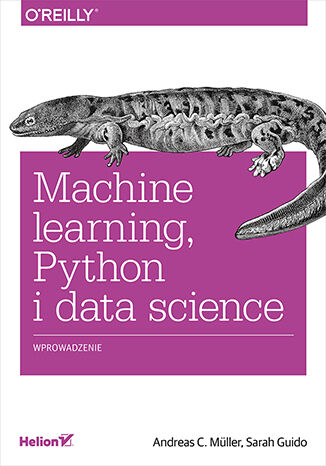
Machine learning, Python i data science. Wprowadzenie
Andreas Müller, Sarah Guido
Uczenie maszynowe kojarzy się z dużymi firmami i rozbudowanymi zespołami. Prawda jest taka, że obecnie można samodzielnie budować zaawansowane rozwiązania uczenia maszynowego i korzystać do woli z olbrzymich zasobów dostępnych danych. Trzeba tylko mieć pomysł i... trochę podstawowej wiedzy. Tymczasem większość opracowań na temat uczenia maszynowego i sztucznej inteligencji wymaga biegłości w zaawansowanej matematyce. Utrudnia to naukę tego zagadnienia, mimo że uczenie maszynowe jest coraz powszechniej stosowane w projektach badawczych i komercyjnych. Ta praktyczna książka ułatwi Ci rozpoczęcie wdrażania rozwiązań rzeczywistych problemów związanych z uczeniem maszynowym. Zawiera przystępne wprowadzenie do uczenia maszynowego i sztucznej inteligencji, a także sposoby wykorzystania Pythona i biblioteki scikit-learn, uwzględniające potrzeby badaczy i analityków danych oraz inżynierów pracujących nad aplikacjami komercyjnymi. Zagadnienia matematyczne ograniczono tu do niezbędnego minimum, zamiast tego skoncentrowano się na praktycznych aspektach algorytmów uczenia maszynowego. Dokładnie opisano, jak konkretnie można skorzystać z szerokiej gamy modeli zaimplementowanych w dostępnych bibliotekach. W książce między innymi: podstawowe informacje o uczeniu maszynowym najważniejsze algorytmy uczenia maszynowego przetwarzanie danych w uczeniu maszynowym ocena modelu i dostrajanie parametrów łańcuchy modeli i hermetyzacja przepływu pracy przetwarzanie danych tekstowych Python i uczenie maszynowe: programowanie do zadań specjalnych!