
Python
W kategorii Python zostały zebrane podręczniki poruszające tematykę programowania z zastosowaniem praktycznie niezależnego sprzętowo, dostępnego na licencji Open Source języka. Książki przedstawią Wam wszechstronności i elastyczności Pythona a także różne typy tworzenia kodu poprzez programowanie strukturalne, obiektowe czy funkcjonalne.
Nauczycie się tworzyć aplikacje sieciowe o dowolnym przeznaczeniu, komunikujące się z systemami operacyjnymi, lub korzystające z baz danych. Techniki analizy składni, przetwarzanie tekstu czy rozłożenie obciążenia programu na wiele wątków i procesów przestanie być problematyczne.
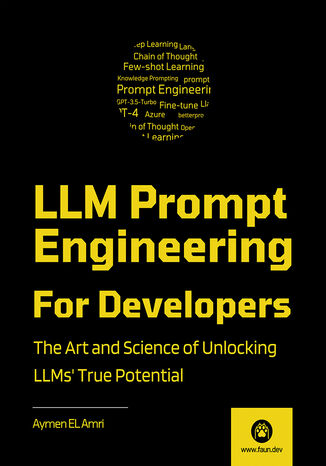
LLM Prompt Engineering for Developers. The Art and Science of Unlocking LLMs' True Potential
Aymen El Amri
LLM Prompt Engineering For Developers begins by laying the groundwork with essential principles of natural language processing (NLP), setting the stage for more complex topics. It methodically guides readers through the initial steps of understanding how large language models work, providing a solid foundation that prepares them for the more intricate aspects of prompt engineering.As you proceed, the book transitions into advanced strategies and techniques that reveal how to effectively interact with and utilize these powerful models. From crafting precise prompts that enhance model responses to exploring innovative methods like few-shot and zero-shot learning, this resource is designed to unlock the full potential of language model technology.This book not only teaches the technical skills needed to excel in the field but also addresses the broader implications of AI technology. It encourages thoughtful consideration of ethical issues and the impact of AI on society. By the end of this book, readers will master the technical aspects of prompt engineering & appreciate the importance of responsible AI development, making them well-rounded professionals ready to focus on the advancement of this cutting-edge technology.
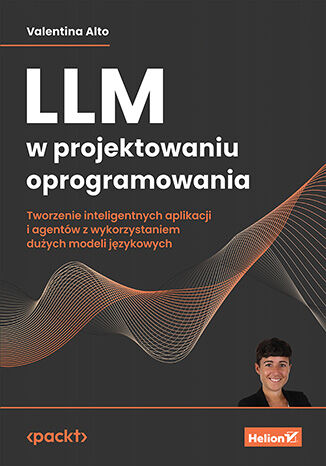
Valentina Alto
Duże modele językowe (LLM) stały się technologicznym przełomem. Ich wszechstronność i funkcjonalność sprawiły, że coraz częściej mówi się o nowej erze inteligentnie działających urządzeń i aplikacji. Umiejętność zastosowania LLM we własnych projektach już dziś jest koniecznością dla wielu projektantów i programistów. Dzięki tej książce opanujesz podstawowe koncepcje związane z użyciem LLM. Poznasz unikatowe cechy i mocne strony kilku najważniejszych modeli (w tym GPT, Gemini, Falcon). Następnie dowiesz się, w jaki sposób LangChain, lekki framework Pythona, pozwala na projektowanie inteligentnych agentów do przetwarzania danych o nieuporządkowanej strukturze. Znajdziesz tu również informacje dotyczące dużych modeli podstawowych, które wykraczają poza obsługę języka i potrafią wykonywać różne zadania związane na przykład z grafiką i dźwiękiem. Na koniec zgłębisz zagadnienia dotyczące ryzyka związanego z LLM, a także poznasz techniki uniemożliwiania tym modelom potencjalnie szkodliwych działań w aplikacji. Najciekawsze zagadnienia: architektura dużych modeli językowych unikatowe funkcje LLM komponenty służące do koordynacji sztucznej inteligencji, w tym tworzenia frontendu użycie wiedzy nieparametrycznej i wektorowych baz danych dostrajanie dużych modeli językowych do własnych potrzeb odpowiedzialność i etyka w systemach korzystających z LLM Odkryj, jak łatwo model generatywnej AI zintegruje się z Twoją aplikacją! O książce w mediach: Eksperyment Myślowy - recenzja książki
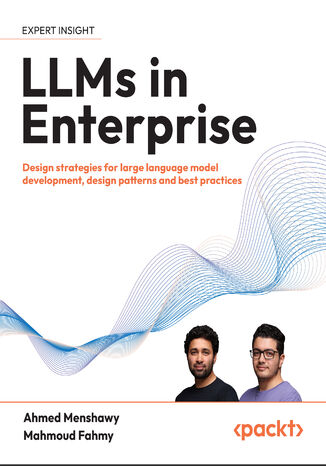
Ahmed Menshawy, Mahmoud Fahmy
The integration of large language models (LLMs) into enterprise applications is transforming how businesses use AI to drive smarter decisions and efficient operations. LLMs in Enterprise is your practical guide to bringing these capabilities into real-world business contexts. It demystifies the complexities of LLM deployment and provides a structured approach for enhancing decision-making and operational efficiency with AI.Starting with an introduction to the foundational concepts, the book swiftly moves on to hands-on applications focusing on real-world challenges and solutions. You’ll master data strategies and explore design patterns that streamline the optimization and deployment of LLMs in enterprise environments. From fine-tuning techniques to advanced inferencing patterns, the book equips you with a toolkit for solving complex challenges and driving AI-led innovation in business processes.By the end of this book, you’ll have a solid grasp of key LLM design patterns and how to apply them to enhance the performance and scalability of your generative AI solutions.*Email sign-up and proof of purchase required
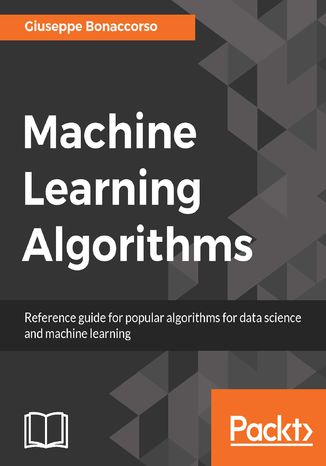
Giuseppe Bonaccorso
In this book, you will learn all the important machine learning algorithms that are commonly used in the field of data science. These algorithms can be used for supervised as well as unsupervised learning, reinforcement learning, and semi-supervised learning. The algorithms that are covered in this book are linear regression, logistic regression, SVM, naïve Bayes, k-means, random forest, TensorFlow and feature engineering.In this book, you will how to use these algorithms to resolve your problems, and how they work. This book will also introduce you to natural language processing and recommendation systems, which help you to run multiple algorithms simultaneously.On completion of the book, you will know how to pick the right machine learning algorithm for clustering, classification, or regression for your problem
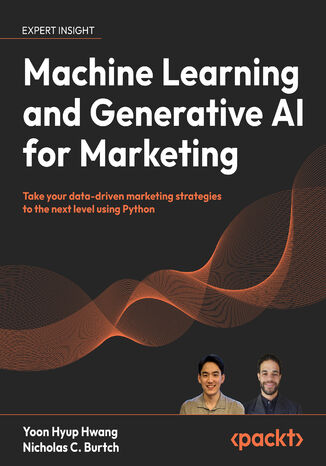
Yoon Hyup Hwang, Nicholas C. Burtch
In the dynamic world of marketing, the integration of artificial intelligence (AI) and machine learning (ML) is no longer just an advantage—it's a necessity. Moreover, the rise of generative AI (GenAI) helps with the creation of highly personalized, engaging content that resonates with the target audience.This book provides a comprehensive toolkit for harnessing the power of GenAI to craft marketing strategies that not only predict customer behaviors but also captivate and convert, leading to improved cost per acquisition, boosted conversion rates, and increased net sales.Starting with the basics of Python for data analysis and progressing to sophisticated ML and GenAI models, this book is your comprehensive guide to understanding and applying AI to enhance marketing strategies. Through engaging content & hands-on examples, you'll learn how to harness the capabilities of AI to unlock deep insights into customer behaviors, craft personalized marketing messages, and drive significant business growth. Additionally, you'll explore the ethical implications of AI, ensuring that your marketing strategies are not only effective but also responsible and compliant with current standardsBy the conclusion of this book, you'll be equipped to design, launch, and manage marketing campaigns that are not only successful but also cutting-edge.
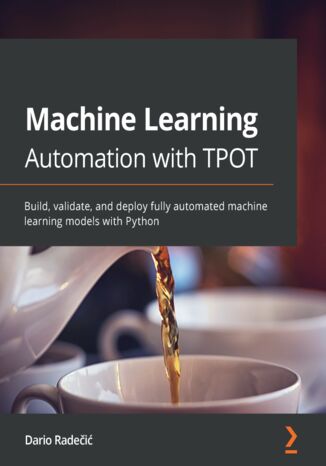
Dario Radečić
The automation of machine learning tasks allows developers more time to focus on the usability and reactivity of the software powered by machine learning models. TPOT is a Python automated machine learning tool used for optimizing machine learning pipelines using genetic programming. Automating machine learning with TPOT enables individuals and companies to develop production-ready machine learning models cheaper and faster than with traditional methods.With this practical guide to AutoML, developers working with Python on machine learning tasks will be able to put their knowledge to work and become productive quickly. You'll adopt a hands-on approach to learning the implementation of AutoML and associated methodologies. Complete with step-by-step explanations of essential concepts, practical examples, and self-assessment questions, this book will show you how to build automated classification and regression models and compare their performance to custom-built models. As you advance, you'll also develop state-of-the-art models using only a couple of lines of code and see how those models outperform all of your previous models on the same datasets.By the end of this book, you'll have gained the confidence to implement AutoML techniques in your organization on a production level.
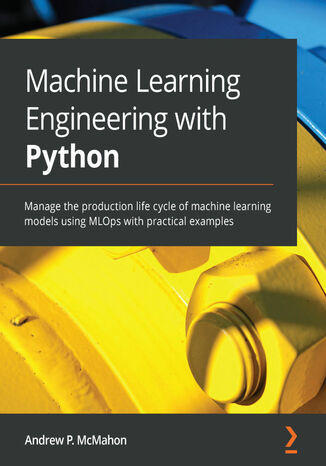
Andrew P. McMahon
Machine learning engineering is a thriving discipline at the interface of software development and machine learning. This book will help developers working with machine learning and Python to put their knowledge to work and create high-quality machine learning products and services.Machine Learning Engineering with Python takes a hands-on approach to help you get to grips with essential technical concepts, implementation patterns, and development methodologies to have you up and running in no time. You'll begin by understanding key steps of the machine learning development life cycle before moving on to practical illustrations and getting to grips with building and deploying robust machine learning solutions. As you advance, you'll explore how to create your own toolsets for training and deployment across all your projects in a consistent way. The book will also help you get hands-on with deployment architectures and discover methods for scaling up your solutions while building a solid understanding of how to use cloud-based tools effectively. Finally, you'll work through examples to help you solve typical business problems.By the end of this book, you'll be able to build end-to-end machine learning services using a variety of techniques and design your own processes for consistently performant machine learning engineering.
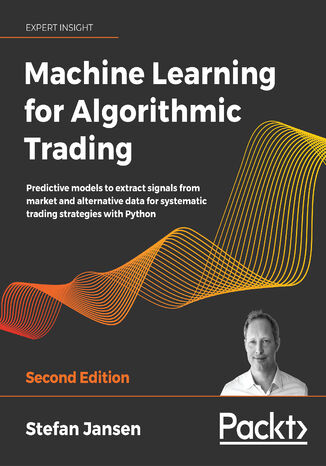
Stefan Jansen
The explosive growth of digital data has boosted the demand for expertise in trading strategies that use machine learning (ML). This revised and expanded second edition enables you to build and evaluate sophisticated supervised, unsupervised, and reinforcement learning models.This book introduces end-to-end machine learning for the trading workflow, from the idea and feature engineering to model optimization, strategy design, and backtesting. It illustrates this by using examples ranging from linear models and tree-based ensembles to deep-learning techniques from cutting edge research.This edition shows how to work with market, fundamental, and alternative data, such as tick data, minute and daily bars, SEC filings, earnings call transcripts, financial news, or satellite images to generate tradeable signals. It illustrates how to engineer financial features or alpha factors that enable an ML model to predict returns from price data for US and international stocks and ETFs. It also shows how to assess the signal content of new features using Alphalens and SHAP values and includes a new appendix with over one hundred alpha factor examples.By the end, you will be proficient in translating ML model predictions into a trading strategy that operates at daily or intraday horizons, and in evaluating its performance.