
Python
Burkhard Meier
Python is a multi-domain, interpreted programming language. It is a widely used general-purpose, high-level programming language. It is often used as a scripting language because of its forgiving syntax and compatibility with a wide variety of different eco-systems. Its flexible syntax enables developers to write short scripts while at the same time, they can use object-oriented concepts to develop very large projects.Python GUI Programming Cookbook follows a task-based approach to help you create beautiful and very effective GUIs with the least amount of code necessary. This book uses the simplest programming style, using the fewest lines of code to create a GUI in Python, and then advances to using object-oriented programming in later chapters. If you are new to object-oriented programming (OOP), this book will teach you how to take advantage of the OOP coding style in the context of creating GUIs written in Python.Throughout the book, you will develop an entire GUI application, building recipe upon recipe, connecting the GUI to a database. In the later chapters, you will explore additional Python GUI frameworks, using best practices. You will also learn how to use threading to ensure your GUI doesn’t go unresponsive.By the end of the book, you will be an expert in Python GUI programming to develop a common set of GUI applications.
Burkhard Meier
Python is a multi-domain, interpreted programming language. It is a widely used general-purpose, high-level programming language. It is often used as a scripting language because of its forgiving syntax and compatibility with a wide variety of different eco-systems. Python GUI Programming Cookbook follows a task-based approach to help you create beautiful and very effective GUIs with the least amount of code necessary.This book will guide you through the very basics of creating a fully functional GUI in Python with only a few lines of code. Each and every recipe adds more widgets to the GUIs we are creating. While the cookbook recipes all stand on their own, there is a common theme running through all of them. As our GUIs keep expanding, using more and more widgets, we start to talk to networks, databases, and graphical libraries that greatly enhance our GUI’s functionality. This book is what you need to expand your knowledge on the subject of GUIs, and make sure you’re not missing out in the long run.
Alan D. Moore
Tkinter is widely used to build GUIs in Python due to its simplicity. In this book, you’ll discover Tkinter’s strengths and overcome its challenges as you learn to develop fully featured GUI applications.Python GUI Programming with Tkinter, Second Edition, will not only provide you with a working knowledge of the Tkinter GUI library, but also a valuable set of skills that will enable you to plan, implement, and maintain larger applications. You’ll build a full-blown data entry application from scratch, learning how to grow and improve your code in response to continually changing user and business needs. You’ll develop a practical understanding of tools and techniques used to manage this evolving codebase and go beyond the default Tkinter widget capabilities. You’ll implement version control and unit testing, separation of concerns through the MVC design pattern, and object-oriented programming to organize your code more cleanly.You’ll also gain experience with technologies often used in workplace applications, such as SQL databases, network services, and data visualization libraries. Finally, you’ll package your application for wider distribution and tackle the challenge of maintaining cross-platform compatibility.
Python GUI Programming with Tkinter. Develop responsive and powerful GUI applications with Tkinter
Alan D. Moore
Tkinter is a lightweight, portable, and easy-to-use graphical toolkit available in the Python Standard Library, widely used to build Python GUIs due to its simplicity and availability. This book teaches you to design and build graphical user interfaces that are functional, appealing, and user-friendly using the powerful combination of Python and Tkinter.After being introduced to Tkinter, you will be guided step-by-step through the application development process. Over the course of the book, your application will evolve from a simple data-entry form to a complex data management and visualization tool while maintaining a clean and robust design. In addition to building the GUI, you'll learn how to connect to external databases and network resources, test your code to avoid errors, and maximize performance using asynchronous programming. You'll make the most of Tkinter's cross-platform availability by learning how to maintain compatibility, mimic platform-native look and feel, and build executables for deployment across popular computing platforms.By the end of this book, you will have the skills and confidence to design and build powerful high-end GUI applications to solve real-world problems.
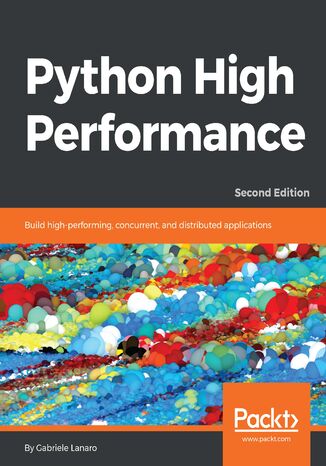
Dr. Gabriele Lanaro
Python is a versatile language that has found applications in many industries. The clean syntax, rich standard library, and vast selection of third-party libraries make Python a wildly popular language. Python High Performance is a practical guide that shows how to leverage the power of both native and third-party Python libraries to build robust applications. The book explains how to use various profilers to find performance bottlenecks and apply the correct algorithm to fix them. The reader will learn how to effectively use NumPy and Cython to speed up numerical code. The book explains concepts of concurrent programming and how to implement robust and responsive applications using Reactive programming. Readers will learn how to write code for parallel architectures using Tensorflow and Theano, and use a cluster of computers for large-scale computations using technologies such as Dask and PySpark. By the end of the book, readers will have learned to achieve performance and scale from their Python applications.
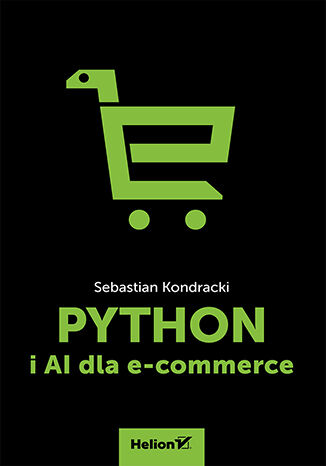
Sebastian Kondracki
Sztuczna inteligencja według Pythona. Sięgnij po potężne wsparcie dla swojego e-sklepu E-commerce wspierany przez potężną moc sztucznej inteligencji ― to dla wielu właścicieli rodzimych firm internetowych wciąż brzmi jak odległa przyszłość. Może gdzieś tam, w Kalifornii, może u technologicznych gigantów, może Apple, Amazon, a bliżej nas, powiedzmy, Allegro korzysta lub będzie korzystać z chatbotów czy data-driven marketingu. Ale nasza firma do tej pory świetnie sobie radziła, to i dalej będzie sobie radzić z prostym mechanizmem sklepu online i kilkoma osobami obsługi. Marzenie ściętej głowy. Do 2025 roku w Polsce brakować będzie 200 tysięcy specjalistów w dziedzinie AI. I to nie w wielkich korporacjach. Głód programistów potrafiących kodować algorytmy sztucznej inteligencji odczują przede wszystkim firmy mniejsze i średnie. Jeśli jesteś właścicielem biznesu bazującego na sprzedaży w sieci, jeśli jesteś początkującym programistą albo działasz już jako programista e-commerce, ale chcesz się w tym kierunku rozwijać ― ta "książka kucharska" jest dla Ciebie. Dlaczego "książka kucharska"? Ponieważ podręcznik zawiera gotowe przepisy na algorytmy optymalizacyjne, systemy rekomendacyjne, przetwarzanie ogromnych ilości danych z ruchu odnotowanego w sklepie i zamianę ich w wiedzę o kliencie. Wszystko to już dziś wdrożysz w dowolnym e-sklepie stosunkowo małym kosztem. Zarówno przy użyciu gotowych programów napisanych w Pythonie przez ogromną społeczność miłośników AI i Pythona, jak i sprytnych produktów w modelu SaaS (ang. software as a service), sprzedawanych przez rzeszę polskich i zagranicznych startupów.
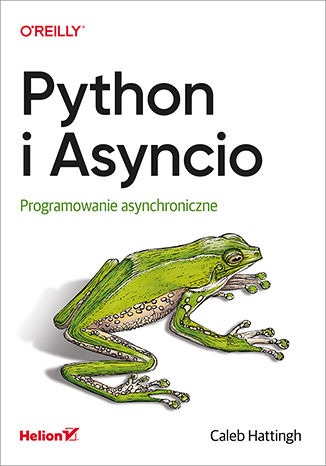
Python i Asyncio. Programowanie asynchroniczne
Caleb Hattingh
Programowanie współbieżne jest ważną techniką w tworzeniu nowoczesnych rozwiązań sieciowych. Programiści Pythona często w tym celu korzystają z wątków i mechanizmu wywłaszczania. Z tym że nie jest to optymalne rozwiązanie - z uwagi na ryzyko naruszenia bezpieczeństwa. Istnieje też możliwość programowania asynchronicznego z wykorzystaniem biblioteki asyncio, która została dodana w Pythonie 3.4. Złożoność API Asyncio budzi jednak obawy programistów Pythona, również biegle posługujących się tym językiem. Mimo to wysiłek włożony w zrozumienie działania Asyncio jest opłacalny, gdyż biblioteka ta pozwala na skuteczne rozwiązywanie problemów ze współbieżnym programowaniem sieciowym. Lektura tej książki ułatwi Ci pozbycie się obaw przed biblioteką asyncio. Zrozumiesz jej podstawowe elementy, co pozwoli Ci na rozpoczęcie programowania sterowanego zdarzeniami i prostą obsługę tysięcy jednoczesnych połączeń sieciowych. Dowiesz się, dlaczego Asyncio stanowi bezpieczniejszą alternatywę dla wielozadaniowości z wywłaszczaniem wątków, i dogłębnie zrozumiesz koncepcję programowania asynchronicznego. Następnie przeanalizujesz wprowadzone w Pythonie zmiany, dzięki którym możliwe jest programowanie asynchroniczne. Dowiesz się także, w jakich konkretnie sytuacjach biblioteka asyncio jest wyjątkowo użyteczna i których narzędzi należy wtedy używać. W książce pokazano najlepsze sposoby wykorzystania nowych możliwości Asyncio. W tej książce: porównanie programowania współbieżnego z wykorzystaniem Asyncio i wątków podstawy programowania bazującego na zdarzeniach możliwości Asyncio ważne dla programistów końcowych oraz twórców frameworków składnia async/await, w tym API koprocedur i klasy Future szczegółowe przypadki użycia kilku bibliotek zgodnych z Asyncio Programowanie asynchroniczne: nowa wizja bezpieczeństwa kodu Pythona!
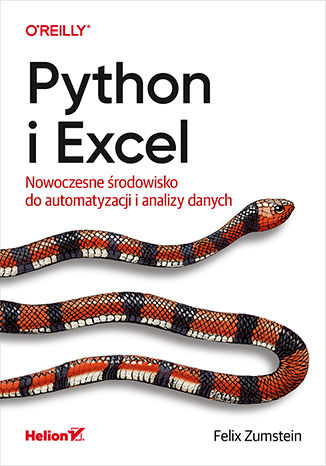
Python i Excel. Nowoczesne środowisko do automatyzacji i analizy danych
Felix Zumstein
Bez Excela trudno sobie wyobrazić wykonywanie różnych złożonych zadań - to ulubione narzędzie naukowców, finansistów, analityków danych, a także profesjonalistów z innych branż. Każda z tych dziedzin ma swoje stale rosnące wymagania wobec Excela. Firma Microsoft wciąż rozwija ten kultowy arkusz kalkulacyjny, jednak język VBA nie nadąża za potrzebami wielu użytkowników. Osoby te często w codziennej pracy korzystają z Pythona do automatyzacji zadań, stąd integracja Excela i Pythona wydaje się naturalnym i wyjątkowo obiecującym rozwiązaniem. Nie musisz dłużej czekać na włączenie Pythona jako języka skryptowego Excela - ta książka wyjaśnia, jak je połączyć i wyciągnąć z tej integracji maksimum korzyści. To wydanie przeznaczone dla zaawansowanych użytkowników Excela, którzy nie posiadają głębokiej wiedzy o Pythonie. Pokazuje, w jaki sposób manipulować danymi zawartymi w plikach Excela bez Excela, a także jak znakomicie zwiększać możliwości tego programu poprzez budowę interaktywnych narzędzi do analizy danych. Niezależnie od tego, czy interesuje Cię praca z samymi arkuszami Excela, czy też chcesz tworzyć aplikacje Excela, znajdziesz tu mnóstwo wyczerpujących, jasnych i praktycznych wskazówek, popartych zrozumiałymi przykładami przydatnego kodu. W książce między innymi: gruntowne podstawy Pythona i korzystania z notatników Jupyter i Visual Studio Code stosowanie biblioteki pandas do zastępowania typowych obliczeń w Excelu automatyzacja konsolidacji skoroszytów Excela i tworzenia raportów w Excelu tworzenie interaktywnych narzędzi Excela za pomocą xlwings współpraca Excela z bazą danych i plikami CSV stosowanie Pythona do zastąpienia VBA, Power Query i Power Pivot Użyj Pythona, a pokochasz Excela!