Systemy operacyjne

345
Wird geladen...
E-BOOK

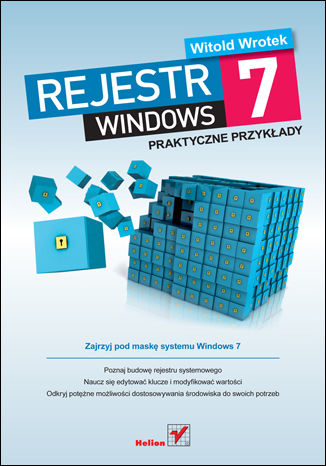
Rejestr Windows 7. Praktyczne przykłady

Witold Wrotek

Zajrzyj pod maskę systemu Windows 7 Poznaj budowę rejestru systemowego Naucz się edytować klucze i modyfikować wartości Odkryj potężne możliwości dostosowywania środowiska do swoich potrzeb Rejestr Windows jest bazą danych konfiguracyjnych, za pomocą których można kontrolować każdy aspekt działania systemu operacyjnego. Zawiera on informacje na temat zainstalowanego w komputerze sprzętu i oprogramowania, a także ustawienia związane z poszczególnymi użytkownikami środowiska. Edytując wpisy przechowywane w rejestrze, można w znacznym stopniu dostosować wygląd i sposób funkcjonowania systemu do własnych potrzeb oraz zoptymalizować jego pracę w celu zwiększenia ogólnej wydajności komputera. Aby osiągnąć odpowiednie efekty, niczego przy okazji nie psując, trzeba oczywiście dysponować wiedzą, przez niektórych uważaną za niemal magiczną. Dzięki książce "Rejestr Windows 7. Praktyczne przykłady " również Ty możesz dołączyć do grona osób wtajemniczonych. Dowiesz się z niej, jak zbudowany jest ów rejestr i jaką rolę pełnią poszczególne jego elementy. Nauczysz się zabezpieczać go przed awariami i właściwie reagować w sytuacjach, gdy mimo wszystko wystąpi jakiś błąd. Poznasz możliwości drzemiące w rejestrze i metody wykorzystywania ich w celu modyfikacji interfejsu środowiska czy działania dostępnych w nim narzędzi. Odkryjesz również sposoby optymalizacji i defragmentacji rejestru, a wszystko to bez konieczności wczytywania się w techniczną nowomowę i przebijania przez niezrozumiałą dokumentację. Szybko, łatwo, praktycznie. Struktura i funkcje rejestru systemu Windows 7 Sposoby dodawania oraz edytowania kluczy i wartości Zabezpieczanie rejestru przed awariami i postępowanie w przypadku ich wystąpienia Dostosowywanie interfejsu systemu do swoich potrzeb Kontrolowanie działania aplikacji i narzędzi systemowych Zarządzanie usługami z poziomu rejestru Utrzymywanie rejestru w dobrej kondycji

347
Wird geladen...
E-BOOK

Scripting. Automation with Bash, PowerShell, and Python

Rheinwerk Publishing, Inc, Michael Kofler
This comprehensive scripting guide empowers system administrators, developers, and power users to automate repetitive IT tasks across platforms using three major scripting languages: Bash, PowerShell, and Python. The book opens with foundational scripting concepts and showcases what you can accomplish with just ten lines of code. It continues with in-depth chapters on each language, emphasizing syntax, control structures, error handling, and modularity.Readers will explore practical techniques for managing files, parsing text, utilizing regular expressions, and working with JSON, XML, and INI formats. The book dives into job automation with cron and Task Scheduler, secure communication via SSH, and scripting in professional environments with tools like Visual Studio Code and Git.The final section applies scripting to real-world cases, including system backups, image processing, web scraping, API consumption, database interactions, cloud integration, and virtual machine automation. With this book, readers build a strong scripting toolkit to efficiently manage modern IT workflows.

348
Wird geladen...
E-BOOK

SELinux System Administration. Effectively secure your Linux systems with SELinux - Second Edition

Sven Vermeulen

Do you have the crucial job of protecting your private and company systems from malicious attacks and undefined application behavior? Are you looking to secure your Linux systems with improved access controls? Look no further, intrepid administrator! This book will show you how to enhance your system’s secure state across Linux distributions, helping you keep application vulnerabilities at bay. This book covers the core SELinux concepts and shows you how to leverage SELinux to improve the protection measures of a Linux system. You will learn the SELinux fundamentals and all of SELinux’s configuration handles including conditional policies, constraints, policy types, and audit capabilities. These topics are paired with genuine examples of situations and issues you may come across as an administrator. In addition, you will learn how to further harden the virtualization offering of both libvirt (sVirt) and Docker through SELinux. By the end of the book you will know how SELinux works and how you can tune it to meet your needs.

349
Wird geladen...
E-BOOK

SELinux System Administration. Implement mandatory access control to secure applications, users, and information flows on Linux - Third Edition

Sven Vermeulen

Linux is a dominant player in many organizations and in the cloud. Securing the Linux environment is extremely important for any organization, and Security-Enhanced Linux (SELinux) acts as an additional layer to Linux system security. SELinux System Administration covers basic SELinux concepts and shows you how to enhance Linux system protection measures. You will get to grips with SELinux and understand how it is integrated. As you progress, you’ll get hands-on experience of tuning and configuring SELinux and integrating it into day-to-day administration tasks such as user management, network management, and application maintenance. Platforms such as Kubernetes, system services like systemd, and virtualization solutions like libvirt and Xen, all of which offer SELinux-specific controls, will be explained effectively so that you understand how to apply and configure SELinux within these applications. If applications do not exert the expected behavior, you’ll learn how to fine-tune policies to securely host these applications. In case no policies exist, the book will guide you through developing custom policies on your own.By the end of this Linux book, you’ll be able to harden any Linux system using SELinux to suit your needs and fine-tune existing policies and develop custom ones to protect any app and service running on your Linux systems.

350
Wird geladen...
E-BOOK

Serverless Architectures with AWS. Discover how you can migrate from traditional deployments to serverless architectures with AWS

Mohit Gupta

Serverless Architecture with AWS begins with an introduction to the serverless model and helps you get started with AWS and Lambda. You'll also get to grips with other capabilities of the AWS Serverless Platform and see how AWS supports enterprise-grade serverless applications with and without Lambda.This book will guide you in deploying your first serverless project and exploring the capabilities of serverless Amazon Athena, an interactive query service that makes it easy to analyze data in Amazon Simple Storage Service (S3 Amazon) using standard SQL. You’ll also learn about AWS Glue, a fully managed ETL service that makes categorizing data easy and cost-effective. You'll study how Amazon Kinesis makes it possible to unleash the potential of real-time data insights and analytics with capabilities such as video streams, data streams, data firehose, and data analytics. Last but not least, you’ll be equipped to combine Amazon Kinesis capabilities with AWS Lambda to create lightweight serverless architectures.By the end of the book, you will be ready to create and run your first serverless application that takes advantage of the high availability, security, performance, and scalability of AWS.

351
Wird geladen...
E-BOOK

Serverless Architectures with Kubernetes. Create production-ready Kubernetes clusters and run serverless applications on them

Onur Yilmaz, Sathsara Sarathchandra

Kubernetes has established itself as the standard platform for container management, orchestration, and deployment. By learning Kubernetes, you’ll be able to design your own serverless architecture by implementing the function-as-a-service (FaaS) model.After an accelerated, hands-on overview of the serverless architecture and various Kubernetes concepts, you’ll cover a wide range of real-world development challenges faced by real-world developers, and explore various techniques to overcome them. You’ll learn how to create production-ready Kubernetes clusters and run serverless applications on them. You'll see how Kubernetes platforms and serverless frameworks such as Kubeless, Apache OpenWhisk and OpenFaaS provide the tooling to help you develop serverless applications on Kubernetes. You'll also learn ways to select the appropriate framework for your upcoming project. By the end of this book, you’ll have the skills and confidence to design your own serverless applications using the power and flexibility of Kubernetes.

352
Wird geladen...
E-BOOK

Sieci Linux. Receptury

Carla Schroder

Jak stworzyć sieć opartą o serwery pracujące pod kontrolą Linuksa? Jak uruchomić serwer VoIP i sieć VPN? Jak zapewnić bezawaryjną, wydajną i bezpieczną pracę sieci? Mogłoby się wydawać, że o Linuksie napisano już wszystko. Jednak do tej pory nie było książki, która w kompleksowy sposób omawiałaby wszystkie zagadnienia, dotyczące spraw sieciowych w tym systemie operacyjnym. Aż do teraz! Autor tej książki przedstawia poszczególne kwestie w sprawdzony w tej serii sposób: problem - rozwiązanie - dyskusja. Dzięki podręcznikowi "Sieci Linux. Receptury" dowiesz się, w jaki sposób przygotować router, jak skonfigurować firewall przy użyciu pakietu iptables oraz jak stworzyć punkt dostępu do sieci bezprzewodowej i serwer VoIP, korzystający z popularnego rozwiązania Asterisk. Poznasz zaawansowane możliwości pakietu OpenSSH oraz sposoby bezpiecznego, zdalnego administrowania serwerem. Dodatkowo nauczysz się używać graficznych pulpitów, łączyć w bezpieczny sposób odległe sieci za pomocą pakietu OpenVPN czy też udostępniać w sieci pliki przy użyciu serwera Samba. Twoją ciekawość zaspokoi z pewnością opis zastosowania Samby w roli kontrolera domeny. Po lekturze tej książki nie będą Ci obce sposoby monitorowania pracy sieci i usług, tworzenia wykresów wykorzystania zasobów czy też użycia adresów IP w wersji szóstej. Jedno jest pewne: jeżeli jesteś administratorem sieciowym lub masz ambicję nim zostać, ta książka musi znaleźć się na Twojej półce! Tworzenie bramy opartej o system Linux Budowa firewalla opartego o iptables Przygotowanie punktu dostępu do sieci bezprzewodowej Przydzielanie adresów IP za pomocą serwera DHCP Konfiguracja serwera VoIP - Asterisk Zaawansowane tematy, związane z routingiem Zdalna i bezpieczna administracja z wykorzystaniem protokołu SSH Używanie zdalnych pulpitów graficznych Tworzenie wirtualnych sieci przy użyciu pakietu OpenVPN Wykorzystanie Linuksa w roli kontrolera domeny Windows Udostępnianie plików za pomocą pakietu Samba Usługi katalogowe LDAP Monitorowanie i wizualizacja parametrów pracy sieci i usług Zastosowanie protokołu IPv6 Przygotowanie do bezobsługowej, sieciowej instalacji nowych systemów Administrowanie serwerem za pomocą konsoli podłączonej przez port szeregowy Uruchomienie serwera dial-up Analiza, diagnoza i rozwiązywanie problemów sieciowych Odpowiedzi na wszystkie Twoje pytania w jednym miejscu!