
Bezpieczeństwo systemów
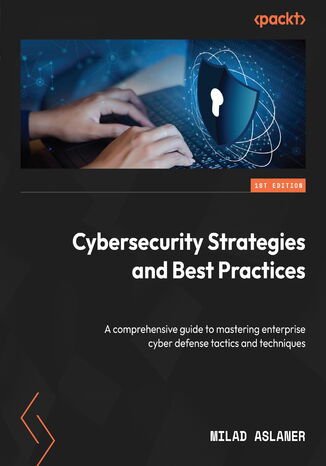
Milad Aslaner
If you are a cybersecurity professional looking for practical and actionable guidance to strengthen your organization’s security, then this is the book for you. Cybersecurity Strategies and Best Practices is a comprehensive guide that offers pragmatic insights through real-world case studies. Written by a cybersecurity expert with extensive experience in advising global organizations, this guide will help you align security measures with business objectives while tackling the ever-changing threat landscape. You’ll understand the motives and methods of cyber adversaries and learn how to navigate the complexities of implementing defense measures.As you progress, you’ll delve into carefully selected real-life examples that can be applied in a multitude of security scenarios. You’ll also learn how to cut through the noise and make informed decisions when it comes to cybersecurity solutions by carefully assessing vendor claims and technology offerings. Highlighting the importance of a comprehensive approach, this book bridges the gap between technical solutions and business strategies to help you foster a secure organizational environment.By the end, you’ll have the knowledge and tools necessary to improve your organization's cybersecurity posture and navigate the rapidly changing threat landscape.
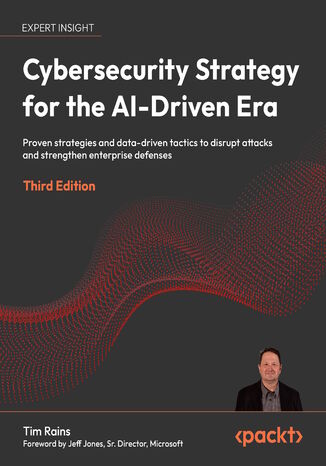
Tim Rains, Jeff Jones
Designing a cybersecurity strategy that actually works is difficult when threats evolve faster than budgets, teams, and tools. This book helps security leaders cut through noise by focusing on how organizations are compromised, which strategies succeed, and how to measure outcomes.Written by Tim Rains, a former Global Chief Security Advisor at Microsoft and senior security leader at AWS and Fortune-scale enterprises, this edition expands on the previous editions with major updates and new chapters. You will learn how threat intelligence, attack-centric security, intrusion kill chains, and MITRE ATT&CK can help defenders design stronger strategies.New and expanded content covers ransomware, API security, “living off the land” attacks, resilience as a cybersecurity strategy, and the security of AI systems alongside practical guidance on using AI to improve security outcomes. This book takes a practical, evidence-based approach to cybersecurity strategy, helping you assess trade-offs, avoid costly missteps, and communicate clearly with executives and boards.By the end of this book, you’ll be able to evaluate cybersecurity strategies more effectively, improve enterprise defenses, and communicate security priorities clearly to executives and boards.
Cybersecurity: The Beginner's Guide. A comprehensive guide to getting started in cybersecurity
Dr. Erdal Ozkaya
It's not a secret that there is a huge talent gap in the cybersecurity industry. Everyone is talking about it including the prestigious Forbes Magazine, Tech Republic, CSO Online, DarkReading, and SC Magazine, among many others. Additionally, Fortune CEO's like Satya Nadella, McAfee's CEO Chris Young, Cisco's CIO Colin Seward along with organizations like ISSA, research firms like Gartner too shine light on it from time to time.This book put together all the possible information with regards to cybersecurity, why you should choose it, the need for cyber security and how can you be part of it and fill the cybersecurity talent gap bit by bit. Starting with the essential understanding of security and its needs, we will move to security domain changes and how artificial intelligence and machine learning are helping to secure systems. Later, this book will walk you through all the skills and tools that everyone who wants to work as security personal need to be aware of. Then, this book will teach readers how to think like an attacker and explore some advanced security methodologies. Lastly, this book will deep dive into how to build practice labs, explore real-world use cases and get acquainted with various cybersecurity certifications.By the end of this book, readers will be well-versed with the security domain and will be capable of making the right choices in the cybersecurity field.
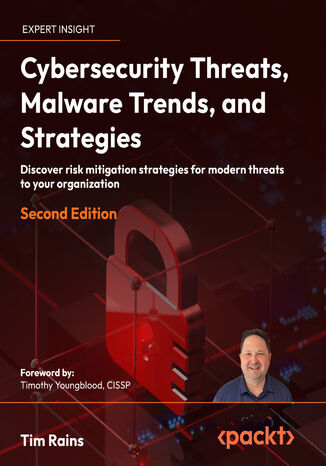
Tim Rains, Timothy Youngblood
Tim Rains is Microsoft's former Global Chief Security Advisor and Amazon Web Services’ former Global Security Leader for Worldwide Public Sector. He has spent the last two decades advising private and public sector organizations all over the world on cybersecurity strategies.Cybersecurity Threats, Malware Trends, and Strategies, Second Edition builds upon the success of the first edition that has helped so many aspiring CISOs, and cybersecurity professionals understand and develop effective data-driven cybersecurity strategies for their organizations. In this edition, you’ll examine long-term trends in vulnerability disclosures and exploitation, regional differences in malware infections and the socio-economic factors that underpin them, and how ransomware evolved from an obscure threat to the most feared threat in cybersecurity. You’ll also gain valuable insights into the roles that governments play in cybersecurity, including their role as threat actors, and how to mitigate government access to data. The book concludes with a deep dive into modern approaches to cybersecurity using the cloud.By the end of this book, you will have a better understanding of the threat landscape, how to recognize good Cyber Threat Intelligence, and how to measure the effectiveness of your organization's cybersecurity strategy.
Tim Rains
After scrutinizing numerous cybersecurity strategies, Microsoft’s former Global Chief Security Advisor in this book helps you understand the efficacy of popular cybersecurity strategies and more.Cybersecurity Threats, Malware Trends, and Strategies offers an unprecedented long-term view of the global threat landscape by examining the twenty-year trend in vulnerability disclosures and exploitation, nearly a decade of regional differences in malware infections, the socio-economic factors that underpin them, and how global malware has evolved. This will give you further perspectives into malware protection for your organization. It also examines internet-based threats that CISOs should be aware of.The book will provide you with an evaluation of the various cybersecurity strategies that have ultimately failed over the past twenty years, along with one or two that have actually worked. It will help executives and security and compliance professionals understand how cloud computing is a game changer for them.By the end of this book, you will know how to measure the effectiveness of your organization’s cybersecurity strategy and the efficacy of the vendors you employ to help you protect your organization and yourself.
Cybersecurity w pytaniach i odpowiedziach
Wojciech Ciemski
Co o cyberbezpieczeństwie każdy wiedzieć powinien W świecie, w którym większość naszych mniej lub bardziej wrażliwych danych przechowywana jest w sieci, cyberbezpieczeństwo powinno być tematem numer jeden. Niestety, na ogół nie jest, bo… Po prostu nie chce się nam myśleć o zastosowaniu odpowiednich zabezpieczeń. Stają się one dla nas kluczowe dopiero, kiedy ktoś się cyberwłamie i realnie skradnie coś, co było dla nas istotne: hasło do poczty e-mail, pieniądze z konta w banku, zdjęcia, które wolelibyśmy zachować dla siebie, itd. Tyle że wtedy jest już za późno. Ta książka powstała po to, by jej czytelnik zdążył wyprzedzić zagrożenie. Stanowi wprowadzenie do zagadnienia cyberbezpieczeństwa. Podzielona na kilka kluczowych części (systemy operacyjne, sieci komputerowe, aplikacje webowe, kryptografia, wreszcie cyberbezpieczeństwo jako takie), pozwala zapoznać się z najważniejszymi zagrożeniami i ze sposobami zabezpieczeń. Przybliża terminologię związaną z tematem i stanowi świetny punkt wyjścia do dalszego zgłębiania jego wybranych aspektów. Cyberniebezpieczeństwo czyha. Czy jesteś na nie przygotowany?
Shane Molinari, Jim Packer
In today's world full of online threats, the complexity of harmful software presents a significant challenge for detection and analysis. This insightful guide will teach you how to apply the principles of data science to online security, acting as both an educational resource and a practical manual for everyday use.Data Science for Malware Analysis starts by explaining the nuances of malware, from its lifecycle to its technological aspects before introducing you to the capabilities of data science in malware detection by leveraging machine learning, statistical analytics, and social network analysis. As you progress through the chapters, you’ll explore the analytical methods of reverse engineering, machine language, dynamic scrutiny, and behavioral assessments of malicious software. You’ll also develop an understanding of the evolving cybersecurity compliance landscape with regulations such as GDPR and CCPA, and gain insights into the global efforts in curbing cyber threats.By the end of this book, you’ll have a firm grasp on the modern malware lifecycle and how you can employ data science within cybersecurity to ward off new and evolving threats.
Rohan Pinto
Looking forward to mastering digital identity? This book will help you get to grips with complete frameworks, tools, and strategies for safeguarding personal data, securing online transactions, and ensuring trust in digital interactions in today's cybersecurity landscape.Decentralized Identity Explained delves into the evolution of digital identities, from their historical roots to the present landscape and future trajectories, exploring crucial concepts such as IAM, the significance of trust anchors and sources of truth, and emerging trends such as SSI and DIDs. Additionally, you’ll gain insights into the intricate relationships between trust and risk, the importance of informed consent, and the evolving role of biometrics in enhancing security within distributed identity management systems. Through detailed discussions on protocols, standards, and authentication mechanisms, this book equips you with the knowledge and tools needed to navigate the complexities of digital identity management in both current and future cybersecurity landscapes.By the end of this book, you’ll have a detailed understanding of digital identity management and best practices to implement secure and efficient digital identity frameworks, enhancing both organizational security and user experiences in the digital realm.