
Bezpieczeństwo systemów
W kategorii Bezpieczeństwo systemów zebrano książki, które pomogą zabezpieczyć Wasze prywatne lub firmowe komputery przed programami szpiegującymi, atakami hakerów czy wirusami. Poznacie procedury i normy związane z profesjonalną ochroną informacji oraz procedury przeprowadzenia audytu bezpieczeństwa. Opanujecie zaawansowane techniki zapewniające bezpieczeństwo komputerów, niezależnie jaki system operacyjny został na nich zainstalowany. Jeżeli jesteście twórcami oprogramowania, to znajdziecie tutaj informacje jak skutecznie zabezpieczyć własne aplikacje przed crackerami i hackerami, oraz jak tworzyć bezpieczne w użytkowaniu programy czy aplikacje sieciowe.
Docker Quick Start Guide. Learn Docker like a boss, and finally own your applications
Earl Waud
Docker is an open source software platform that helps you with creating, deploying, and running your applications using containers. This book is your ideal introduction to Docker and containerization.You will learn how to set up a Docker development environment on a Linux, Mac, or Windows workstation, and learn your way around all the commands to run and manage your Docker images and containers.You will explore the Dockerfile and learn how to build your own enterprise-grade Docker images. Then you will learn about Docker networks, Docker swarm, and Docker volumes, and how to use these features with Docker stacks in order to define, deploy, and maintain highly-scalable, fault-tolerant multi-container applications.Finally, you will learn how to leverage Docker with Jenkins to automate the building of Docker images and the deployment of Docker containers. By the end of this book, you will be well prepared when it comes to using Docker for your next project.
Domain-Driven Design in PHP. A Highly Practical Guide
Keyvan Akbary, Carlos Buenosvinos, Christian Soronellas
Domain-Driven Design (DDD) has arrived in the PHP community, but for all the talk, there is very little real code. Without being in a training session and with no PHP real examples, learning DDD can be challenging. This book changes all that. It details how to implement tactical DDD patterns and gives full examples of topics such as integrating Bounded Contexts with REST, and DDD messaging strategies. In this book, the authors show you, with tons of details and examples, how to properly design Entities, Value Objects, Services, Domain Events, Aggregates, Factories, Repositories, Services, and Application Services with PHP. They show how to apply Hexagonal Architecture within your application whether you use an open source framework or your own.

Efektywne zarządzanie podatnościami na zagrożenia. Jak minimalizować ryzyko w cyfrowym ekosystemie
Chris Hughes, Nikki Robinson
Musisz sobie uświadomić, że korzystanie z systemów opartych na chmurze wiąże się z cyberzagrożeniami - podobnie jak w przypadku tradycyjnej infrastruktury. Musisz się dobrze orientować w złożoności swojego systemu i w powiązaniach poszczególnych elementów. Dopiero na tej podstawie możesz planować i ustalać priorytety we własnym programie zarządzania ryzykiem, uwzględniając przy tym wiele innych zagadnień. W tej praktycznej książce znajdziesz opis kompleksowych praktyk, dzięki którym współczesne organizacje utrzymujące złożone ekosystemy oprogramowania mogą skutecznie identyfikować podatności, zarządzać nimi i ograniczać ryzyko wystąpienia poważnych naruszeń bezpieczeństwa. Dowiesz się, dlaczego nie wystarczy po prostu "użyć łatki", aby naprawić znane luki w oprogramowaniu. Poznasz zasady profesjonalnego zarządzania podatnościami uwzględniające monitorowanie systemów i baz danych podatności. Przekonasz się, jak ważne są czynnik ludzki i identyfikacja czynników psychologicznych, które podczas interakcji użytkownika z oprogramowaniem przyczyniają się do powstawania podatności. W miarę lektury książki przyswoisz wydajne i skuteczne strategie, dzięki którym zapewnisz swojej organizacji wysoki poziom cyberbezpieczeństwa. Najciekawsze zagadnienia: zarządzanie złożonymi środowiskami poprawki do oprogramowania i bezpieczna konfiguracja ocena podatności i łączenie ich w łańcuch czynnik ludzki w zarządzaniu podatnościami oprogramowanie bezpieczne już na etapie projektu budowa dojrzałego modelu zarządzania podatnościami Sprawdź, jak w erze chmury zarządzać ryzykiem informatycznym!
Efektywny Kotlin. Najlepsze praktyki
Marcin Moskała
Projektanci Kotlina postawili na pragmatyzm. Oznacza to, że do dziś wszystkie decyzje związane z rozwojem języka są podejmowane z uwzględnieniem potrzeb biznesowych: produktywności, skalowalności, prostej konserwacji, niezawodności i wydajności. Od początku szczególną uwagę zwraca się również na bezpieczeństwo, czytelność, wielokrotne używanie kodu, łatwość użycia narzędzi i możliwości współdziałania z innymi językami. Bardzo ważna okazała się też wydajność zarówno działania kodu, jak i pracy programisty. Konsekwentne przestrzeganie tych założeń dało znakomite efekty. Dziś Kotlin jest świetnym wyborem dla programisty - pod jednym warunkiem: że zna specyfikę języka i korzysta z niego we właściwy sposób. Ta książka jest przeznaczona dla doświadczonych programistów Kotlina, którzy chcą opanować ten język na wysokim poziomie. Wyjaśniono w niej sposoby korzystania ze szczególnych funkcji Kotlina, aby możliwe było uzyskanie bezpiecznego, czytelnego, skalowalnego i wydajnego kodu. Znalazły się w niej informacje o najlepszych praktykach pisania kodu w Kotlinie ze szczególnym uwzględnieniem praktyk wysokiego poziomu, zalecanych przez autorytety i twórców języka. Wyczerpująco omówiono też kwestie związane z właściwościami i typami specyficznymi dla platformy oraz tworzenie języków dziedzinowych, a także klasy i funkcje wewnątrzwierszowe. Jest to praktyczny przewodnik zawierający zbiór wytycznych, których uwzględnienie pozwoli pisać dobry i idiomatyczny kod w Kotlinie. W tej książce między innymi: reguły pisania kodu o wysokiej jakości programowanie dla różnych platform oraz aplikacje mobilne wzorce i konwencje programistyczne konwencje i kontrakty dla programistów wspólnie tworzących projekt zapewnianie wysokiej wydajności aplikacji i bibliotek Kotlin: wydajność, bezpieczeństwo, radość z programowania!
Mostafa Yahia
Effective threat investigation requires strong technical expertise, analytical skills, and a deep understanding of cyber threats and attacker techniques. It's a crucial skill for SOC analysts, enabling them to analyze different threats and identify security incident origins. This book provides insights into the most common cyber threats and various attacker techniques to help you hone your incident investigation skills.The book begins by explaining phishing and email attack types and how to detect and investigate them, along with Microsoft log types such as Security, System, PowerShell, and their events. Next, you’ll learn how to detect and investigate attackers' techniques and malicious activities within Windows environments. As you make progress, you’ll find out how to analyze the firewalls, flows, and proxy logs, as well as detect and investigate cyber threats using various security solution alerts, including EDR, IPS, and IDS. You’ll also explore popular threat intelligence platforms such as VirusTotal, AbuseIPDB, and X-Force for investigating cyber threats and successfully build your own sandbox environment for effective malware analysis.By the end of this book, you’ll have learned how to analyze popular systems and security appliance logs that exist in any environment and explore various attackers' techniques to detect and investigate them with ease.
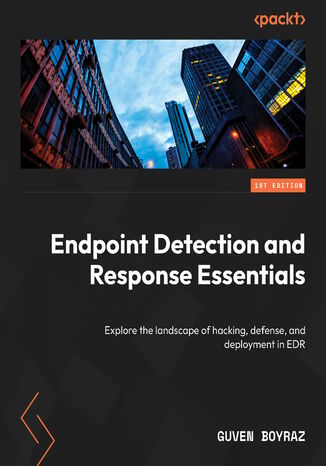
Guven Boyraz
In this data-driven age, safeguarding sensitive data and privacy has become paramount, demanding a deep understanding of the intricacies of cyberspace and its associated threats. With a focus on endpoint defense, Endpoint Detection and Response Essentials guides you in implementing EDR solutions to stay ahead of attackers and ensure the overall security posture of your IT infrastructure.Starting with an insightful introduction to EDR and its significance in the modern cyber threat landscape, this book offers a quick overview of popular EDR tools followed by their practical implementation. From real-world case studies, best practices, and deployment strategies to maximizing the effectiveness of EDR, including endpoint hardening techniques and advanced DNS visibility methods, this comprehensive resource equips you with the knowledge and hands-on skills to strengthen your organization’s defense against cyber attacks. Recognizing the role of the DNS protocol, you’ll fortify your organization's endpoint defense proactively.By the end of this book, you'll have honed the skills needed to construct a resilient cybersecurity defense for yourself and your organization.
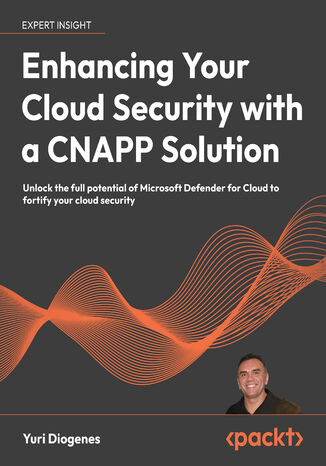
Yuri Diogenes
Cloud security is a pivotal aspect of modern IT infrastructure, essential for safeguarding critical data and services. This comprehensive book explores Cloud Native Application Protection Platform (CNAPP), guiding you through adopting, deploying, and managing these solutions effectively. Written by Yuri Diogenes, Principal PM at Microsoft, who has been with Defender for Cloud (formerly Azure Security Center) since its inception, this book distills complex concepts into actionable knowledge making it an indispensable resource for Cloud Security professionals.The book begins with a solid foundation detailing the why and how of CNAPP, preparing you for deeper engagement with the subject. As you progress, it delves into practical applications, including using Microsoft Defender for Cloud to enhance your organization's security posture, handle multicloud environments, and integrate governance and continuous improvement practices into your operations.Further, you'll learn how to operationalize your CNAPP framework, emphasizing risk management & attack disruption, leveraging AI to enhance security measures, and integrating Defender for Cloud with Microsoft Security Exposure Management. By the end, you'll be ready to implement and optimize a CNAPP solution in your workplace, ensuring a robust defense against evolving threats.
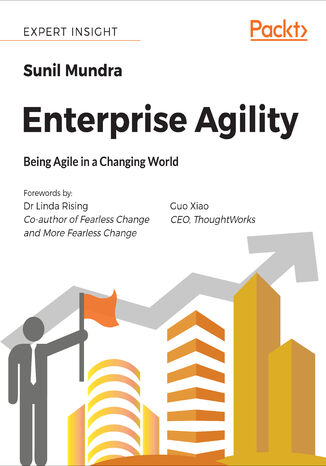
Enterprise Agility. Being Agile in a Changing World
Sunil Mundra
The biggest challenge enterprises face today is dealing with fast-paced change in all spheres of business. Enterprise Agility shows how an enterprise can address this challenge head on and thrive in the dynamic environment. Avoiding the mechanistic construction of existing enterprises that focus on predictability and certainty, Enterprise Agility delivers practical advice for responding and adapting to the scale and accelerating pace of disruptive change in the business environment.Agility is a fundamental shift in thinking about how enterprises work to effectively deal with disruptive changes in the business environment. The core belief underlying agility is that enterprises are open and living systems. These living systems, also known as complex adaptive systems (CAS), are ideally suited to deal with change very effectively.Agility is to enterprises what health is to humans. There are some foundational principles that can be broadly applied, but the definition of healthy is very specific to each individual. Enterprise Agility takes a similar approach with regard to agility: it suggests foundational practices to improve the overall health of the body—culture, mindset, and leadership—and the health of its various organs: people, process, governance, structure, technology, and customers. The book also suggests a practical framework to create a plan to enhance agility.