
Bezpieczeństwo systemów
Expert Angular. Build deep understanding of Angular to set you apart from the developer crowd
Sridhar Rao Chivukula
Got some experience of Angular under your belt? Want to learn everything about using advanced features for developing websites? This book is everything you need for the deep understanding of Angular that will set you apart from the developer crowd.Angular has introduced a new way to build applications. Creating complex and rich web applications, with a lighter resource footprint, has never been easier or faster. Angular is now at release 4, with significant changes through previous versions. This book has been written and tested for Angular release 4.Angular is a mature technology, and you'll likely have applications built with earlier versions. This book starts by showing you best practices and approaches to migrating your existing Angular applications so that you can be immediately up-to-date. You will take an in-depth look at components and see how to control the user journey in your applications by implementing routing and navigation. You will learn how to work with asynchronous programming by using Observables.To easily build applications that look great, you will learn all about template syntax and how to beautify applications with Material Design. Mastering forms and data binding will further speed up your application development time. Learning about managing services and animations will help you to progressively enhance your applications. Next you’ll use native directives to integrate Bootstrap with Angular. You will see the best ways to test your application with the leading options such as Jasmine and Protractor. At the end of the book, you’ll learn how to apply design patterns in Angular, and see the benefits they will bring to your development.
Atul Mistry
Expert AWS Development begins with theinstallation of the AWS SDK and you will goon to get hands-on experience of creatingan application using the AWS ManagementConsole and the AWS Command LineInterface (CLI). Then, you will integrateapplications with AWS services such asDynamoDB, Amazon Kinesis, AWS Lambda,Amazon SQS, and Amazon SWF.Following this, you will get well versed withCI/CD workflow and work with four majorphases in the release process – Source,Build, Test, and Production. Then, you willlearn to apply AWS Developer tools to yourContinuous Integration (CI) and ContinuousDeployment (CD) workflow. Later, youwill learn about user authentication usingAmazon Cognito, and also how you canevaluate the best architecture as per yourinfrastructure costs. You will learn aboutAmazon EC2 service and will deploy anapp using it. You will also deploy a practicalreal-world example of a CI/CD applicationwith the Serverless Application Framework,which is known as AWS Lambda.Finally, you will learn how to build, develop,and deploy the Application using AWSDeveloper tools such as AWS CodeCommit,AWS CodeBuild, AWS CodeDeploy, andAWS CodePipeline, as per your projectrequirements.
Exploring Experience Design. Fusing business, tech, and design to shape customer engagement
Ezra Schwartz
We live in an experience economy in which interaction with products is valued more than owning them. Products are expected to engage and delight in order to form the emotional bonds that forge long-term customer loyalty:Products need to anticipate our needs and perform tasks for us: refrigerators order food, homes monitor energy, and cars drive autonomously; they track our vitals, sleep, location, finances, interactions, and content use; recognize our biometric signatures, chat with us, understand and motivate us. Beautiful and easy to use, products have to be fully customizable to match our personal preferences.Accomplishing these feats is easier said than done, but a solution has emerged in the form of Experience design (XD), the unifying approach to fusing business, technology and design around a user-centered philosophy.This book explores key dimensions of XD: Close collaboration among interdisciplinary teams, rapid iteration and ongoing user validation. We cover the processes, methodologies, tools, techniques and best-practices practitioners use throughout the entire product development life-cycle, as ideas are transformed to into positive experiences which lead to perpetual customer engagement and brand loyalty.
William Confer, William Roberts
This book is intended for developers and engineers with some familiarity of operating system concepts as implemented by Linux. A basic background in C code would be helpful. Their positions range from hobbyists wanting to secure their Android powered creations to OEM engineers building handsets to engineers of emerging areas where Android is seeing growth.
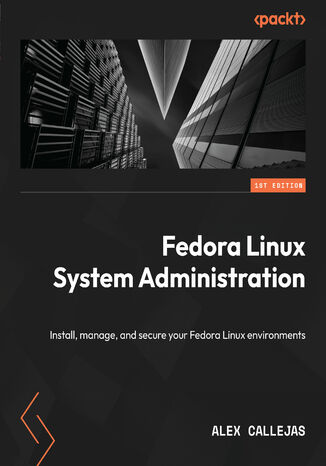
Fedora Linux System Administration. Install, manage, and secure your Fedora Linux environments
Alex Callejas
Fedora Linux is a free and open-source platform designed for hardware, clouds, and containers that enables software developers and community members to create custom solutions for their customers. This book is a comprehensive guide focusing on workstation configuration for the modern system administrator.The book begins by introducing you to the philosophy underlying the open-source movement, along with the unique attributes of the Fedora Project that set it apart from other Linux distributions. The chapters outline best practices and strategies for essential system administration tasks, including operating system installation, first-boot configuration, storage, and network setup. As you make progress, you’ll get to grips with the selection and usage of top applications and tools in the tech environment. The concluding chapters help you get a clear understanding of the basics of version control systems, enhanced Linux security, automation, virtualization, and containers, which are integral to modern system administration.By the end of this book, you’ll have gained the knowledge needed to optimize day-to-day tasks related to Linux-based system administration.

Carey Parker
Internet jest obecny w większości obszarów naszego życia. To już nie tylko korzystanie ze stron internetowych, ale także bankowość, zakupy w sieci czy podtrzymywanie relacji z rodziną i ze znajomymi. Oznacza to, że niemal cały czas Twoje bezpieczeństwo, pieniądze i prywatność są narażone na ataki. Aby skutecznie chronić siebie i swoich bliskich, musisz zdobyć pewne minimum wiedzy. Nie sposób obronić się przed naprawdę zdeterminowanym hakerem, ale ochrona przed pospolitymi włamaniami czy masową inwigilacją jest jak najbardziej możliwa, i to z wykorzystaniem prostych narzędzi. Trzeba tylko wiedzieć, jak się do tego zabrać! To przystępny i kompleksowy przewodnik po zagadnieniach bezpieczeństwa, skierowany do osób, które nie znają się na komputerach i informatyce. Kwestie cyberbezpieczeństwa przedstawiono tu krok po kroku, z minimalnym użyciem specjalistycznego języka. Opisano dziesiątki całkiem prostych sposobów pozwalających każdemu zabezpieczyć swoje urządzenia i dane. Książka została napisana tak, aby maksymalnie uprościć zarządzanie Twoim bezpieczeństwem w sieci. W każdym rozdziale znalazła się kompletna lista kontrolna ze szczegółowymi instrukcjami i rysunkami. Najważniejsze zagadnienia: zarządzanie hasłami dostępu blokowanie inwigilacji i śledzenia w internecie bezpieczne korzystanie z bankowości, ze sklepów i z serwisów społecznościowych bezpieczeństwo smartfona, tabletu i domowej sieci ochrona dzieci korzystających z internetu Nie musisz być informatykiem, by pamiętać o bezpieczeństwie!
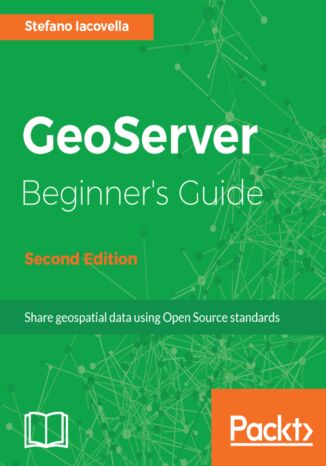
GeoServer Beginner's Guide. Share geospatial data using Open Source standards - Second Edition
Stefano Iacovella
GeoServer is an opensource server writtenin Java that allows users to share, process,and edit geospatial data. This book willguide you through the new featuresand improvements of GeoServer and willhelp you get started with it. GeoServerBeginner's Guide gives you the impetus tobuild custom maps using your data withoutthe need for costly commercial softwarelicenses and restrictions. Even if you donot have prior GIS knowledge, you will beable to make interactive maps after readingthis book.You will install GeoServer, access your datafrom a database, and apply style points,lines, polygons, and labels to impress sitevisitors with real-time maps. Then youfollow a step-by-step guide that installsGeoServer in minutes. You will explorethe web-based administrative interfaceto connect to backend data stores suchas PostGIS, and Oracle. Going ahead, youcan display your data on web-basedinteractive maps, use style lines, points,polygons, and embed images to visualizethis data for your web visitors. You willwalk away from this book with a workingapplication ready for production.After reading GeoServer Beginner's Guide,you will be able to build beautiful custommaps on your website using your geospatialdata.
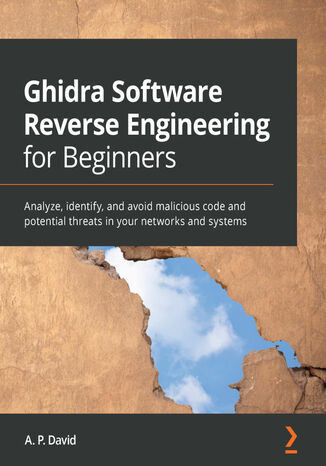
David Álvarez Pérez
Ghidra, an open source software reverse engineering (SRE) framework created by the NSA research directorate, enables users to analyze compiled code on any platform, whether Linux, Windows, or macOS. This book is a starting point for developers interested in leveraging Ghidra to create patches and extend tool capabilities to meet their cybersecurity needs.You'll begin by installing Ghidra and exploring its features, and gradually learn how to automate reverse engineering tasks using Ghidra plug-ins. You’ll then see how to set up an environment to perform malware analysis using Ghidra and how to use it in the headless mode. As you progress, you’ll use Ghidra scripting to automate the task of identifying vulnerabilities in executable binaries. The book also covers advanced topics such as developing Ghidra plug-ins, developing your own GUI, incorporating new process architectures if needed, and contributing to the Ghidra project.By the end of this Ghidra book, you’ll have developed the skills you need to harness the power of Ghidra for analyzing and avoiding potential vulnerabilities in code and networks.