
Bezpieczeństwo systemów
Ganesan Senthilvel, Ovais Mehboob Ahmed Khan, Habib...
If you want to design and develop enterprise applications using .NET Core as the development framework and learn about industry-wide best practices and guidelines, then this book is for you. The book starts with a brief introduction to enterprise architecture, which will help you to understand what enterprise architecture is and what the key components are. It will then teach you about the types of patterns and the principles of software development, and explain the various aspects of distributed computing to keep your applications effective and scalable. These chapters act as a catalyst to start the practical implementation, and design and develop applications using different architectural approaches, such as layered architecture, service oriented architecture, microservices and cloud-specific solutions. Gradually, you will learn about the different approaches and models of the Security framework and explore various authentication models and authorization techniques, such as social media-based authentication and safe storage using app secrets. By the end of the book, you will get to know the concepts and usage of the emerging fields, such as DevOps, BigData, architectural practices, and Artificial Intelligence.
Enterprise Cloud Security and Governance. Efficiently set data protection and privacy principles
Zeal Vora
Modern day businesses and enterprises are moving to the Cloud, to improve efficiency and speed, achieve flexibility and cost effectiveness, and for on-demand Cloud services. However, enterprise Cloud security remains a major concern because migrating to the public Cloud requires transferring some control over organizational assets to the Cloud provider. There are chances these assets can be mismanaged and therefore, as a Cloud security professional, you need to be armed with techniques to help businesses minimize the risks and misuse of business data.The book starts with the basics of Cloud security and offers an understanding of various policies, governance, and compliance challenges in Cloud. This helps you build a strong foundation before you dive deep into understanding what it takes to design a secured network infrastructure and a well-architected application using various security services in the Cloud environment.Automating security tasks, such as Server Hardening with Ansible, and other automation services, such as Monit, will monitor other security daemons and take the necessary action in case these security daemons are stopped maliciously. In short, this book has everything you need to secure your Cloud environment with. It is your ticket to obtain industry-adopted best practices for developing a secure, highly available, and fault-tolerant architecture for organizations.
Alessandro Segala
If you’re a software developer, this book will give you an introduction to cryptography, helping you understand how to make the most of it for your applications. The book contains extensive code samples in JavaScript, both for Node.js and for frontend apps running in a web browser, although the core concepts can be used by developers working with any programming language and framework.With a purely hands-on approach that is focused on sharing actionable knowledge, you’ll learn about the common categories of cryptographic operations that you can leverage in all apps you’re developing, including hashing, encryption with symmetric, asymmetric and hybrid ciphers, and digital signatures. You’ll learn when to use these operations and how to choose and implement the most popular algorithms to perform them, including SHA-2, Argon2, AES, ChaCha20-Poly1305, RSA, and Elliptic Curve Cryptography. Later, you’ll learn how to deal with password and key management. All code in this book is written in JavaScript and designed to run in Node.js or as part of frontend apps for web browsers.By the end of this book, you'll be able to build solutions that leverage cryptography to protect user privacy, offer better security against an expanding and more complex threat landscape, help meet data protection requirements, and unlock new opportunities.

Manoj P R
Ethereum and Blockchain will change the way software is built for business transactions. Most industries have been looking to leverage these new technologies to gain efficiencies and create new business models and opportunities.The Ethereum Cookbook covers various solutions such as setting up Ethereum, writing smart contracts, and creating tokens, among others. You’ll learn about the security vulnerabilities, along with other protocols of Ethereum.Once you have understood the basics, you’ll move on to exploring various design decisions and tips to make your application scalable and secure. In addition to this, you’ll work with various Ethereum packages such as Truffle, Web3, and Ganache.By the end of this book, you’ll have comprehensively grasped the Ethereum principles and ecosystem.
Rishalin Pillay, Mohammed Abutheraa
The Ethical Hacking Workshop will teach you how to perform ethical hacking and provide you with hands-on experience using relevant tools.By exploring the thought process involved in ethical hacking and the various techniques you can use to obtain results, you'll gain a deep understanding of how to leverage these skills effectively.Throughout this book, you'll learn how to conduct a successful ethical hack, how to use the tools correctly, and how to interpret the results to enhance your environment's security. Hands-on exercises at the end of each chapter will ensure that you solidify what you’ve learnt and get experience with the tools.By the end of the book, you'll be well-versed in ethical hacking and equipped with the skills and knowledge necessary to safeguard your enterprise against cyber-attacks.
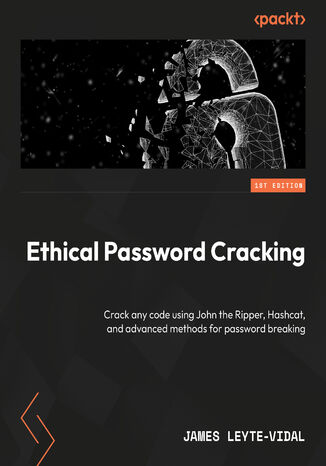
James Leyte-Vidal
Whether you’re looking to crack passwords as part of a thorough security audit or aiming to recover vital information, this book will equip you with the skills to accomplish your goals. Written by a cybersecurity expert with over fifteen years of experience in penetration testing, Ethical Password Cracking offers a thorough understanding of password protection and the correct approach to retrieving password-protected data.As you progress through the chapters, you first familiarize yourself with how credentials are stored, delving briefly into the math behind password cracking. Then, the book will take you through various tools and techniques to help you recover desired passwords before focusing on common cracking use cases, hash recovery, and cracking. Real-life examples will prompt you to explore brute-force versus dictionary-based approaches and teach you how to apply them to various types of credential storage.By the end of this book, you'll understand how passwords are protected and how to crack the most common credential types with ease.

Etyczne łamanie haseł. John the Ripper, hashcat i inne zaawansowane techniki
James Leyte-Vidal
Umiejętność łamania haseł przydaje się nie tylko przestępcom, ale również specjalistom do spraw bezpieczeństwa. Jest cenna w wielu sytuacjach, na przykład w razie konieczności odzyskania dostępu do systemu po odejściu użytkownika z firmy, w testowaniu penetracyjnym i w obszarze działalności zespołów czerwonych. W takich przypadkach próba złamania hasła ma udowodnić wysoki poziom mechanizmu kontroli dostępu albo jego nieskuteczność. Dzięki tej praktycznej książce dogłębnie zrozumiesz zagadnienia związane z ochroną haseł i odzyskiwaniem chronionych nimi danych. Rozpoczniesz od zapoznania się z zasadami przechowywania danych uwierzytelniających i matematycznymi podstawami technik łamania haseł. Następnie nauczysz się posługiwać różnymi narzędziami ułatwiającymi odzyskiwanie haseł, by potem zająć się typowymi przypadkami ich łamania, odzyskiwania skrótów i pokonywania zabezpieczeń. Przyjrzysz się działaniu metod siłowych i słownikowych, dowiesz się także, jak stosować je przy różnych sposobach przechowywania danych uwierzytelniających. Poszczególne zagadnienia zostały zilustrowane licznymi rzeczywistymi przykładami. Pod koniec lektury przekonasz się, że potrafisz z łatwością łamać najpopularniejsze typy danych uwierzytelniających. W książce między innymi: koncepcje łamania haseł i popularnych typów skrótów identyfikowanie, wyodrębnianie i łamanie skrótów haseł systemów Windows i macOS architektura WPA/WPA2 popularne menedżery haseł, takie jak KeePass, LastPass i 1Password formatowanie skrótów dla portfeli bitcoin, litecoin, Ethereum i ich łamanie Nie ma nic złego w łamaniu haseł, jeśli robisz to etycznie!
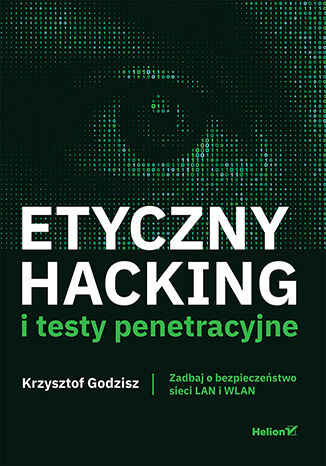
Etyczny hacking i testy penetracyjne. Zadbaj o bezpieczeństwo sieci LAN i WLAN
Krzysztof Godzisz
Twoja superbezpieczna sieć lokalna Lokalne sieci komputerowe LAN i bezprzewodowe sieci lokalne WLAN pozwalają łączyć ze sobą urządzenia elektroniczne w ograniczonym obszarze, jakim jest dom, biuro albo budynek. Połączone w ten sposób komputery stacjonarne, laptopy, drukarki, serwery współdzielą zasoby i są podłączone do internetu poprzez router, który zarządza ruchem sieciowym. Ze względu na to, że w ramach takich sieci dostępne są cenne, często wrażliwe dane, zagadnienie ich bezpieczeństwa to kwestia kluczowa zarówno z punktu widzenia administratora, jak i użytkownika. Na szczęście osoby administrujące siecią LAN czy WLAN nie pozostają bezradne wobec prób wyłudzania haseł i danych czy ataków polegających na przeciążeniu serwera. Można je w pewnym sensie uprzedzić i sprawdzić odporność sieci dzięki zastosowaniu metod etycznego hackingu. Ta książka stanowi kompleksowy podręcznik, dzięki któremu nie tylko dowiesz się, jak stworzyć własne laboratorium do testów penetracyjnych, ale też poznasz zagrożenia czyhające na Twoją sieć bezprzewodową i nauczysz się je rozpoznawać, a także im zapobiegać. Opinie o książce: Krzysztof to przede wszystkim pasjonat, który omawiane zagadnienia prezentuje na praktycznych przykładach. Przekazuje wiedzę w sposób przystępny dla początkujących, posługując się przy tym licznymi grafikami pozwalającymi jeszcze lepiej zrozumieć temat cyberbezpieczeństwa. Książka pomoże również uniknąć pewnych problemów z konfigurowaniem środowiska ― żałuję, że nie wyszła, kiedy byłem w technikum. Jeśli szukasz konkretnego poradnika, jak zacząć przygodę z bezpieczeństwem sieci od strony ofensywnej ― ta pozycja na pewno jest warta uwagi! Oskar Klimczuk, dziennikarz i pasjonat cyberbezpieczeństwa w technicznym wydaniu Merytorycznie i fachowo napisana książka. Zawiera opisane krok po kroku szczegóły wraz z licznymi grafikami, by nawet osoba początkująca mogła zgłębić tajniki testowania penetracyjnego i przekonać się, czy to coś dla niej. Karolina Matkowska, HR & Office Director i pasjonatka cyberbezpieczeństwa Jeśli chcesz poznać podstawy łamania zabezpieczeń sieci WLAN i LAN, to polecam zajrzeć do tej książki, przeczytać ją, zakupić adapter i ruszyć do, podkreślmy to, etycznego działania. Krzysztof Godzisz to człowiek o sporej wiedzy i warto się od niego uczyć ― nie tylko teorii i praktyki w zakresie zabezpieczeń sieci, lecz także podejścia do samego procesu łamania zabezpieczeń. W moim przypadku lektura ma jeszcze jeden, niespodziewany efekt uboczny ― poznawszy temat z perspektywy atakującego, przypuszczam, że niejeden jesienny i zimowy wieczór spędzę, zgłębiając temat i nieco reperując zabezpieczenia we własnej sieci. Tak na wszelki wypadek. Lena Sędkiewicz, programistka Połączenie warsztatowego charakteru, świadomej etyki i logicznej struktury. Książka jest naturalnym wyborem dla osób, które chcą naprawdę zrozumieć bezpieczeństwo sieci ― od fundamentów po praktykę. Artur Markiewicz, fascynat cyberbezpieczeństwa