
Bezpieczeństwo systemów
W kategorii Bezpieczeństwo systemów zebrano książki, które pomogą zabezpieczyć Wasze prywatne lub firmowe komputery przed programami szpiegującymi, atakami hakerów czy wirusami. Poznacie procedury i normy związane z profesjonalną ochroną informacji oraz procedury przeprowadzenia audytu bezpieczeństwa. Opanujecie zaawansowane techniki zapewniające bezpieczeństwo komputerów, niezależnie jaki system operacyjny został na nich zainstalowany. Jeżeli jesteście twórcami oprogramowania, to znajdziecie tutaj informacje jak skutecznie zabezpieczyć własne aplikacje przed crackerami i hackerami, oraz jak tworzyć bezpieczne w użytkowaniu programy czy aplikacje sieciowe.
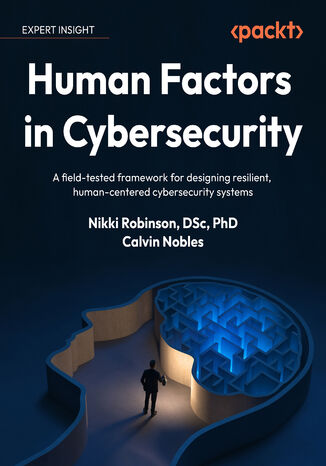
Nikki Robinson, Calvin Nobles, Chris Cochran
Cybersecurity isn’t just a technical problem; it’s a human one. Human Factors in Cybersecurity equips you to tackle today’s digital threats by designing systems that respect how cybersecurity professionals actually think, behave, and make decisions.Despite billions spent on advanced technologies, human behavior remains cybersecurity’s greatest vulnerability. This book shows how to design defenses that work with people, not against them. Blending cybersecurity operations expertise with human factors science, it reveals that security failures are not inevitable. They’re design failures. Inside, you’ll learn how to shift from user-blaming policies to human-centered security engineering. Discover how to predict and influence user behavior, design controls that support cognitive realities, and embed human factors strategies at scale. Through actionable frameworks, real-world examples, and clear guidance, you will learn to reduce errors, build trust, and design systems resilient to human limitations.Authored by experts in cybersecurity, machine learning, and human factors engineering, this book delivers the interdisciplinary insight needed to lead the shift toward systems that are not only secure but genuinely usable. It transforms human factors from cybersecurity’s biggest blind spot into its most powerful driver of resilience.
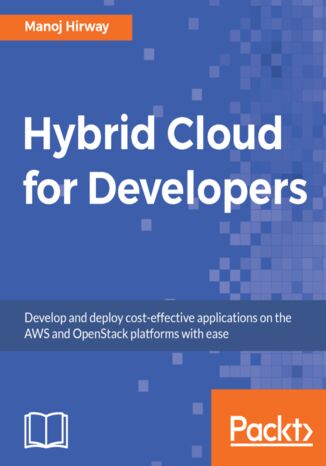
Manoj Hirway
This book introduces you to the hybrid cloud platform, and focuses on the AWS public cloud and OpenStack private cloud platforms. It provides a deep dive into the AWS and OpenStack cloud platform services that are essential for developing hybrid cloud applications. You will learn to develop applications on AWS and OpenStack platforms with ease by leveraging various cloud services and taking advantage of PaaS.The book provides you with the ability to leverage the ?exibility of choosing a cloud platform for migrating your existing resources to the cloud, as well as developing hybrid cloud applications that can migrate virtual machine instances from AWS to OpenStack and vice versa. You will also be able to build and test cloud applications without worrying about the system that your development environment supports.The book also provides an in-depth understanding of the best practices that are followed across the industry for developing cloud applications, as well as for adapting the hybrid cloud platform. Lastly, it also sheds light on various troubleshooting techniques for OpenStack and AWS cloud platform services that are consumed by hybrid cloud applications.By the end of this book, you will have a deep understanding of the hybrid cloud platform and will be able to develop robust, efficient, modular, scalable, and ?exible cloud applications.
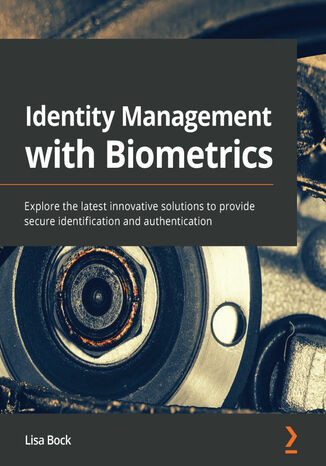
Lisa Bock
Biometric technologies provide a variety of robust and convenient methods to securely identify and authenticate an individual. Unlike a password or smart card, biometrics can identify an attribute that is not only unique to an individual, but also eliminates any possibility of duplication. Identity Management with Biometrics is a solid introduction for anyone who wants to explore biometric techniques, such as fingerprint, iris, voice, palm print, and facial recognition.Starting with an overview of biometrics, you’ll learn the various uses and applications of biometrics in fintech, buildings, border control, and many other fields. You’ll understand the characteristics of an optimal biometric system and then review different types of errors and discover the benefits of multi-factor authentication. You’ll also get to grips with analyzing a biometric system for usability and accuracy and understand the process of implementation, testing, and deployment, along with addressing privacy concerns. The book outlines the importance of protecting biometric data by using encryption and shows you which factors to consider and how to analyze them before investing in biometric technologies.By the end of this book, you’ll be well-versed with a variety of recognition processes and be able to make the right decisions when implementing biometric technologies.
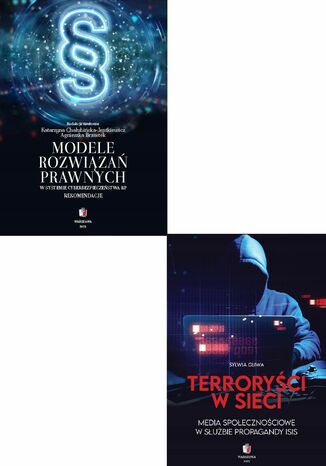
IDENTYFIKACJA I PRZECIWDZIAŁANIE ZAGROŻENIOM W CYBERPRZESTRZENI Pakiet 2 książki
Katarzyna Chałubińska-Jentkiewicz, Agnieszka Brzostek, Sylwia Gliwa
IDENTYFIKACJA I PRZECIWDZIAŁANIE ZAGROŻENIOM W CYBERPRZESTRZENI - Pakiet 2 książki 1) MODELE ROZWIĄZAŃ PRAWNYCH W SYSTEMIE CYBERBEZPIECZEŃSTWA RP Przedmiotem zainteresowania Autorów stało się interdyscyplinarnie postrzegane cyberbezpieczeństwo, zaś badaniom poddano prawne i organizacyjne rozwiązania na rzecz efektywnego przeciwdziałania oraz zwalczania niebezpiecznych zachowań w cyberprzestrzeni. Wyzwaniem badawczym stały się także relacje pomiędzy systemem cyberbezpieczeństwa a systemem prawa i związanym z tym działaniem organów władzy publicznej. Ważne zagadnienie stanowiła również analiza prawno-administracyjnych uregulowań w zakresie ochrony danych osobowych oraz ochrony informacji w cyberprzestrzeni, a także odpowiedzialności karnej za naruszenie dóbr podlegających przedmiotowej ochronie. Prof. dr hab. Waldemar KITLER, ASZWOJ Publikacja wpisuje się w aktualny nurt nauk o cyberbezpieczeństwie i jest interdyscyplinarna, tak samo jak pojęcie i system cyberbezpieczeństwa, obejmując swoim zakresem prawo publiczne i prywatne. Istotą i tym co odróżnia ją o innych dostępnych na rynku opracowań w zakresie systemu cyberbezpieczeństwa jest wskazanie przez każdego z Autorów rekomendacji w zakresie rozwoju określonych dziedzin prawa w systemie cyberbezpieczeństwa. dr hab. Jarosław Kostrubiec, prof. UMCS 2) TERRORYŚCI W SIECI. Media społecznościowe w służbie propagandy ISIS Jedną z istotnych cech współczesnego terroryzmu jest aktywne wykorzystanie nowoczesnych technologii informacyjnych do prowadzenia działań o charakterze propagandowym i dezinformacyjnym. Dotyczy to przede wszystkim mediów społecznościowych, które umożliwiają organizacjom terrorystycznym docieranie do odbiorców na masową skalę, przy czym krąg odbiorców obejmuje zarówno potencjalnych zwolenników i sympatyków, członków organizacji, jak też społeczeństw demokratycznych. Dlatego też podjęta w publikacji problematyka zasługuje na szczególną uwagę. Dr hab. Tomasz Aleksandrowicz Niesłychany rozwój technologiczny w obszarze komunikacji, jaki się dokonał w ciągu ostatnich dwóch - trzech dekad, z jednej strony został skonsumowany w obszarach rozwoju ekonomicznego, społecznego, bezpieczeństwa, a z drugiej strony stał się potężną bronią w rękach terrorystów. Docenili oni bowiem korzyści, jakie płyną z możliwości dotarcia do umysłów milionów ludzi na całym świecie, wykorzystując najnowsze zdobycze komunikacji elektronicznej w swojej działalności propagandowej. Niewątpliwie tzw. Państwo Islamskie stało się niesławnym liderem w posługiwaniu się narzędziem w aktywności propagandowej. Przeprowadzenie badań naukowych w tym obszarze należy postrzegać pozytywnie. Prof. dr hab. Kuba Jałoszyński
Matthew Nohr, Isaac Rabinovitch
AppFog is the leading platform-as-a-service provider of PHP, Ruby, Node.js, and Java solutions. It is used by developers worldwide to deploy tens of thousands of applications. AppFog delivers a reliable, scalable, and fast platform for deploying applications in the cloud.This book is a hands-on guide that will walk you through creating and deploying applications to the cloud using AppFog, which will allow you to get your application deployed without the hassle of setting up servers.This book demonstrates how to use the AppFog service to build an application and have it running in the Cloud. It will walk you through the initial AppFog setup process and explain how to create your first application in minutes.You will also discover how to use services such as databases to make your applications more powerful. You will also learn how to create applications from scratch.You will find out everything you need to know to get an application running in the cloud for the first time.
Florian Klaffenbach, Oliver Michalski, Markus Klein, Mohamed...
This Learning Path helps you understand microservices architecture and leverage various services of Microsoft Azure Service Fabric to build, deploy, and maintain highly scalable enterprise-grade applications. You will learn to select an appropriate Azure backend structure for your solutions and work with its toolkit and managed apps to share your solutions with its service catalog. As you progress through the Learning Path, you will study Azure Cloud Services, Azure-managed Kubernetes, and Azure Container Services deployment techniques. To apply all that you’ve understood, you will build an end-to-end Azure system in scalable, decoupled tiers for an industrial bakery with three business domains. Toward the end of this Learning Path, you will build another scalable architecture using Azure Service Bus topics to send orders between decoupled business domains with scalable worker roles processing these orders.By the end of this Learning Path, you will be comfortable in using development, deployment, and maintenance processes to build robust cloud solutions on Azure.This Learning Path includes content from the following Packt products:• Learn Microsoft Azure by Mohamed Wali• Implementing Azure Solutions - Second Edition by Florian Klaffenbach, Oliver Michalski, Markus Klein • Microservices with Azure by Namit Tanasseri and Rahul Rai
Mitesh Soni
This book will teach you all about the Visual Studio Team Services and Microsoft Azure PaaS offerings that support Continuous Integration, Continuous Delivery, Continuous Deployment, and execution in the cloud with high availability, disaster recovery, and security.You will first be given a tour of all the concepts and tools that Microsoft Azure has to offer and how these can be used in situations to cultivate the DevOps culture. You’ll be taught how to use and manage Visual Studio Team Services (VSTS) and about the structure of the sample application used throughout the book. You will become familiar with the nitty gritty of Continuous Integration and Continuous Development with VSTS and Microsoft Azure Apps. You will not only learn how to create App service environments, but also how to compare Azure Web Apps and App Service Environments to deploy web applications in a more secure environment.Once you have completed Continuous Integration and created the Platform for application deployment, you will learn more about the final stepping stone in achieving end-to-end automation using approval-based Continuous Delivery and Deployment. You will then learn about Continuous Monitoring, using the monitoring and notification options provided by Microsoft Azure and Visual Studio Team Services.
Vandana Verma Sehgal
DevSecOps is built on the idea that everyone is responsible for security, with the goal of safely distributing security decisions at speed and scale to those who hold the highest level of context. This practice of integrating security into every stage of the development process helps improve both the security and overall quality of the software. This book will help you get to grips with DevSecOps and show you how to implement it, starting with a brief introduction to DevOps, DevSecOps, and their underlying principles.After understanding the principles, you'll dig deeper into different topics concerning application security and secure coding before learning about the secure development lifecycle and how to perform threat modeling properly. You’ll also explore a range of tools available for these tasks, as well as best practices for developing secure code and embedding security and policy into your application. Finally, you'll look at automation and infrastructure security with a focus on continuous security testing, infrastructure as code (IaC), protecting DevOps tools, and learning about the software supply chain.By the end of this book, you’ll know how to apply application security, safe coding, and DevSecOps practices in your development pipeline to create robust security protocols.