
Programowanie w chmurze
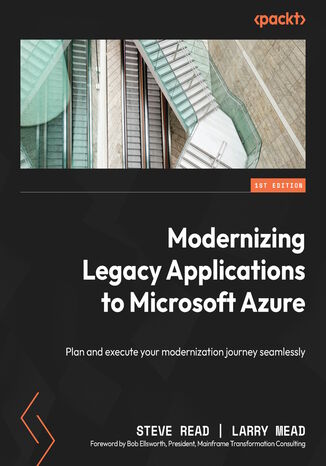
Steve Read, Larry Mead
Organizations have varying circumstances, objectives, and prerequisites when contemplating a hyper-scale cloud solution transformation to a platform such as Azure. Modernizing Legacy Applications to Microsoft Azure uncovers potential scenarios and provides choices, methodologies, techniques, and prospective possibilities for transitioning from legacy applications to the Microsoft Azure environment.You’ll start by understanding the legacy systems and the main concerns regarding migration. Then, you’ll investigate why distributed architectures are compelling and the various components of the Azure platform needed during migration. After that, you’ll explore the approaches to modernizing legacy applications and the Rs of modernizing (i.e., rehost, refactor, rearchitect, and retire). You’ll also learn about integration approaches and potential pitfalls.By the end of this book, you’ll be well equipped to modernize your legacy workloads while being aware of pitfalls and best practices.
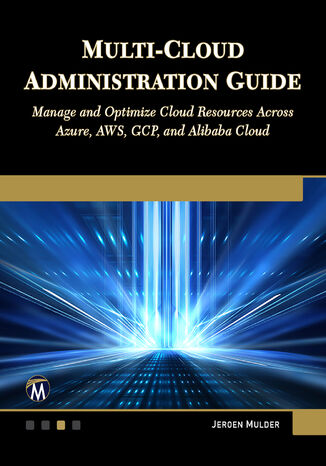
Mercury Learning and Information, Jeroen Mulder
This is a comprehensive resource designed for IT professionals and cloud architects navigating the complexities of multi-cloud environments. As organizations increasingly adopt multi-cloud strategies, this guide provides essential frameworks and practical insights into managing and optimizing cloud resources across major platforms, including AWS, Azure, GCP, and Alibaba Cloud.The book begins with an exploration of Cloud Adoption Frameworks (CAFs), offering a structured approach to cloud adoption that emphasizes governance, security, and operational excellence. Subsequent chapters delve into key aspects of cloud administration, such as virtualizing and managing connectivity, storage, and compute resources. The guide also addresses advanced topics like creating interoperability between clouds, managing data governance, and ensuring data security across multiple cloud platforms.In addition to technical insights, the guide covers critical areas like access management, cloud security, and compliance automation, equipping readers with the knowledge to secure and streamline multi-cloud operations. By offering best practices, real-world examples, and in-depth analyses, this book empowers professionals to efficiently manage multi-cloud environments and leverage the full potential of cloud technologies.
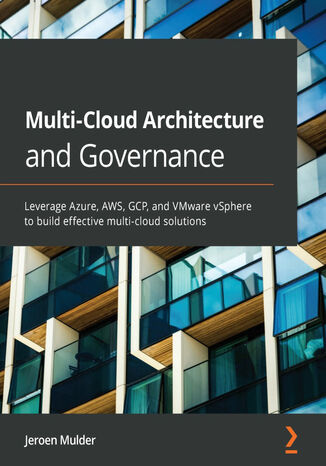
Jeroen Mulder
Multi-cloud has emerged as one of the top cloud computing trends, with businesses wanting to reduce their reliance on only one vendor. But when organizations shift to multiple cloud services without a clear strategy, they may face certain difficulties, in terms of how to stay in control, how to keep all the different components secure, and how to execute the cross-cloud development of applications. This book combines best practices from different cloud adoption frameworks to help you find solutions to these problems.With step-by-step explanations of essential concepts and practical examples, you’ll begin by planning the foundation, creating the architecture, designing the governance model, and implementing tools, processes, and technologies to manage multi-cloud environments. You’ll then discover how to design workload environments using different cloud propositions, understand how to optimize the use of these cloud technologies, and automate and monitor the environments. As you advance, you’ll delve into multi-cloud governance, defining clear demarcation models and management processes. Finally, you’ll learn about managing identities in multi-cloud: who’s doing what, why, when, and where.By the end of this book, you’ll be able to create, implement, and manage multi-cloud architectures with confidence
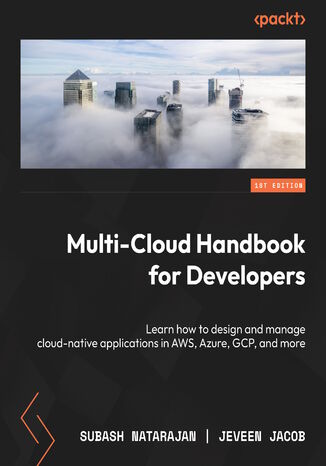
Subash Natarajan, Jeveen Jacob
Unleash the power of cloud computing with Multi-Cloud Handbook for Developers, your guide to mastering the nuances of cloud-native and multi-cloud, covering practical strategies for design, development, and management. Explore the essential concepts, challenges, and methodologies critical for navigating the complex landscape of modern cloud computing.Using core architectural and design principles (such as microservices and 12-factor architecture) and advanced strategies (such as distributed application design patterns, domain-driven design (DDD), and API-first strategies), you’ll learn how to build portable and efficient apps across various cloud platforms. You’ll understand how to leverage Infrastructure as Code (IaC), continuous integration and deployment (CI/CD), GitOps, and DevOps practices, along with containerization and orchestration techniques using Docker and Kubernetes. You’ll also get to grips with data, security, compliance, and cloud cost management strategies in multi-cloud environments.With real-world case studies, best practices, and insights into future trends, this book will equip you with the skills to develop, manage, troubleshoot, and innovate cloud-native applications across diverse cloud platforms, positioning you at the forefront of the cloud computing revolution.
Najlepsze praktyki w Kubernetes. Jak budować udane aplikacje
Brendan Burns, Eddie Villalba, Dave Strebel, Lachlan...
Systemy informatyczne oparte na chmurze stały się atrakcyjną alternatywą dla standardowej infrastruktury. Wymusiły jednak radykalne zmiany w praktykach tworzenia, wdrażania i utrzymywania aplikacji. Dziś uwaga profesjonalistów skupiona jest na Kubernetes, który w ciągu zaledwie kilku lat stał się faktycznym standardem wdrażania natywnej chmury. Aby tworzone aplikacje funkcjonowały wydajnie, bezawaryjnie i niezawodnie, warto wdrożyć i stosować wzorce i najlepsze praktyki. Konieczne jest również przemodelowanie sposobu pracy programistów. Ta książka jest przeznaczona dla profesjonalnych użytkowników Kubernetes, którzy chcą poznać wzorce i najlepsze praktyki przy wdrażaniu rzeczywistych rozwiązań. Znalazły się tu informacje o jego działaniu w różnych skalach, topologiach i domenach, a także liczne przykłady zastosowania omawianych technologii. Sporo miejsca poświęcono zagadnieniom projektowania aplikacji, konfiguracji i działania usług Kubernetes, a także ciągłej integracji i testowania aplikacji. Ważnym zagadnieniem są takie aspekty zarządzania klastrem jak przydzielanie zasobów, zapewnienie bezpieczeństwa czy autoryzacja i dostęp do klastra. Prezentowane treści zilustrowano fragmentami przejrzystego kodu, co dodatkowo zwiększa przydatność tej książki w pracy inżyniera. Najciekawsze zagadnienia: konfiguracja i projektowanie aplikacji w Kubernetes wzorce monitorowania i zarządzanie uaktualnieniami aplikacji wdrażanie i wycofywanie aplikacji Kubernetes polityka sieciowa i współpraca Kubernetes z architekturą Service Mesh platformy wysokiego poziomu na bazie Kubernetes Kubernetes i uczenie maszynowe Najlepsze praktyki w Kubernetes: poradzisz sobie z każdym wyzwaniem!
Mona M, Premkumar Rangarajan
Natural language processing (NLP) uses machine learning to extract information from unstructured data. This book will help you to move quickly from business questions to high-performance models in production.To start with, you'll understand the importance of NLP in today’s business applications and learn the features of Amazon Comprehend and Amazon Textract to build NLP models using Python and Jupyter Notebooks. The book then shows you how to integrate AI in applications for accelerating business outcomes with just a few lines of code. Throughout the book, you'll cover use cases such as smart text search, setting up compliance and controls when processing confidential documents, real-time text analytics, and much more to understand various NLP scenarios. You'll deploy and monitor scalable NLP models in production for real-time and batch requirements. As you advance, you'll explore strategies for including humans in the loop for different purposes in a document processing workflow. Moreover, you'll learn best practices for auto-scaling your NLP inference for enterprise traffic.Whether you're new to ML or an experienced practitioner, by the end of this NLP book, you'll have the confidence to use AWS AI services to build powerful NLP applications.
Rob Chapman, Peter Holmes
To overcome application monitoring and observability challenges, Grafana Labs offers a modern, highly scalable, cost-effective Loki, Grafana, Tempo, and Mimir (LGTM) stack along with Prometheus for the collection, visualization, and storage of telemetry data.Beginning with an overview of observability concepts, this book teaches you how to instrument code and monitor systems in practice using standard protocols and Grafana libraries. As you progress, you’ll create a free Grafana cloud instance and deploy a demo application to a Kubernetes cluster to delve into the implementation of the LGTM stack. You’ll learn how to connect Grafana Cloud to AWS, GCP, and Azure to collect infrastructure data, build interactive dashboards, make use of service level indicators and objectives to produce great alerts, and leverage the AI & ML capabilities to keep your systems healthy. You’ll also explore real user monitoring with Faro and performance monitoring with Pyroscope and k6. Advanced concepts like architecting a Grafana installation, using automation and infrastructure as code tools for DevOps processes, troubleshooting strategies, and best practices to avoid common pitfalls will also be covered.After reading this book, you’ll be able to use the Grafana stack to deliver amazing operational results for the systems your organization uses.
Kingston Smiler. S
This book is intended for network protocol developers, SDN controller application developers, and academics who would like to understand and develop their own OpenFlow switch or OpenFlow controller in any programming language. With basic understanding of OpenFlow and its components, you will be able to follow the recipes in this book.