
Programowanie w chmurze
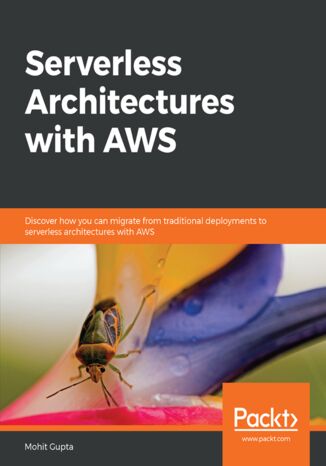
Mohit Gupta
Serverless Architecture with AWS begins with an introduction to the serverless model and helps you get started with AWS and Lambda. You'll also get to grips with other capabilities of the AWS Serverless Platform and see how AWS supports enterprise-grade serverless applications with and without Lambda.This book will guide you in deploying your first serverless project and exploring the capabilities of serverless Amazon Athena, an interactive query service that makes it easy to analyze data in Amazon Simple Storage Service (S3 Amazon) using standard SQL. You’ll also learn about AWS Glue, a fully managed ETL service that makes categorizing data easy and cost-effective. You'll study how Amazon Kinesis makes it possible to unleash the potential of real-time data insights and analytics with capabilities such as video streams, data streams, data firehose, and data analytics. Last but not least, you’ll be equipped to combine Amazon Kinesis capabilities with AWS Lambda to create lightweight serverless architectures.By the end of the book, you will be ready to create and run your first serverless application that takes advantage of the high availability, security, performance, and scalability of AWS.
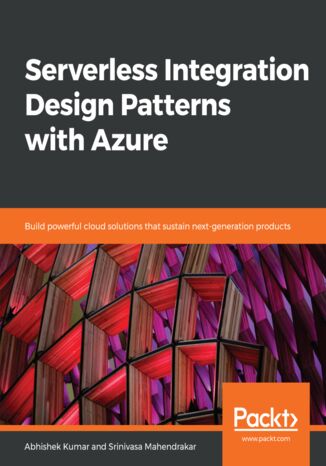
Abhishek Kumar, Srinivasa Mahendrakar
With more enterprises adapting cloud-based and API-based solutions, application integration has become more relevant and significant than ever before. Parallelly, Serverless Integration has gained popularity, as it helps agile organizations to build integration solutions quickly without having to worry about infrastructure costs. With Microsoft Azure’s serverless offerings, such as Logic Apps, Azure Functions, API Management, Azure Event Grid and Service Bus, organizations can build powerful, secure, and scalable integration solutions with ease.The primary objective of this book is to help you to understand various serverless offerings included within Azure Integration Services, taking you through the basics and industry practices and patterns. This book starts by explaining the concepts of services such as Azure Functions, Logic Apps, and Service Bus with hands-on examples and use cases. After getting to grips with the basics, you will be introduced to API Management and building B2B solutions using Logic Apps Enterprise Integration Pack.This book will help readers to understand building hybrid integration solutions and touches upon Microsoft Cognitive Services and leveraging them in modern integration solutions. Industry practices and patterns are brought to light at appropriate opportunities while explaining various concepts.
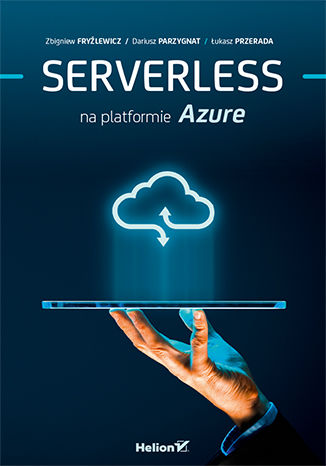
Serverless na platformie Azure
Zbigniew Fryźlewicz, Dariusz Parzygnat, Łukasz Przerada
Odkryj platformę Microsoft Azure i możliwości architektury serverless! Poznaj usługi FaaS oferowane przez platformę Azure Twórz skalowalne aplikacje w architekturze serverless Naucz się praktycznie wykorzystywać potencjał chmury Platformy chmurowe i oferowane przez nie usługi zdobyły serca całych rzesz programistów i inwestorów IT, którzy cenią sobie nie tylko ich wysoką skalowalność, niezawodność i bezpieczeństwo, lecz również stosunkowo niskie koszty, wygodę używania oraz możliwości szybkiego uruchamiania i udostępniania gotowych rozwiązań. Ostatnimi czasy szczególnie popularna jest architektura serverless, dzięki której tworzenie i wdrażanie wydajnych aplikacji sieciowych wymaga niewielkich nakładów pracy i jest możliwe w bardzo krótkim czasie. Jeśli chcesz od praktycznej strony poznać proces budowania i wdrażania aplikacji wykorzystującej usługi FaaS oferowane przez chmurę firmy Microsoft, sięgnij po książkę Serverless na platformie Azure. Bez zbędnych wstępów otworzy przed Tobą świat nowoczesnej architektury, umożliwiającej szybkie i łatwe wprowadzanie na rynek wydajnych, skalowalnych i łatwych w utrzymaniu aplikacji biznesowych. Dzięki lekturze poznasz kroki niezbędne do opracowania rozwiązania opartego na Azure Functions, realizacji przepływów za pomocą Durable Task Framework i integracji aplikacji z zewnętrznymi serwisami przy użyciu Azure Logic Apps. Dowiesz się też, jak monitorować rozwiązanie za pomocą usługi Application Insights. Zalety i ograniczenia architektury i przetwarzania serverless Tworzenie aplikacji opartej na Azure Functions Realizacja przepływów za pomocą Durable Functions Integracja z zewnętrznymi serwisami przy użyciu Azure Logic Apps Wdrożenie aplikacji za pomocą narzędzi CI/CD w ramach usługi Azure DevOps Testowanie aplikacji opartej na Azure Functions Monitorowanie rozwiązania za pomocą Application Insights Buduj, wdrażaj, oszczędzaj - pracuj wydajniej dzięki architekturze serverless!
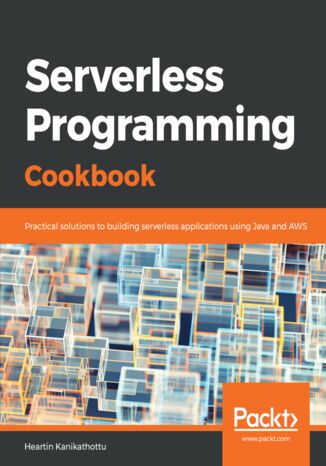
Heartin Kanikathottu
Managing physical servers will be a thing of the past once you’re able to harness the power of serverless computing. If you’re already prepped with the basics of serverless computing, Serverless Programming Cookbook will help you take the next step ahead. This recipe-based guide provides solutions to problems you might face while building serverless applications. You'll begin by setting up Amazon Web Services (AWS), the primary cloud provider used for most recipes. The next set of recipes will cover various components to build a Serverless application including REST APIs, database, user management, authentication, web hosting, domain registration, DNS management, CDN, messaging, notifications and monitoring. The book also introduces you to the latest technology trends such as Data Streams, Machine Learning and NLP. You will also see patterns and practices for using various services in a real world application. Finally, to broaden your understanding of Serverless computing, you'll also cover getting started guides for other cloud providers such as Azure, Google Cloud Platform and IBM cloud. By the end of this book, you’ll have acquired the skills you need to build serverless applications efficiently using various cloud offerings.
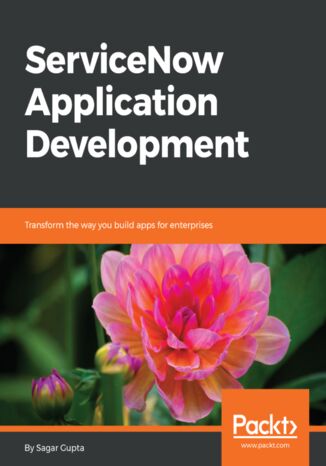
ServiceNow Application Development. Transform the way you build apps for enterprises
Sagar Gupta
ServiceNow provides service management for every department in the enterprise, including IT, Human Resources, Facilities, Field Service, and more.This book focuses on all the steps required to develop apps and workflows for any of your business requirements using ServiceNow. You will start with the first module, which covers the basics of ServiceNow and how applications are structured; how you can customize the dashboard as required; and also how to create users. After you get used to the dashboard, you will move on to the next module, Applications and Tables, where you will learn about working with different tables and how you can create a scope other than the global scope for your application. The next module is Scripting and APIs, where you will learn Scripting in ServiceNow and use powerful APIs to develop applications. The final module, Administration Essentials, covers debugging, advanced database features, and scheduled script creation.By the end of the book you will have mastered creating organized and customer-friendly applications
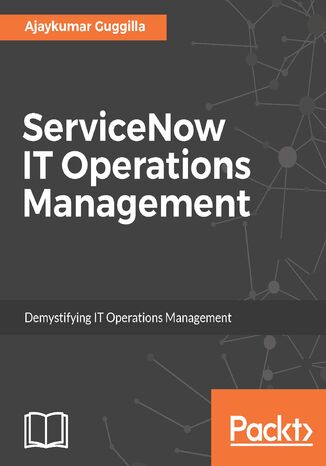
ServiceNow IT Operations Management. Demystifying IT Operations Management
Ajaykumar Guggilla, Andrew Pishchulin
ServiceNow ITOM enables infrastructure and processes to be managed in a highly automated manner. It contains various segments that ensure its applications and enterprise infrastructures are optimized for high performance and helps in creating a lean and agile organization through service?level visibility and automation.This book will be a comprehensive guide that will be based on Geneva release and will help you discover how IT activities can be connected to your business needs, rather than just focusing on internal IT process. It will take a service-centric approach to operations management and consolidate all your resource data into a single system IT record. You will learn about discovery, orchestration, MID server and cloud management, helping you take full advantage of ServiceNow IT Operations Management to improve the quality of service & increasing the service availability.By the end of the book, you will be able to achieve improved service availability, immediate visibility of vital business services and much more, all from the convenience of your single screen.
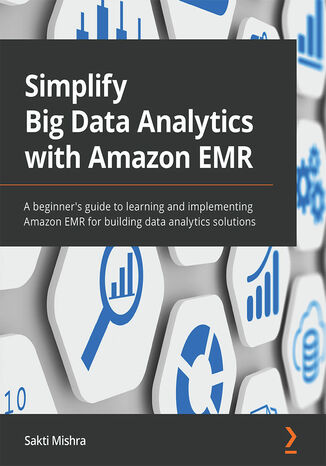
Sakti Mishra
Amazon EMR, formerly Amazon Elastic MapReduce, provides a managed Hadoop cluster in Amazon Web Services (AWS) that you can use to implement batch or streaming data pipelines. By gaining expertise in Amazon EMR, you can design and implement data analytics pipelines with persistent or transient EMR clusters in AWS.This book is a practical guide to Amazon EMR for building data pipelines. You'll start by understanding the Amazon EMR architecture, cluster nodes, features, and deployment options, along with their pricing. Next, the book covers the various big data applications that EMR supports. You'll then focus on the advanced configuration of EMR applications, hardware, networking, security, troubleshooting, logging, and the different SDKs and APIs it provides. Later chapters will show you how to implement common Amazon EMR use cases, including batch ETL with Spark, real-time streaming with Spark Streaming, and handling UPSERT in S3 Data Lake with Apache Hudi. Finally, you'll orchestrate your EMR jobs and strategize on-premises Hadoop cluster migration to EMR. In addition to this, you'll explore best practices and cost optimization techniques while implementing your data analytics pipeline in EMR.By the end of this book, you'll be able to build and deploy Hadoop- or Spark-based apps on Amazon EMR and also migrate your existing on-premises Hadoop workloads to AWS.
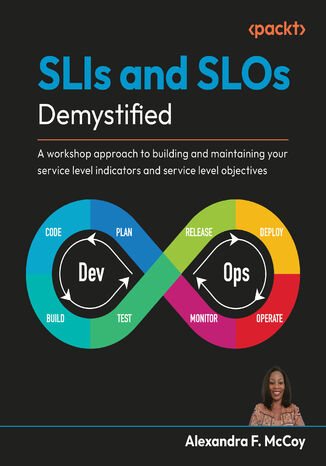
Alexandra F. McCoy
In today's digital landscape, ensuring service reliability is more than just a necessity—it’s a competitive advantage. SLIs and SLOs Demystified equips software engineers, SREs, and business leaders with the knowledge to build, measure, and manage service level indicators (SLIs) and service level objectives (SLOs) efficiently. Written by Alexandra F. McCoy—an experienced site reliability engineer with over a decade of experience in the cloud and technology industry—this book simplifies complex reliability concepts for engineers at all levels. Starting with a review of reliability engineering basics, Alexandra provides a step-by-step approach to defining impactful SLIs, facilitating productive SLO discussions, and integrating observability into your monitoring strategy. You'll also see how these principles apply to web applications, distributed systems, databases, and new features through real-world examples that can help you develop SLIs and SLOs for your specific environment. The book goes beyond implementation to explore the financial impact of reliability, alerting strategies, integration with incident management, and using error budgets for business decisions.By the end of this book, you’ll be able to drive operational excellence, minimize unplanned downtime, and optimize end user experiences with well-established reliability metrics.