
Sztuczna inteligencja
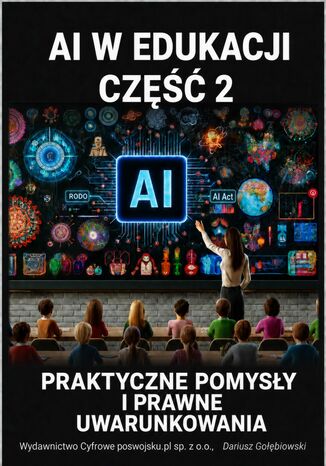
AI W EDUKACJI CZĘŚĆ 2 PRAKTYCZNE POMYSŁY PRAWNE UWARUNKOWANIA dla edukatorów i edukatorek
Dariusz Gołębiowski
Spis treści AI W EDUKACJI CZĘŚĆ 2 PRAKTYCZNE POMYSŁY PRAWNE UWARUNKOWANIA 2 NOTA WYDAWCY 3 SPIS TREŚCI 7 OD AUTORA 11 WPROWADZENIE: Od Warsztatu do Praktyki - Implementacja AI w Programie Nauczania 18 Rozdział 1 SCENARIUSZE IMPLEMENTACYJNE: AI W SERCU DYDYKTYKI 22 BIOLOGIA - Symulacje procesów żywotnych i wizualizacja mikroświata (Multimodalność) 29 CHEMIA - Cyfrowe laboratorium projektowe i modelowanie cząsteczek 30 ETYKA - Debata z AI: Analiza dylematów moralnych w świecie cyfrowym 31 FIZYKA - Eksperymenty myślowe i symulacje praw fizyki wspierane przez modele rozumujące 32 GEOGRAFIA - Dynamiczne mapowanie zmian klimatycznych i analizy terenowe 33 HISTORIA - Analiza źródeł w systemach RAG i konfrontacja z "cyfrowymi świadkami" 34 INFORMATYKA - Architektura agentów, kodowanie wspomagane przez AI i cyberbezpieczeństwo 35 JĘZYK OBCY - Imersja: Twój interaktywny partner do konwersacji w czasie rzeczywistym 36 JĘZYK POLSKI - Warsztat kreatywnego pisania i analizy tekstów literackich 37 MATEMATIKA - Rozwiązywanie złożonych problemów krok po kroku (Reasoning Steps) 38 MUZYKA - Produkcja dźwięku, kompozycja i analiza struktur muzycznych 39 PLASTYKA - Od wizji do obrazu: Projektowanie graficzne i koncepcje wizualne 40 PRZYRODA - Interaktywne odkrywanie ekosystemów (Wsparcie multimodalne) 41 TECHNIKA - Prototypowanie rozwiązań technicznych i inżynierii myśli 42 WIEDZA O SPOŁECZEŃSTWIE - Symulacje procesów społecznych i analiza danych publicznych 43 WYCHOWANIE FIZYCZNE - Analiza ruchu i personalizacja treningu wspomagana przez AI 44 ZAJĘCIA WYCHOWAWCZE - Budowanie odporności cyfrowej i etyki w sieci 45 Rozdział 2 ZAGROŻENIA I BEZPIECZEŃSTWO W ERZE INTELIGENCJI SZTUCZNEJ 46 RODO - Szkoła w ekosystemie danych cyfrowych 47 Wyzwania implementacyjne AI: Od narzędzia do odpowiedzialności 50 Zagrożenia systemowe i społeczne 54 Quo Vadis - bezmyślny człowieku? 56 Podsumowanie dla Edukatorki 57 Rozdział 3 STRATEGIE MINIMALIZACJI RYZYKA I MANIPULACJI W ŚRODOWISKU SZKOLNYM 58 Potencjał AI w służbie nauczyciela: od operacyjności do mentorstwa 62 Refleksja i pytania kontrolne 66 Podsumowanie 68 Pytania kontrolne 69 Rozdział 7 AI W ZARZĄDZANIU PLACÓWKĄ EDUKACYJNĄ 71 Rozdział 5 AI ACT - EDUKATOR: NAUCZYCIEL, DYREKTOR SZKOŁY, TRENER 75 AI ACT - stan prawny - podstawy 76 Co obowiązywało już wcześniej? 76 Co rzeczywiście zmieniło się 2 sierpnia 2026 r.? 77 Edukacja a AI 79 Czy zwykłe korzystanie z tzw. czata jest systemem wysokiego ryzyka? 79 Jakie systemy edukacyjne AI Act uznaje za wysokiego ryzyka? 80 Czy nauczyciel może zlecić AI ocenianie prac uczniów? 83 Zakaz rozpoznawania emocji w szkole 85 Obowiązek rozwijania kompetencji w zakresie AI 87 Dane uczniów a RODO 89 Czy nauczyciel musi oznaczać materiały przygotowane z pomocą AI? 91 Tekst 91 Obraz, dźwięk i film 92 Czego AI Act nie wprowadza w szkole? 93 Rozdział 6 CZY AI MOŻE ZASTĄPIĆ NAUCZYCIELA? (Perspektywa 2026+) 95 Rozdział 7 INTERDYSCYPLINARNE PROJEKTY EDUKACYJNE Z WYKORZYSTANIEM AI 97 PROJEKT 1. BIOLOGIA I INFORMATYKA - Biochemiczne śledztwo z Godot Engine i profesorem kodowania AI 98 Tytuł projektu 98 Główna idea 98 Cele 99 Organizacja pracy 99 Przebieg projektu 100 AI w projekcie 100 Ocena i rezultat 101 PROJEKT 2. HISTORIA, JĘZYK POLSKI I PLASTYKA - Śledztwo w archiwum pamięci 102 Tytuł projektu 102 Główna idea 102 Cele 103 Organizacja pracy 103 Przebieg projektu 103 AI w projekcie 104 Ocena i rezultat 105 PROJEKT 3. GEOGRAFIA, MATEMATYKA I WIEDZA O SPOŁECZEŃSTWIE - Miasto odporne na falę upałów 106 Tytuł projektu 106 Główna idea 106 Cele 107 Organizacja pracy 107 Przebieg projektu 108 AI w projekcie 109 Ocena i rezultat 109 Wspólne zasady bezpiecznej pracy z AI 110 Słowniczek najważniejszych pojęć związanych ze sztuczną inteligencją 111 1. Modele wielomodalne - LMM 112 2. Modele rozumujące - Reasoning Models 115 3. RAG - Retrieval-Augmented Generation 118 4. Agentic Workflows - przepływy agentowe 122 5. Bias - stronniczość lub obciążenie modelu 124 6. Modele głosowe - Voice AI 126 7. Modele generatywne obrazów 128 Pojęcia uzupełniające 130 PODSUMOWANIE 132 PODZIĘKOWANIA 135 📚 Poznaj inne książki poswojsku.pl 137 🎓 Szkolenia i Webinary 141 🌟 Zostańmy w kontakcie! 143 Prawa autorskie i znaki towarowe 145

AI w rękach sprzedawcy. Jak zwiększyć efektywność sprzedaży i zdominować rynek
Jeb Blount, Anthony Iannarino
Oto czas przełomu. Należysz do pierwszego pokolenia, które ma dostęp do sztucznej inteligencji. Równocześnie żyjesz w czasach gwałtownych zmian. To oznacza, że nie możesz zachłysnąć się AI i w pełni zautomatyzować procesu sprzedaży. W erze sztucznej inteligencji relacje międzyludzkie przynoszą jeszcze większą przewagę konkurencyjną. Jeśli jednak nie wdrożysz potrzebnych narzędzi AI, szybko zostaniesz w tyle. Poznaj perspektywę prawdziwych liderów sprzedaży zarządzających najlepszymi zespołami na świecie! Will Frattini, dyrektor, ZoomInfo Dzięki tej praktycznej książce dowiesz się, w czym konkretnie może Ci pomóc AI. Nauczysz się automatyzować nudne, powtarzalne zadania, przeprowadzać rozległe analizy i badania, budować pipeline sprzedażowy, tworzyć skuteczne komunikaty, które wyróżnią się na tle konkurencji, a także skracać cykl sprzedaży. Poznasz również sprytne techniki generowania promptów, które pomogą Ci uzyskiwać najlepsze możliwe wyniki. Szybko się przekonasz, że w tym nowym świecie innowacji AI możesz budować głębsze relacje międzyludzkie, a to z kolei niezawodnie przełoży się na imponującą efektywność sprzedaży. Wiedza zawarta w książce ułatwi Ci zdobycie przewagi przy użyciu tej przełomowej technologii! Przełomowa książka dla specjalistów w dziedzinie sprzedaży, którzy chcą wyprzedzić konkurencję w dynamicznym świecie! Bernie Weiss, prezes oddziału iHeartMedia
AI w tłumaczeniach. Automatyzacja procesu przekładu w dobie sztucznej inteligencji
Łukasz Bogucki
Tłumaczenia technologicznie doładowane Branża tłumaczeniowa przeżywa w ostatnich kilku latach prawdziwą rewolucję. Jest ona związana z rozwojem technologii tłumaczeń wspomaganych komputerowo (CAT) i sztucznej inteligencji (AI). I choć wielu tłumaczy zerka z obawą szczególnie w stronę tej drugiej, obawiając się, że AI odbierze im pracę, znacznie lepiej (i efektywniej) jest potraktować oba narzędzia właśnie jako narzędzia - ułatwiające i usprawniające proces tłumaczenia tekstu. Jeśli chcesz się dowiedzieć, jak te dwie technologie mogą wspomóc lub zmienić Twoją pracę, sięgnij po tę książkę. Dowiesz się, na czym faktycznie polega rola tłumacza w pracy nad przekładem Poznasz historyczne początki tłumaczeń wspomaganych technologiami cyfrowymi Zrozumiesz zasadę działania narzędzi mogących przyspieszyć i usprawnić Twoją pracę Zastanowisz się nad tym, jaka przyszłość czeka branżę, którą właśnie opanowuje generatywna sztuczna inteligencja
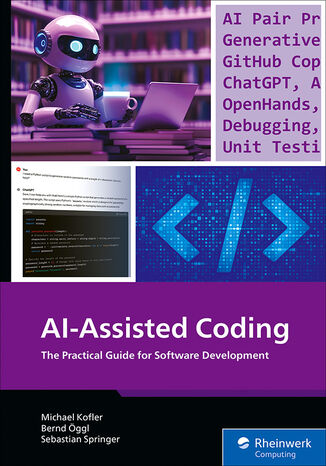
AI-Assisted Coding. Enhancing Programming with AI Tools and Techniques
Rheinwerk Publishing, Inc, Michael Kofler, Bernd Öggl,...
This book takes programmers through the process of enhancing their workflow using AI tools. It begins by introducing the basics of coding with AI assistants, such as GitHub Copilot and ChatGPT, and shows how these tools can assist in writing and optimizing code. The next section focuses on using AI in debugging, refactoring, and generating software documentation, helping readers master techniques for coding with AI support. Pair programming with AI is explored in detail, with practical examples demonstrating its real-world applications. The book also dives into advanced tools like Ollama and Aider, giving readers the knowledge to build local language models and integrate them into their development workflows. The final chapters highlight how AI can be incorporated into projects, enabling more efficient, innovative coding processes. By the end of the book, readers will have the necessary skills to use AI-powered tools seamlessly, ultimately improving their programming productivity and broadening their AI integration capabilities.
AI-Native LLM Security. Threats, defenses, and best practices for building safe and trustworthy AI
Vaibhav Malik, Ken Huang, Ads Dawson
Adversarial AI attacks present a unique set of security challenges, exploiting the very foundation of how AI learns. This book explores these threats in depth, equipping cybersecurity professionals with the tools needed to secure generative AI and LLM applications. Rather than skimming the surface of emerging risks, it focuses on practical strategies, industry standards, and recent research to build a robust defense framework.Structured around actionable insights, the chapters introduce a secure-by-design methodology, integrating threat modeling and MLSecOps practices to fortify AI systems. You’ll discover how to leverage established taxonomies from OWASP, NIST, and MITRE to identify and mitigate vulnerabilities. Through real-world examples, the book highlights best practices for incorporating security controls into AI development life cycles, covering key areas such as CI/CD, MLOps, and open-access LLMs.Built on the expertise of its co-authors—pioneers in the OWASP Top 10 for LLM applications—this guide also addresses the ethical implications of AI security, contributing to the broader conversation on trustworthy AI. By the end of this book, you’ll be able to develop, deploy, and secure AI technologies with confidence and clarity.*Email sign-up and proof of purchase required
Abhijit Dey, Srinivasan Shanmuganathan, David Roldán Martínez
In today’s FinTech landscape, AI is no longer optional, it’s non-negotiable. And it’s not here to replace product managers, but to enhance their skills and amplify their impact. This book is a comprehensive guide for product managers and FinTech innovators looking to harness generative AI and LLMs in financial services. As the industry moves beyond traditional apps into AI-driven platforms, this book offers a practical blueprint for building trust and driving innovation in a rapidly evolving landscape shaped by generative AI.Unlike other FinTech books that lean towards theory, this guide provides actionable, real-world insights. It covers foundational AI-first principles, offers deep dives into key FinTech verticals through success-and-failure case studies, and explores platform scaling and agentic AI. Each chapter centers on real scenarios including a FinTech startup case study to illustrate frameworks and best practices. You’ll learn to integrate AI responsibly, navigate regulatory hurdles, and design customer-centric, data-driven financial products. You’ll equip yourself with the practical tools and templates to confidently innovate within regulatory boundaries.By the end, you’ll be ready to design and scale AI-driven financial products, positioning yourself as a forward-thinking product leader in the AI-first FinTech era.

Algorytmy sztucznej inteligencji. Ilustrowany przewodnik
Rishal Hurbans
Sztuczna inteligencja ma umożliwiać wykorzystywanie danych i algorytmów do podejmowania lepszych decyzji, rozwiązywania trudnych problemów i automatyzowania złożonych zadań. Ma też zwiększać produktywność człowieka. Obecnie sztuczna inteligencja z rozmachem wkracza do kolejnych dziedzin. Budzi zachwyt, ale też kontrowersje i obawy. Nowe narzędzia, choćby były tworzone z najlepszymi intencjami, zawsze mogą zostać wykorzystane w niewłaściwy czy szkodliwy sposób. Oznacza to, że każdy, kto rozwija nowe technologie, powinien to robić odpowiedzialnie. Aby to było możliwe, trzeba dobrze zrozumieć podstawy działania sztucznej inteligencji - algorytmy. To praktyczny przewodnik po algorytmach sztucznej inteligencji. Skorzystają z niego programiści i inżynierowie, którzy chcą zrozumieć zagadnienia i algorytmy związane ze sztuczną inteligencją na podstawie praktycznych przykładów i wizualnych wyjaśnień. Książka pokazuje, jak radzić sobie z takimi zadaniami programistycznymi jak wykrywanie oszustw bankowych czy sterowanie pojazdem autonomicznym. Pierwsze rozdziały dotyczą podstawowych koncepcji i algorytmów i stają się punktem wyjścia do bardziej złożonych tematów: wydajnych algorytmów przeszukiwania oraz poszukiwania rozwiązań w środowisku konkurencyjnym. Przedstawiono tu zagadnienia uczenia maszynowego, w tym proces przygotowania danych, modelowania i testowania. Omówiono też zasady uczenia przez wzmacnianie za pomocą algorytmu Q-learning. W książce: kategorie i znaczenie algorytmów sztucznej inteligencji. inteligentne przeszukiwanie w procesie podejmowania decyzji algorytmy genetyczne i inteligencja rozproszona uczenie maszynowe i sieci neuronowe uczenie przez wzmacnianie Zrozum algorytmy, a pojmiesz istotę sztucznej inteligencji!
Analityka rozszerzona. Automatyzacja i sztuczna inteligencja w podejmowaniu decyzji
Willi Weber, Tobias Zwingmann
Niepowodzenia biznesowe można różnie tłumaczyć, jeśli jednak od szukania wymówek wolisz zapewnić sukces swojej firmie, przemyśl sposób, w jaki korzystasz z analizy danych. Poprzez rozszerzenie możliwości i poprawę jakości analiz otworzysz sobie drzwi do podejmowania najbardziej racjonalnych decyzji - decyzji opartych na wnioskach. W tej książce znajdziesz przejrzystą, praktyczną i kompletną ścieżkę, która doprowadzi Twoją firmę do analitycznej doskonałości! Dzięki lekturze zdobędziesz wiedzę potrzebną do skutecznego wykorzystywania informacji w realizacji celów biznesowych. Jeśli dostrzegasz ograniczenia tradycyjnych metod interpretacji danych, docenisz opisaną tu dynamiczną i realistyczną strategię zwiększania możliwości analitycznych. Dowiesz się, jak wprowadzić inteligentną automatyzację i nowoczesną sztuczną inteligencję, co umożliwi podejmowanie lepszych decyzji w Twoim zespole. Najważniejsze zagadnienia: rozszerzona analityka, jej zalety i potencjalne ograniczenia najlepsze praktyki w dziedzinie implementacji rozszerzonej analityki w firmie role analityczne, przepływy pracy, potrzebne narzędzia i umiejętności korzystanie z danych, a także budowanie zaufania i dostępności analiza przypadków posłużenia się rozszerzoną analityką jako czynnikiem wspierającym Oto drogowskaz dla organizacji, która chce bazować na danych w erze sztucznej inteligencji! Donald Farmer, właściciel firmy TreeHive Strategy
Android: Game Programming. A Developer's Guide
Raul Portales, John Horton
Gaming has historically been a strong driver of technology, whether we’re talking about hardware or software performance, the variety of input methods, or graphics support and the Android game platform is no different. Android is a mature, yet still growing, platform that many game developers have embraced as it provides tools, APIs, and services to help bootstrap Android projects and ensure their success, many of which are specially designed to help game developers.Since Android uses one of the most popular programming languages, Java, as the primary language to build apps of all types, you will start this course by first obtaining a solid grasp of the Java language and its foundation APIs. This will improve your chances of succeeding as an Android app developer. We will show you how to get your Android development environment set up and you will soon have your first working game.The course covers all the aspects of game development through various engrossing and insightful game projects. You will learn all about frame-by-frame animations and resource animations using a space shooter game, create beautiful and responsive menus and dialogs, and explore the different options to play sound effects and music in Android. You will also learn the basics of creating a particle system and will see how to use the Leonids library. By the end of the course, you will be able to configure and use Google Play Services on the developer console and port your game to the big screen.This Learning Path combines some of the best that Packt has to offer in one complete, curated package. It includes content from the following Packt products:? Learning Java by Building Android Games by John Horton? Android Game Programming by Example by John Horton? Mastering Android Game Development by Raul Portales
Mercury Learning and Information, Oswald Campesato
As part of the Pocket Primer series, this book introduces basic deep learning concepts and integrates them into Angular 10 applications. It offers a fast-paced introduction to deep learning features and popular classifiers. Covering Angular 10 functionality, deep learning concepts, and key classification algorithms, the book includes code samples and figures. Topics such as TensorFlow and Keras are also explored.The book begins with an introduction to AI and its applications, followed by state space search and heuristic search strategies. You will delve into expert systems, their development life cycle, knowledge acquisition, and representation. These topics lead to a deeper understanding of neural networks, the learning process, and fuzzy logic systems, ensuring a comprehensive grasp of AI and deep learning principles.Understanding these concepts is essential for developing sophisticated AI applications and enhancing Angular 10 projects. This book transitions you from a novice to a proficient developer, equipped with practical skills and knowledge. Advanced topics like fuzzy expert systems and logic programming are covered, culminating in advanced Prolog. Companion files with source code and color figures enhance the learning experience, making this book an invaluable resource for integrating deep learning with Angular 10.
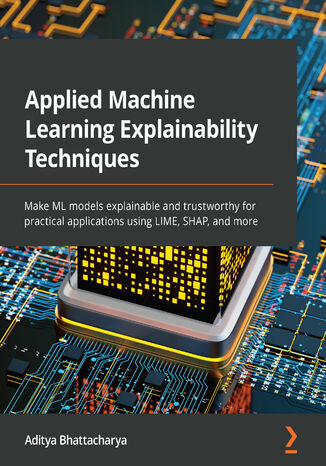
Aditya Bhattacharya
Explainable AI (XAI) is an emerging field that brings artificial intelligence (AI) closer to non-technical end users. XAI makes machine learning (ML) models transparent and trustworthy along with promoting AI adoption for industrial and research use cases.Applied Machine Learning Explainability Techniques comes with a unique blend of industrial and academic research perspectives to help you acquire practical XAI skills. You'll begin by gaining a conceptual understanding of XAI and why it's so important in AI. Next, you'll get the practical experience needed to utilize XAI in AI/ML problem-solving processes using state-of-the-art methods and frameworks. Finally, you'll get the essential guidelines needed to take your XAI journey to the next level and bridge the existing gaps between AI and end users.By the end of this ML book, you'll be equipped with best practices in the AI/ML life cycle and will be able to implement XAI methods and approaches using Python to solve industrial problems, successfully addressing key pain points encountered.
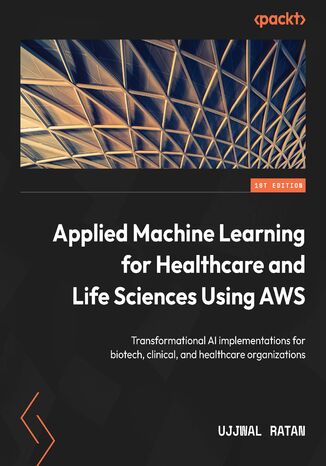
Ujjwal Ratan
While machine learning is not new, it's only now that we are beginning to uncover its true potential in the healthcare and life sciences industry. The availability of real-world datasets and access to better compute resources have helped researchers invent applications that utilize known AI techniques in every segment of this industry, such as providers, payers, drug discovery, and genomics.This book starts by summarizing the introductory concepts of machine learning and AWS machine learning services. You’ll then go through chapters dedicated to each segment of the healthcare and life sciences industry. Each of these chapters has three key purposes -- First, to introduce each segment of the industry, its challenges, and the applications of machine learning relevant to that segment. Second, to help you get to grips with the features of the services available in the AWS machine learning stack like Amazon SageMaker and Amazon Comprehend Medical. Third, to enable you to apply your new skills to create an ML-driven solution to solve problems particular to that segment. The concluding chapters outline future industry trends and applications.By the end of this book, you’ll be aware of key challenges faced in applying AI to healthcare and life sciences industry and learn how to address those challenges with confidence.
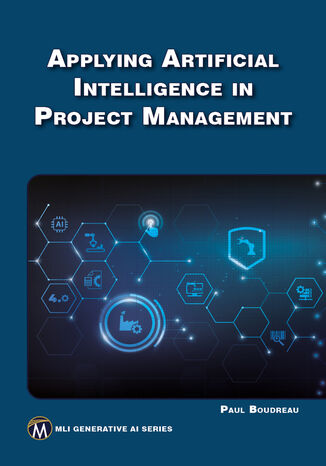
Mercury Learning and Information, Paul Boudreau
Artificial intelligence is reshaping the way projects are managed, offering unprecedented opportunities to improve efficiency, accuracy, and outcomes. This course begins with an introduction to AI’s role in project management, exploring how machine learning, natural language processing, and predictive algorithms can transform traditional approaches. You’ll learn about the key components of AI-driven projects and how to develop a strong business case for adopting these innovations.As you progress, the course delves into practical applications of AI in automating project tasks, analyzing data, and predicting results. Participants will gain hands-on experience with tools that leverage machine learning to forecast project success, improve productivity, and resolve potential failures. Additionally, you’ll discover how generative AI and large language models can enhance communication, planning, and decision-making throughout the project lifecycle.Finally, the course examines the broader implications of integrating AI into project management. You’ll explore strategies for acquiring AI solutions, implementing them within teams, and navigating the ethical challenges they present. By the end of the course, participants will have a clear understanding of how to leverage AI to optimize projects and stay competitive in a rapidly evolving technological landscape.
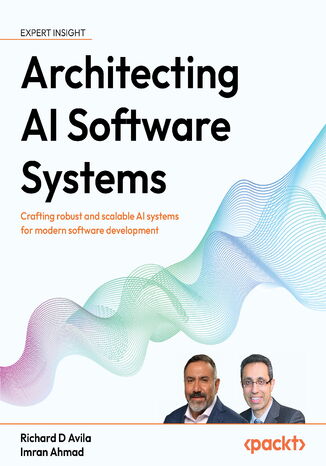
Richard D Avila, Imran Ahmad
Architecting AI Software Systems provides a definitive guide to building AI-enabled systems, emphasizing the balance between AI’s capabilities and traditional software architecture principles.As AI technologies gain widespread acceptance and are increasingly expected in future applications, this book provides architects and developers with the essential knowledge to stay competitive. It introduces a structured approach to mastering the complexities of AI integration, covering key architectural concepts and processes critical to building scalable and robust AI systems while minimizing development and maintenance risks. The book guides readers on a progressive journey, using real-world examples and hands-on exercises to deepen comprehension. It also includes the architecture of a fictional AI-enabled system as a learning tool. You will engage with exercises designed to reinforce your understanding and apply practical insights, leading to the development of key architectural products that support AI systems. This is an essential resource for architects seeking to mitigate risks and master the complexities of AI-enabled system development.By the end of the book, readers will be equipped with patterns, strategies and concepts necessary to architect AI-enabled systems across various domains.
Lars Malmqvist
Written for Salesforce architects who want quickly implementable AI solutions for their business challenges, Architecting AI Solutions on Salesforce is a shortcut to understanding Salesforce Einstein’s full capabilities – and using them.To illustrate the full technical benefits of Salesforce’s own AI solutions and components, this book will take you through a case study of a fictional company beginning to adopt AI in its Salesforce ecosystem. As you progress, you'll learn how to configure and extend the out-of-the-box features on various Salesforce clouds, their pros, cons, and limitations. You'll also discover how to extend these features using on- and off-platform choices and how to make the best architectural choices when designing custom solutions. Later, you'll advance to integrating third-party AI services such as the Google Translation API, Microsoft Cognitive Services, and Amazon SageMaker on top of your existing solutions. This isn’t a beginners’ Salesforce book, but a comprehensive overview with practical examples that will also take you through key architectural decisions and trade-offs that may impact the design choices you make.By the end of this book, you'll be able to use Salesforce to design powerful tailor-made solutions for your customers with confidence.
Artificial Intelligence and Expert Systems. Techniques and Applications for Problem Solving
Mercury Learning and Information, I. Gupta, G....
This book covers current AI applications and techniques for solving problems and accomplishing tasks. It introduces branches of AI such as formal logic, reasoning, knowledge engineering, expert systems, neural networks, and fuzzy logic. It emphasizes expert systems, with sections on state space search, knowledge engineering, neural networks, fuzzy logic, and Prolog.It begins with an introduction to AI and its applications, setting the stage for foundational concepts. Readers are guided through state space search and heuristic search strategies, crucial for problem-solving in AI. The focus shifts to expert systems, covering their development life cycle, knowledge acquisition, and representation, providing a deep dive into emulating human decision-making.Later chapters cover neural networks and the learning process, essential for creating adaptive systems. Sections on fuzzy logic and fuzzy systems introduce methods for handling uncertainty in AI. Final chapters on programming in logic and advanced Prolog offer practical techniques for AI solutions. This approach equips readers with the skills to apply AI in various domains, enhancing their problem-solving abilities and understanding of intelligent systems.