
Sztuczna inteligencja
Artificial Intelligence Basics. A Self-Teaching Introduction
Mercury Learning and Information, N. Gupta, R....
This book is designed as a self-teaching introduction to the fundamental concepts of artificial intelligence (AI). It begins with the history of AI, the Turing test, and early applications, providing a strong foundation. Later chapters cover the basics of searching, game playing, and knowledge representation. The journey continues with detailed explorations of expert systems and machine learning, equipping readers with essential AI techniques.As the course progresses, you will delve into separate programming chapters on Prolog and Python, learning how to implement AI concepts in these languages. These chapters offer practical coding experience, enhancing your understanding of AI programming. The book culminates with a comprehensive chapter on AI machines and robotics, showcasing numerous modern applications and providing a glimpse into the future of AI technology.Understanding these AI concepts is crucial as they form the basis of many modern technologies and applications. This book ensures a smooth transition from a beginner to a proficient AI practitioner, equipped with both theoretical knowledge and practical skills. By the end of the book, you will have a thorough understanding of AI's history, core principles, and practical implementations, ready to apply this knowledge to real-world problems and projects.
Artificial Intelligence Engines. A Tutorial Introduction to the Mathematics of Deep Learning
James V Stone
This book is a comprehensive guide to the mathematics behind artificial intelligence engines, taking readers from foundational concepts to advanced applications. It begins with an introduction to artificial neural networks, exploring topics like perceptrons, linear associative networks, and gradient descent. Practical examples accompany each chapter, making complex mathematical principles accessible, even for those with limited prior knowledge.The book's detailed structure covers key algorithms like backpropagation, Hopfield networks, and Boltzmann machines, advancing to deep restricted Boltzmann machines, variational autoencoders, and convolutional neural networks. Modern topics such as generative adversarial networks, reinforcement learning, and capsule networks are explored in depth. Each section connects theory to real-world AI applications, helping readers understand how these techniques are used in practice.Ideal for students, researchers, and AI enthusiasts, the book balances theoretical depth with practical insights. Basic mathematical knowledge or foundation is recommended, allowing readers to fully engage with the content. This book serves as an accessible yet thorough resource for anyone eager to dive deeper into artificial intelligence and machine learning.
Artificial Intelligence. Ethical, social, and security impacts for the present and the future
IT Governance Publishing, Dr. Julie E. Mehan
This book offers an in-depth exploration of Artificial Intelligence (AI), from its origins to the ethical and societal challenges it presents today. It provides a comprehensive understanding of AI’s impact on human interaction, collaboration, privacy, and security. Through analyzing both opportunities and risks, the book emphasizes the ethical concerns surrounding AI, such as bias, privacy violations, and security threats.Chapters explore AI’s transformative role in cybersecurity, misinformation, and human-machine collaboration, highlighting its implications for job markets and human relationships. Real-world examples illustrate how AI can drive progress or cause harm. The ethical dilemmas around AI, including its use in surveillance and decision-making, are thoroughly examined, presenting challenges central to modern technology.Looking ahead, the book offers a forward-thinking perspective on AI’s future, discussing emerging trends and the need for responsible policy-making. It concludes by addressing how society can prepare for AI’s continued growth, offering strategies for navigating the evolving landscape. With practical insights and deep analysis, this book helps readers grasp AI’s profound implications for our future.
Tomasz Rymarczyk
This monograph aims to synthesize methods, measurement architectures, and algorithms that advance approaches to electrical and ultrasonic tomography, with a particular focus on artificial intelligence in image reconstruction and decision support. The work places these techniques in modern, complex environmental, industrial, and medical diagnostic systems, where non-invasive measurements are required for reliable observation, control, and process optimization. The scope of this work encompasses forward and inverse problems, numerical modelling, and data-driven learning methods, and is based on practical prototypes and verified applications. Tomographic imaging is presented as a family of techniques that infer internal structure based on boundary or remote measurements, enabling inspection without physical intervention. The theoretical foundations are outlined along with historical context and standard formulations of inverse problems, which are ill-posed and sensitive to noise and modelling errors. Established numerical frameworks, such as the Finite Element Method, are used to regularize and solve forward and inverse problems for electric and acoustic fields. These pillars provide a coherent path from physics to computation, and ultimately to images interpreted in an operational context. Artificial intelligence methods were applied to improve reconstruction fidelity, noise immunity, and computational efficiency. The text discusses deterministic frameworks such as Tikhonov, Gauss-Newton, and Total Variation, followed by a discussion of machine learning and deep learning architectures such as LSTM and CNN, along with ResNet, DiffNet, and specifically developed differential models for tomographic signals. The proposed multi-branch and pixel-centric strategies were evaluated using quantitative metrics such as RMSE, SSIM, ICC, Pearson correlation, relative image error, MAE, MAPE, and related metrics that reflect both perceptual and task-specific quality. The combination of physics-based modeling and prior knowledge has been shown to reduce inference time and increase noise tolerance compared to classical iterative solvers. A significant portion of the monograph is devoted to the design and evolution of measurement devices. Electrical and hybrid tomographs, next-generation ultrasound tomographs, a beamforming platform, and specialized flaw detection solutions are designed and characterized. Portable and mobile configurations, along with body potential mapping, are used to extend tomographic detection capabilities to include outpatient and situational monitoring. The measurement layer is integrated with distributed acquisition, synchronization, and embedded processing, allowing the systems to operate within industrial and clinical constraints. Applications in process engineering and medicine are presented. Fermentation control, crystallization monitoring, and autonomous process supervision illustrate industrial utility, including connections to the Internet of Things and real-time data infrastructure. Medical research includes non-invasive lung monitoring, portable diagnostics, and ultrasound brain detection, as well as portable hybrid ultrasound impedance solutions for lower urinary tract assessment. Non-destructive testing is addressed using advanced ultrasound imaging on the DefectoVision platform, which describes 3D reconstruction and quantitative assessment. These cases demonstrate that tomographic sensing can reveal internal states, detect anomalies, and support inspection without disrupting production or compromising safety. The book is designed to guide the reader from fundamentals to implementations and verified use cases. Chapter 1 introduces tomographic imaging, the physical principles underlying electrical and ultrasound techniques, and the challenges of the inverse problem. Chapter 2 discusses reconstruction methods, from deterministic regularization to machine learning and deep learning, along with evaluation metrics. Chapter 3 documents the designed measurement devices along with their electronics, sensor geometry, and system characteristics. Chapter 4 develops reconstruction processes based on simulated and experimental datasets and discusses comparative performance, including hybrid and 3D approaches. Chapter 5 consolidates applications in industrial processes and medical diagnostics, presenting experimental setups, results, and discussions that link quantitative metrics to operational requirements. Chapter 6 concludes with a summary, conclusions, and perspectives for further development. This publication is aimed at researchers and PhD students in the fields of sensors, inverse problems, and computational imaging, as well as engineers and practitioners responsible for process control, non-destructive testing, and medical technology assessment. The material was developed autonomously, with theoretical assumptions, numerical methods, device descriptions, and application studies, so that knowledge can be transferred from laboratory prototypes to real systems. This work was developed thanks to the research community and collaboration at the Netrix S.A. Research and Development Centre and the Institute of Information Technology and Innovative Technologies at the WSEI University in Lublin. Appreciation is expressed to my colleagues who collaborated with me on research projects in the areas of device prototyping, data acquisition, and algorithm development, which translated concepts into working systems. We also extend our gratitude to the reviewers, whose insightful comments contributed to improved clarity and completeness, and to our family for their continued support. The presented projects were developed to demonstrate how intelligent tomographic measurement systems can be constructed and deployed as reliable imaging, monitoring, and control tools. This synthesis of physics-based modelling and learning-based reasoning will be useful to both academia and industry seeking to implement practical, large-scale tomography.
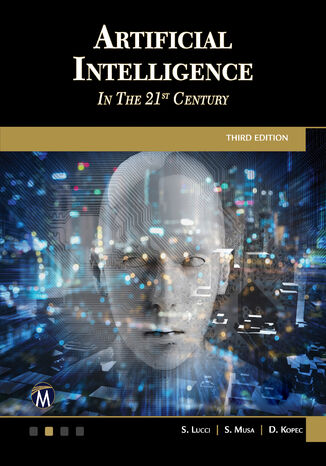
Artificial Intelligence in the 21st Century. The Future of Technology and Human Innovation
Mercury Learning and Information, Stephen Lucci, Sarhan...
This third edition provides a comprehensive, accessible presentation of AI, including examples, applications, full-color images, and human interest boxes. New chapters on deep learning, AI security, and AI programming keep the content cutting-edge. Topics like neural networks, genetic algorithms, natural language processing, planning, and complex board games are covered.The course starts with an AI overview, moving through uninformed search, intelligent search methods, and game-based strategies. It delves into logic in AI, knowledge representation, production systems, uncertainty in AI, and expert systems. Middle chapters cover machine learning, neural networks, and deep learning. It continues with nature-inspired search methods, natural language processing, and automated planning, ending with robotics and advanced computer games.These AI concepts are crucial for developing sophisticated AI applications. This book transitions you from novice to proficient AI practitioner, equipped with practical skills and comprehensive knowledge. Companion files with resources, simulations, and figures enhance learning. By the end, you'll understand AI principles and applications, ready to tackle real-world challenges.
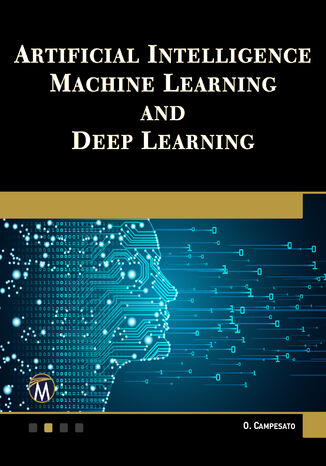
Mercury Learning and Information, Oswald Campesato
This book introduces AI, then explores machine learning, deep learning, natural language processing (NLP), and reinforcement learning. Readers learn about classifiers like logistic regression, k-NN, decision trees, random forests, and SVMs. It delves into deep learning architectures such as CNNs, RNNs, LSTMs, and autoencoders, with Keras-based code samples supplementing the theory.Starting with a foundational AI overview, the course progresses into machine learning, explaining classifiers and their applications. It continues with deep learning, focusing on architectures like CNNs and RNNs. Advanced topics include LSTMs and autoencoders, essential for modern AI. The book also covers NLP and reinforcement learning, emphasizing their importance.Understanding these concepts is vital for developing advanced AI systems. This book transitions you from beginner to proficient AI practitioner, combining theoretical knowledge and practical skills. Appendices on Keras, TensorFlow 2, and Pandas enrich the learning experience. By the end, readers will understand AI principles and be ready to apply them in real-world scenarios.
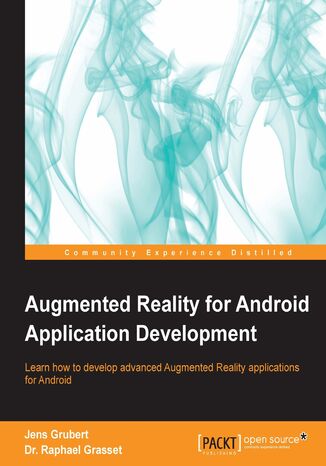
Jens Grubert
Augmented Reality offers the magical effect of blending the physical world with the virtual world, which brings applications from your screen into your hands. AR redefines advertising and gaming, as well as education. It will soon become a technology that will have to be mastered as a necessity by mobile application developers.Augmented Reality for Android Application Development enables you to implement sensor-based and computer vision-based AR applications on Android devices. You will learn about the theoretical foundations and practical details of implemented AR applications, and you will be provided with hands-on examples that will enable you to quickly develop and deploy novel AR applications on your own.Augmented Reality for Android Application Development will help you learn the basics of developing mobile AR browsers, how to integrate and animate 3D objects easily with the JMonkeyEngine, how to unleash the power of computer vision-based AR using the Vuforia AR SDK, and will teach you about popular interaction metaphors. You will get comprehensive knowledge of how to implement a wide variety of AR apps using hands-on examples.This book will make you aware of how to use the AR engine, Android layout, and overlays, and how to use ARToolkit. Finally, you will be able to apply this knowledge to make a stunning AR application.
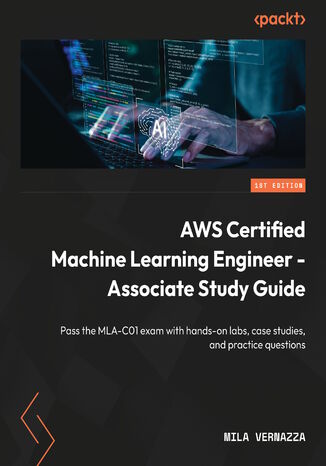
Mila Vernazza
The AWS Certified Machine Learning Engineer – Associate Study Guide gives you the knowledge and practical skills to build, deploy, and manage ML systems on AWS while preparing you for the MLA-C01 exam. This book is designed for data scientists, ML engineers, developers, and cloud professionals who want real-world experience—not just theoretical exam prep.You’ll work through the entire ML lifecycle using AWS services: ingesting and preparing data with S3, Glue, and SageMaker Data Wrangler; training models with built-in algorithms or custom frameworks; and deploying them using real-time, batch, asynchronous, or serverless endpoints. Each chapter includes hands-on labs, best practices, and exam tips mapped directly to MLA-C01 domains.You’ll then explore automation with SageMaker Pipelines and CI/CD tooling, as well as critical MLOps skills such as drift detection, bias monitoring, workload security, and cost optimization. The book also features end-to-end case studies and coverage of emerging AWS AI tools—including Amazon Bedrock, JumpStart, and Canvas—so you can apply both traditional and generative AI techniques.By the end of this guide, you’ll be ready to pass the MLA-C01 exam and confidently design production-ready ML solutions on AWS.
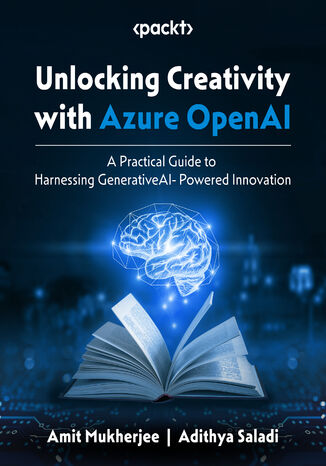
Amit Mukherjee, Adithya Saladi, Marco Casalaina
Find out what makes Azure OpenAI a robust platform for building AI-driven solutions that can transform how businesses operate. Written by seasoned experts from Microsoft, this book will guide you in understanding Azure OpenAI from fundamentals through to advanced concepts and best practices.The book begins with an introduction to large language models (LLMs) and the Azure OpenAI Service, detailing how to access, use, and optimize its models. You'll learn how to design and implement AI-driven solutions, such as question-answering systems, contact center analytics, and GPT-powered search applications. Additionally, the chapters walk you through advanced concepts, including embeddings, fine-tuning models, prompt engineering, and building custom AI applications using LangChain and Semantic Kernel. You'll explore real-world use cases such as QnA systems, document summarizers, and SQLGPT for database querying, as well as gain insights into securing and operationalizing these solutions in enterprises.By the end of this book, you'll be ready to design, develop, and deploy scalable AI solutions, ensuring business success through intelligent automation and data-driven insights.
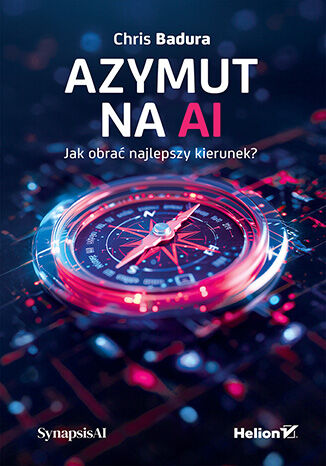
Azymut na AI. Jak obrać najlepszy kierunek?
Chris Badura
Rewolucja już tu jest Decyzja, by napisać tę książkę, wzięła się z przekonania jej autora, że w sercu każdej technologii powinien się znajdować człowiek: jego potrzeby, emocje i marzenia. Drugim powodem było pragnienie nakreślenia ogromu perspektyw, jakie otwiera przed nami sztuczna inteligencja. I nie chodzi tu tylko o możliwości techniczne. Także o to, że AI zaprasza ludzi do świata, w którym maszyny rozumieją ich lepiej niż kiedykolwiek przedtem. Rewolucja AI właśnie się rozpoczyna, dobrze jest się do niej zawczasu przygotować - zarówno mentalnie, jak i zawodowo. Zacznij czytać i przekonaj się, w jaki sposób sztuczna inteligencja kształtuje teraźniejszość i przyszłość w różnych aspektach życia: od rewolucyjnych zmian w edukacji, poprzez przełomowe zastosowania w medycynie, aż po wyjątkowe innowacje w sztuce i designie. Zrozum, jak działa sztuczna inteligencja Dowiedz się, w jakich dziedzinach życia wspomaga nas już dziś Naucz się z nią komunikować Poznaj zawody, w których współpraca z AI będzie wkrótce odgrywała kluczową rolę Zobacz, jak za przyczyną sztucznej inteligencji zmieni się świat
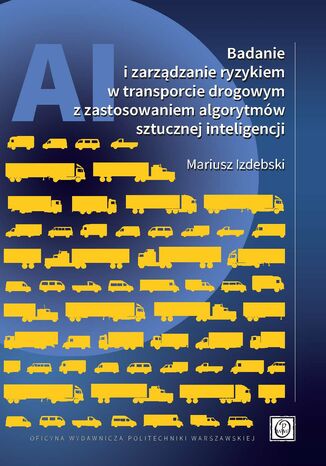
Mariusz Izdebski
Praca dotyczy tematyki zarządzania ryzykiem w transporcie drogowym z wykorzystaniem algorytmów sztucznej inteligencji w procesach przewozowych do minimalizacji zdarzeń niebezpiecznych. Wartością poznawczą przeprowadzonych badań jest opracowanie autorskich, oryginalnych modeli zarządzania ryzykiem w transporcie drogowym wraz z ich algorytmizacją narzędziami sztucznej inteligencji. Opracowane modele zarządzania ryzykiem mogą mieć zastosowanie w różnych obszarach, np. budownictwie. Wykorzystanie algorytmów sztucznej inteligencji w zarządzaniu ryzykiem w transporcie drogowym pozwoliło na opracowanie oryginalnych metod oceny i zarządzania ryzykiem w procesach przewozowych. Do badania redukcji poziomu ryzyka zastosowano dwa zaawansowane algorytmy sztucznej inteligencji - mrówkowy i genetyczny. Sposób ich działania jest różny, co pozwoliło na porównanie jakości generowanych rozwiązań, a tym samym wyznaczenie efektywności tych algorytmów w zarządzaniu ryzykiem w transporcie drogowym. Monografia składa się z dziewięciu rozdziałów, które podzielono na trzy obszary tematyczne. W pierwszym obszarze (rozdz. 1-3) zdefiniowano najnowsze badania z zakresu tematyki ryzyka w transporcie drogowym, scharakteryzowano kluczowe zagrożenia w procesach przewozowych i przedstawiono procedurę zarządzania ryzykiem w transporcie drogowym. Kluczowym elementem tej części monografii jest opis algorytmów sztucznej inteligencji stosowanych w zarządzaniu ryzykiem w transporcie drogowym, ze szczególnym podkreśleniem dużej roli, jaką odgrywają użyte algorytmy. W drugim obszarze (rozdz. 4 i 5) opisano modele zarządzania ryzykiem w transporcie drogowym i przedstawiono ich formalny zapis. W trzecim obszarze (rozdz. 6-8) opisano proces algorytmizacji opracowanych modeli zarządzania ryzykiem wraz ze sposobem szacowania ryzyka na odcinkach sieci transportowej i przedstawiono weryfikację algorytmów zastosowanych w aplikacji do przykładów. W podsumowaniu monografii przedłożono rekomendacje dla decydentów zarządzających ryzykiem w transporcie drogowym, a także podkreślono oryginalność przedstawionych badań i ich dalszy kierunek.
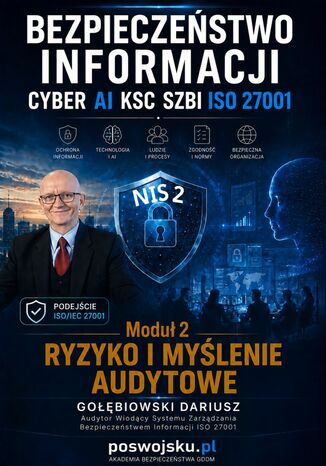
BEZPIECZEŃSTWO INFORMACJI CYBER AI KSC SZBI ISO 27001 Moduł 2 Ryzyko i myślenie audytowe
Dariusz Gołębiowski
BEZPIECZEŃSTWO INFORMACJI CYBER AI KSC SZBI ISO 27001 Moduł 2: Ryzyko i myślenie audytowe Ryzyko w cyberbezpieczeństwie często kojarzy się z tabelami, skomplikowaną matematyką, audytowym żargonem i straszeniem katastrofami. Ten eBook pokazuje coś zupełnie innego: ryzyko jako praktyczne narzędzie podejmowania decyzji, zarządzania organizacją i budowania realnego bezpieczeństwa. **Moduł 2 "Ryzyko i myślenie audytowe"** prowadzi czytelnika od podstawowego zrozumienia, czym naprawdę jest ryzyko, przez odróżnienie zagrożenia, podatności i skutku, aż po praktyczne podejście do traktowania ryzyka, priorytetów, decyzji kierowniczych i spojrzenia audytora. To materiał napisany prostym, zrozumiałym językiem - bez "ISO-bełkotu", bez sztucznego strachu i bez oderwania od codziennej pracy organizacji. Autor pokazuje, że bezpieczeństwo informacji nie zaczyna się od narzędzi technicznych, ale od właściwego sposobu myślenia: zauważania ryzyk, rozumienia skutków, dokumentowania decyzji i budowania powtarzalnego systemu działania. W środku znajdziesz m.in.: * wyjaśnienie, czym jest ryzyko w rzeczywistym świecie, * różnicę między zagrożeniem, podatnością, skutkiem i ryzykiem, * przykłady błędów popełnianych przez organizacje, * praktyczne studia przypadków, * spojrzenie na ryzyko z perspektywy zarządu, CISO, audytora i pracownika, * odniesienia do NIS2, uKSC, ISO 27001 i SZBI, * ćwiczenia refleksyjne pomagające przełożyć teorię na praktykę. Ten moduł jest szczególnie przydatny dla osób, które chcą zrozumieć cyberbezpieczeństwo nie tylko jako zbiór zabezpieczeń technicznych, ale jako element zarządzania organizacją, odpowiedzialności kierowniczej, ciągłości działania i świadomego podejmowania decyzji. To eBook dla dyrektorów, kierowników, administratorów, inspektorów ochrony danych, osób odpowiedzialnych za IT, bezpieczeństwo informacji, compliance, zarządzanie ryzykiem oraz wszystkich, którzy chcą przygotować organizację do wymagań NIS2, uKSC i podejścia zgodnego z ISO/IEC 27001. **Jeżeli chcesz przestać bać się słowa "ryzyko" i zacząć używać go jako praktycznego narzędzia zarządzania - ten moduł jest dla Ciebie.**
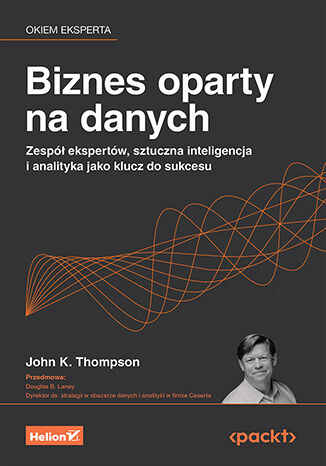
Biznes oparty na danych. Zespół ekspertów, sztuczna inteligencja i analityka jako klucz do sukcesu
John K. Thompson, Douglas B. Laney
Skuteczna analityka wymaga wykonywania wieloaspektowego zestawu zadań w ramach właściwie zarządzanego procesu. Thomas H. Davenport, profesor Babson College Analityka mocno się zmieniła. Kiedyś skupiała się głównie na tworzeniu raportów i wykresów, które prezentowały dane w atrakcyjnej formie. Teraz stała się bardziej zaawansowana ― zespoły pracują w nowy sposób, łącząc różnorodne umiejętności, takie jak analiza danych, programowanie i znajomość biznesu. Dzięki temu decyzje podejmowane w firmach mogą być lepsze, a osiąganie celów ― łatwiejsze. Jednak by to działało, potrzebne są zmiany w strukturze organizacji i podejściu do pracy. Oto najbardziej praktyczny poradnik korzystania z analityki w funkcjonowaniu organizacji! Bill Schmarzo, dyrektor do spraw innowacji w Hitachi Vantara W tej książce znajdziesz podstawowe koncepcje związane z budowaniem skutecznych zespołów analitycznych i zarządzaniem nimi. Wyjaśniono w niej dokładnie, co należy robić, kogo zatrudniać, jakie projekty realizować i czego unikać na drodze do zbudowania sprawnego zespołu analitycznego. Omówiono również znaczenie biznesowego cyklu decyzyjnego w osiąganiu trwałego sukcesu przedsiębiorstwa. Ponadto poznasz wartościowe modele z obszaru zaawansowanej analityki i prognoz opartych na analizie danych. Nie zabrakło też opisu metod i praktyk zarządzania zespołami analitycznymi, a także wskazówek, jak wpływać na oczekiwania kierownictwa i wybierać projekty o największej wartości. Dzięki tej książce dyrektorzy wykonawczy i zespoły analityczne dowiedzą się, jak wypracować trwałą, strategiczną, a nawet rewolucyjną przewagę! Kirk Borne, główny danolog w Booz Allen Hamilton John K. Thompson jest dyrektorem do spraw technologii z ponad 30-letnim doświadczeniem w dziedzinie zaawansowanej analityki biznesowej. Obecnie odpowiada za globalny zespół zaawansowanej analityki i sztucznej inteligencji w CSL Behring. Interesuje go rozwijanie innowacyjnych technologii w celu zwiększenia wartości uzyskiwanej przez organizacje na całym świecie. Bogata wiedza i praktyczne doświadczenie autora zwiększają wartość tej doskonałej książki! Judith Hurwitz, prezeska Hurwitz & Associates
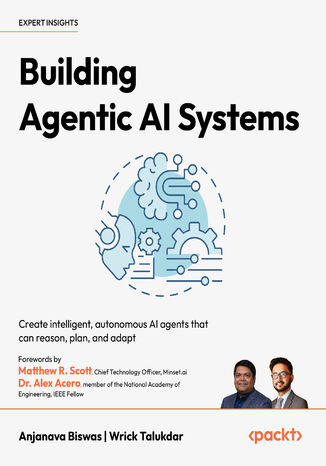
Anjanava Biswas, Wrick Talukdar, Matthew R. Scott,...
Gain unparalleled insights into the future of AI autonomy with this comprehensive guide to designing and deploying autonomous AI agents that leverage generative AI (GenAI) to plan, reason, and act. Written by industry-leading AI architects and recognized experts shaping global AI standards and building real-world enterprise AI solutions, it explores the fundamentals of agentic systems, detailing how AI agents operate independently, make decisions, and leverage tools to accomplish complex tasks.Starting with the foundations of GenAI and agentic architectures, you’ll explore decision-making frameworks, self-improvement mechanisms, and adaptability. The book covers advanced design techniques, such as multi-step planning, tool integration, and the coordinator, worker, and delegator approach for scalable AI agents.Beyond design, it addresses critical aspects of trust, safety, and ethics, ensuring AI systems align with human values and operate transparently. Real-world applications illustrate how agentic AI transforms industries such as automation, finance, and healthcare. With deep insights into AI frameworks, prompt engineering, and multi-agent collaboration, this book equips you to build next-generation adaptive, scalable AI agents that go beyond simple task execution and act with minimal human intervention.
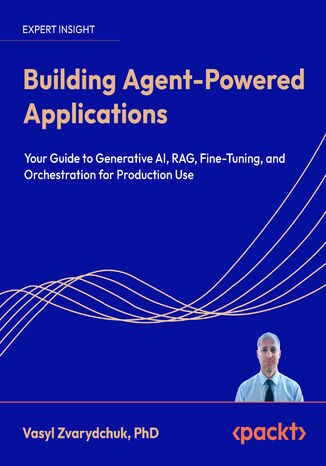
Vasyl Zvarydchuk
Large language models can produce impressive demos, but turning them into reliable products takes more than better prompts. You need to understand model behavior, know when to use retrieval or fine-tuning, structure agents correctly, and evaluate systems before deployment.Building Agent-Powered Applications gives an end-to-end engineering perspective on creating production-ready generative AI solutions. Written by Microsoft Principal AI Engineer Vasyl Zvarydchuk, it helps software engineers, data scientists, and applied AI practitioners move from concept to implementation. You’ll begin with AI, NLP, embeddings, transformers, and LLM behavior, then progress to prompt engineering, summarization, classification, extraction, reasoning, RAG, and fine-tuning.The book shows how to design agentic workflows with tools, memory, planning, orchestration, and human-in-the-loop controls. You’ll learn to evaluate quality with offline and online testing, task-specific metrics, LLM-as-a-judge methods, and responsible AI checks. Rather than treating prompting, RAG, fine-tuning, and agents as separate topics, this book shows how they work together in practice. By the end, you’ll be able to make better architectural trade-offs, reduce failure modes, and build scalable, trustworthy AI applications.*Email sign-up and proof of purchase required
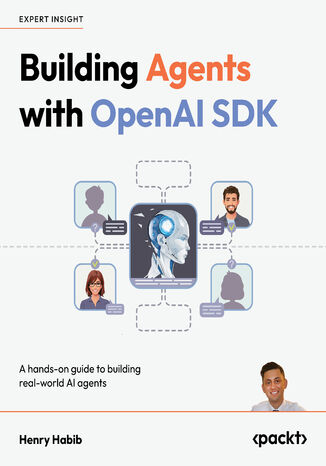
Henry Habib
Everyone’s talking about AI agents, but how do you build one that works in the real world? Not a toy demo, but an agent that solves real problems, saves time, and integrates into workflows. With vague frameworks, fragmented tooling, and endless hype, most developers are left without a clear path. The hardest part isn’t technical; it is knowing where to start.This book gives you that starting point. It’s a complete guide to building intelligent AI agents and agentic systems using the official OpenAI Agents SDK. It begins by grounding you in the core concepts, design principles, and architecture of AI agents, how they differ from other traditional systems, their advantages, and why that matters.Through practical step-by-step projects, you’ll master every feature of the SDK—tools, memory, RAG, multi-agent orchestration, tracing, handoffs, and more—while contributing to an end-to-end agent system that grows in complexity. Projects include a custom support agent, invoice and inventory assistant, health advisor, sales trainer, and data analyst, giving you production-ready skills.By the end, you’ll know how to design, build, and deploy agentic systems that interact with APIs, query databases, hand off to external systems, and drive meaningful outcomes. You won’t just understand AI agents; you’ll be ready to ship them.