
Sztuczna inteligencja
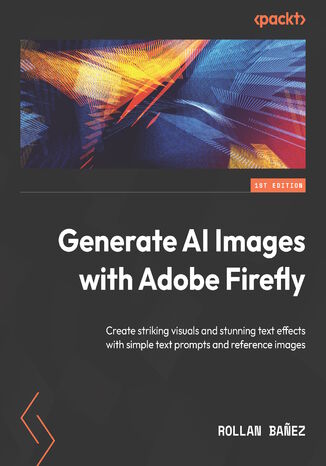
Rollan Banez
Creating conceptual art and design assets is a slow and laborious process, especially for those unfamiliar with complex design tools. With Adobe Firefly, you can say goodbye to your design challenges and start creating attractive visuals faster than ever before. Written by an Adobe expert with over two decades of experience, Extending Creativity With Adobe Firefly teaches you how to use Generative AI for art and design with easy-to-follow steps. You’ll learn how to create images, add text effects, edit photos, and explore colors faster with Adobe Firefly. You'll discover Firefly’s capabilities for tasks like generating text-to-image samples, styling text effects, and editing photos quickly. You’ll also find how to integrate Firefly with other Adobe Creative Cloud apps to streamline your workflow. If you're just starting out, this book will acquaint you with the basics of design, enabling you to create images easily. If you are a professional, you’ll learn how to improve collaboration and visual communication, and if you are a teacher, you’ll be able to enhance your teaching methods with visual thinking. By the end, you’ll master every function of Adobe Firefly and create outputs for website and desktop applications such as Photoshop, Illustrator, Express, and Adobe Stock.
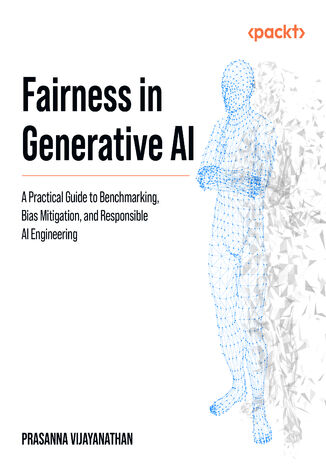
Prasanna Vijayanathan
As generative AI moves into critical applications like hiring, credit decisions, education, and healthcare, the potential for real-world harm escalates. When systems perpetuate stereotypes or skew outcomes based on identity, the impact goes far beyond poor user experience. It results in lost opportunities, violated dignity, and erosion of trust. This book offers practical methods for evaluating and ensuring fairness across text, image, and multimodal GenAI systems. You'll begin with fairness principles that matter for GenAI and learn how to translate philosophical constructs into engineering artifacts. Abstract goals become measurable requirements: what constitutes harm, which groups are in scope, how fairness is defined, and which trade-offs are acceptable. Next, design a benchmarking framework that integrates with existing pipelines. Thereafter, create scenario and prompt libraries, model sensitive attributes and intersections, and run evaluations through an orchestrated pipeline. Implement quantitative metrics and qualitative rubrics, add human review with rater training and agreement checks, and publish results as scorecards and dashboards. Finally, integrate fairness checks into CI and model release gates, monitor drift, and run incident response playbooks so benchmarks stay credible as models and norms evolve.

Fizyka na tropie świadomości. Od zjawisk kwantowych przez sieci neuronowe po sztuczną inteligencję
George Musser
Jak się uczy sztuczna inteligencja? Czy może popełniać błędy? Czy kiedykolwiek będzie świadoma? Czym się różni wiersz napisany przez ChatGTP od wiersza, którego autorem jest człowiek? George Musser rozmawia ze znanymi fizykami zajmującymi się najbardziej śmiałymi teoriami i prowadzącymi intrygujące badania. Porusza tematy zjawisk kwantowych, sieci neuronowych, sztucznej inteligencji i, przede wszystkim, świadomości. Szuka tak pożądanej przez naukowców "teorii wszystkiego" wspólnie z najwybitniejszymi umysłami naszej epoki. A to nie takie proste! Fizycy bywają wszak ciekawscy, wścibscy i natrętni. Gdy zasną, śnią im się kolejne pytania, gdy się budzą, zaczynają z zapałem analizować, czy śnili świadomie. Gdy zobaczą kota na kanapie, zamiast zapytać, kto sobie tak słodko śpi, pytają, czy zrozumiałby rachunek różniczkowy. Gdy poprosisz trzech fizyków o wyjaśnienie jednego problemu, otrzymasz cztery różne teorie. Na szczęście, nikt nie potrafi z nimi rozmawiać tak jak wytrawny dziennikarz naukowy George Musser. Dzięki Fizyce na tropie świadomości nauczysz się tego, czego jeszcze nie umie żadna sztuczna inteligencja: umiejętności zadawania krytycznych pytań.
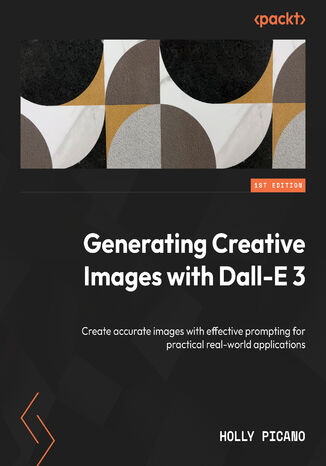
Holly Picano
Unveil the extraordinary capabilities of the groundbreaking AI model, DALL-E 3, as it transforms text prompts into accurate images. This book addresses the challenge of creating meaningful images by writing prompts, guiding you step by step through creating stunning visual art regardless of your skill level.Prepare to delve deep into the inner workings of DALL-E 3's architecture and training process. With clear explanations, practical tutorials, and real-world examples that can be easily applied, you’ll unlock secrets to creating awe-inspiring AI-generated art, from fine art prints to digital designs. This book provides comprehensive insights into various lens options, camera angles, lighting techniques, and art movements, helping you integrate AI capabilities with your artistic skills. You’ll also learn to create NFTs that can be monetized and gain invaluable insights into designing compelling covers, all within the ethical boundaries of AI-generated art. And with the invaluable prompt cheat sheet by your side, you’ll hone your skills in formulating captivating prompts for diverse purposes.By the end of this book, you’ll have learned how to produce generative AI art at a rapid pace and relatively low cost and push the boundaries of imagination with DALL-E 3.
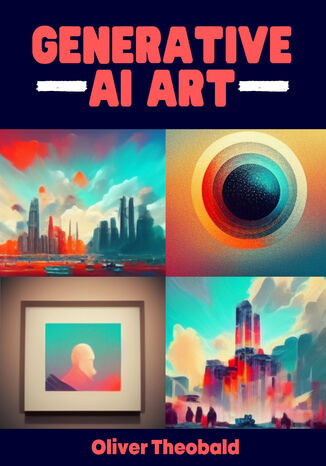
Generative AI Art. Unleash Your Creativity with Generative AI Art for Beginners
Oliver Theobald
The course introduces the basic concepts of artificial intelligence and its application in art, making it accessible even to those without a technical background. This foundation paves the way for exploring the nuances of effective prompt crafting, a critical skill for generating bespoke AI artwork.The course focuses on hands-on demonstrations with leading AI art software, including Craiyon and Midjourney, offering step-by-step guides to harness these tools effectively. Through practical examples, learners will understand how to navigate image prompts, masking techniques, framing, and lighting to enhance the visual appeal of their creations. The significance of navigating these elements is underscored, highlighting their role in achieving consistency and originality in AI-generated art.The course wraps up by delving into the remixing of popular art styles, the art of creating compelling text prompts, and the critical aspects of image rights, ethics, privacy, and originality in the digital art space. By concluding with recommended resources, learners are equipped to continue their journey in AI art, fueled by inspiration and a solid understanding of the field's possibilities and responsibilities.
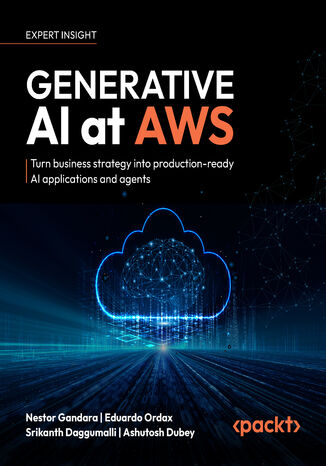
Generative AI at AWS. Turn business strategy into production-ready AI applications and agents
Nestor Gandara, Eduardo Ordax, Srikanth Daggumalli, Ashutosh...
Cut through the noise around generative AI and learn how to turn promising ideas into secure, scalable solutions on AWS. This book helps you connect business priorities with technical execution, so you can identify worthwhile use cases, select the right models and services, and move from pilot to production with confidence.You explore the fundamentals of generative AI, understand how foundation models and agents work, and see where services such as Amazon Bedrock AgentCore and Amazon SageMaker AI fit into a modern AI stack. From there, the book guides you through preparing data, building an MVP, deploying production-ready applications, and designing for scalability, governance, and responsible AI.Real-world industry examples and practical decision frameworks help you evaluate when to use generative AI, when traditional approaches are a better fit, and how to measure business value. You also examine advanced topics such as agentic AI, emerging patterns, and the future direction of enterprise AI.By the end of this book, you will be able to plan, build, and govern generative AI solutions on AWS that deliver measurable value for your organization.
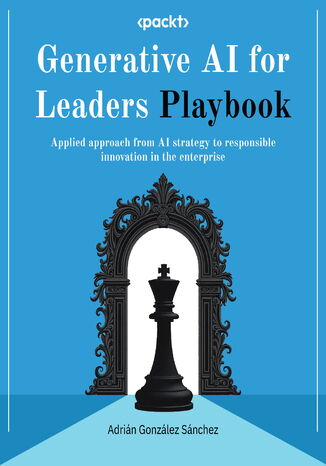
Adrián González Sánchez
Gen AI has shifted from a technical breakthrough to a leadership imperative. This book is the essential guide for executives, directors, and tech leads who must navigate this transformation. Written for strategic leaders and decision-makers, it bridges the gap between AI’s technical realities and enterprise applications, equipping leaders with the fluency, frameworks, and foresight to lead effectively in the age of digital intelligence. This playbook demystifies key concepts such as Generative AI, LLMs, and emerging agentic AI systems. It guides readers through crafting AI strategies aligned with business objectives, building AI-native organizations, and implementing governance frameworks for responsible and compliant adoption. Real-world case studies illustrate how leading companies are leveraging AI for innovation, efficiency, and growth. Beyond strategy, the book focuses on assembling and scaling AI teams, evaluating technology vendors, and integrating AI across functions. You’ll also explore global policy trends, ethical implications, and future scenarios that every organization must prepare for. This playbook is your roadmap to turning AI disruption into sustainable advantage. It’s the leadership guide every executive needs to understand, implement, and scale AI responsibly.*Email sign-up and proof of purchase required
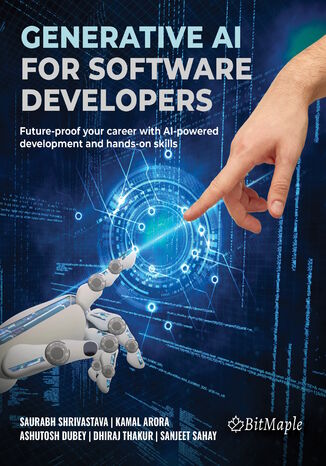
Saurabh Shrivastava, Kamal Arora, Ashutosh Dubey, Sanjeet...
Generative AI for Software Developers is your practical guide to mastering AI-powered development and staying ahead in a fast-changing industry. Through a structured, hands-on approach, this book helps you understand, implement, and optimize Generative AI in modern software engineering. From AI-assisted coding, debugging, and documentation to testing, deployment, and system design, it equips you with the skills to integrate AI seamlessly into your workflows.You’ll work with tools such as GitHub Copilot, Amazon Q Developer, and OpenAI APIs while learning strategies for prompt engineering, fine-tuning, and building scalable AI-powered applications. Featuring real-world use cases, best practices, and expert insights, this book bridges the gap between experimenting with AI and production deployment.Whether you’re an aspiring AI developer, experienced engineer, or solutions architect, this guide gives you the clarity, confidence, and tactical knowledge to thrive in the GenAI-driven future of software development. Armed with these insights, you’ll be ready to build, integrate, and scale intelligent solutions that enhance every stage of the software development lifecycle.

Leonid Kuligin, Jorge Zaldívar, Maximilian Tschochohei, Harrison...
The rapid transformation and enterprise adoption of GenAI has created an urgent demand for developers to quickly build and deploy AI applications that deliver real value. Written by three distinguished Google AI engineers and LangChain contributors who have shaped Google Cloud’s integration with LangChain and implemented AI solutions for Fortune 500 companies, this book bridges the gap between concept and implementation, exploring LangChain and Google Cloud’s enterprise-ready tools for scalable AI solutions.You'll start by exploring the fundamentals of LLMs and how LangChain simplifies the development of AI workflows by connecting LLMs with external data and services. This book guides you through using essential tools like the Gemini and PaLM 2 APIs, Vertex AI, and Vertex AI Search to create sophisticated, production-ready GenAI applications. You'll also overcome the context limitations of LLMs by mastering advanced techniques like RAG and external memory layers.Through practical patterns and real-world examples, you’ll gain everything you need to harness Google Cloud’s AI ecosystem, reducing the time to market while ensuring enterprise scalability. You’ll have the expertise to build robust GenAI applications that can be tailored to solve real-world business challenges.*Email sign-up and proof of purchase required
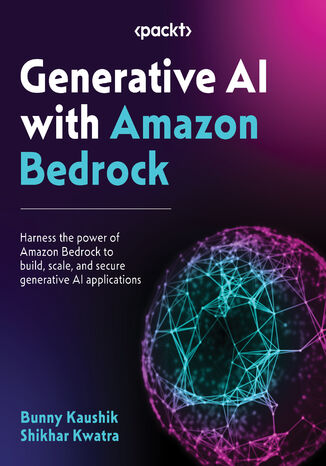
Shikhar Kwatra, Bunny Kaushik
The concept of generative artificial intelligence has garnered widespread interest, with industries looking to leverage it to innovate and solve business problems. Amazon Bedrock, along with LangChain, simplifies the building and scaling of generative AI applications without needing to manage the infrastructure.Generative AI with Amazon Bedrock takes a practical approach to enabling you to accelerate the development and integration of several generative AI use cases in a seamless manner. You’ll explore techniques such as prompt engineering, retrieval augmentation, fine-tuning generative models, and orchestrating tasks using agents. The chapters take you through real-world scenarios and use cases such as text generation and summarization, image and code generation, and the creation of virtual assistants. The latter part of the book shows you how to effectively monitor and ensure security and privacy in Amazon Bedrock.By the end of this book, you’ll have gained a solid understanding of building and scaling generative AI apps using Amazon Bedrock, along with various architecture patterns and security best practices that will help you solve business problems and drive innovation in your organization.
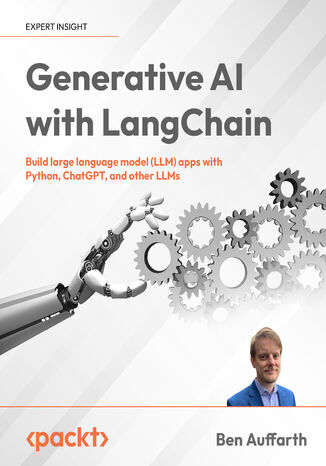
Ben Auffarth
ChatGPT and the GPT models by OpenAI have brought about a revolution not only in how we write and research but also in how we can process information. This book discusses the functioning, capabilities, and limitations of LLMs underlying chat systems, including ChatGPT and Gemini. It demonstrates, in a series of practical examples, how to use the LangChain framework to build production-ready and responsive LLM applications for tasks ranging from customer support to software development assistance and data analysis – illustrating the expansive utility of LLMs in real-world applications.Unlock the full potential of LLMs within your projects as you navigate through guidance on fine-tuning, prompt engineering, and best practices for deployment and monitoring in production environments. Whether you're building creative writing tools, developing sophisticated chatbots, or crafting cutting-edge software development aids, this book will be your roadmap to mastering the transformative power of generative AI with confidence and creativity.

Generative AI with Python. Harness the Power of Python for Building Generative AI Models
Rheinwerk Publishing, Inc, Bert Gollnick
Generative AI with Python introduces readers to the fascinating world of AI model development. It begins with essential concepts in AI and deep learning, building a solid foundation for working with generative models. You will explore how to create models that generate text, images, and more, with clear, practical examples. The book provides an in-depth look at large language models and pretrained tools like Hugging Face, demonstrating how they can be leveraged in real-world applications. Each chapter blends theoretical concepts with hands-on coding exercises to ensure you understand both the principles and practical implementation of generative AI. Starting with the basics of natural language processing and deep learning, the book guides you to more advanced applications such as text summarization, image generation, and model fine-tuning. You'll also learn about optimizing AI models and deploying them in various environments. By the end of the book, you’ll be able to confidently build AI-driven applications with Python, capable of transforming business processes and enhancing consumer products.
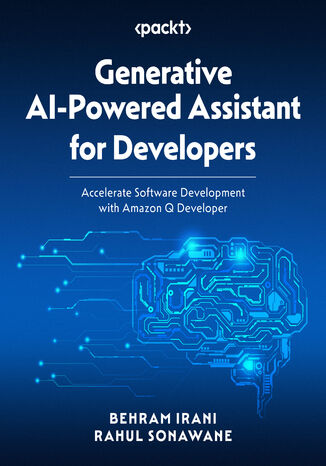
Behram Irani, Rahul Sonawane
Many developers face the challenge of managing repetitive tasks and maintaining productivity. This book will help you tackle both these challenges with Amazon Q Developer, a generative AI-powered assistant designed to optimize coding and streamline workflows.This book takes you through the setup and customization of Amazon Q Developer, demonstrating how to leverage its capabilities for auto-code generation, code explanation, and transformation across multiple IDEs and programming languages. You'll learn to use Amazon Q Developer to enhance coding experiences, generate accurate code references, and ensure security by scanning for vulnerabilities. The book also shows you how to use Amazon Q Developer for AWS-related tasks, including solution building, applying architecture best practices, and troubleshooting errors. Each chapter provides practical insights and step-by-step guidance to help you fully integrate this powerful tool into your development process. You’ll get to grips with effortless code implementation, explanation, transformation, and documentation, helping you create applications faster and improve your development experience.By the end of this book, you’ll have mastered Amazon Q Developer to accelerate your software development lifecycle, improve code quality, and build applications faster and more efficiently.
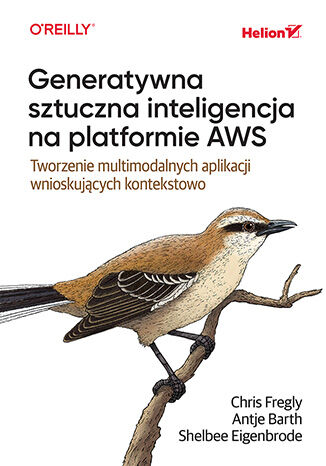
Chris Fregly, Antje Barth, Shelbee Eigenbrode
Podczas projektowania aplikacji opartych na generatywnej AI trzeba dokonywać wielu wyborów decydujących o jakości danych dostarczanych przez aplikację, jej opłacalności, skalowalności i niezawodności. Decyzje te są tym trudniejsze, że świat generatywnej AI zmienia się niezwykle szybko, a mity i błędne przeświadczenia dotyczące tej technologii mają się świetnie. W tej niezwykle pragmatycznej książce, przeznaczonej dla dyrektorów technicznych, praktyków uczenia maszynowego, twórców aplikacji, analityków biznesowych, inżynierów i badaczy danych, znajdziesz skuteczne techniki używania sztucznej inteligencji. Zaznajomisz się z cyklem życia projektu opartego na generatywnej AI i jej zastosowaniami, a także metodami doboru i dostrajania modeli, generowania danych wspomaganego wyszukiwaniem, uczenia przez wzmacnianie na podstawie informacji zwrotnych od człowieka, kwantyzacji, optymalizacji i wdrażania modeli. Poznasz szczegóły różnych typów modeli, między innymi dużych językowych (LLM), multimodalnych generujących obrazy (Stable Diffusion) i odpowiadających na pytania wizualne (Flamingo/IDEFICS). Dowiedz się, jak: używać generatywnej AI w biznesie dobierać modele generatywnej AI stosować inżynierię monitu i uczenie kontekstowe dostrajać modele przy użyciu własnych zbiorów danych i techniki LoRA korzystać z agentów i akcji za pomocą bibliotek LangChain i ReAct tworzyć aplikacje na bazie usługi Amazon Bedrock To fascynująca książka, rewelacyjna kompozycja niezwykle ważnych informacji, a także szczegółowych, praktycznych kodów, skryptów i instrukcji! Jeff Barr, wiceprezes i główny popularyzator AWS
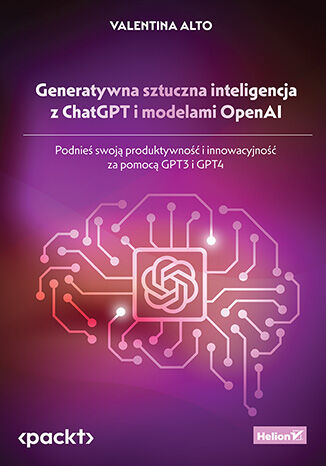
Valentina Alto
Generatywne modele językowe, takie jak ChatGPT udostępniony przez OpenAI, stały się przełomem ze względu na ich możliwości i łatwe użycie w szerokiej gamie zastosowań. Wszechstronność tych narzędzi pozwala podnieść produktywność i kreatywność na niespotykany wcześniej poziom. Wystarczy w tym celu użyć we własnych projektach ChatGPT lub któregoś z wyspecjalizowanych modeli. Dzięki tej przystępnej książce zrozumiesz metody działania wielkich modeli językowych i techniki szkolenia modeli generatywnych. Następnie zapoznasz się z przypadkami użycia, w których ChatGPT sprawdzi się najlepiej, a w efekcie zwiększy produktywność i kreatywność. Dowiesz się też, jak wchodzić w interakcje z ChatGPT, tworzyć lepsze prompty i korzystać z funkcji uczenia się. Znajdziesz tu rozdziały dla marketingowców, naukowców i programistów, ułatwiające szybkie zastosowanie nabytej wiedzy w praktyce. Przekonasz się również, jak w środowisku korporacyjnym stosować interfejsy API modeli OpenAI dostępne w infrastrukturze Azure. Dla każdego scenariusza podano kompletną implementację w Pythonie, korzystającą z bibliotek Streamlit i LangChain do integracji modeli AI z aplikacjami. W książce: koncepcja generatywnej AI i architektura GPT projektowanie optymalnych promptów prezentacja aplikacji i przypadków użycia ChatGPT używanie modeli i funkcji OpenAI za pośrednictwem wywołań API kod Pythona do budowania i wdrażania systemów generatywnej AI odpowiedzialność i etyka w systemach generatywnej AI Odkryj, jak łatwo model generatywnej AI zintegruje się z Twoją aplikacją!

Generatywne głębokie uczenie, wyd. II. Uczenie maszyn, jak malować, pisać, komponować i grać
David Foster
Generatywna sztuczna inteligencja (AI) jest dziś gorącym tematem w dziedzinie techniki. Ta praktyczna książka pokazuje inżynierom uczenia się maszyn, jak wykorzystywać TensorFlow i Keras, aby od zera tworzyć robiące wrażenie generatywne modele głębokiego uczenia, w tym wariacyjne autokodowanie (VAE), generatywne sieci przeciwstawne (GAN), transformery, przepływy normalizacyjne, modele oparte na energii i dyfuzyjne modele odszumiające. Książka zaczyna się od podstaw głębokiego uczenia i prowadzi do nowatorskich architektur. Dzięki wskazówkom i sztuczkom zrozumiesz, jak sprawić, aby nasze modele uczyły się bardziej skutecznie i stawały się bardziej kreatywne. - Dowiedz się, jak VAE pozwala zmienić wyraz twarzy na zdjęciu. - Naucz GAN generowania obrazów na podstawie własnego zbioru danych. - Zbuduj modele dyfuzyjne do tworzenia nowych odmian kwiatów. - Wyszkol swój własny GPT, aby generował tekst. - Dowiedz się jak są szkolone duże modele językowe jak ChatGPT. - Przeanalizuj najnowocześniejsze architektury jak StyleGAN2 i ViT-VQGAN - Skomponuj muzykę polifoniczną wykorzystując transformery i MuseGAN - Zrozum jak generatywne modele świata mogą rozwiązać zadania uczenia przez wzmacnianie. - Zanurz się w multimodalnych modelach jak DALL.E 2, Imagen i Stable Diffusion Książka ta analizuje także przyszłą generacyjną sztuczną inteligencję i sposób, w jaki ludzie i firmy mogą proaktywnie zacząć wykorzystywać tę niezwykłą nową technikę, aby zyskiwać przewagę konkurencyjną. "Generatywne głębokie uczenie to dostępne wprowadzenie do narzędzi głębokiego uczenia dla celów modelowania generatywnego. Jeśli jesteście kreatywnymi praktykami, kochającymi bawić się kodem i chcecie zastosować głębokie uczenie w swojej pracy, ta książka jest dla was." -David Ha Szef strategii, Stability AT "Doskonała książka, która zagłębia się wprost w podstawowe technik stanowiące aktualną wiedzę o generacyjnym głębokim nauczaniu. Jest to ekscytująca analiza jednej z najbardziej fascynujących dziedzin w ramach sztucznej inteligencji!" -Francois Chollet Twórca Keras