
Bezpieczeństwo sieci
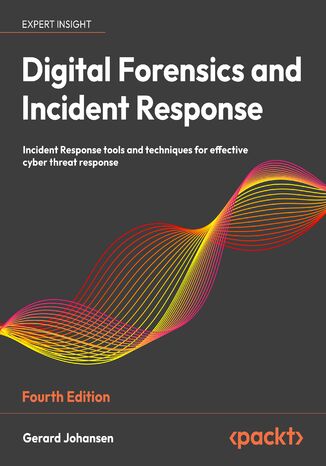
Gerard Johansen
Embark on a journey into the forefront of cyber defense with Digital Forensics and Incident Response, 4th Edition. This guide is your gateway to mastering the sophisticated techniques and methodologies essential for tackling today’s cyber threats. Authored by leading cybersecurity expert Gerard Johansen, this book provides an insider's look at the cutting-edge tools and innovative strategies needed to prevent, detect, and respond to digital vulnerabilities. With its focus on practical applications and up-to-date examples, it equips you with the skills to develop and refine robust digital forensic capabilities within your organizationThe fourth edition goes beyond traditional approaches by integrating the latest advancements in cloud technology and machine learning, offering a comprehensive look at how these technologies can enhance forensic practices. Dive into the nuances of deploying scalable incident response strategies, using open-source tools for effective threat hunting, and applying ML/AI to uncover and counteract emerging cyber threats. Each chapter is designed to build your proficiency in handling real-world challenges, making you indispensable in your fieldBy the end of the book, you will be well-versed in the various tasks and techniques associated with incident response.

Gerard Johansen
An understanding of how digital forensics integrates with the overall response to cybersecurity incidents is key to securing your organization’s infrastructure from attacks. This updated third edition will help you perform cutting-edge digital forensic activities and incident response with a new focus on responding to ransomware attacks.After covering the fundamentals of incident response that are critical to any information security team, you’ll explore incident response frameworks. From understanding their importance to creating a swift and effective response to security incidents, the book will guide you using examples. Later, you’ll cover digital forensic techniques, from acquiring evidence and examining volatile memory through to hard drive examination and network-based evidence. You’ll be able to apply these techniques to the current threat of ransomware. As you progress, you’ll discover the role that threat intelligence plays in the incident response process. You’ll also learn how to prepare an incident response report that documents the findings of your analysis. Finally, in addition to various incident response activities, the book will address malware analysis and demonstrate how you can proactively use your digital forensic skills in threat hunting.By the end of this book, you’ll be able to investigate and report unwanted security breaches and incidents in your organization.
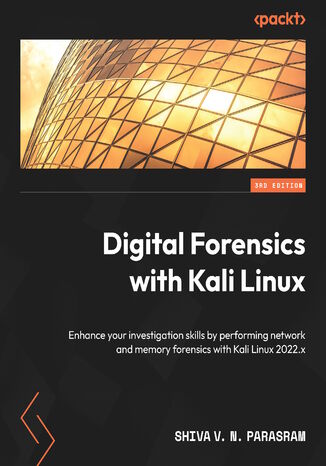
Shiva V. N. Parasram
Kali Linux is a Linux-based distribution that's widely used for penetration testing and digital forensics. This third edition is updated with real-world examples and detailed labs to help you take your investigation skills to the next level using powerful tools.This new edition will help you explore modern techniques for analysis, extraction, and reporting using advanced tools such as FTK Imager, Hex Editor, and Axiom. You’ll cover the basics and advanced areas of digital forensics within the world of modern forensics while delving into the domain of operating systems. As you advance through the chapters, you'll explore various formats for file storage, including secret hiding places unseen by the end user or even the operating system. You’ll also discover how to install Windows Emulator, Autopsy 4 in Kali, and how to use Nmap and NetDiscover to find device types and hosts on a network, along with creating forensic images of data and maintaining integrity using hashing tools. Finally, you'll cover advanced topics such as autopsies and acquiring investigation data from networks, memory, and operating systems.By the end of this digital forensics book, you'll have gained hands-on experience in implementing all the pillars of digital forensics: acquisition, extraction, analysis, and presentation – all using Kali Linux's cutting-edge tools.

Jeremiah Ginn
The SASE concept was coined by Gartner after seeing a pattern emerge in cloud and SD-WAN projects where full security integration was needed. The market behavior lately has sparked something like a space race for all technology manufacturers and cloud service providers to offer a SASE solution. The current training available in the market is minimal and manufacturer-oriented, with new services being released every few weeks. Professional architects and engineers trying to implement SASE need to take a manufacturer-neutral approach.This guide provides a foundation for understanding SASE, but it also has a lasting impact because it not only addresses the problems that existed at the time of publication, but also provides a continual learning approach to successfully lead in a market that evolves every few weeks. Technology teams need a tool that provides a model to keep up with new information as it becomes available and stay ahead of market hype.With this book, you’ll learn about crucial models for SASE success in designing, building, deploying, and supporting operations to ensure the most positive user experience (UX). In addition to SASE, you’ll gain insight into SD-WAN design, DevOps, zero trust, and next-generation technical education methods.

Jon Langemak, Aditya Amar
Networking functionality in Docker has changed considerably since its first release, evolving to offer a rich set of built-in networking features, as well as an extensible plugin model allowing for a wide variety of networking functionality. This book explores Docker networking capabilities from end to end. Begin by examining the building blocks used by Docker to implement fundamental containing networking before learning how to consume built-in networking constructs as well as custom networks you create on your own. Next, explore common third-party networking plugins, including detailed information on how these plugins inter-operate with the Docker engine. Consider available options for securing container networks, as well as a process for troubleshooting container connectivity.Finally, examine advanced Docker networking functions and their relevant use cases, tying together everything you need to succeed with your own projects.

Efektywne zarządzanie podatnościami na zagrożenia. Jak minimalizować ryzyko w cyfrowym ekosystemie
Chris Hughes, Nikki Robinson
Musisz sobie uświadomić, że korzystanie z systemów opartych na chmurze wiąże się z cyberzagrożeniami - podobnie jak w przypadku tradycyjnej infrastruktury. Musisz się dobrze orientować w złożoności swojego systemu i w powiązaniach poszczególnych elementów. Dopiero na tej podstawie możesz planować i ustalać priorytety we własnym programie zarządzania ryzykiem, uwzględniając przy tym wiele innych zagadnień. W tej praktycznej książce znajdziesz opis kompleksowych praktyk, dzięki którym współczesne organizacje utrzymujące złożone ekosystemy oprogramowania mogą skutecznie identyfikować podatności, zarządzać nimi i ograniczać ryzyko wystąpienia poważnych naruszeń bezpieczeństwa. Dowiesz się, dlaczego nie wystarczy po prostu "użyć łatki", aby naprawić znane luki w oprogramowaniu. Poznasz zasady profesjonalnego zarządzania podatnościami uwzględniające monitorowanie systemów i baz danych podatności. Przekonasz się, jak ważne są czynnik ludzki i identyfikacja czynników psychologicznych, które podczas interakcji użytkownika z oprogramowaniem przyczyniają się do powstawania podatności. W miarę lektury książki przyswoisz wydajne i skuteczne strategie, dzięki którym zapewnisz swojej organizacji wysoki poziom cyberbezpieczeństwa. Najciekawsze zagadnienia: zarządzanie złożonymi środowiskami poprawki do oprogramowania i bezpieczna konfiguracja ocena podatności i łączenie ich w łańcuch czynnik ludzki w zarządzaniu podatnościami oprogramowanie bezpieczne już na etapie projektu budowa dojrzałego modelu zarządzania podatnościami Sprawdź, jak w erze chmury zarządzać ryzykiem informatycznym!
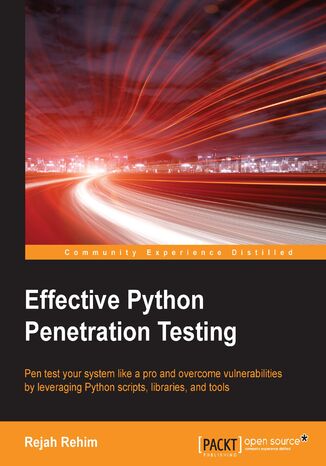
Rejah Rehim
Penetration testing is a practice of testing a computer system, network, or web application to find weaknesses in security that an attacker can exploit. Effective Python Penetration Testing will help you utilize your Python scripting skills to safeguard your networks from cyberattacks. We will begin by providing you with an overview of Python scripting and penetration testing. You will learn to analyze network traffic by writing Scapy scripts and will see how to fingerprint web applications with Python libraries such as ProxMon and Spynner. Moving on, you will find out how to write basic attack scripts, and will develop debugging and reverse engineering skills with Python libraries. Toward the end of the book, you will discover how to utilize cryptography toolkits in Python and how to automate Python tools and libraries.

Bahaaldine Azarmi, Alexis Charveriat, Stephen Brown, Farbod...
Built to simplify high-scale data analytics in Elasticsearch, this practical guide will take you from foundational concepts to advanced applications across search, observability, and security. It will help you overcome common challenges such as efficiently querying large datasets, applying advanced analytics without deep prior knowledge, and resolving for a unique and consolidated query language.Written by senior experts at Elastic with extensive field experience, this book delivers actionable guidance rooted in solving today’s data challenges at scale. After introducing ESQL and its architecture, the chapters explore real-world applications across various domains, including analytics, raw log analysis, observability, and cybersecurity. Advanced topics such as scaling, optimization, and future developments are also covered to help you maximize your ESQL capabilities.By the end of this book, you’ll be able to leverage ESQL for comprehensive data management and analysis, optimizing your workflows and enhancing your productivity with Elasticsearch.