
Informatyka
Zajrzyj do kategorii Informatyka w księgarni internetowej Ebookpoint. Znajdziesz tutaj bestsellerowe książki, ebooki i kursy video z branży IT. Sięgnij po najlepszą literaturę dla specjalistów i rozwijaj doświadczenie, które już posiadasz, lub rozpocznij swoją przygodę z programowaniem, cyberbezpieczeństwem lub grafiką komputerową. Pogłębiaj swoją wiedzę tak, jak Ci wygodnie - z tradycyjną książką, wygodnym ebookiem lub nowoczesnym videokursem. Sprawdź, jakie tytuły znajdziesz w kategorii Informatyka!
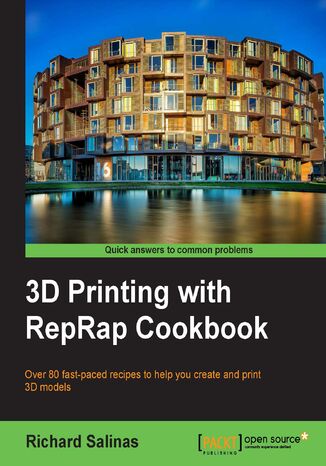
3D printing with RepRap Cookbook. Over 80 fast-paced recipes to help you create and print 3D models
Richard Salinas
A systematic guide consisting of over 100 recipes which focus on helping you understand the process of 3D printing using RepRap machines. The book aims at providing professionals with a series of working recipes to help make their fuzzy notions into real, saleable projects/objects using 3D printing technology. This book is for novice designers and artists who own a RepRap-based 3D printer, have fundamental knowledge of its working, and who desire to gain better mastery of the printing process. For the more experienced user, it will provide a handy visual resource, with side-by-side comparisons of the two most popular slicers, Skeinforge and Slic3r. A basic understanding of designing and modeling principles and elementary knowledge of digital modeling would be a plus.
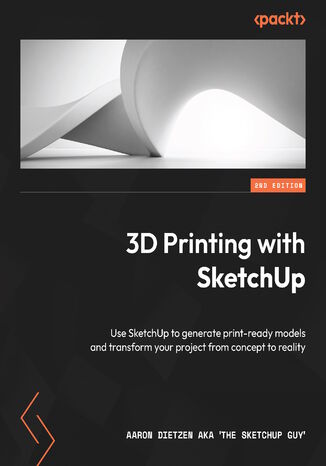
Aaron Dietzen aka 'The SketchUp Guy'
Working with the amazing 3D printing technology and getting access to the printing hardware is now easier than ever before. While there are many other resources that cover the general process of 3D printing, this book is the ultimate guide to creating models for 3D printing using SketchUp.You’ll start with a basic understanding of how SketchUp is used in the 3D printing workflow and jump into the steps to create a print-ready model using only SketchUp. This 3D printing book will guide you in using SketchUp to modify existing 3D files and cover additional tools that make SketchUp an even more powerful modeling tool. As you advance, you’ll learn how to transform 2D images into 3D printable solids, how to create multi-part prints that can be assembled without the use of fasteners or glue, and how to make sure your model, whether designed from scratch or assembled from preexisting geometry, is ready to be made real via your 3D printer.By the end of this book, you’ll have the confidence to bring your design ideas to life by generating your own 3D print-ready models with SketchUp.
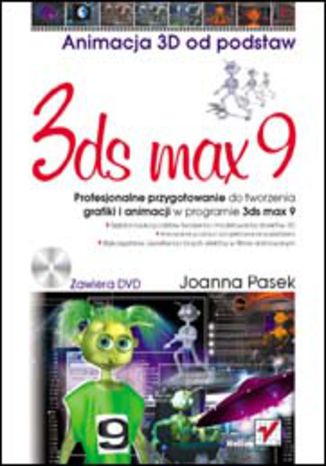
3ds max 9. Animacja 3D od podstaw
Joanna Pasek
Rozpocznij fascynującą przygodę w świecie grafiki 3D! Szybka nauka podstaw tworzenia i modelowania obiektów 3D Kreowanie postaci i projektowanie przestrzeni Wykorzystanie oświetlenia i innych efektów w filmie animowanym Myślisz o tworzeniu własnych animacji komputerowych? Postanowiłeś wykorzystać niesamowite możliwości 3ds max 9? Zapewne wiesz, że program ten pozwala nie tylko tworzyć trójwymiarowe obiekty graficzne i przetwarzać je w najbardziej wyrafinowany sposób, ale także opracować kompletny film animowany. Udostępnia on niezwykle szeroki zakres opcji i efektów, włącznie z możliwością szczegółowego modelowania i wprawiania w ruch postaci oraz symulowania wszelkich detali dotyczących ich otoczenia. Oprócz tego 3ds max 9 pozwala na bezpośrednie importowanie materiałów z programów takich, jak CorelDraw, Illustrator czy Photoshop, a także na wykorzystanie własnych zdjęć cyfrowych. Warto podkreślić, że jego funkcjonalny interfejs jest przyjazny dla początkujących użytkowników. Książka "3ds max 9. Animacja 3D od podstaw" jest zbiorem ćwiczeń ilustrowanych zrzutami ekranu, opatrzonych cennymi wskazówkami, uwagami i komentarzami ułatwiającymi pracę z programem. Jej struktura opracowana została w taki sposób, by zadania zawarte w kolejnych rozdziałach prowadziły do powstania gotowego, profesjonalnego filmu animowanego. Krok po kroku zgłębisz tu podstawy tworzenia obiektów i przypisywania im właściwości, zasady modelowania, przygotowywania postaci i umiejscawiania ich w określonym otoczeniu, metody dopracowywania szczegółów wnętrz, sposoby animacji i kwestie ostatecznego renderingu filmu. W książce znajdziesz ponadto szczegółowe omówienie interfejsu programu i opis działania najważniejszych poleceń. Domyślne ustawienia i podstawy obsługi 3ds max 9 Tworzenie i modyfikowanie prostych obiektów Modelowanie ze splajnów i modelowanie siatkowe Formowanie postaci i sytuowanie ich w przestrzeni Schematy wnętrz i szczegółowe kwestie ich wyposażenia Różne rodzaje animacji postaci Typy oświetlenia, efekty specjalne i napisy końcowe Rendering filmu animowanego
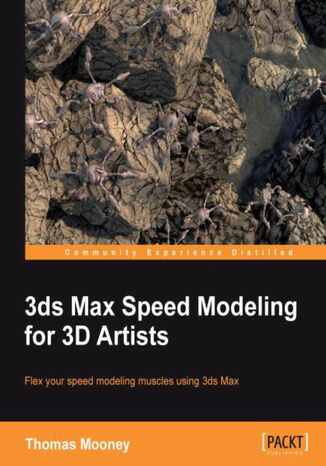
Thomas Mooney
Production of 3D art is an exciting medium, but the task of modeling requires intense attention to detail, so speed and efficiency are vital. This book breaks down speed modeling workflow in 3ds Max into stages you can easily achieve, with a focus on hard surface modeling and methods you can apply to your own designs.3ds Max Speed Modeling for 3D Artists will help level up your 3D modeling skills. It focuses on hard surface modeling, and shows the range of tools and techniques in 3ds Max 2013.This book shows content creation methods aimed at 3ds Max modelers preparing to show their skill to the industry. The key feature of modeling that artists must exhibit is speediness while preserving technical accuracy. The author helps you follow set project guidelines while pushing creativity and outlines the entire workflow from concept development to exporting a game-ready model.The book begins with introductions for new users to the interface and modeling tools, and progresses to topics aimed at users already familiar with 3ds Max, who want to improve their content creation process. You'll also see ways 3ds Max content is used with other applications, like sculpting software and game editors, and learn features of speed modeling, efficient workflow, re-use of content, and tips on getting more done, more quickly.By the end of this book you will have learned key topics in modeling, ready to face professional level work with elan.
Marcin Kowalik
Google i inne wyszukiwarki jest dla większości z nas podstawowym źródłem informacji. Nic więc dziwnego, że marketing w wyszukiwarkach właśnie stanowi sporą część budżetów reklamowych wielu podmiotów tworzących rynek ubezpieczeń. Zarówno ubezpieczyciele, pośrednicy w postaci multi-agencji, jak i sami agenci ubezpieczeniowi powinni posiadać podstawowe umiejętności pozyskiwania klientów z wykorzystaniem marketingu w wyszukiwarkach właśnie. W tym inspirującym dokumencie autor pokazuje na 5 przykładach, jak w nowoczesny sposób podejść do działań marketingowych dla produktów ubezpieczeniowych w wyszukiwarkach
Mike X Cohen
Through 50 hands-on, guided projects solved in Python, you will investigate the internal mechanisms of large language models by treating their hidden states, attention patterns, and embeddings as data to analyze. Rather than accepting LLMs as black boxes, you will open them up, examine what's inside, and run experiments to understand why they behave the way they do. All projects are based on Python (using libraries such as NumPy, PyTorch, statsmodels, scikit-learn, Matplotlib, Pandas, and Seaborn) and come with full solutions and partial solution notebook files, so you can practice and improve your skills in data science, deep learning, data visualization, and scientific and statistical coding.

70 sposobów na rozkochanie KLIENTA... w Twoim e-biznesie
Paweł Krzyworączka
Klient. Czyż nie jest to najpiękniejsze słowo na świecie? E-przedsiębiorco! Skoro prowadzisz swój biznes w sieci, to z pewnością wiesz, jakie są niezbędne składowe Twojego sukcesu: to świetny produkt, sprawny marketing, no i oczywiście dobrze napisane oprogramowanie, dzięki któremu klient będzie mógł sprawnie poruszać się po Twoim e-sklepie, od pierwszego wejrzenia aż po szczęśliwie sfinalizowaną transakcję. Czekaj, czekaj... Czy coś nam po drodze przypadkiem nie umknęło? Jakieś słowo... Ważne słowo. Użyliśmy go, wymieniając warunkowe powodzenia w e-biznesie. Wiem! To słowo to: KLIENT. Pisany dużą literą, a nawet samymi dużymi literami, ponieważ to właśnie on, Klient, stanowi prawdziwy klucz do Twojego szczęścia. Możesz mieć świetną ofertę, najnowocześniejsze, najskuteczniejsze narzędzia marketingowe, najbardziej intuicyjny sklep w sieci, ale to i tak nic, jeśli Twój poziom obsługi Klienta leży i kwiczy. Paweł Krzyworączka prowadzi swój internetowy biznes od roku 2008 i od tego czasu z prawdziwą pasją obserwuje dwustronne relacje między sprzedającymi i kupującymi, na przemian jako przedstawiciel jednej i drugiej strony. Na tej podstawie wciąż udoskonala obsługę Klienta we własnej firmie, starając się eliminować błędy, które zauważa u innych, ale także wdrażać pozytywne wzorce, jakich sam doświadczył. Chętnie porównuje relację kupujący-sprzedawca do związku miłosnego, zaznaczając przy tym, że to sprzedający musi się bardziej starać, bo to jemu o wiele bardziej zależy. A jak jest z Tobą? Zależy Ci na Twoim Kliencie, czy nie? Wciąż czujesz niedosyt i marzysz skrycie o tym, by zauroczyć, a następnie rozkochać Klienta w Twoim e-biznesie? A może chcesz, by miłość rozkwitła i przekształciła się w związek na całe życie? Jeśli tak, jeśli masz naprawdę poważne plany w stosunku do swoich Klientów, koniecznie sięgnij po książkę Pawła Krzyworączki! Paweł Krzyworączka — absolwent krakowskiej AGH i jej były pracownik ze stopniem naukowym doktora. Od 2008 roku e-przedsiębiorca, pasjonat nowych technologii oraz zagadnień z zakresu psychologii obsługi Klienta. Szeroko rozpowszechnione powiedzenie „nasz Klient, nasz Pan”, rozumie jako: „mój Klient, mój Przyjaciel”. Będąc właścicielem firmy Krzywy.pl, tworzy serwisy internetowe, kampanie e-marketingowe, prowadzi doradztwo, audyty i szkolenia z e-biznesu. Prowadzi bloga o e-biznesie (ebiznesy.pl), jest założycielem i administratorem prawdopodobnie największego polskiego forum e-biznesu (forum.ebiznesy.pl). Prowadzi kilka sklepów internetowych, m.in. tabletoid.pl. Jego życiowym i zawodowym mottem jest nieustanne dążenie do doskonałości. Także w obsłudze Klienta.
Stefan Boeykens, Ruben Van de Walle, Pieter...
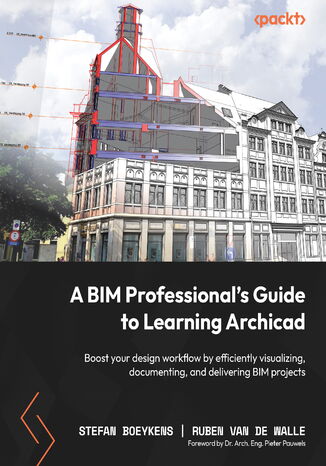
A BIM Professional’s Guide to Learning Archicad is a comprehensive introduction to all that Archicad has to offer for creating 3D models, 2D document extracts, and related outputs. This book is not a click-by-click series of recipes, but rather focuses on helping you understand why and how Archicad works by providing realistic examples and expert tips.The book gradually introduces you to Archicad tools using ample examples. It then helps you master its complexity through clear modules, allowing you to start your first project quickly, gain useful skills in subsequent projects, and keep using the book as a source for insights into the software. You’ll start with the basic modeling of construction elements and then move on to adding roofs, stairs, and objects to the project. Next, you’ll dive into basic drafting and 2D views for creating 2D output, and grasp how to use attributes and more advanced modeling tools for designing curtain walls and sites. The concluding chapters will show you how to extract and visualize your data and automate the publishing of your extracts and 2D documents into a variety of output formats.By the end of this book, you’ll have gained a solid understanding of Archicad, how to implement it efficiently in your architectural projects, and how BIM can improve your overall design workflow.
Trista Pan , Zhang Liang, Yacine Si...
Apache ShardingSphere is a new open source ecosystem for distributed data infrastructures based on pluggability and cloud-native principles that helps enhance your database.This book begins with a quick overview of the main challenges faced by database management systems (DBMSs) in production environments, followed by a brief introduction to the software's kernel concept. After that, using real-world examples of distributed database solutions, elastic scaling, DistSQL, synthetic monitoring, database gateways, and SQL authority and user authentication, you’ll fully understand ShardingSphere's architectural components, how they’re configured and can be plugged into your existing infrastructure, and how to manage your data and applications. You’ll also explore ShardingSphere-JDBC and ShardingSphere-Proxy, the ecosystem’s clients, and how they can work either concurrently or independently to address your needs. You’ll then learn how to customize the plugin platform to define personalized user strategies and manage multiple configurations seamlessly. Finally, the book enables you to get up and running with functional and performance tests for all scenarios.By the end of this book, you’ll be able to build and deploy a customized version of ShardingSphere, addressing the key pain points encountered in your data management infrastructure.
Emmanouil Gkatziouras
Software development is becoming increasingly complex due to the various software components used. Applications need to be packaged with software components to facilitate their operations, making it complicated to run them. With Docker Compose, a single command can set up your application and the needed dependencies.This book starts with an overview of Docker Compose and its usage and then shows how to create an application. You will also get to grips with the fundamentals of Docker volumes and network, along with Compose commands, their purpose, and use cases. Next, you will set up databases for daily usage using Compose and, leveraging Docker networking, you will establish communication between microservices. You will also run entire stacks locally on Compose, simulate production environments, and enhance CI/CD jobs using Docker Compose. Later chapters will show you how to benefit from Docker Compose for production deployments, provision infrastructure on public clouds such as AWS and Azure, and wrap up with Compose deployments on said infrastructure.By the end of this book, you will have learned how to effectively utilize Docker Compose for day-to-day development.
Hamida Rebai
To deliver software at a faster rate and reduced costs, companies with stable legacy systems and growing data volumes are trying to modernize their applications and accelerate innovation, but this is no easy matter. A Developer’s Guide to Building Resilient Cloud Applications with Azure helps you overcome these application modernization challenges to build secure and reliable cloud-based applications on Azure and connect them to databases with the help of easy-to-follow examples.The book begins with a basic definition of serverless and event-driven architecture and Database-as-a-Service, before moving on to an exploration of the different services in Azure, namely Azure APIManagement using the gateway pattern, event-driven architecture, Event Grid, Azure Event Hubs, Azure message queues, FaaS using Azure Functions, and the database-oriented cloud. Throughout the chapters, you’ll learn about creating, importing, and managing APIs and Service Fabric in Azure, and discover how to ensure continuous integration and deployment in Azure to fully automate the software delivery process, that is, the build and release process.By the end of this book, you’ll be able to build and deploy cloud-oriented applications using APIs, serverless, Service Fabric, Azure Functions, and Event Grid technologies.
Anuraj Parameswaran, Tamir Al Balkhi
A Developer’s Guide to .NET in Azure helps you embark on a transformative journey through Microsoft Azure that is tailored to .NET developers. This book is a curated compendium that’ll enable you to master the creation of resilient, scalable, and highly available applications.The book is divided into four parts, with Part 1 demystifying Azure for you and emphasizing the portal's utility and seamless integration. The chapters in this section help you configure your workspace for optimal Azure synergy. You’ll then move on to Part 2, where you’ll explore serverless computing, microservices, containerization, Dapr, and Azure Kubernetes Service for scalability, and build pragmatic, cost-effective applications using Azure Functions and Container apps. Part 3 delves into data and storage, showing you how to utilize Azure Blob Storage for unstructured data, Azure SQL Database for structured data, and Azure Cosmos DB for document-oriented data. The final part teaches you about messaging and security, utilizing Azure App Configuration, Event Hubs, Service Bus, Key Vault, and Azure AD B2C for robust, secure applications.By the end of this book, you’ll have mastered Azure's responsive infrastructure for exceptional applications.
Eran Kinsbruner
Testing web applications during a sprint poses a challenge for frontend web app developers, which can be overcome by harnessing the power of new, open source cross-browser test automation frameworks. This book will introduce you to a range of leading, powerful frameworks, such as Selenium, Cypress, Puppeteer, and Playwright, and serve as a guide to leveraging their test coverage capability. You’ll learn essential concepts of web testing and get an overview of the different web automation frameworks in order to integrate them into your frontend development workflow. Throughout the book, you'll explore the unique features of top open source test automation frameworks, as well as their trade-offs, and learn how to set up each of them to create tests that don't break with changes in the app.By the end of this book, you'll not only be able to choose the framework that best suits your project needs but also create your initial JavaScript-based test automation suite. This will enable fast feedback upon code changes and increase test automation reliability. As the open source market for these frameworks evolves, this guide will help you to continuously validate your project needs and adapt to the changes.
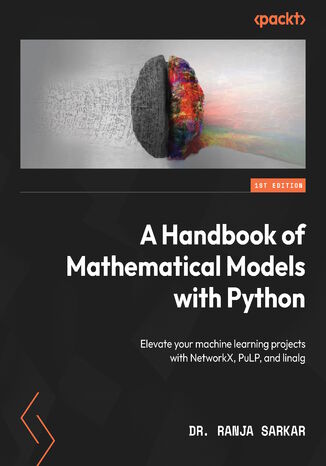
Ranja Sarkar
Mathematical modeling is the art of transforming a business problem into a well-defined mathematical formulation. Its emphasis on interpretability is particularly crucial when deploying a model to support high-stake decisions in sensitive sectors like pharmaceuticals and healthcare.Through this book, you’ll gain a firm grasp of the foundational mathematics underpinning various machine learning algorithms. Equipped with this knowledge, you can modify algorithms to suit your business problem. Starting with the basic theory and concepts of mathematical modeling, you’ll explore an array of mathematical tools that will empower you to extract insights and understand the data better, which in turn will aid in making optimal, data-driven decisions. The book allows you to explore mathematical optimization and its wide range of applications, and concludes by highlighting the synergetic value derived from blending mathematical models with machine learning.Ultimately, you’ll be able to apply everything you’ve learned to choose the most fitting methodologies for the business problems you encounter.
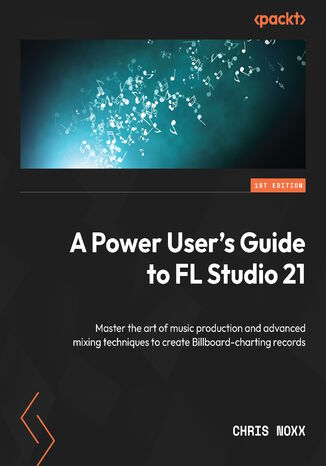
Chris Noxx
A digital audio workstation empowering both aspiring and seasoned producers to create original music compositions, FL Studio has not only advanced the culture of collaboration across several genres but has provided a creative outlet for up-and-coming artists worldwide.Achieving professional production prowess takes practice, market insight, and mentorship. This book explains how the author used FL Studio as a creative palette to build a successful career as a record producer, using specific techniques and workflow processes that only FL Studio can accommodate. You’ll develop a Power User's mindset, create signature sounds using stock FL Studio One Shots, create top-level drum loops, learn about FL Studio's VST’s, and approach arrangements from a practical and pop music perspective. This comprehensive guide covers everything from crafting and adding hypnotic melodies and chords, to mixing and mastering productions, and promoting those records to artists and companies, to take your career to the next level.By the end of this book, you’ll be able to create original productions from scratch using FL Studio’s virtual instruments and sound kits, mix and master the finished production, and arrange it using the Billboard-charting formula.
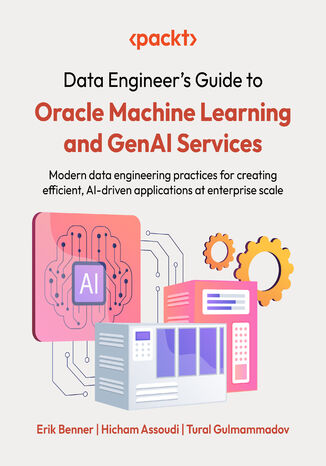
Erik Benner, Hicham Assoudi, Tural Gulmammadov
In A Practical Guide to Oracle AI Engineering, you'll learn how to tackle the challenges of building scalable, high-performance AI workflows in modern enterprises. Many organizations struggle to turn raw data into actionable insights while maintaining security, compliance, and operational efficiency. This book provides practical, end-to-end guidance for data engineers and architects to design, secure, implement, and optimize ML and GenAI solutions across Oracle Cloud, Oracle Database, and MySQL HeatWave.Written by multiple Oracle experts with deep experience in Oracle technologies and enterprise data platforms, this book walks you through real-world examples and hands-on workflows, from data preparation and in-database ML to deploying GenAI-powered applications and intelligent agents. You’ll gain skills in building pipelines, managing models, leveraging vector search for advanced AI use cases, and integrating AI into business applications with APEX and Oracle Digital Assistant. Advanced topics include scalable model deployment, serverless inference, monitoring, and MLOps best practices. By the end, you’ll be equipped to solve complex data challenges, accelerate AI adoption, and deliver measurable business impact through intelligent, production-ready solutions.