
Informatyka
B. M. Harwani
Core Data is the essential ingredient in data driven iOS apps. It's used for storing, retrieving, and manipulating application data in databases, XML, and binary formats. It's an essential component for iPhone, iPod Touch, and iPad apps.Core Data Essentials provides a clear, readable guide to the most useful aspects of Core Data. Built around a realistic example app, the book showcases the most important aspects of Core Data development in the context of a complete, functioning app written in Objective C.The book starts with a tour of how the app works. Then you'll see how to easily display data using the Table View. You'll learn how to develop an appropriate data model that fits the needs of your app, then implement that model as updatable data objects. You'll see how to update data and build relationships between objects and learn how Core Data can work with search, and how to provide your users with friendly data editing features.
Corel PaintShop Pro X4. Obróbka zdjęć cyfrowych. Ćwiczenia praktyczne
Roland Zimek
Popraw swoje fotografie, korzystając z prostego i wydajnego programu do obróbki zdjęć! Jak sprawić, aby zdjęcia wyglądały jeszcze lepiej? Jak osiągnąć ciekawe efekty artystyczne? Jak połączyć ze sobą fragmenty kilku zdjęć? Wszyscy robimy dziś tysiące cyfrowych zdjęć, z których większość nigdy nie opuszcza dysku komputera, a tylko nieliczne są w ogóle przez kogoś oglądane. Dzieje się tak, ponieważ nie radzimy sobie z selekcją fotografii i zarządzaniem nimi. Niewielu z nas potrafi też obrabiać je w takim stopniu, aby nadawały się do publicznej prezentacji. Ponadto niektórzy nie mają pojęcia, jak udostępnić je w internecie. Jak się do tego zabrać? Jak ogarnąć duże zbiory zdjęć? Jak wybrać te najlepsze i przygotować je do prezentacji lub druku? Jak sprawić, aby wyglądały dobrze na ekranie komputera oraz w postaci odbitek? Odpowiedzi na te i wiele innych pytań znajdziesz w książce "Corel PaintShop Pro X4. Obróbka zdjęć cyfrowych. Ćwiczenia praktyczne ". Krok po kroku przedstawia ona wszystkie etapy obróbki fotografii, począwszy od operacji takich, jak importowanie i otwieranie zdjęć, poprzez ich kadrowanie, korektę, retusz, stosowanie efektów czy filtrów, a skończywszy na tworzeniu kolaży, korzystaniu z warstw i obróbce HDR. Książka stanowi doskonałe źródło praktycznej wiedzy dla wszystkich fotoamatorów, którzy chcą poznać jedno z najbardziej popularnych narzędzi do edycji cyfrowych zdjęć i zarządzania ich zbiorami. Takim narzędziem niewątpliwie jest program Corel PaintShop Pro X4. Podstawowe zasady pracy w programie Corel PaintShop Pro X4 Otwieranie, importowanie, eksportowanie i zapisywanie zdjęć Kadrowanie fotografii i edycja ich podstawowych parametrów Wszechstronny retusz zdjęć i zaawansowane techniki korekcji Korzystanie z filtrów i efektów artystycznych Retusz osób na zdjęciach Obróbka HDR, plików RAW i stosowanie warstw Łączenie wielu zdjęć w jedno i edycja obiektów Tworzenie panoram i praca z tłami Osiągaj wspaniałe efekty z programem Corel PaintShop Pro X4!
Witold Wrotek
CorelDRAW dla każdego! CorelDRAW, czyli dlaczego warto rysować i projektować z użyciem tego fantastycznego programu CorelPHOTO-PAINT, czyli jak zrobić dobry użytek z aplikacji Corela do edycji zdjęć i malowania obrazów Mnóstwo dobrych przykładów, czyli jak porzucić teorię na rzecz praktyki i błyskawicznie opanować materiał CorelDRAW to program znany wszystkim, choć czasem wyłącznie z nazwy. Jest bardzo wygodny i da się w nim narysować niemal wszystko. Nie wierzysz? Przeczytaj tę książkę i dowiedz się, jak i do czego wykorzystać aplikacje składające się na pakiet CorelDRAW Graphics Suite 7, a szybko zmienisz zdanie. Może nawet spodobają Ci się tak, że nie zechcesz więcej używać żadnych innych, czego serdecznie życzy Ci autor niniejszego poradnika. Zobacz, jakie cuda można zrobić za pomocą programów CorelDRAW, CorelPHOTO-PAINT oraz kilku pożytecznych dodatków. W nowym wydaniu książki Witolda Wrotka oprócz rzetelnych opisów najważniejszych funkcji i metod pracy z programami do grafiki wektorowej i bitmapowej, a także uaktualnień związanych z wprowadzeniem kolejnej wersji pakietu, CorelDRAW Graphics Suite 7, można znaleźć całą masę konkretnych przykładów zastosowania różnych rozwiązań w praktyce. Dowiesz się stąd, jak rozpocząć pracę z programem i w szybkim tempie przejść do pracy projektowej. W mig nauczysz się rozwiązywać problemy, wybierać najlepsze narzędzia, tworzyć zaawansowane rysunki wektorowe i poprawiać zdjęcia. A gdy już uda Ci się osiągnąć oczekiwane efekty, sam przyznasz, że nie możesz obyć się bez Corela! Z książki dowiesz się, jak w programach CorelDRAW i CorelPHOTO-PAINT: wyglądają elementy ekranów można rozpocząć pracę rysować linie i figury stosować obiekty, wypełnienia i kolory pracować z bitmapami i dodawać tekst wykorzystywać efekty dwu i trójwymiarowe zapisywać i eksportować pliki zaznaczać według kolorów tworzyć animacje używać deformacji przygotowywać obrazki do druku i je drukować Wypróbuj szczęśliwą siódemkę Corela — CorelDRAW Graphics Suite 7!
CorelDRAW Graphics Suite X6 PL
Witold Wrotek
Odkryj w sobie duszę artysty — rozpocznij przygodę z Corelem! Poznaj narzędzia pakietu CorelDRAW Graphics Suite X6 Dowiedz się, jak rysować, przekształcać i drukować grafikę Naucz się edytować, kadrować i korygować fotografie Rozwojowi informatyki towarzyszy lawinowy wzrost liczby programów użytkowych, w tym również oprogramowania umożliwiającego tworzenie i edycję obrazów cyfrowych. Jedną z pierwszych liczących się aplikacji graficznych był CorelDRAW — program służący początkowo jedynie do edycji grafiki wektorowej, który z czasem ewoluował w rozbudowany pakiet wyspecjalizowanych narzędzi. Za jego pomocą można nie tylko poprawiać obrazy, lecz także wykonywać wiele innych czynności, zarówno w profesjonalnych studiach graficznych, jak i wśród wymagających hobbystów. Jeśli chcesz wkroczyć w magiczny świat grafiki komputerowej z pakietem CorelDRAW lub planujesz zastąpić nim dotychczas używany program, sięgnij po książkę CorelDRAW Graphics Suite X6 PL. Krok po kroku przedstawi Ci ona kluczowe narzędzia najnowszej polskiej wersji Corela, pokaże, jak efektywnie tworzyć i edytować grafikę wektorową, oraz zaprezentuje techniki stosowane w obróbce grafiki rastrowej, w tym zdjęć cyfrowych. Poznasz również funkcje tekstowe pakietu, nauczysz się korzystać z efektów 2D i 3D. Dowiesz się, jak przygotowywać graficzne elementy stron WWW oraz animacje, a także odkryjesz tajniki zapisywania, eksportowania i drukowania prac. Interfejs użytkownika programów pakietu CorelDRAW Podstawowe operacje rysunkowe i edycyjne Dodawanie, przekształcanie i deformowanie obiektów Korzystanie z kolorów i wypełnień Wstawianie tekstów, ich edycja i przekształcanie Zastosowanie efektów dwu- i trójwymiarowych Tworzenie animacji i grafiki na strony WWW Zapisywanie, eksportowanie i drukowanie prac Zostań grafikiem z CorelDRAW Graphics Suite X6!
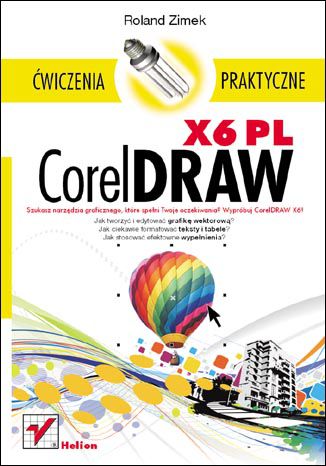
CorelDRAW X6 PL. Ćwiczenia praktyczne
Roland Zimek
Szukasz narzędzia graficznego, które spełni Twoje oczekiwania? Wypróbuj CorelDRAW X6! Jak tworzyć i edytować grafikę wektorową? Jak ciekawie formatować teksty i tabele? Jak stosować efektowne wypełnienia? CorelDRAW to bardzo popularny wśród profesjonalistów i zaawansowanych amatorów program graficzny, umożliwiający tworzenie i edytowanie różnego rodzaju obrazów wektorowych. Rozwiązanie to doskonale sprawdza się podczas przygotowywania plakatów, szyldów, reklam, wizytówek, dyplomów, broszur, raportów, a nawet przy tworzeniu skomplikowanych rysunków technicznych. Program cieszy się dużym uznaniem wśród grafików dzięki prostocie używania i rozbudowanym narzędziom edycyjnym, a także sporym możliwościom wykorzystania danych pochodzących z innych aplikacji. Jeśli chcesz naprawdę dobrze poznać funkcje tego programu i nauczyć się stosować je w praktyce, sięgnij po książkę "CorelDRAW X6 PL. Ćwiczenia praktyczne". Zaprezentowane w niej opisy i zadania szybko wprowadzą Cię w świat grafiki wektorowej, a także pozwolą poznać najlepsze techniki projektowe i skutecznie ich używać. Z książki tej nauczysz się, jak poprawnie tworzyć i edytować różnego rodzaju materiały graficzne, umieszczać i formatować w nich teksty oraz tabele, posługiwać się konturami i wypełnieniami oraz precyzyjnie rysować za pomocą narzędzi oferowanych przez najnowszą wersję programu CorelDRAW. Wprowadzenie do grafiki wektorowej Podstawowe działania w programie Rysowanie kształtów w CorelDRAW Edycja i przekształcanie obiektów Wprowadzanie i formatowanie tekstów Tworzenie i modyfikowanie tabel Stosowanie różnych rodzajów wypełnień Korzystanie z konturów Używanie narzędzi do precyzyjnego rysowania Wykorzystaj program CorelDRAW X6 do tworzenia profesjonalnych grafik!
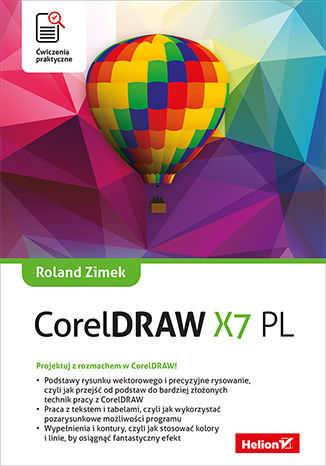
CorelDRAW X7 PL. Ćwiczenia praktyczne
Roland Zimek
Projektuj z rozmachem w CorelDRAW! Podstawy rysunku wektorowego i precyzyjne rysowanie, czyli jak przejść od podstaw do bardziej złożonych technik pracy z CorelDRAW Praca z tekstem i tabelami, czyli jak wykorzystać pozarysunkowe możliwości programu Wypełnienia i kontury, czyli jak stosować kolory i linie, by osiągnąć fantastyczny efekt Praca z CorelDRAW od wielu lat jest źródłem satysfakcji i sukcesów całej rzeszy użytkowników: projektantów, grafików, hobbystów i zawodowców. Już od ćwierćwiecza program ten wykorzystywany jest do tworzenia reklam, szyldów i skomplikowanych rysunków technicznych. Ponieważ jednak CorelDRAW działa na zasadach zupełnie innych niż popularny Paint czy Photoshop, wiele osób omija go szerokim łukiem. Niesłusznie! Niektóre obrazy, zwłaszcza te wymagające precyzji oraz skalowalności, da się przygotować wyłącznie w Corelu. Sprawdź, jak działa najnowsza wersja programu, CorelDRAW X7 PL. W tej książce znajdziesz praktyczne informacje, które pozwolą Ci od razu rozpocząć pracę z programem. Dowiesz się, jakie reguły rządzą obiektami i jak wykorzystać je do swoich celów. Odkryjesz, jak narysować i wstawić kształt geometryczny, wypełnić go kolorem i uzupełnić o tekst. Nauczysz się zmieniać wielkość elementów oraz wygląd czcionek, pracować z tabelami, używać linijki i siatki. Zrozumiesz sens grupowania obiektów i stosowania prowadnic. A wszystko to w serii przemyślanych ćwiczeń, których wykonanie pozwoli Ci mistrzowsko opanować CorelDRAW! Uruchamianie programu i wygląd ekranu Rysowanie prostych obiektów i nadawanie kolorów Transformacje obiektów, tworzenie kopii i wybieranie obiektów Kolejność obiektów, ich grupowanie i blokowanie Wyrównywanie i rozkładanie oraz zmiana kształtu obiektów Wprowadzanie i formatowanie tekstu Wyrównywanie obiektów względem tekstu Wstawianie znaków specjalnych i zabawa czcionkami Praca nad kolumnami, wierszami i komórkami w tabelach Wypełnienie jednolite, tonalne, postscriptowe Okno Właściwości obiektu i stosowanie konturów Linijki, siatka i prowadnice Przyciąganie obiektów i tekstu do siatki bazowej Zostań specem od Corela!
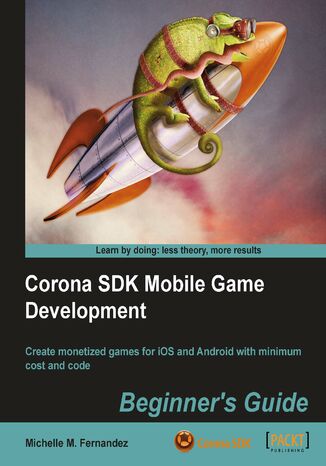
Michelle M Fernandez
Corona SDK is the fastest and easiest way to create commercially successful cross platform mobile games. Just ask Robert Nay, a 14 year old who created Bubble Ball - downloaded three million times, famously knocking Angry Birds off the top spot. You don't need to be a programming veteran to create games using Corona. Corona SDK is the number one tool for creating fun, simple blockbuster games. Assuming no experience at all with programming or game development you will learn the basic foundations of Lua and Corona right through to creating several monetized games deployable to Android and Apple stores. You will begin with a crash course in Lua, the programming language underpinning the Corona SDK tool. After downloading and installing Corona and writing some simple code you will dive straight into game development. You will start by creating a simple breakout game with controls optimized for mobile. You will build on this by creating two more games incorporating different features such as falling physics. The book ends with a tutorial on social network integration, implementing in app purchase and most important of all monetizing and shipping your game to the Android and App stores.
CORS Essentials. Access web resources on different domains
Rajesh Gunasundaram
This book explains how to use CORS, including specific implementations for platforms such as Drupal, WordPress, IIS Server, ASP.NET, JBoss, Windows Azure, and Salesforce, as well as how to use CORS in the Cloud on Amazon AWS, YouTube, Mulesoft, and others. It examines limitations, security risks, and alternatives to CORS. It explores the W3C Specification and major developer documentation sources about CORS. It attempts to predict what kinds of extension to the CORS specification, or completely new techniques, will come in the future to address the limitations of CORSWeb developers will learn how to share code and assets across domains with CORS. They will learn a variety of techniques that are rather similar in their method and syntax. The book is organized by similar types of framework and application, so it can be used as a reference. Developers will learn about special cases, such as when a proxy is necessary. And they will learn about some alternative techniques that achieve similar goals, and when they may be preferable to using CORS
Tim Juravich
CouchDB is a NoSQL database which is making waves in the development world. It's the tool of choice for many PHP developers so they need to understand the robust features of CouchDB and the tools that are available to them.CouchDB and PHP Web Development Beginner's Guide will teach you the basics and fundamentals of using CouchDB within a project. You will learn how to build an application from beginning to end, learning the difference between the quick wayù to do things, and the right wayù by looking through a variety of code examples and real world scenarios. You will start with a walkthrough of setting up a sound development environment and then learn to create a variety of documents manually and programmatically. You will also learn how to manage their source control with Git and keep track of their progress. With each new concept, such as adding users and posts to your application, the author will take you through code step-by-step and explain how to use CouchDB's robust features. Finally, you will learn how to easily deploy your application and how to use simple replication to scale your application.
cPanel User Guide and Tutorial. Get the most from cPanel with this easy to follow guide
Aric Pedersen
A great book for getting the most out of your cPanel-supporting web hostIf you have web hosting requirements beyond the most basic, you should look for a host that offers cPanel. cPanel gives you tight control over every aspect of your web site, email accounts, and domain names.But once you've got a web site with cPanel support, how do you go about using it? While the documentation included with cPanel may provide a quick reference, to really get the most from it you need a more detailed, systematic tutorial.Read this book to find out exactly how to get the most from cPanel in all aspects of your web site management: web, email, FTP, security, domains, back ups, and more.
CQRS by Example. Master CQRS: Build Efficient and Scalable Systems with Real-World Examples
Carlos Buenosvinos, Christian Soronellas, Keyvan Akbary
This course offers an in-depth exploration of the Command Query Responsibility Segregation (CQRS) pattern, a powerful architecture design that separates read and write operations to achieve greater scalability and performance in software systems. You'll begin by understanding the core principles behind CQRS and why it is essential for handling complex, high-traffic applications. Throughout the course, we’ll work through real-world examples that demonstrate how to apply CQRS to achieve a cleaner and more efficient codebase.Next, we will guide you through the practical aspects of implementing CQRS in a variety of use cases, focusing on how it enhances system maintainability and performance. You'll learn to distinguish between commands and queries effectively, and how to manage data consistency across distributed systems using techniques like event sourcing and eventual consistency.By the end of the course, you will have a comprehensive understanding of CQRS and its benefits. You'll be able to implement it in your own projects, whether you're building new applications or improving legacy systems. With a focus on scalability, maintainability, and performance, this course equips you with the skills needed to take on complex architectural challenges confidently.
Kedeisha Bryan, Taamir Ransome
Preparing for a data engineering interview can often get overwhelming due to the abundance of tools and technologies, leaving you struggling to prioritize which ones to focus on. This hands-on guide provides you with the essential foundational and advanced knowledge needed to simplify your learning journey.The book begins by helping you gain a clear understanding of the nature of data engineering and how it differs from organization to organization. As you progress through the chapters, you’ll receive expert advice, practical tips, and real-world insights on everything from creating a resume and cover letter to networking and negotiating your salary. The chapters also offer refresher training on data engineering essentials, including data modeling, database architecture, ETL processes, data warehousing, cloud computing, big data, and machine learning. As you advance, you’ll gain a holistic view by exploring continuous integration/continuous development (CI/CD), data security, and privacy. Finally, the book will help you practice case studies, mock interviews, as well as behavioral questions.By the end of this book, you will have a clear understanding of what is required to succeed in an interview for a data engineering role.
Viktor Vedmich, Alexander Dovnar, Viktoria Semaan
In the high-stakes world of cloud-native technologies, Kubernetes technical interviews are notoriously challenging, and theory-heavy resources leave candidates unprepared for real-world scenarios. This guide by Viktor Vedmich and Alexander Dovnar, two seasoned professionals with decades of combined experience in DevOps, AWS, and Kubernetes architecture, bridges that gap to help you unlock actionable strategies and insights to excel in even the toughest interviews.Beginning with core concepts such as Pods and Services, the book guides you through scaling, networking, GitOps, and deployment strategies. You’ll explore advanced topics, including security, observability, monitoring, and troubleshooting, all framed in the context of real-world interviews. Each chapter includes practical scenarios and authentic questions that test both your understanding and problem-solving skills. Rather than relying on rote memorization, this guide helps you develop the depth and confidence expected of top-tier Kubernetes professionals.By the end of this hands-on journey, you'll be ready to take on roles from junior DevOps engineer to senior architect, equipped with the practical expertise needed to stand out in today’s competitive hiring process.
Cracking the Product Marketing Code. Craft winning go-to-market strategies for market domination
Iman Bayatra, Daniel Kuperman
In the ever-evolving product landscape, the significance of building the right product and bringing it effectively to the right market cannot be overstated. With this book, you’ll learn how to bridge the gap between your product and the market to meet customer needs effectively.Equipped with a comprehensive understanding of product marketing and its key functions—inbound and outbound strategies—you’ll discover how these strategies interweave throughout the product launch process and how to effectively leverage them to bring a product to market.This product marketing book will help you master the inbound strategies, influencing product development by conducting market and customer research, analyzing the competitive landscape, identifying customer segments, and building buyer personas to identify gaps and drive product innovation.Next, you’ll get to grips with outbound strategies, the driving force behind product adoption and sustained exponential growth. You’ll create and test messaging and positioning, build the go-to-market (GTM) plan, enable your sales team to maximize effectiveness, and ensure a product-market fit throughout the different stages of the buyer journey with impactful collaboration internally and externally for creating value.By the end of this book, you’ll have transformed into a product marketing expert enhancing product innovation, driving product adoption, and accelerating growth.
Create React App 2 Quick Start Guide. Build React applications faster with Create React App
Brandon Richey
If you're a power user and you aren’t happy always reusing default configurations, from previous applications with each new application, then all you need is Create React App (CRA), a tool in the React ecosystem designed to help you create boilerplate code for building a web frontend.This book will help you use CRA to write React programs without significant configuration-related difficulties. With this quick start guide, you will integrate your applications with React to build efficient professional web services.You will learn to design UIs with the features of CRA and template your React applications.By the end of the book, you will be sufficiently skilled to be able to build faster and effective React apps using CRA.
Remo Laubacher
Creating a concrete5 theme isn't complicated if there’s already a HTML document. There are only very few PHP functions you’ll have to add, but those are powerful and give you a lot of freedom. As you’ll learn to create mobile ready themes, you’ll start to see that there’s almost no limit in what you can do.Creating Concrete5 Themes is a practical, hands-on guide that provides you with a number of examples that will teach you how to create powerful concrete5 themes, change the look of content block elements, and even make your site ready for mobile devices.Creating Concrete5 Themes starts with a few words about the editing concept and architecture of concrete5 and then continues with the creation of a basic theme which gets extended with more and more elements until the theme is mobile ready.You will learn where to find the information necessary to get your own concrete5 site and then get a quick introduction to understand the idea of the in-site editing concept. We’ll then create a theme which is extended with features and more details as we progress. You’ll also see some examples to show you the process of overriding elements from the core without losing the ability to upgrade concrete5 in the future. Once we’ve customized every element in concrete5 to build a complete theme, we’ll have a look at responsive techniques to make your site ready for small screen devices such as mobile phones and tablets.