
Informatyka
Zajrzyj do kategorii Informatyka w księgarni internetowej Ebookpoint. Znajdziesz tutaj bestsellerowe książki, ebooki i kursy video z branży IT. Sięgnij po najlepszą literaturę dla specjalistów i rozwijaj doświadczenie, które już posiadasz, lub rozpocznij swoją przygodę z programowaniem, cyberbezpieczeństwem lub grafiką komputerową. Pogłębiaj swoją wiedzę tak, jak Ci wygodnie - z tradycyjną książką, wygodnym ebookiem lub nowoczesnym videokursem. Sprawdź, jakie tytuły znajdziesz w kategorii Informatyka!
Data science od podstaw. Analiza danych w Pythonie. Wydanie II
Joel Grus
Analityka danych jest uważana za wyjątkowo obiecującą dziedzinę wiedzy. Rozwija się błyskawicznie i znajduje coraz to nowsze zastosowania. Profesjonaliści biegli w eksploracji danych i wydobywaniu z nich pożytecznych informacji mogą liczyć na interesującą pracę i bardzo atrakcyjne warunki zatrudnienia. Jednak aby zostać analitykiem danych, trzeba znać matematykę i statystykę, a także nauczyć się programowania. Umiejętności w zakresie uczenia maszynowego i uczenia głębokiego również są ważne. W przypadku tak specyficznej dziedziny, jaką jest nauka o danych, szczególnie istotne jest zdobycie gruntownych podstaw i dogłębne ich zrozumienie. W tym przewodniku opisano zagadnienia związane z podstawami nauki o danych. Wyjaśniono niezbędne elementy matematyki i statystyki. Przedstawiono także techniki budowy potrzebnych narzędzi i sposoby działania najistotniejszych algorytmów. Książka została skonstruowana tak, aby poszczególne implementacje były jak najbardziej przejrzyste i zrozumiałe. Zamieszczone tu przykłady napisano w Pythonie: jest to język dość łatwy do nauki, a pracę na danych ułatwia szereg przydatnych bibliotek Pythona. W drugim wydaniu znalazły się nowe tematy, takie jak uczenie głębokie, statystyka i przetwarzanie języka naturalnego, a także działania na ogromnych zbiorach danych. Zagadnienia te często pojawiają się w pracy współczesnego analityka danych. W książce między innymi: elementy algebry liniowej, statystyki i rachunku prawdopodobieństwa zbieranie, oczyszczanie i eksploracja danych algorytmy modeli analizy danych podstawy uczenia maszynowego systemy rekomendacji i przetwarzanie języka naturalnego analiza sieci społecznościowych i algorytm MapReduce Nauka o danych: bazuj na solidnych podstawach!
Data Science. Programowanie, analiza i wizualizacja danych z wykorzystaniem języka R
Michael Freeman, Joel Ross
Aby surowe dane przekuć w gotową do wykorzystania wiedzę, potrzebna jest umiejętność ich analizy, przekształcania i niekiedy również wizualizacji. Nagrodą za włożony w to wysiłek jest lepsze rozumienie różnych złożonych zagadnień z wielu dziedzin wiedzy. Co więcej, znajomość procesów programowego przetwarzania danych pozwala na szybkie wykrywanie i opisywanie wzorców danych, praktycznie niemożliwych do dostrzeżenia innymi technikami. Dla wielu badaczy jednak barierą na drodze do skorzystania z tych atrakcyjnych możliwości jest konieczność pisania kodu. Oto podręcznik programowania w języku R dla analityków danych, szczególnie przydatny dla osób, które nie mają doświadczenia w tej dziedzinie. Dokładnie opisano tu potrzebne narzędzia i technologie. Zamieszczono wskazówki dotyczące instalacji i konfiguracji oprogramowania do pisania kodu, wykonywania go i zarządzania nim, a także śledzenia wersji projektów i zmian w nich oraz korzystania z innych podstawowych mechanizmów. Poszczególne kroki tworzenia kodu w języku R wyjaśniono dokładnie i przystępnie. Dzięki tej książce można płynnie przejść do konkretnych zadań i budować potrzebne aplikacje. Zrozumienie prezentowanych w niej treści ułatwiają liczne przykłady i ćwiczenia, co pozwala szybko przystąpić do skutecznego analizowania własnych zbiorów danych. W tej książce między innymi: przygotowanie środowiska pracy i rozpoczęcie programowania w R podstawy zarządzania projektami, kontrola wersji i generowanie dokumentacji ramki danych, pakiety dplyr i tidyr kod do wizualizacji danych i pakiet ggplot2 tworzenie aplikacji i techniki współpracy w zespołach specjalistów Po prostu R i dane. Wyciśniesz każdą kroplę wiedzy!
Matt Eland
As the fields of data science, machine learning, and artificial intelligence rapidly evolve, .NET developers are eager to leverage their expertise to dive into these exciting domains but are often unsure of how to do so. Data Science in .NET with Polyglot Notebooks is the practical guide you need to seamlessly bring your .NET skills into the world of analytics and AI. With Microsoft’s .NET platform now robustly supporting machine learning and AI tasks, the introduction of tools such as .NET Interactive kernels and Polyglot Notebooks has opened up a world of possibilities for .NET developers. This book empowers you to harness the full potential of these cutting-edge technologies, guiding you through hands-on experiments that illustrate key concepts and principles. Through a series of interactive notebooks, you’ll not only master technical processes but also discover how to integrate these new skills into your current role or pivot to exciting opportunities in the data science field. By the end of the book, you’ll have acquired the necessary knowledge and confidence to apply cutting-edge data science techniques and deliver impactful solutions within the .NET ecosystem.
Data Science with SQL Server Quick Start Guide. Integrate SQL Server with data science
Dejan Sarka
SQL Server only started to fully support data science with its two most recent editions. If you are a professional from both worlds, SQL Server and data science, and interested in using SQL Server and Machine Learning (ML) Services for your projects, then this is the ideal book for you.This book is the ideal introduction to data science with Microsoft SQL Server and In-Database ML Services. It covers all stages of a data science project, from businessand data understanding,through data overview, data preparation, modeling and using algorithms, model evaluation, and deployment.You will learn to use the engines and languages that come with SQL Server, including ML Services with R and Python languages and Transact-SQL. You will also learn how to choose which algorithm to use for which task, and learn the working of each algorithm.
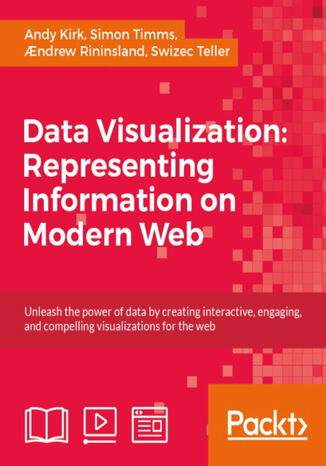
Aendrew Rininsland , Andy Kirk, Swizec Teller,...
Do you want to create more attractive charts? Or do you have huge data sets and need to unearth the key insights in a visual manner? Data visualization is the representation and presentation of data, using proven design techniques to bring alive the patterns, stories, and key insights that are locked away.This learning path is divided into three modules. The first module will equip you with the key techniques required to overcome contemporary data visualization challenges. In the second module, Social Data Visualization with HTML5 and JavaScript, it teaches you how to leverage HTML5 techniques through JavaScript to build visualizations.In third module, Learning d3.js Data Visualization, will lead you to D3, which has emerged as one of the leading platforms to develop beautiful, interactive visualizations over the web. By the end of this course, you will have unlocked the mystery behind successful data visualizations.This Learning Path combines some of the best that Packt has to offer in one complete, curated package. It includes content from the following Packt products:? Data Visualization: a successful design process by Andy Kirk? Social Data Visualization with HTML5 and JavaScript by Simon Timms? Learning d3.js Data Visualization, Second Edition by Ændrew Rininsland and Swizec Teller
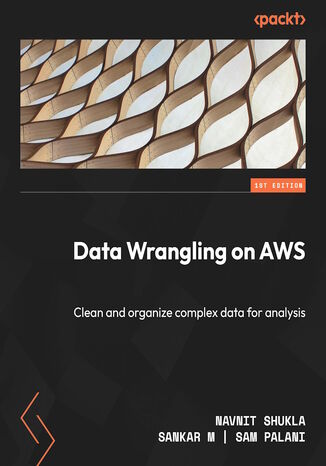
Data Wrangling on AWS. Clean and organize complex data for analysis
Navnit Shukla, Sankar M, Sam Palani
Data wrangling is the process of cleaning, transforming, and organizing raw, messy, or unstructured data into a structured format. It involves processes such as data cleaning, data integration, data transformation, and data enrichment to ensure that the data is accurate, consistent, and suitable for analysis. Data Wrangling on AWS equips you with the knowledge to reap the full potential of AWS data wrangling tools.First, you’ll be introduced to data wrangling on AWS and will be familiarized with data wrangling services available in AWS. You’ll understand how to work with AWS Glue DataBrew, AWS data wrangler, and AWS Sagemaker. Next, you’ll discover other AWS services like Amazon S3, Redshift, Athena, and Quicksight. Additionally, you’ll explore advanced topics such as performing Pandas data operation with AWS data wrangler, optimizing ML data with AWS SageMaker, building the data warehouse with Glue DataBrew, along with security and monitoring aspects.By the end of this book, you’ll be well-equipped to perform data wrangling using AWS services.
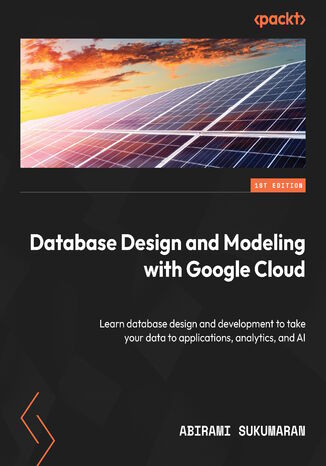
Abirami Sukumaran, Priyanka Vergadia, Bagirathi Narayanan
In the age of lightning-speed delivery, customers want everything developed, built, and delivered at high speed and at scale. Knowledge, design, and choice of database is critical in that journey, but there is no one-size-fits-all solution. This book serves as a comprehensive and practical guide for data professionals who want to design and model their databases efficiently. The book begins by taking you through business, technical, and design considerations for databases. Next, it takes you on an immersive structured database deep dive for both transactional and analytical real-world use cases using Cloud SQL, Spanner, and BigQuery. As you progress, you’ll explore semi-structured and unstructured database considerations with practical applications using Firestore, cloud storage, and more. You’ll also find insights into operational considerations for databases and the database design journey for taking your data to AI with Vertex AI APIs and generative AI examples. By the end of this book, you will be well-versed in designing and modeling data and databases for your applications using Google Cloud.
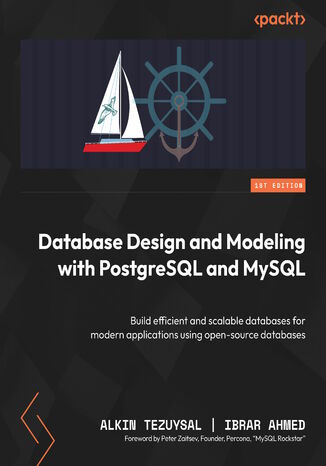
Alkin Tezuysal, Ibrar Ahmed, Peter Zaitsev
Database Design and Modeling with PostgreSQL and MySQL will equip you with the knowledge and skills you need to architect, build, and optimize efficient databases using two of the most popular open-source platforms.As you progress through the chapters, you'll gain a deep understanding of data modeling, normalization, and query optimization, supported by hands-on exercises and real-world case studies that will reinforce your learning. You'll explore topics like concurrency control, backup and recovery strategies, and seamless integration with web and mobile applications. These advanced topics will empower you to tackle complex database challenges confidently and effectively. Additionally, you’ll explore emerging trends, such as NoSQL databases and cloud-based solutions, ensuring you're well-versed in the latest developments shaping the database landscape. By embracing these cutting-edge technologies, you'll be prepared to adapt and innovate in today's ever-evolving digital world.By the end of this book, you’ll be able to understand the technologies that exist to design a modern and scalable database for developing web applications using MySQL and PostgreSQL open-source databases.
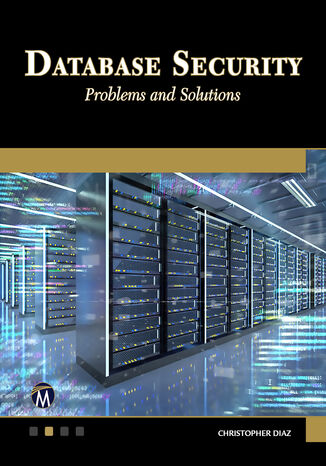
Database Security. Master the Art of Protecting Your Data with Cutting-Edge Techniques
Mercury Learning and Information, Christopher Diaz
This book provides a comprehensive guide to resolving database security issues during design, implementation, and production phases. It emphasizes specific measures and controls unique to database security, beyond general information security. Topics include account credential management, data access management, and techniques like database normalization, referential integrity, transactions, locks, and check constraints.The importance of database security lies in protecting sensitive data from unauthorized access and ensuring data integrity. This book is designed for professionals, workshops, and self-learners, offering hands-on demonstrations with major Database Management Systems (MySQL, Oracle, and Microsoft SQL Server) across various computing platforms (Linux/UNIX, MacOS, Windows).Starting with an introduction to information, data, and database security, the book covers database design, management, administration, user accounts, privileges, roles, and security controls for confidentiality. It also delves into transactions and data integrity with concurrent access. Each chapter includes questions and projects to reinforce learning and comprehension.
Alejandro Duarte
Vaadin is an open-source Java framework used to build modern user interfaces. Vaadin 8 simplifies application development and improves user experience. The book begins with an overview of the architecture of Vaadin applications and the way you can organize your code in modules.Then it moves to the more advanced topics about advanced topics such as internationalization, authentication, authorization, and database connectivity. The book also teaches you how to implement CRUD views, how to generate printable reports, and how to manage data with lazy loading.By the end of this book you will be able to architect, implement, and deploy stunning Vaadin applications, and have the knowledge to master web development with Vaadin.
Thomas Kurian Theakanath
Datadog is an essential cloud monitoring and operational analytics tool which enables the monitoring of servers, virtual machines, containers, databases, third-party tools, and application services. IT and DevOps teams can easily leverage Datadog to monitor infrastructure and cloud services, and this book will show you how.The book starts by describing basic monitoring concepts and types of monitoring that are rolled out in a large-scale IT production engineering environment. Moving on, the book covers how standard monitoring features are implemented on the Datadog platform and how they can be rolled out in a real-world production environment. As you advance, you'll discover how Datadog is integrated with popular software components that are used to build cloud platforms. The book also provides details on how to use monitoring standards such as Java Management Extensions (JMX) and StatsD to extend the Datadog platform. Finally, you'll get to grips with monitoring fundamentals, learn how monitoring can be rolled out using Datadog proactively, and find out how to extend and customize the Datadog platform.By the end of this Datadog book, you will have gained the skills needed to monitor your cloud infrastructure and the software applications running on it using Datadog.
Greg Deckler
DAX provides an extra edge by extracting key information from the data that is already present in your model. Filled with examples of practical, real-world calculations geared toward business metrics and key performance indicators, this cookbook features solutions that you can apply for your own business analysis needs.You'll learn to write various DAX expressions and functions to understand how DAX queries work. The book also covers sections on dates, time, and duration to help you deal with working days, time zones, and shifts. You'll then discover how to manipulate text and numbers to create dynamic titles and ranks, and deal with measure totals. Later, you'll explore common business metrics for finance, customers, employees, and projects. The book will also show you how to implement common industry metrics such as days of supply, mean time between failure, order cycle time and overall equipment effectiveness. In the concluding chapters, you'll learn to apply statistical formulas for covariance, kurtosis, and skewness. Finally, you'll explore advanced DAX patterns for interpolation, inverse aggregators, inverse slicers, and even forecasting with a deseasonalized correlation coefficient.By the end of this book, you'll have the skills you need to use DAX's functionality and flexibility in business intelligence and data analytics.
DAX for Humans. The No CALCULATE Guide that Makes DAX Easy
Greg Deckler
Although DAX has been around for over a decade, many struggle to master the language primarily because DAX is often taught through the CALCULATE function, which is the most complex and unintuitive function in all of DAX. But what if DAX could be taught without CALCULATE? The result would be an incredibly intuitive and easy way to learn DAX.DAX for Humans stands the traditional approach to learning DAX on its head, foregoing the traditional, legacy methods of learning DAX for a more modern approach that focuses on core DAX concepts and not any specific function. Even if you know nothing about DAX, from the very first chapter you will learn the essentials of the DAX language, as well as a single pattern to solve the majority of DAX problems. From that point forward, you’ll explore how to work with the basic building blocks of the DAX language and apply what you learn to real-world business scenarios across customers, human resources, projects, finance, operations, and more.By the end of this book, you’ll be able to apply your DAX skills to simple, complex, and advanced scenarios; understand how to optimize and debug your DAX code; and even know how to efficiently apply artificial intelligence to help you write and debug your DAX code.

Vaughn Vernon
DDD w pigułce Modelowanie oprogramowania jest kojarzone z pojęciem programowania dziedzinowego, w skrócie zwanego DDD. Jest to dość nowatorskie podejście do tworzenia architektury oprogramowania, a jego największą zaletą jest wysoka pewność uzyskiwania bardzo dobrych rezultatów. Programiści często błyskawicznie dostrzegają zalety DDD i korzyści płynące ze stosowania odpowiednich narzędzi, stąd technika ta cieszy się coraz większym uznaniem. Dopiero jednak pełne zrozumienie zasad stosowania wzorców projektowych DDD przez wszystkich zaangażowanych w projekt pozwala na osiągnięcie imponujących wyników przy projektowaniu skomplikowanych systemów oprogramowania. Ten zwięzły i czytelnie napisany podręcznik jest przeznaczony dla programistów, ekspertów dziedzinowych, menedżerów, analityków biznesowych, architektów informacji i testerów. Koncentruje się na praktycznej wiedzy niezbędnej do uzyskania pożądanych rezultatów. Wyjaśniono, jak segregować modele dziedzin za pomocą wzorca kontekstu ograniczonego, jak rozwinąć język wszechobecny, a także w jaki sposób zintegrować wiele kontekstów ograniczonych poprzez wykorzystanie relacji zespołowych i mechanizmów technicznych. Co najważniejsze, dowiesz się, jak podejście DDD działa w rzeczywistości i co zrobić, aby jak najszybciej cieszyć się jego zaletami. W książce przedstawiono następujące zagadnienia: wprowadzenie do DDD i zalety tego podejścia do projektowania projektowanie strategiczne DDD integrowanie istniejących systemów w ramach tworzenia nowych aplikacji modelowanie taktyczne - agregaty i zdarzenia dziedziny narzędzia do zarządzania projektami i przyśpieszania prac Narzędzia DDD - ciesz się udanym wdrożeniem!
Alexandru Bolboacă, Ferenc-Lajos Deák
Think you know C++? Think again.For decades, C++ has been clouded by myths and misunderstandings—from its early design decisions to misconceptions that still linger today. Claims like C++ is too hard to learn or C++ is obsolete are often rooted in some truth, but they are outdated and fail to capture the language’s ongoing evolution and modern capabilities.Written by industry veterans with over 40 years of combined experience, this book uncovers the myths, exploring their origins and relevance in the context of today’s C++ landscape. It equips you with a deeper understanding of advanced features and best practices to elevate your projects. Each chapter tackles a specific misconception, shedding light on C++'s modern features, such as smart pointers, lambdas, and concurrency. You’ll learn practical strategies to navigate common challenges like code portability and compiler compatibility, as well as how to incorporate modern best practices into your C++ codebase to optimize performance and future-proof your projects. By the end of this book, you’ll have a comprehensive understanding of C++'s evolution, equipping you to make informed decisions and harness its powerful features to enhance your skills, coding practices, and projects.

Decyzyjni. Jak zwykli ludzie kreują niezwykłe produkty
Marty Cagan, Chris Jones
Wiodące firmy produktowe nie powstają za sprawą magii! Holly Hester-Reilly, H2R Product Science Wydaje się, że liderzy technologiczni, tacy jak Amazon, Apple, Google czy Tesla, przyciągają wybitnych ludzi i dzięki temu wciąż utrzymują swoją innowacyjność. W rzeczywistości ważniejsze jest środowisko, które pozwala zespołowi produktowemu na wypracowywanie niezwykłych rozwiązań. Większość firm jednak utrzymuje struktury uniemożliwiające wykorzystanie ludzkiej innowacyjności. Oto instrukcja, dzięki której liderzy będą mogli przeprowadzać transformacje w swoich organizacjach! Martin Eriksson, Mind the Product Cagan i Jones stworzyli kompendium wiedzy o przywództwie produktowym Teresa Torres, Product Talk W tej książce znajdziesz wszystkie informacje, które są Ci potrzebne do stworzenia środowiska sprzyjającego tworzeniu innowacyjnych rozwiązań. Dowiesz się, jak dostrzegać i wykorzystywać naturalne talenty każdego członka zespołu. Zapoznasz się z szeregiem praktycznych wskazówek, dzięki którym zidentyfikujesz wszelkie kwestie organizacyjne i kulturowe utrudniające pracę zespołu produktowego. Prześledzisz też liczne przykłady ułatwiające zrozumienie omawianych przez autorów koncepcji i wdrażanie ich we własnej organizacji. Przede wszystkim jednak nauczysz się tego, co najważniejsze: funkcjonowania przywództwa produktowego. Poznaj sekrety organizacji produktowych światowej klasy i zostań takim liderem, jakiego potrzebuje Twój zespół produktowy! Sprawdź, jak konkretnie działają zespoły produktowe, które odnoszą sukcesy Poznaj techniki rekrutacji i coachingu członków zespołów produktowych Opanuj zasady tworzenia inspirujących wizji produktów i strategii produktowych Naucz się przydzielać zespołom problemy do rozwiązania, a nie funkcjonalności do opracowania Dowiedz się, jak przeprowadzić udaną transformację organizacji produktowej Czytajcie, i to już! Phill Terry, Collaborative Gain Oto przewodnik po przywództwie produktowym, jakiego dotąd wszystkim nam brakowało! Gabrielle Bufrem, VMware Lektura obowiązkowa dla liderów produktu! Felipe Castro, Outcome Edge