
Programowanie
Hemang Doshi
Are you looking to prepare for the CISA exam and understand the roles and responsibilities of an information systems (IS) auditor?The CISA - Certified Information Systems Auditor Study Guide is here to help you get started with CISA exam prep.This book covers all the five CISA domains in detail to help you pass the exam. You’ll start by getting up and running with the practical aspects of an information systems audit. The book then shows you how to govern and manage IT, before getting you up to speed with acquiring information systems. As you progress, you’ll gain knowledge of information systems operations and understand how to maintain business resilience, which will help you tackle various real-world business problems. Finally, you’ll be able to assist your organization in effectively protecting and controlling information systems with IT audit standards.By the end of this CISA book, you'll not only have covered the essential concepts and techniques you need to know to pass the CISA certification exam but also have the ability to apply them in the real world.
Andy Paul
If you are a Citrix® engineer, a virtualization consultant, or an IT project manager with prior experience of using Citrix XenApp® and related technologies for desktop virtualization and want to further explore the power of XenApp® for flawless desktop virtualization, then this book is for you.
Gaspare Silvestri
Over 40 engaging recipes that will help you implement a full-featured XenDesktop® 7.6 architecture and its main satellite componentsAbout This BookImplement, configure, and optimize the migration from a physical to a VDI architecture using XenDesktop 7.6Publish desktops and applications to the end user devices, optimizing their performance and increasing the security for the delivered resourcesA pragmatic guide that helps you to explore the XenDesktop 7.6 architecture and its related components to implement a service-oriented architecture based on the Citrix FlexCast approachWho This Book Is ForIf you are a system administrator or an experienced IT professional who wants to refer to a centralized container of procedures and advanced tasks in XenDesktop, this is the book for you.Experience of the virtualized environment and an understanding of the general concepts of desktop virtualization (VDI) are required.What You Will LearnUpgrade from XenDesktop 5.6 / 7.x to XenDesktop 7.6Configure and deploy virtual machines for XenDesktop 7.6Perform configuration and optimization operations for desktop and server OS images for future deploymentsPlan and configure XenDesktop user experienceExecute desktop environment administration tasks, including catalog creation, power management, and resource allocationUnderstand how to publish the hosted applications, Local Access Apps (LAA), and applications using Microsoft App-VWork with XenDesktop PowerShell to reduce the time required to perform the management tasks by the creation of the PowerShell scriptsImplement the two-factor hardware and software authentication for XenDesktopInstall and configure Citrix Netscaler Gateway 10.5 and Citrix XenMobile 10 to improve the quality, the performance, and the manageability of your Virtual Desktop Infrastructure (VDI) architectureIn DetailIn the era of Bring Your Own Device (BYOD) and consecration of the mobile devices, Citrix has strengthened its position in this market, powering its desktop and application virtualization platforms, integrating the ability to publish virtual and physical desktops with the capability to assign applications and contents in a secure manner on any device, anywhere, more than previous versions. The XenDesktop 7.6 version is a more integrated platform, which permits the use and interaction with mobility and cloud platforms leaders in the market.This book will help you understand how to implement, configure, and optimize migration from a physical to a VDI architecture, moving from a standard application approach to a centralized and more secure way to assign and release resources to the end users.The book begins with the upgrade and installation procedures for the core infrastructural components, along with an explanation of how to deploy and optimize procedures for desktop virtual machines. Moving on, you will perform desktop and applications deployment through the XenDesktop core plus integrated publishing platforms, such as Microsoft App-V.Finally, the book explains how to install and configure important collateral platforms such as the Citrix Netscaler, Citrix CloudBridge and Citrix XenMobile platforms, along with execution of the most advanced activities and configurations.Style and approachThis book is a step-by-step course that includes standard and high-level tasks oriented to deploy a full-functioning Citrix environment. This practical approach is based on both GUI and command-line operations, which gives IT professionals an alternative on the way to operate, where possible.
Claude Code in Action. From zero to deployed apps with AI-assisted development
Taeho Jo
You no longer need traditional programming experience to create real applications. This book introduces you to building software using Claude Code, where you will collaborate with AI to design, develop, and deploy applications from scratch.Starting with the basics, you’ll learn how to work effectively with AI assistants, structure prompts, and translate ideas into working software. As you progress, you’ll build a range of real-world projects from personal websites and portfolio apps to interactive tools and AI-powered applications. Each project is designed to reinforce practical skills while exposing you to modern development workflows.The book emphasizes a structured, step-by-step learning approach, guiding you through planning, iteration, debugging, and deployment. You’ll also explore advanced capabilities such as API integration, automation workflows, and AI agent-based development. Later chapters introduce MCP, plugins, and skills to extend Claude Code into a powerful development environment.By the end of this book, you won’t just understand AI-assisted development, you’ll confidently build, customize, and deploy your own applications.
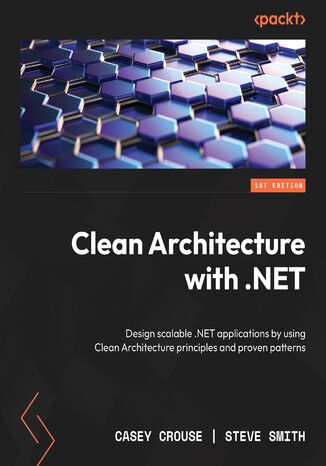
Casey Crouse, Steve "Ardalis" Smith, Jason Taylor
Learn how to apply Clean Architecture in real-world .NET applications with Azure in this guide. Designed around an e-commerce project - Project Odyssey, you’ll design and build every architectural layer, from core domain logic and application orchestration to infrastructure and presentation. This book equips you to apply DDD, CQRS, MediatR, and dependency injection, enabling loosely coupled, testable systems. You’ll build reusable and modular code structures that scale with your application’s complexity and learn how to persist data using EF Core with a code-first approach, managing schema evolution with migrations while keeping infrastructure concerns isolated from your domain logic. Learn how to develop secure systems by integrating Azure External ID, Azure Key Vault, and application-level authentication and authorization. Gain practical experience with Blazor Server, Razor components, and MudBlazor UI, all integrated within a layered architecture. Learn to enforce business logic boundaries, reduce boilerplate with generic request handlers, and use real-world use cases like payment processing and shopping cart management. Whether you're new to Clean Architecture or scaling up enterprise solutions, this book provides the patterns, tools, and mindset to succeed. *Email sign-up and proof of purchase required
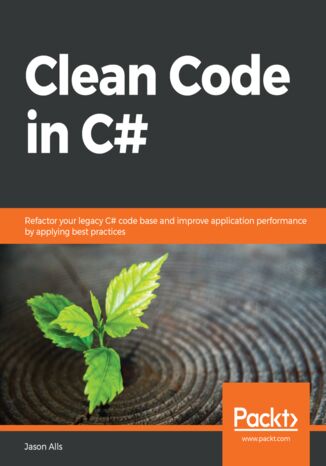
Jason Alls
Traditionally associated with developing Windows desktop applications and games, C# is now used in a wide variety of domains, such as web and cloud apps, and has become increasingly popular for mobile development. Despite its extensive coding features, professionals experience problems related to efficiency, scalability, and maintainability because of bad code. Clean Code in C# will help you identify these problems and solve them using coding best practices.The book starts with a comparison of good and bad code, helping you understand the importance of coding standards, principles, and methodologies. You’ll then get to grips with code reviews and their role in improving your code while ensuring that you adhere to industry-recognized coding standards. This C# book covers unit testing, delves into test-driven development, and addresses cross-cutting concerns. You’ll explore good programming practices for objects, data structures, exception handling, and other aspects of writing C# computer programs. Once you’ve studied API design and discovered tools for improving code quality, you’ll look at examples of bad code and understand which coding practices you should avoid.By the end of this clean code book, you’ll have the developed skills you need in order to apply industry-approved coding practices to write clean, readable, extendable, and maintainable C# code.
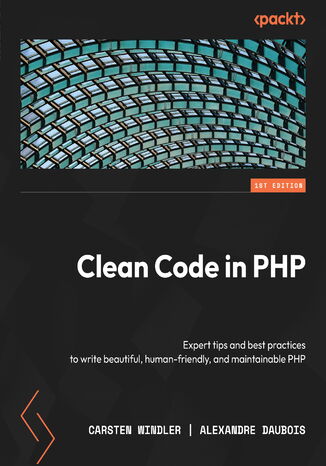
Carsten Windler, Alexandre Daubois
PHP is a beginner-friendly language, but also one that is rife with complaints of bad code,;yet no clean code books are specific to PHP. Enter Clean Code in PHP. This book is a one-stop guide to learning the theory and best practices of clean code specific to real-world PHP app development environments.This PHP book is cleanly split to help you navigate through coding practices and theories to understand and adopt the nuances of the clean code paradigm. In addition to covering best practices, tooling for code quality, and PHP design patterns, this book also presents tips and techniques for working on large-scale PHP apps with a team and writing effective documentation for your PHP projects.By the end of this book, you’ll be able to write human-friendly PHP code, which will fuel your PHP career growth and set you apart from the competition.
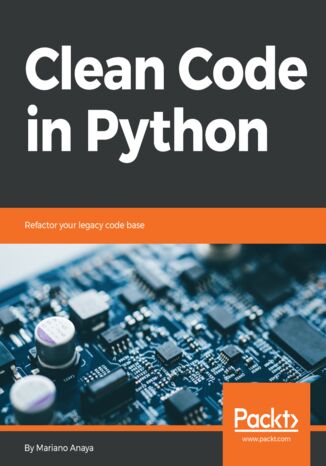
Clean Code in Python. Refactor your legacy code base
Mariano Anaya
Python is currently used in many different areas such as software construction, systems administration, and data processing. In all of these areas, experienced professionals can find examples of inefficiency, problems, and other perils, as a result of bad code. After reading this book, readers will understand these problems, and more importantly, how to correct them. The book begins by describing the basic elements of writing clean code and how it plays an important role in Python programming. You will learn about writing efficient and readable code using the Python standard library and best practices for software design. You will learn to implement the SOLID principles in Python and use decorators to improve your code. The book delves more deeply into object oriented programming in Python and shows you how to use objects with descriptors and generators. It will also show you the design principles of software testing and how to resolve software problems by implementing design patterns in your code. In the final chapter we break down a monolithic application to a microservice one, starting from the code as the basis for a solid platform. By the end of the book, you will be proficient in applying industry approved coding practices to design clean, sustainable and readable Python code.