
Programowanie
Aendrew Rininsland , Michael Heydt, Pablo NAVARRO...
D3 has emerged as one of the leading platforms to develop beautiful, interactive visualizations over the web. We begin the course by setting up a strong foundation, then build on this foundation as we take you through the entire world of reimagining data using interactive, animated visualizations created in D3.js. In the first module, we cover the various features of D3.js to build a wide range of visualizations. We also focus on the entire process of representing data through visualizations. By the end of this module, you will be ready to use D3 to transform any data into a more engaging and sophisticated visualization.In the next module, you will learn to master the creation of graphical elements from data. Using practical examples provided, you will quickly get to grips with the features of D3.js and use this learning to create your own spectacular data visualizations with D3.js.Over the last leg of this course, you will get acquainted with how to integrate D3 with mapping libraries to provide reverse geocoding and interactive maps among many other advanced features of D3. This module culminates by showing you how to create enterprise-level dashboards to display real-time data.This Learning Path combines some of the best that Packt has to offer in one complete, curated package. It includes content from the following Packt products:? Learning D3.js Data Visualization, Second Edition by Andrew H. Rininsland? D3.js By Example by Michael Heydt? Mastering D3.js by Pablo Navarro Castillo
Dancing with Python. Learn to code with Python and Quantum Computing
Robert S. Sutor
Dancing with Python helps you learn Python and quantum computing in a practical way. It will help you explore how to work with numbers, strings, collections, iterators, and files.The book goes beyond functions and classes and teaches you to use Python and Qiskit to create gates and circuits for classical and quantum computing. Learn how quantum extends traditional techniques using the Grover Search Algorithm and the code that implements it. Dive into some advanced and widely used applications of Python and revisit strings with more sophisticated tools, such as regular expressions and basic natural language processing (NLP). The final chapters introduce you to data analysis, visualizations, and supervised and unsupervised machine learning.By the end of the book, you will be proficient in programming the latest and most powerful quantum computers, the Pythonic way.
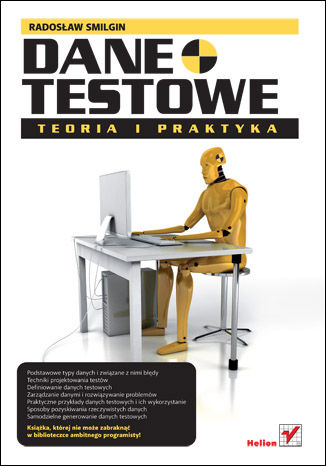
Dane testowe. Teoria i Praktyka
Radosław Smilgin, Anna Piaskowy
Książka, której nie może zabraknąć w biblioteczce ambitnego programisty! Programowanie nierzadko uchodzi za sztukę magiczną, jednak nawet najbardziej pomysłowa aplikacja okaże się bezużyteczna, gdy znajdzie się w niej choć jeden poważny błąd — powodujący, że działanie programu będzie niezgodne z oczekiwaniami twórców i użytkowników. Dlatego nie mniej istotną kwestią jest należyte sprawdzenie poprawności oprogramowania. Takie działanie pozwoli nam zyskać pewność, że otrzymane za jego pomocą wyniki będą w pełni pokrywały się z przyjętymi założeniami. Zadanie to nie jest wcale tak banalne, jak mogłoby się wydawać, a zlekceważenie etapu testów może kosztować znacznie więcej, niż gotowi jesteśmy zapłacić. Niestety, tematyce tej nie poświęca się zwykle odpowiednio dużo uwagi, co można łatwo stwierdzić, przeglądając dostępne na rynku opracowania dotyczące testowania aplikacji. Chlubnym wyjątkiem jest tu książka "Dane testowe. Teoria i praktyka", w całości poświęcona metodologii przygotowywania i praktycznego wykorzystywania danych testowych, które zapewniają maksymalną niezawodność oraz bezpieczeństwo działania programów. Autor wprowadza Czytelnika w teoretyczne podstawy definiowania i generowania tego rodzaju danych, lecz prezentuje również przykłady i możliwości zastosowania opisywanych technik w praktyce. Dzięki temu każdy programista i tester będzie mógł skrócić czas sprawdzania poprawności działania aplikacji i uniknie szeregu typowych błędów oraz zaniechań, popełnianych zwykle w tym nierzadko bardzo skomplikowanym procesie. Podstawowe typy danych i związane z nimi błędy Techniki projektowania testów Definiowanie danych testowych Zarządzanie danymi i rozwiązywanie problemów Praktyczne przykłady danych testowych i ich wykorzystanie Sposoby pozyskiwania rzeczywistych danych Samodzielne generowanie danych testowych
Daniel Arbuckle's Mastering Python. Build powerful Python applications
Daniel Arbuckle
Daniel Arbuckle's Mastering Python covers the basics of operating in a Python development environment, before moving on to more advanced topics. Daniel presents you with real-world solutions to Python 3.6 and advanced-level concepts, such as reactive programming, microservices, ctypes, and Cython tools.You don't need to be familiar with the Python language to use this book, as Daniel starts with a Python primer. Throughout, Daniel highlights the major aspects of managing your Python development environment, shows you how to handle parallel computation, and helps you to master asynchronous I/O with Python 3.6 to improve performance. Finally, Daniel will teach you the secrets of metaprogramming and unit testing in Python, helping you acquire the perfect skillset to be a Python expert. Daniel will get you up to speed on everything from basic programming practices to high-end tools and techniques, things that will help set you apart as a successful Python programmer.
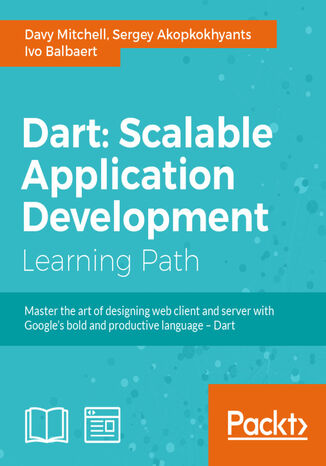
Dart: Scalable Application Development. Provides a solid foundation of libraries and tools
David Mitchell, Sergey Akopkokhyants, Ivo Balbaert
Designed to create next generation apps, Google’s Dart offers a much more robust framework and also supersedes JavaScript in several aspects. Familiar yet innovative, compact yet scalable, it blows away the accumulated JavaScript legacy limitations. Dart was designed for great tool-ability and developer productivity, allowing you to create better application faster than before. Google chose it for their billion dollar advertising business and you have its power for your projects too.The first module will introduce you the Dart language starting from its conception to its current form, and where it headed is through engaging substantial practical projects. You will be taken through building typical applications and exploring the exciting new technologies of HTML5.The second module will show you how to add internalization support to your web applications and how i18n and i10n access can be embedded into your code to design applications that can be localized easily. You will be shown how to organize client-to-server communication and how different HTML5 features can be used in Dart. Finally, this module will show you how you can store data locally, break the storage limit, and prevent security issues in your web application.The third module is a pragmatic guide that will increase your expertise in writing all kinds of applications, including web apps, scripts, and server-side apps. It provides rich insights on how to extend your Dart programming skills. Altogether, this course provides you the power to create powerful applications with Dart, without worrying about your knowledge leading to you having to make compromises to the end product!This Learning Path has been curated from three Packt products:Dart By Example By Davy MitchellMastering Dart By Sergey AkopkokhyantsDart Cookbook By Ivo Balbaert
Cuantum Technologies LLC
Embark on a comprehensive journey through data analysis with Python. Begin with an introduction to data analysis and Python, setting a strong foundation before delving into Python programming basics. Learn to set up your data analysis environment, ensuring you have the necessary tools and libraries at your fingertips. As you progress, gain proficiency in NumPy for numerical operations and Pandas for data manipulation, mastering the skills to handle and transform data efficiently.Proceed to data visualization with Matplotlib and Seaborn, where you'll create insightful visualizations to uncover patterns and trends. Understand the core principles of exploratory data analysis (EDA) and data preprocessing, preparing your data for robust analysis. Explore probability theory and hypothesis testing to make data-driven conclusions and get introduced to the fundamentals of machine learning. Delve into supervised and unsupervised learning techniques, laying the groundwork for predictive modeling.To solidify your knowledge, engage with two practical case studies: sales data analysis and social media sentiment analysis. These real-world applications will demonstrate best practices and provide valuable tips for your data analysis projects.
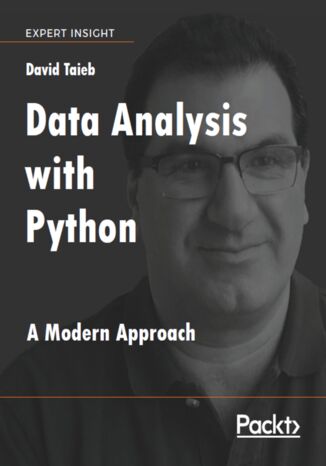
Data Analysis with Python. A Modern Approach
David Taieb
Data Analysis with Python offers a modern approach to data analysis so that you can work with the latest and most powerful Python tools, AI techniques, and open source libraries. Industry expert David Taieb shows you how to bridge data science with the power of programming and algorithms in Python. You'll be working with complex algorithms, and cutting-edge AI in your data analysis. Learn how to analyze data with hands-on examples using Python-based tools and Jupyter Notebook. You'll find the right balance of theory and practice, with extensive code files that you can integrate right into your own data projects.Explore the power of this approach to data analysis by then working with it across key industry case studies. Four fascinating and full projects connect you to the most critical data analysis challenges you’re likely to meet in today. The first of these is an image recognition application with TensorFlow – embracing the importance today of AI in your data analysis. The second industry project analyses social media trends, exploring big data issues and AI approaches to natural language processing. The third case study is a financial portfolio analysis application that engages you with time series analysis - pivotal to many data science applications today. The fourth industry use case dives you into graph algorithms and the power of programming in modern data science. You'll wrap up with a thoughtful look at the future of data science and how it will harness the power of algorithms and artificial intelligence.
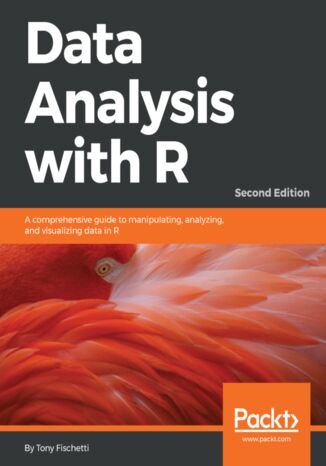
Tony Fischetti
Frequently the tool of choice for academics, R has spread deep into the private sector and can be found in the production pipelines at some of the most advanced and successful enterprises. The power and domain-specificity of R allows the user to express complex analytics easily, quickly, and succinctly. Starting with the basics of R and statistical reasoning, this book dives into advanced predictive analytics, showing how to apply those techniques to real-world data though with real-world examples.Packed with engaging problems and exercises, this book begins with a review of R and its syntax with packages like Rcpp, ggplot2, and dplyr. From there, get to grips with the fundamentals of applied statistics and build on this knowledge to perform sophisticated and powerful analytics. Solve the difficulties relating to performing data analysis in practice and find solutions to working with messy data, large data, communicating results, and facilitating reproducibility.This book is engineered to be an invaluable resource through many stages of anyone’s career as a data analyst.