
Python
W kategorii Python zostały zebrane podręczniki poruszające tematykę programowania z zastosowaniem praktycznie niezależnego sprzętowo, dostępnego na licencji Open Source języka. Książki przedstawią Wam wszechstronności i elastyczności Pythona a także różne typy tworzenia kodu poprzez programowanie strukturalne, obiektowe czy funkcjonalne.
Nauczycie się tworzyć aplikacje sieciowe o dowolnym przeznaczeniu, komunikujące się z systemami operacyjnymi, lub korzystające z baz danych. Techniki analizy składni, przetwarzanie tekstu czy rozłożenie obciążenia programu na wiele wątków i procesów przestanie być problematyczne.
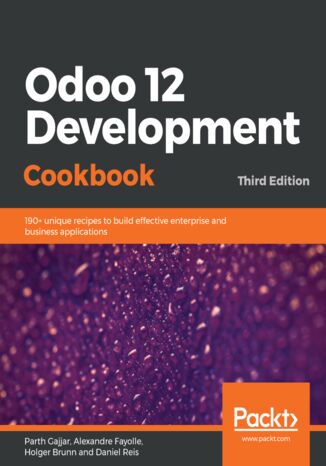
Parth Gajjar, Alexandre Fayolle, Holger Brunn, Daniel...
Odoo is a powerful framework known for rapid application development. Its latest release, Odoo 12, introduces tons of new features. With this book, you’ll learn how to develop powerful Odoo applications from scratch, using all the latest features.This Odoo cookbook starts by covering Odoo installation and deployment on the server. Next, you’ll explore the Odoo framework with real-world examples. You’ll create a new Odoo module from the ground up and progress to advanced framework concepts. You’ll also learn how to modify existing applications, including Point of Sale (POS). This book is not just limited to backend development; the advanced JavaScript recipes for creating new views and widgets will help you build beautiful UI elements. As you move forward, you’ll gain insights into website development and become a quality Odoo developer by studying performance optimization, debugging, and automated tests. Finally, you’ll learn the latest concepts like multi-website, In-App Purchasing (IAP), Odoo.sh, and IoT Box.By the end of the book, you’ll have all the knowledge you need to build powerful Odoo applications. The development best practices used in this book will undoubtedly come handy when you are working with the Odoo framework.
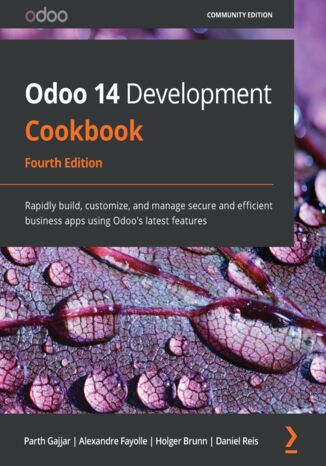
Parth Gajjar, Alexandre Fayolle, Holger Brunn, Daniel...
With its latest iteration, the powerful Odoo framework released a wide variety of features for rapid application development. This updated Odoo development cookbook will help you explore the new features in Odoo 14 and learn how to use them to develop Odoo applications from scratch. You'll learn about the new website concepts in Odoo 14 and get a glimpse of Odoo's new web-client framework, the Odoo Web Library (OWL).Once you've completed the installation, you'll begin to explore the Odoo framework with real-world examples. You'll then create a new Odoo module from the ground up and progress to advanced framework concepts. You'll also learn how to modify existing applications, including Point of Sale (POS) applications. This book isn't just limited to backend development; you'll discover advanced JavaScript recipes for creating new views and widgets. As you progress, you'll learn about website development and become a quality Odoo developer by studying performance optimization, debugging, and automated testing. Finally, you'll delve into advanced concepts such as multi-website, In-App Purchasing (IAP), Odoo.sh, the IoT Box, and security.By the end of the book, you'll have all the knowledge you need to build impressive Odoo applications and you'll be well versed in development best practices that will come in handy when working with the Odoo framework.
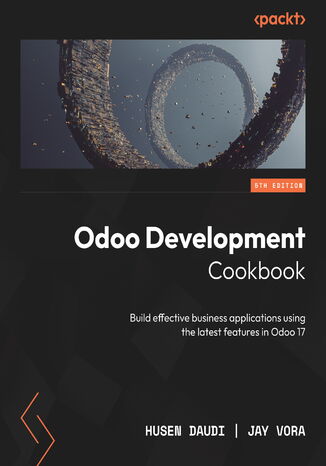
Husen Daudi, Jay Vora, Parth Gajjar, Alexandre...
The latest version of the powerful Odoo framework uncovers a wide variety of features for rapid application development. Written by seasoned Odoo experts, this updated Odoo Development Cookbook will help you explore Odoo 17’s new features and use them to develop applications from scratch.You'll learn about website development concepts and get to grips with the Odoo Web Library (OWL), as well as create a new Odoo module from the ground up before progressing to advanced framework concepts. The book also shows you how to modify existing applications, including Point of Sale (POS) applications. Going beyond backend development, you'll discover advanced JavaScript recipes for creating new views and widgets. You'll get a clear understanding of website development and be on your way to becoming a proficient Odoo developer by studying performance optimization, debugging, and automated testing.By the end of this book, you'll have the knowledge you need to build impressive applications and be well-versed in Odoo development best practices.
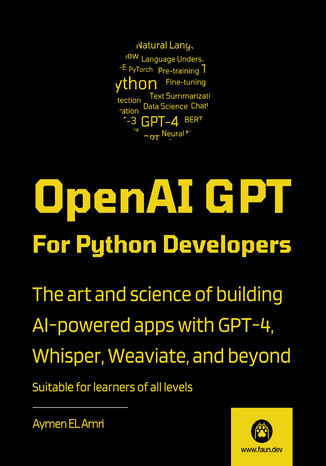
Aymen El Amri
“OpenAI GPT for Python Developers” is meticulously crafted to provide Python developers with a deep dive into the mechanics and applications of GPT technology, beginning with a captivating narrative on the evolution of OpenAI and the fundamental workings of GPT models. As readers progress, they will be expertly guided through the essential steps of setting up a development environment tailored for AI innovations, coupled with insightful advice on selecting the most appropriate GPT model to suit specific project needs.The guide progresses into practical tutorials that cover the implementation of chat completions and the art of prompt engineering, providing a solid foundation in harnessing the capabilities of GPT for generating human-like text responses. Practical applications are further expanded with discussions on the creation of autonomous AI-to-AI dialogues, the development of AI avatars, and the strategic use of AI in interactive applications.In addition to technical skills, this book addresses the ethical implications and prospects of AI technologies, encouraging a holistic view of AI development. The guide is enriched with detailed examples, step-by-step tutorials, and comprehensive explanations that illuminate the theoretical aspects and emphasize practical implementation.
Aleksei Spizhevoi, Aleksandr Rybnikov
OpenCV 3 is a native cross-platform library for computer vision, machine learning, and image processing. OpenCV's convenient high-level APIs hide very powerful internals designed for computational efficiency that can take advantage of multicore and GPU processing. This book will help you tackle increasingly challenging computer vision problems by providing a number of recipes that you can use to improve your applications.In this book, you will learn how to process an image by manipulating pixels and analyze an image using histograms. Then, we'll show you how to apply image filters to enhance image content and exploit the image geometry in order to relay different views of a pictured scene. We’ll explore techniques to achieve camera calibration and perform a multiple-view analysis.Later, you’ll work on reconstructing a 3D scene from images, converting low-level pixel information to high-level concepts for applications such as object detection and recognition. You’ll also discover how to process video from files or cameras and how to detect and track moving objects. Finally, you'll get acquainted with recent approaches in deep learning and neural networks.By the end of the book, you’ll be able to apply your skills in OpenCV to create computer vision applications in various domains.
Gabriel Garrido Calvo, Prateek Joshi
Computer vision is found everywhere in modern technology. OpenCV for Python enables us to run computer vision algorithms in real time. With the advent of powerful machines, we have more processing power to work with. Using this technology, we can seamlessly integrate our computer vision applications into the cloud. Focusing on OpenCV 3.x and Python 3.6, this book will walk you through all the building blocks needed to build amazing computer vision applications with ease.We start off by manipulating images using simple filtering and geometric transformations. We then discuss affine and projective transformations and see how we can use them to apply cool advanced manipulations to your photos like resizing them while keeping the content intact or smoothly removing undesired elements. We will then cover techniques of object tracking, body part recognition, and object recognition using advanced techniques of machine learning such as artificial neural network. 3D reconstruction and augmented reality techniques are also included. The book covers popular OpenCV libraries with the help of examples.This book is a practical tutorial that covers various examples at different levels, teaching you about the different functions of OpenCV and their actual implementation. By the end of this book, you will have acquired the skills to use OpenCV and Python to develop real-world computer vision applications.
Dr. Menua Gevorgyan , Michael Beyeler (USD),...
OpenCV is a native cross-platform C++ library for computer vision, machine learning, and image processing. It is increasingly being adopted in Python for development. This book will get you hands-on with a wide range of intermediate to advanced projects using the latest version of the framework and language, OpenCV 4 and Python 3.8, instead of only covering the core concepts of OpenCV in theoretical lessons. This updated second edition will guide you through working on independent hands-on projects that focus on essential OpenCV concepts such as image processing, object detection, image manipulation, object tracking, and 3D scene reconstruction, in addition to statistical learning and neural networks.You’ll begin with concepts such as image filters, Kinect depth sensor, and feature matching. As you advance, you’ll not only get hands-on with reconstructing and visualizing a scene in 3D but also learn to track visually salient objects. The book will help you further build on your skills by demonstrating how to recognize traffic signs and emotions on faces. Later, you’ll understand how to align images, and detect and track objects using neural networks.By the end of this OpenCV Python book, you’ll have gained hands-on experience and become proficient at developing advanced computer vision apps according to specific business needs.
Michael Beyeler, Michael Beyeler (USD)
Design and develop advanced computer vision projects using OpenCV with PythonAbout This BookProgram advanced computer vision applications in Python using different features of the OpenCV libraryPractical end-to-end project covering an important computer vision problemAll projects in the book include a step-by-step guide to create computer vision applicationsWho This Book Is ForThis book is for intermediate users of OpenCV who aim to master their skills by developing advanced practical applications. Readers are expected to be familiar with OpenCV’s concepts and Python libraries. Basic knowledge of Python programming is expected and assumed.What You Will LearnGenerate real-time visual effects using different filters and image manipulation techniques such as dodging and burningRecognize hand gestures in real time and perform hand-shape analysis based on the output of a Microsoft Kinect sensorLearn feature extraction and feature matching for tracking arbitrary objects of interestReconstruct a 3D real-world scene from 2D camera motion and common camera reprojection techniquesTrack visually salient objects by searching for and focusing on important regions of an imageDetect faces using a cascade classifier and recognize emotional expressions in human faces using multi-layer peceptrons (MLPs)Recognize street signs using a multi-class adaptation of support vector machines (SVMs)Strengthen your OpenCV2 skills and learn how to use new OpenCV3 featuresIn DetailOpenCV is a native cross platform C++ Library for computer vision, machine learning, and image processing. It is increasingly being adopted in Python for development. OpenCV has C++/C, Python, and Java interfaces with support for Windows, Linux, Mac, iOS, and Android. Developers using OpenCV build applications to process visual data; this can include live streaming data from a device like a camera, such as photographs or videos. OpenCV offers extensive libraries with over 500 functionsThis book demonstrates how to develop a series of intermediate to advanced projects using OpenCV and Python, rather than teaching the core concepts of OpenCV in theoretical lessons. Instead, the working projects developed in this book teach the reader how to apply their theoretical knowledge to topics such as image manipulation, augmented reality, object tracking, 3D scene reconstruction, statistical learning, and object categorization.By the end of this book, readers will be OpenCV experts whose newly gained experience allows them to develop their own advanced computer vision applications.Style and approachThis book covers independent hands-on projects that teach important computer vision concepts like image processing and machine learning for OpenCV with multiple examples.