
Python
W kategorii Python zostały zebrane podręczniki poruszające tematykę programowania z zastosowaniem praktycznie niezależnego sprzętowo, dostępnego na licencji Open Source języka. Książki przedstawią Wam wszechstronności i elastyczności Pythona a także różne typy tworzenia kodu poprzez programowanie strukturalne, obiektowe czy funkcjonalne.
Nauczycie się tworzyć aplikacje sieciowe o dowolnym przeznaczeniu, komunikujące się z systemami operacyjnymi, lub korzystające z baz danych. Techniki analizy składni, przetwarzanie tekstu czy rozłożenie obciążenia programu na wiele wątków i procesów przestanie być problematyczne.
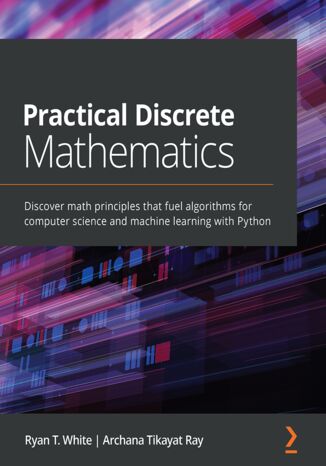
Ryan T. White, Archana Tikayat Ray
Discrete mathematics deals with studying countable, distinct elements, and its principles are widely used in building algorithms for computer science and data science. The knowledge of discrete math concepts will help you understand the algorithms, binary, and general mathematics that sit at the core of data-driven tasks.Practical Discrete Mathematics is a comprehensive introduction for those who are new to the mathematics of countable objects. This book will help you get up to speed with using discrete math principles to take your computer science skills to a more advanced level.As you learn the language of discrete mathematics, you’ll also cover methods crucial to studying and describing computer science and machine learning objects and algorithms. The chapters that follow will guide you through how memory and CPUs work. In addition to this, you’ll understand how to analyze data for useful patterns, before finally exploring how to apply math concepts in network routing, web searching, and data science.By the end of this book, you’ll have a deeper understanding of discrete math and its applications in computer science, and be ready to work on real-world algorithm development and machine learning.
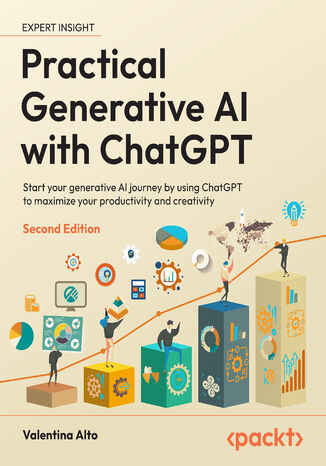
Valentina Alto
Practical Generative AI with ChatGPT is your hands-on guide to unlocking the full potential of ChatGPT. From building AI assistants and mastering prompt engineering to analyzing documents and images and even generating code, this book equips you with the skills to integrate generative AI into your workflow.Written by a technical architect specializing in AI and intelligent applications, this book provides the tools and knowledge you need to streamline tasks, enhance productivity, and create intelligent solutions. You’ll learn how to craft precise prompts, leverage ChatGPT for daily efficiency, and develop custom AI assistants tailored to your needs.The chapters show you how to use ChatGPT’s multimodal capabilities to generate images with DALL·E and even transform images into code. This ChatGPT book goes beyond basic interactions by showing you how to design custom GPTs and integrate OpenAI’s APIs into your applications. You’ll explore how businesses use OpenAI models, from building AI applications, including semantic search, to creating an AI roadmap. Each chapter is packed with practical examples, ensuring you can apply the techniques right away.By the end of this book, you’ll be well equipped to leverage OpenAI's technology for competitive advantage.*Email sign-up and proof of purchase required
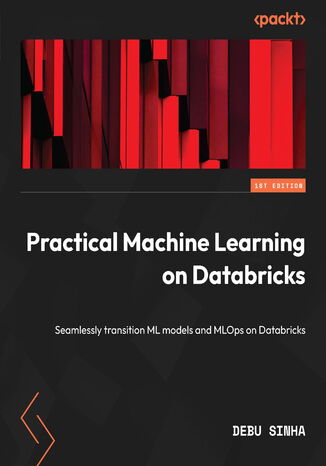
Practical Machine Learning on Databricks. Seamlessly transition ML models and MLOps on Databricks
Debu Sinha
Unleash the potential of databricks for end-to-end machine learning with this comprehensive guide, tailored for experienced data scientists and developers transitioning from DIY or other cloud platforms. Building on a strong foundation in Python, Practical Machine Learning on Databricks serves as your roadmap from development to production, covering all intermediary steps using the databricks platform. You’ll start with an overview of machine learning applications, databricks platform features, and MLflow. Next, you’ll dive into data preparation, model selection, and training essentials and discover the power of databricks feature store for precomputing feature tables. You’ll also learn to kickstart your projects using databricks AutoML and automate retraining and deployment through databricks workflows. By the end of this book, you’ll have mastered MLflow for experiment tracking, collaboration, and advanced use cases like model interpretability and governance. The book is enriched with hands-on example code at every step. While primarily focused on generally available features, the book equips you to easily adapt to future innovations in machine learning, databricks, and MLflow.
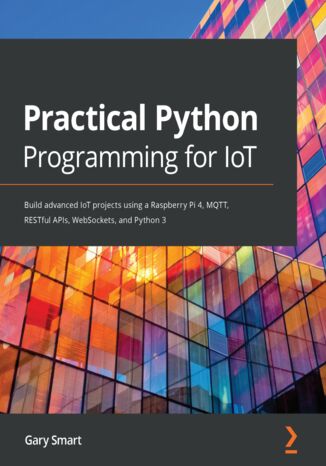
Gary Smart
The age of connected devices is here, be it fitness bands or smart homes. It's now more important than ever to understand how hardware components interact with the internet to collect and analyze user data. The Internet of Things (IoT), combined with the popular open source language Python, can be used to build powerful and intelligent IoT systems with intuitive interfaces.This book consists of three parts, with the first focusing on the Internet component of IoT. You'll get to grips with end-to-end IoT app development to control an LED over the internet, before learning how to build RESTful APIs, WebSocket APIs, and MQTT services in Python. The second part delves into the fundamentals behind electronics and GPIO interfacing. As you progress to the last part, you'll focus on the Things aspect of IoT, where you will learn how to connect and control a range of electronic sensors and actuators using Python. You'll also explore a variety of topics, such as motor control, ultrasonic sensors, and temperature measurement. Finally, you'll get up to speed with advanced IoT programming techniques in Python, integrate with IoT visualization and automation platforms, and build a comprehensive IoT project.By the end of this book, you'll be well-versed with IoT development and have the knowledge you need to build sophisticated IoT systems using Python.
PKS Prakash, Avishek Pal
Time Series Analysis allows us to analyze data which is generated over a period of time and has sequential interdependencies between the observations. This book describes special mathematical tricks and techniques which are geared towards exploring the internal structures of time series data and generating powerful descriptive and predictive insights. Also, the book is full of real-life examples of time series and their analyses using cutting-edge solutions developed in Python. The book starts with descriptive analysis to create insightful visualizations of internal structures such as trend, seasonality, and autocorrelation. Next, the statistical methods of dealing with autocorrelation and non-stationary time series are described. This is followed by exponential smoothing to produce meaningful insights from noisy time series data. At this point, we shift focus towards predictive analysis and introduce autoregressive models such as ARMA and ARIMA for time series forecasting. Later, powerful deep learning methods are presented, to develop accurate forecasting models for complex time series, and under the availability of little domain knowledge. All the topics are illustrated with real-life problem scenarios and their solutions by best-practice implementations in Python.The book concludes with the Appendix, with a brief discussion of programming and solving data science problems using Python.
Mike Cohen
Pozornie nie dzieje się nic złego, jeśli inżynier lub analityk danych nie rozumie algebry liniowej. Może korzystać z już istniejących narzędzi i nie przejmować się szczegółami ich implementacji. Warto jednak dokładnie poznać algorytmy używane w nauce o danych i dostosować do swoich potrzeb istniejące metody obliczeniowe, tutaj więc nowoczesna algebra liniowa okazuje się nieodzowna. Jeśli chcesz ją poznać w nowoczesnej, praktycznej formie, najlepiej posłużyć się kodem i zastosowaniem algebry liniowej w analizie danych czy symulacjach numerycznych. To książka przeznaczona dla osób, które pracują ze zbiorami danych. Jest praktycznym przewodnikiem po koncepcjach algebry liniowej, pomyślanym tak, by ułatwić ich zrozumienie i zastosowanie w użytecznych obliczeniach. Poszczególne zagadnienia przedstawiono za pomocą kodu Pythona, wraz z przykładami ich wykorzystania w nauce o danych, uczeniu maszynowym, uczeniu głębokim, symulacjach i przetwarzaniu danych biomedycznych. Dzięki podręcznikowi nauczysz się arytmetyki macierzowej, poznasz istotne rozkłady macierzy, w tym LU i QR, a także rozkład według wartości osobliwych, zapoznasz się też z takimi zagadnieniami jak model najmniejszych kwadratów i analiza głównych składowych.
Praktyczne uczenie nienadzorowane przy użyciu języka Python
Ankur A. Patel
Wielu ekspertów branżowych uważa uczenie nienadzorowane za kolejną granicę w dziedzinie sztucznej inteligencji, która może stanowić klucz do pełnej sztucznej inteligencji. Ponieważ większość danych na świecie jest nieoznakowana, nie można do nich zastosować konwencjonalnego uczenia nadzorowanego. Z kolei uczenie nienadzorowane może być stosowane wobec nieoznakowanych zbiorów danych w celu odkrycia istotnych wzorców ukrytych głęboko w tych danych, które dla człowieka mogą być niemal niemożliwe do odkrycia. Autor Ankur Patel pokazuje, jak stosować uczenie nienadzorowane przy wykorzystaniu dwóch prostych platform dla języka Python: Scikit-learn oraz TensorFlow (wraz z Keras). Dzięki dołączonemu kodowi i praktycznym przykładom analitycy danych będą mogli identyfikować trudne do znalezienia wzorce w danych i odkrywać dogłębne zależności biznesowe, wykrywać anomalie, przeprowadzać automatyczną selekcję zmiennych i generować syntetyczne zbiory danych. Wystarczy znajomość programowania i nieco doświadczenia w uczeniu maszynowym, aby zająć się: Porównywaniem mocnych i słabych stron różnych podejść do uczenia maszynowego: uczenia nadzorowanego, nienadzorowanego i wzmacnianego. Przygotowywaniem i zarządzaniem projektami uczenia maszynowego. Budowaniem systemu wykrywania anomalii w celu wychwycenia oszustwa dotyczącego kard kredytowych. Rozdzielaniem użytkowników na wydzielone i jednorodne grupy. Przeprowadzaniem uczenia pół-nadzorowanego. Opracowywaniem systemów polecania filmów z użyciem ograniczonych automatów Boltzmanna. Generowaniem syntetycznych obrazów przy użyciu generujących sieci antagonistycznych. Badacze, inżynierowie i studenci docenią tę książkę pełną praktycznych technik uczenia nienadzorowanego, napisaną prostym językiem z nieskomplikowanymi przykładami w języku Python, które można szybko i skutecznie implementować. Sarah Nagy Główny analityk danych w firmie Edison Ankur A. Patel jest wiceprezesem ds. informatyki analitycznej w firmie 7Park Data, wspieranej przez firmę inwestycyjną Vista Equity Partners. W firmie 7Park Data, Ankur i jego zespół analizy danych wykorzystują dane alternatywne do opracowywania produktów związanych z danymi dla funduszy hedgingowych i korporacji oraz rozwijają usługi uczenia maszynowego dla klientów firmowych.
Ferran Garcia Pagans
If you are a business analyst who wants to understand how to improve your data analysis and how to apply predictive analytics, then this book is ideal for you. This book assumes you have some basic knowledge of statistics and a spreadsheet editor such as Excel, but knowledge of QlikView is not required.