
Python
W kategorii Python zostały zebrane podręczniki poruszające tematykę programowania z zastosowaniem praktycznie niezależnego sprzętowo, dostępnego na licencji Open Source języka. Książki przedstawią Wam wszechstronności i elastyczności Pythona a także różne typy tworzenia kodu poprzez programowanie strukturalne, obiektowe czy funkcjonalne.
Nauczycie się tworzyć aplikacje sieciowe o dowolnym przeznaczeniu, komunikujące się z systemami operacyjnymi, lub korzystające z baz danych. Techniki analizy składni, przetwarzanie tekstu czy rozłożenie obciążenia programu na wiele wątków i procesów przestanie być problematyczne.
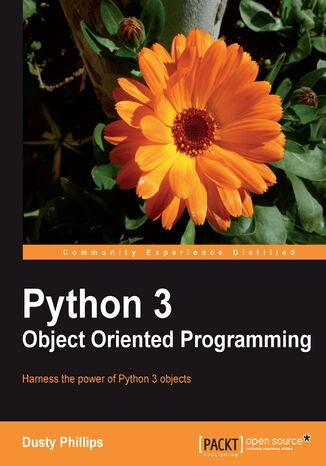
Python 3 Object Oriented Programming. Harness the power of Python 3 objects
Dusty Phillips
Object Oriented Programming is a very important aspect of modern programming languages. The basic principles of Object Oriented Programming are relatively easy to learn. Putting them together into working designs can be challenging.This book makes programming more of a pleasure than a chore using powerful Python 3 object-oriented features of Python 3. It clearly demonstrates the core OOP principles and how to correctly implement OOP in Python. Object Oriented Programming ranks high in importance among the many models Python supports. Yet, many programmers never bother learning the powerful features that make this language object oriented.The book teaches when and how OOP should be correctly applied. It emphasizes not only the simple syntax of OOP in Python, but also how to combine these objects into well-designed software.This book will introduce you to the terminology of the object-oriented paradigm, focusing on object-oriented design with step-by-step examples. It will take you from simple inheritance, one of the most useful tools in the object-oriented programmer's toolbox, all the way through to cooperative inheritance, one of the most complicated. You will be able to raise, handle, define, and manipulate exceptions.You will be able to integrate the object-oriented and the not-so-object-oriented aspects of Python. You will also be able to create maintainable applications by studying higher level design patterns. You'll learn the complexities of string and file manipulation, and how Python distinguishes between binary and textual data. Not one, but two very powerful automated testing systems will be introduced to you. You'll understand the joy of unit testing and just how easy they are to create. You'll even study higher level libraries such as database connectors and GUI toolkits and how they apply object-oriented principles.
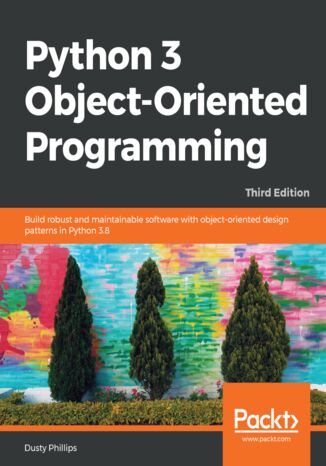
Dusty Phillips
Object-oriented programming (OOP) is a popular design paradigm in which data and behaviors are encapsulated in such a way that they can be manipulated together. This third edition of Python 3 Object-Oriented Programming fully explains classes, data encapsulation, and exceptions with an emphasis on when you can use each principle to develop well-designed software.Starting with a detailed analysis of object-oriented programming, you will use the Python programming language to clearly grasp key concepts from the object-oriented paradigm. You will learn how to create maintainable applications by studying higher level design patterns. The book will show you the complexities of string and file manipulation, and how Python distinguishes between binary and textual data. Not one, but two very powerful automated testing systems, unittest and pytest, will be introduced in this book. You'll get a comprehensive introduction to Python's concurrent programming ecosystem.By the end of the book, you will have thoroughly learned object-oriented principles using Python syntax and be able to create robust and reliable programs confidently.
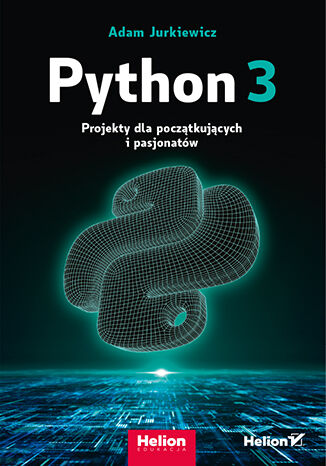
Python 3. Projekty dla początkujących i pasjonatów
Adam Jurkiewicz
Twórz różne programy w Pythonie - i baw się świetnie! Jeśli: chcesz poznać język Python od strony praktycznej przymierzasz się do matury z informatyki marzysz o karierze programisty to doskonale trafiłeś! Dzięki tej książce przekonasz się, jak wspaniałą przygodą jest programowanie i jak łatwo ją zacząć! Poznasz podstawy Pythona, dowiesz się, jak pisać i formatować kod, a także szybko nauczysz się uruchamiać swoje programy. Instrukcje sterujące, operatory, typy danych, funkcje, klasy i moduły nie będą miały przed Tobą tajemnic, a to jeszcze nie koniec! Przede wszystkim będziesz poznawać Pythona od strony praktycznej, tworząc projekty prawdziwych gier i symulacji oraz aplikacje do wizualizacji danych i anonimizowania metadanych plików graficznych. Możesz użyć tej książki jako pomocy w przygotowaniu do matury i wsparcia w wyborze drogi zawodowej. Przekonaj się, że nauka może być najlepszą zabawą. Baw się dobrze i zdaj egzamin celująco - oczywiście z Pythonem! środowisko IDLE podstawy Pythona w wersji 3.6 i wyższej konstrukcje języka projekty gier symulacje fizyczne prezentacja i wizualizacja danych praktyczne zastosowania Pythona Okiełznaj Pythona i naucz się programować!
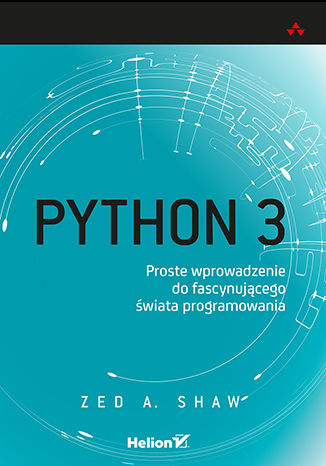
Python 3. Proste wprowadzenie do fascynującego świata programowania
Zed A. Shaw
Python jest dojrzałym, elastycznym i bardzo wszechstronnym językiem programowania. Nadaje się do budowy przeróżnych aplikacji, a także do tworzenia programów służących do bardzo specyficznych zastosowań, takich jak badania naukowe. Aby jednak w pełni wykorzystać te imponujące możliwości, musisz pisać dobry kod: przejrzysty, zwięzły, działający poprawnie. Niestety, nie jest łatwo nauczyć się dobrego programowania. To coś więcej niż przyswojenie zestawu poleceń i słów kluczowych. Wymaga czasu, wysiłku, sporego zaangażowania i... dobrego przewodnika na tej trudnej ścieżce. Niniejsza książka jest właśnie takim dobrym przewodnikiem dla początkujących programistów. Jest napisana w sposób łatwy i wciągający. Duży nacisk położono na analizę tworzonego kodu. Jeśli tylko skoncentrujesz się na wykonywanych zadaniach, zdobędziesz się na zaangażowanie i dokładność, zrozumienie znaczenia każdej linii programu przyjdzie łatwo. Wartościowym elementem książki są wskazówki, jak zepsuć napisany kod, a następnie go zabezpieczyć. Dzięki temu łatwiej Ci przyjdzie unikanie błędów. Dzięki tej książce zdobędziesz trzy najważniejsze umiejętności każdego programisty: czytanie i pisanie ze zrozumieniem, dbałość o szczegóły oraz dostrzeganie różnic. Najistotniejsze zagadnienia poruszone w książce: przygotowanie kompletnego środowiska programistycznego organizowanie, pisanie, psucie i naprawianie kodu programowanie obiektowe projektowanie programu i testowanie kodu podstawy budowy aplikacji internetowych i prostszych gier Zrozum Pythona, pisz dobry kod!
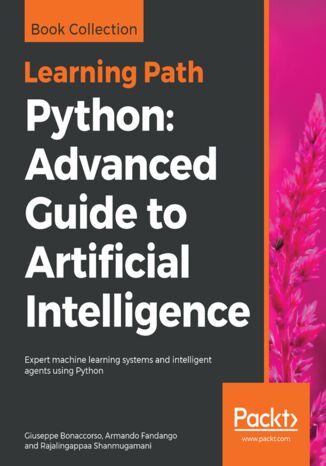
Giuseppe Bonaccorso, Rajalingappaa Shanmugamani
This Learning Path is your complete guide to quickly getting to grips with popular machine learning algorithms. You'll be introduced to the most widely used algorithms in supervised, unsupervised, and semi-supervised machine learning, and learn how to use them in the best possible manner. Ranging from Bayesian models to the MCMC algorithm to Hidden Markov models, this Learning Path will teach you how to extract features from your dataset and perform dimensionality reduction by making use of Python-based libraries. You'll bring the use of TensorFlow and Keras to build deep learning models, using concepts such as transfer learning, generative adversarial networks, and deep reinforcement learning. Next, you'll learn the advanced features of TensorFlow1.x, such as distributed TensorFlow with TF clusters, deploy production models with TensorFlow Serving. You'll implement different techniques related to object classification, object detection, image segmentation, and more. By the end of this Learning Path, you'll have obtained in-depth knowledge of TensorFlow, making you the go-to person for solving artificial intelligence problemsThis Learning Path includes content from the following Packt products:• Mastering Machine Learning Algorithms by Giuseppe Bonaccorso• Mastering TensorFlow 1.x by Armando Fandango• Deep Learning for Computer Vision by Rajalingappaa Shanmugamani
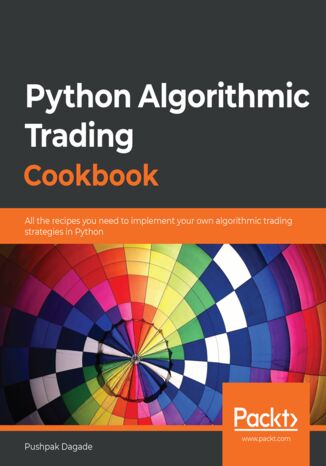
Pushpak Dagade
If you want to find out how you can build a solid foundation in algorithmic trading using Python, this cookbook is here to help.Starting by setting up the Python environment for trading and connectivity with brokers, you’ll then learn the important aspects of financial markets. As you progress, you’ll learn to fetch financial instruments, query and calculate various types of candles and historical data, and finally, compute and plot technical indicators. Next, you’ll learn how to place various types of orders, such as regular, bracket, and cover orders, and understand their state transitions. Later chapters will cover backtesting, paper trading, and finally real trading for the algorithmic strategies that you've created. You’ll even understand how to automate trading and find the right strategy for making effective decisions that would otherwise be impossible for human traders.By the end of this book, you’ll be able to use Python libraries to conduct key tasks in the algorithmic trading ecosystem.Note: For demonstration, we're using Zerodha, an Indian Stock Market broker. If you're not an Indian resident, you won't be able to use Zerodha and therefore will not be able to test the examples directly. However, you can take inspiration from the book and apply the concepts across your preferred stock market broker of choice.
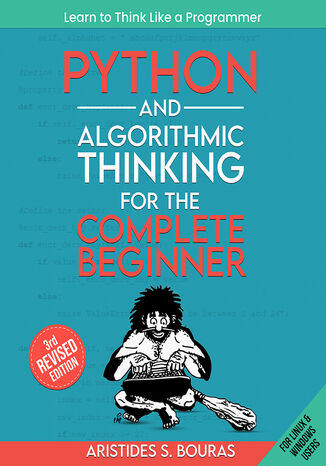
Aristides Bouras
This course is meticulously designed to take beginners on a journey through the fascinating world of Python programming and algorithmic thinking. The initial chapters lay a strong foundation, starting with the basics of how computers operate, moving into Python programming, and familiarizing learners with integrated development environments like IDLE and Visual Studio Code.Further, the course delves into essential programming constructs such as variables, constants, input/output handling, and operators. You'll gain practical experience with trace tables, sequence control structures, and decision control structures through comprehensive exercises and examples. The curriculum emphasizes hands-on learning with chapters dedicated to manipulating numbers, strings, and understanding complex mathematical expressions. By mastering these concepts, you'll be well-prepared to tackle more advanced topics.The final chapters introduce you to object-oriented programming and file manipulation, rounding out your skill set. Throughout the course, practical tips and tricks are provided to enhance your coding efficiency and problem-solving skills. By the end of this course, you will have a robust understanding of Python programming and the ability to apply algorithmic thinking to solve real-world problems.
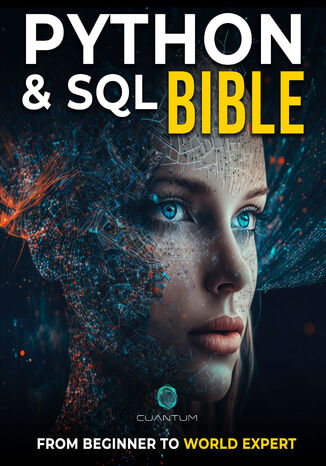
Cuantum Technologies LLC
Embark on a transformative journey with this course designed to equip you with robust Python and SQL skills. Starting with an introduction to Python, you'll delve into fundamental building blocks, control flow, functions, and object-oriented programming. As you progress, you'll master data structures, file I/O, exception handling, and the Python Standard Library, ensuring a solid foundation in Python.The course then transitions to SQL, beginning with an introduction and covering basics, and proceeding to advanced querying techniques. You'll learn about database administration and how Python integrates seamlessly with SQL, enhancing your data manipulation capabilities. By combining Python with SQLAlchemy, you'll perform advanced database operations and execute complex data analysis tasks, preparing you for real-world challenges.By the end of this course, you will have developed the expertise to utilize Python and SQL for scientific computing, data analysis, and database management. This comprehensive learning path ensures you can tackle diverse projects, from basic scripting to sophisticated data operations, making you a valuable asset in the tech industry. You'll also gain hands-on experience with real-world datasets, enhancing your problem-solving skills and boosting your confidence.