
Python
W kategorii Python zostały zebrane podręczniki poruszające tematykę programowania z zastosowaniem praktycznie niezależnego sprzętowo, dostępnego na licencji Open Source języka. Książki przedstawią Wam wszechstronności i elastyczności Pythona a także różne typy tworzenia kodu poprzez programowanie strukturalne, obiektowe czy funkcjonalne.
Nauczycie się tworzyć aplikacje sieciowe o dowolnym przeznaczeniu, komunikujące się z systemami operacyjnymi, lub korzystające z baz danych. Techniki analizy składni, przetwarzanie tekstu czy rozłożenie obciążenia programu na wiele wątków i procesów przestanie być problematyczne.
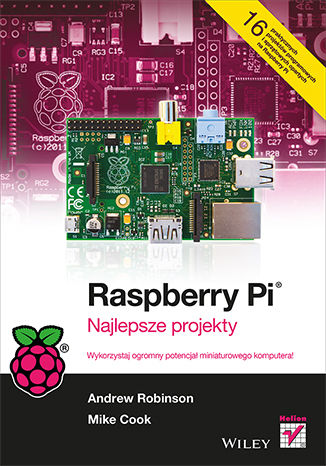
Raspberry Pi. Najlepsze projekty
Andrew Robinson, Mike Cook
Wykorzystaj ogromny potencjał miniaturowego komputera! Raspberry Pi to prawdziwy komputer o rozmiarach lekko przerośniętej karty kredytowej. Posiada on ogromny potencjał, całkiem sporą moc obliczeniową, a do tego kosztuje naprawdę niewiele. Platforma ta była projektowana z myślą o nauce programowania dla dzieci. Jednak, jak to często bywa, historia potoczyła się zupełnie inaczej. Obecnie Raspberry Pi znajduje zastosowanie jako serwer WWW, odtwarzacz filmów lub sterownik urządzeń. Masz dobry pomysł, żeby wykorzystać Pi w projekcie? A może jeszcze nie wiesz, co chciałbyś zrobić z Raspberry Pi? Ta książka rozwieje wszystkie Twoje wątpliwości i podsunie pomysły na atrakcyjne projekty. W trakcie lektury poznasz budowę Raspberry Pi oraz dowiesz się, jak go podłączyć i uruchomić system Linux. W kolejnych rozdziałach przygotujesz grę kółko i krzyżyk oraz stworzysz własny teleprompter. Jeżeli potrzebny Ci jest elektroniczny zegar do pomiaru czasu reakcji lub marzy Ci się twittująca zabawka, to trzymasz w ręku właściwą książkę! Jeżeli pragniesz zamieszkać w inteligentnym domu za rozsądne pieniądze — zainteresuje Cię rozdział poświęcony jego automatyzacji. Sprawdź, jakie to proste! Jest to obowiązkowa lektura dla wszystkich pasjonatów, chcących wycisnąć z Raspberry Pi siódme poty! Sięgnij po tę książkę i: poznaj budowę i podstawy korzystania z Raspberry Pi wygeneruj labirynt w Minecraft zbuduj światła dyskotekowe przygotuj własny czujnik ruchu zrealizuj swoje elektroniczne marzenia Zbiór najlepszych projektów dla Pi!
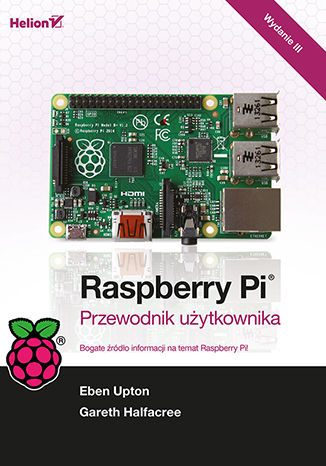
Raspberry Pi. Przewodnik użytkownika. Wydanie III
Eben Upton, Gareth Halfacree
Bogate źródło informacji na temat Raspberry Pi! Raspberry Pi to komputer wielkości karty kredytowej. Wśród jego głównych atutów można wymienić ogrom możliwości oraz niską cenę. Początkowo miał pełnić rolę platformy do nauki programowania, jednak szybko znalazł tysiące innych zastosowań! Raspberry Pi jest używany jako serwer WWW, domowe media center, sterownik urządzeń lub baza do zaawansowanych projektów elektronicznych. Jaki Ty masz pomysł na jego zastosowanie? Ta książka to kolejne wydanie instrukcji użytkownika, dzięki której poznasz tajniki pracy z platformą Raspberry Pi. Została wzbogacona i zaktualizowana o informacje o najnowszej wersji Pi, oznaczonej symbolem B+. Nowa wersja to jeszcze większa moc oraz ciekawe możliwości. Sięgnij po tę książkę i przekonaj się, czym charakteryzuje się architektura ARM oraz jak przygotować Pi do pracy. Naucz się pracować z systemem Linux, a także tworzyć programy i skrypty między innymi za pomocą języka Python. Dowiedz się, jak zbudować centrum multimedialne na podstawie platformy Raspberry Pi oraz jak podłączyć do Pi dodatkowe urządzenia. Książka ta jest obowiązkową lekturą dla wszystkich osób zafascynowanych możliwościami Raspberry Pi. Dzięki tej książce: poznasz historię platformy oraz jej możliwości dowiesz się, jak podłączyć do Pi zewnętrzne urządzenia wykorzystasz złącza GPIO zbudujesz centrum multimedialne z Pi na czele wykorzystasz w pełni możliwości tej niesamowitej platformy Kompletne źródło informacji o Raspberry Pi!
Andrea Lonza
Reinforcement Learning (RL) is a popular and promising branch of AI that involves making smarter models and agents that can automatically determine ideal behavior based on changing requirements. This book will help you master RL algorithms and understand their implementation as you build self-learning agents.Starting with an introduction to the tools, libraries, and setup needed to work in the RL environment, this book covers the building blocks of RL and delves into value-based methods, such as the application of Q-learning and SARSA algorithms. You'll learn how to use a combination of Q-learning and neural networks to solve complex problems. Furthermore, you'll study the policy gradient methods, TRPO, and PPO, to improve performance and stability, before moving on to the DDPG and TD3 deterministic algorithms. This book also covers how imitation learning techniques work and how Dagger can teach an agent to drive. You'll discover evolutionary strategies and black-box optimization techniques, and see how they can improve RL algorithms. Finally, you'll get to grips with exploration approaches, such as UCB and UCB1, and develop a meta-algorithm called ESBAS.By the end of the book, you'll have worked with key RL algorithms to overcome challenges in real-world applications, and be part of the RL research community.
Husan Mahey
With an increase in the number of organizations deploying RPA solutions, Robotic Process Automation (RPA) is quickly becoming the most desired skill set for both developers starting their career and seasoned professionals. This book will show you how to use Automation Anywhere A2019, one of the leading platforms used widely for RPA.Starting with an introduction to RPA and Automation Anywhere, the book will guide you through the registration, installation, and configuration of the Bot agent and Control Room. With the help of easy-to-follow instructions, you’ll build your first bot and discover how you can automate tasks with Excel, Word, emails, XML, and PDF files. You’ll learn from practical examples based on real-world business scenarios, and gain insights into building more robust and resilient bots, executing external scripts such as VBScripts and Python, and adding error handling routines.By the end of this RPA book, you’ll have developed the skills required to install and configure an RPA platform confidently and have a solid understanding of how to build complex and robust, yet performant, bots.
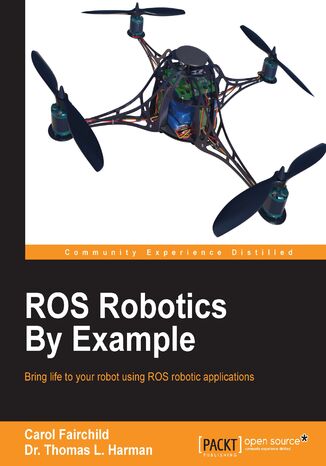
ROS Robotics By Example. Bring life to your robot using ROS robotic applications
Carol Fairchild, Dr. Thomas L. Harman
The visionaries who created ROS developed a framework for robotics centered on the commonality of robotic systems and exploited this commonality in ROS to expedite the development of future robotic systems. From the fundamental concepts to advanced practical experience, this book will provide you with an incremental knowledge of the ROS framework, the backbone of the robotics evolution. ROS standardizes many layers of robotics functionality from low-level device drivers to process control to message passing to software package management. This book provides step-by-step examples of mobile, armed, and flying robots, describing the ROS implementation as the basic model for other robots of these types. By controlling these robots, whether in simulation or in reality, you will use ROS to drive, move, and fly robots using ROS control.
Rozwijanie mikrousług w Pythonie. Budowa, testowanie, instalacja i skalowanie
Tarek Ziade
Rozwijanie mikrousług w Pythonie. Budowa, testowanie, instalacja i skalowanie Mikrousługi są bardzo ciekawym trendem tworzenia kodu. Pojawił się on kilka lat temu z uwagi na potrzebę przyspieszenia cyklu udostępniania oprogramowania. Nowe produkty i funkcje musiały być oferowane użytkownikom możliwie najszybciej. Wkrótce okazało się, że tworzenie architektury aplikacji składającej się z małych, funkcjonalnych jednostek - właśnie mikrousług - jest bardzo obiecującym sposobem pracy. Pozwala na zwiększenie się elastyczności oraz szybkości wprowadzania innowacji, gdyż programista może zająć się jednym elementem bez zastanawiania się nad całością aplikacji. W świecie, w którym rządzą wydajność i krótki czas dostarczania kodu, jest to duża wartość! Dzięki tej książce dowiesz się, w jaki sposób niewielkie, standardowe elementy kodu mogą złożyć się na kompletną, działającą aplikację. Nauczysz się tworzyć takie mikrousługi, rozwiązywać pojawiające się problemy i nabierzesz nawyku stosowania dobrych praktyk. Szybko zaczniesz pisać aplikacje w Pythonie za pomocą szerokiego wachlarza dostępnych narzędzi, włączając w to Flask czy Tox. Przy okazji nauczysz się zasad programowania zorientowanego na testy. Dowiesz się, jak zabezpieczać komunikację pomiędzy usługami i kodować funkcjonalności zapory aplikacyjnej w języku Lua dla serwera Nginx. Poznasz też możliwości instalowania mikrousług w chmurze AWS z wykorzystaniem kontenerów Docker. W tej książce między innymi: mikrousługi i ich rola w tworzeniu nowoczesnych aplikacji WWW cykl tworzenia kodu pod kątem testów i ciągłej integracji monitorowanie i zabezpieczanie mikrousług tworzenie mikrousług w JavaScript budowa mikrousług niezależnie od operatorów chmurowych i technologii wirtualizacyjnych unikanie problemów wynikających z centralizacji aplikacji Mikrousługi w języku Python: integracja doskonała!
Craig Finch
This is a beginner's guide with clear step-by-step instructions, explanations, and advice. Each concept is illustrated with a complete example that you can use as a starting point for your own work. If you are an engineer, scientist, mathematician, or student, this book is for you. To get the most from Sage by using the Python programming language, we'll give you the basics of the language to get you started. For this, it will be helpful if you have some experience with basic programming concepts.
Jason Myerscough
Azure Data Explorer (ADX) enables developers and data scientists to make data-driven business decisions. This book will help you rapidly explore and query your data at scale and secure your ADX clusters.The book begins by introducing you to ADX, its architecture, core features, and benefits. You'll learn how to securely deploy ADX instances and navigate through the ADX Web UI, cover data ingestion, and discover how to query and visualize your data using the powerful Kusto Query Language (KQL). Next, you'll get to grips with KQL operators and functions to efficiently query and explore your data, as well as perform time series analysis and search for anomalies and trends in your data. As you progress through the chapters, you'll explore advanced ADX topics, including deploying your ADX instances using Infrastructure as Code (IaC). The book also shows you how to manage your cluster performance and monthly ADX costs by handling cluster scaling and data retention periods. Finally, you'll understand how to secure your ADX environment by restricting access with best practices for improving your KQL query performance.By the end of this Azure book, you'll be able to securely deploy your own ADX instance, ingest data from multiple sources, rapidly query your data, and produce reports with KQL and Power BI.