
Python
W kategorii Python zostały zebrane podręczniki poruszające tematykę programowania z zastosowaniem praktycznie niezależnego sprzętowo, dostępnego na licencji Open Source języka. Książki przedstawią Wam wszechstronności i elastyczności Pythona a także różne typy tworzenia kodu poprzez programowanie strukturalne, obiektowe czy funkcjonalne.
Nauczycie się tworzyć aplikacje sieciowe o dowolnym przeznaczeniu, komunikujące się z systemami operacyjnymi, lub korzystające z baz danych. Techniki analizy składni, przetwarzanie tekstu czy rozłożenie obciążenia programu na wiele wątków i procesów przestanie być problematyczne.
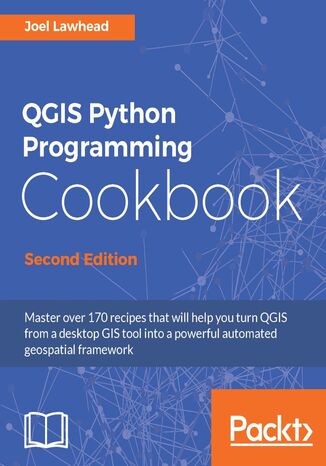
QGIS Python Programming Cookbook, Second Edition. Automating geospatial development - Second Edition
Joel Lawhead
QGIS is a desktop geographic information system that facilitates data viewing, editing, and analysis. Paired with the most efficient scripting language—Python, we can write effective scripts that extend the core functionality of QGIS. Based on version QGIS 2.18, this book will teach you how to write Python code that works with spatial data to automate geoprocessing tasks in QGIS. It will cover topics such as querying and editing vector data and using raster data. You will also learn to create, edit, and optimize a vector layer for faster queries, reproject a vector layer, reduce the number of vertices in a vector layer without losing critical data, and convert a raster to a vector. Following this, you will work through recipes that will help you compose static maps, create heavily customized maps, and add specialized labels and annotations. As well as this, we’ll also share a few tips and tricks based on different aspects of QGIS.
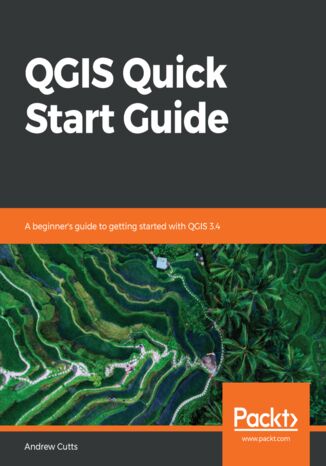
QGIS Quick Start Guide. A beginner's guide to getting started with QGIS 3.4
Andrew Cutts
QGIS is a user friendly, open source geographic information system (GIS). The popularity of open source GIS and QGIS, in particular, has been growing rapidly over the last few years. This book is designed to help beginners learn about all the tools required to use QGIS 3.4.This book will provide you with clear, step-by-step instructions to help you apply your GIS knowledge to QGIS. You begin with an overview of QGIS 3.4 and its installation. You will learn how to load existing spatial data and create vector data from scratch. You will then be creating styles and labels for maps. The final two chapters demonstrate the Processing toolbox and include a brief investigation on how to extend QGIS. Throughout this book, we will be using the GeoPackage format, and we will also discuss how QGIS can support many different types of data.Finally, you will learn where to get help and how to become engaged with the GIS community.
B. M. Harwani
PyQt is one of the best cross-platform interface toolkits currently available; it's stable, mature, and completely native. If you want control over all aspects of UI elements, PyQt is what you need. This book will guide you through every concept necessary to create fully functional GUI applications using PyQt, with only a few lines of code.As you expand your GUI using more widgets, you will cover networks, databases, and graphical libraries that greatly enhance its functionality. Next, the book guides you in using Qt Designer to design user interfaces and implementing and testing dialogs, events, the clipboard, and drag and drop functionality to customize your GUI. You will learn a variety of topics, such as look and feel customization, GUI animation, graphics rendering, implementing Google Maps, and more. Lastly, the book takes you through how Qt5 can help you to create cross-platform apps that are compatible with Android and iOS. You will be able to develop functional and appealing software using PyQt through interesting and fun recipes that will expand your knowledge of GUIs
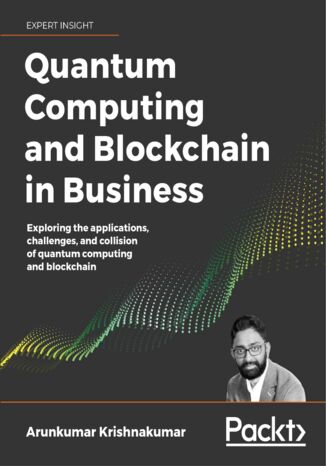
Arunkumar Krishnakumar
Are quantum computing and Blockchain on a collision course or will they be the most important trends of this decade to disrupt industries and life as we know it?Fintech veteran and venture capitalist Arunkumar Krishnakumar cuts through the hype to bring us a first-hand look into how quantum computing and Blockchain together are redefining industries, including fintech, healthcare, and research. Through a series of interviews with domain experts, he also explores these technologies’ potential to transform national and global governance and policies – from how elections are conducted and how smart cities can be designed and optimized for the environment, to what cyberwarfare enabled by quantum cryptography might look like. In doing so, he also highlights challenges that these technologies have to overcome to go mainstream.Quantum Computing and Blockchain in Business explores the potential changes that quantum computing and Blockchain might bring about in the real world. After expanding on the key concepts and techniques, such as applied cryptography, qubits, and digital annealing, that underpin quantum computing and Blockchain, the book dives into how major industries will be impacted by these technologies. Lastly, we consider how the two technologies may come together in a complimentary way.
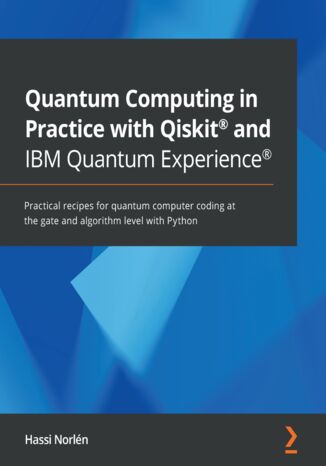
Hassi Norlen
IBM Quantum Experience® is a leading platform for programming quantum computers and implementing quantum solutions directly on the cloud. This book will help you get up to speed with programming quantum computers and provide solutions to the most common problems and challenges.You’ll start with a high-level overview of IBM Quantum Experience® and Qiskit®, where you will perform the installation while writing some basic quantum programs. This introduction puts less emphasis on the theoretical framework and more emphasis on recent developments such as Shor’s algorithm and Grover’s algorithm. Next, you’ll delve into Qiskit®, a quantum information science toolkit, and its constituent packages such as Terra, Aer, Ignis, and Aqua. You’ll cover these packages in detail, exploring their benefits and use cases. Later, you’ll discover various quantum gates that Qiskit® offers and even deconstruct a quantum program with their help, before going on to compare Noisy Intermediate-Scale Quantum (NISQ) and Universal Fault-Tolerant quantum computing using simulators and actual hardware. Finally, you’ll explore quantum algorithms and understand how they differ from classical algorithms, along with learning how to use pre-packaged algorithms in Qiskit® Aqua.By the end of this quantum computing book, you’ll be able to build and execute your own quantum programs using IBM Quantum Experience® and Qiskit® with Python.
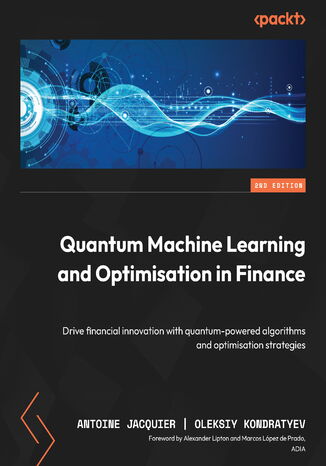
Antoine Jacquier, Oleksiy Kondratyev, Alexander Lipton, Marcos...
As quantum machine learning (QML) continues to evolve, many professionals struggle to apply its powerful algorithms to real-world problems using noisy intermediate-scale quantum (NISQ) hardware. This book bridges that gap by focusing on hands-on QML applications tailored to NISQ systems, moving beyond the traditional textbook approaches that explore standard algorithms like Shor's and Grover's, which lie beyond current NISQ capabilities.You’ll get to grips with major QML algorithms that have been widely studied for their transformative potential in finance and learn hybrid quantum-classical computational protocols, the most effective way to leverage quantum and classical computing systems together.The authors, Antoine Jacquier, a distinguished researcher in quantum computing and stochastic analysis, and Oleksiy Kondratyev, a Quant of the Year awardee with over 20 years in quantitative finance, offer a hardware-agnostic perspective. They present a balanced view of both analog and digital quantum computers, delving into the fundamental characteristics of the algorithms while highlighting the practical limitations of today’s quantum hardware.By the end of this quantum book, you’ll have a deeper understanding of the significance of quantum computing in finance and the skills needed to apply QML to solve complex challenges, driving innovation in your work.
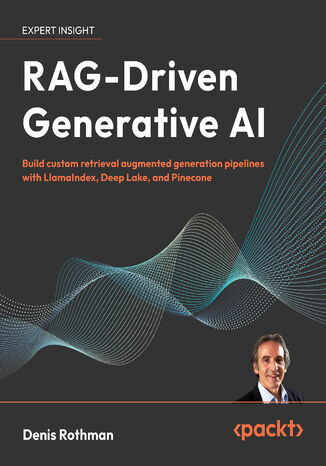
Denis Rothman
RAG-Driven Generative AI provides a roadmap for building effective LLM, computer vision, and generative AI systems that balance performance and costs.This book offers a detailed exploration of RAG and how to design, manage, and control multimodal AI pipelines. By connecting outputs to traceable source documents, RAG improves output accuracy and contextual relevance, offering a dynamic approach to managing large volumes of information. This AI book shows you how to build a RAG framework, providing practical knowledge on vector stores, chunking, indexing, and ranking. You’ll discover techniques to optimize your project’s performance and better understand your data, including using adaptive RAG and human feedback to refine retrieval accuracy, balancing RAG with fine-tuning, implementing dynamic RAG to enhance real-time decision-making, and visualizing complex data with knowledge graphs.You’ll be exposed to a hands-on blend of frameworks like LlamaIndex and Deep Lake, vector databases such as Pinecone and Chroma, and models from Hugging Face and OpenAI. By the end of this book, you will have acquired the skills to implement intelligent solutions, keeping you competitive in fields from production to customer service across any project.*Email sign-up and proof of purchase required
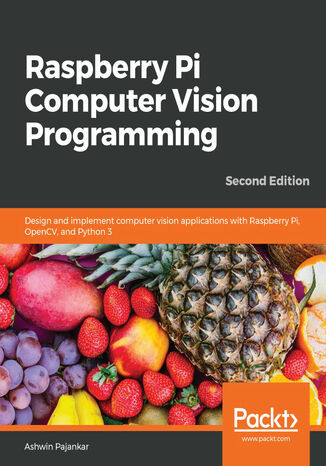
Ashwin Pajankar
Raspberry Pi is one of the popular single-board computers of our generation. All the major image processing and computer vision algorithms and operations can be implemented easily with OpenCV on Raspberry Pi. This updated second edition is packed with cutting-edge examples and new topics, and covers the latest versions of key technologies such as Python 3, Raspberry Pi, and OpenCV. This book will equip you with the skills required to successfully design and implement your own OpenCV, Raspberry Pi, and Python-based computer vision projects.At the start, you'll learn the basics of Python 3, and the fundamentals of single-board computers and NumPy. Next, you'll discover how to install OpenCV 4 for Python 3 on Raspberry Pi, before covering major techniques and algorithms in image processing, manipulation, and computer vision. By working through the steps in each chapter, you'll understand essential OpenCV features. Later sections will take you through creating graphical user interface (GUI) apps with GPIO and OpenCV. You'll also learn to use the new computer vision library, Mahotas, to perform various image processing operations. Finally, you'll explore the Jupyter Notebook and how to set up a Windows computer and Ubuntu for computer vision.By the end of this book, you'll be able to confidently build and deploy computer vision apps.