
Webmasterstwo
Go Web Development Cookbook. Build full-stack web applications with Go
Arpit Aggarwal
Go is an open source programming language that is designed to scale and support concurrency at the language level. This gives you the liberty to write large concurrent web applications with ease. From creating web application to deploying them on Amazon Cloud Services, this book will be your one-stop guide to learn web development in Go. The Go Web Development Cookbook teaches you how to create REST services, write microservices, and deploy Go Docker containers. Whether you are new to programming or a professional developer, this book will help get you up to speed with web development in Go. We will focus on writing modular code in Go; in-depth informative examples build the base, one step at a time. You will learn how to create a server, work with static files, SQL, NoSQL databases, and Beego. You will also learn how to create and secure REST services, and create and deploy Go web application and Go Docker containers on Amazon Cloud Services. By the end of the book, you will be able to apply the skills you've gained in Go to create and explore web applications in any domain.
Go Web Scraping Quick Start Guide. Implement the power of Go to scrape and crawl data from the web
Vincent Smith
Web scraping is the process of extracting information from the web using various tools that perform scraping and crawling. Go is emerging as the language of choice for scraping using a variety of libraries. This book will quickly explain to you, how to scrape data data from various websites using Go libraries such as Colly and Goquery.The book starts with an introduction to the use cases of building a web scraper and the main features of the Go programming language, along with setting up a Go environment. It then moves on to HTTP requests and responses and talks about how Go handles them. You will also learn about a number of basic web scraping etiquettes.You will be taught how to navigate through a website, using a breadth-first and then a depth-first search, as well as find and follow links. You will get to know about the ways to track history in order to avoid loops and to protect your web scraper using proxies.Finally the book will cover the Go concurrency model, and how to run scrapers in parallel, along with large-scale distributed web scraping.
Google AdWords. Skuteczna kampania reklamowa w internecie
Anastasia Holdren
To rozwiązanie po prostu się sprawdza! Reklama w sieci jeszcze nigdy nie była taka prosta! Wystarczy kilka chwil, aby założyć konto w usłudze Google AdWords i zacząć pozyskiwać nowych klientów dzięki możliwości dotarcia do ponad 80% wszystkich internautów. Zastanawiasz się, czy użytkownicy w ogóle klikają reklamy? Oczywiście! Jedyny warunek - Twój anons nie może drażnić użytkownika. Krótkie reklamy tekstowe, pojawiające się w wyszukiwarce lub w sieci wyszukiwania, są mało inwazyjną, a do tego skuteczną i elastyczną formą promocji! Możesz zorganizować sobie minikampanię za 100 zł lub potężną akcję za nieco większą kwotę. Jeżeli potrzebujesz wsparcia pozwalającego błyskawicznie przejść proces konfiguracji konta i uruchomić kampanię reklamową w systemie Google AdWords, znajdziesz je w tej książce. Dowiesz się, jak dobierać słowa kluczowe i je optymalizować oraz jak skonstruować reklamę czy ustawić parametry jej wyświetlania, aby dotarła do Twoich potencjalnych klientów. Zrozumiesz, jak za pomocą elastycznych opcji ustalania stawek i mechanizmów śledzenia dostępnych na platformie AdWords i w narzędziach typu Google Analytics kontrolować koszty, mierzyć skuteczność reklam i obliczać zwrot z inwestycji na reklamę już po kilku godzinach od uruchomienia kampanii. Autorka tej publikacji, Anastasia Holdren, jako jedna z niewielu na świecie posiada certyfikat Authorized AdWords Seminar Leader, dlatego możesz być pewien, że wiedza, którą przekazuje w tej książce, przybliży Cię do sukcesu! Zacznij przygodę z Google AdWords już dziś. Załóż konto Zasil je środkami finansowymi Skonfiguruj kampanię Przygotuj intrygującą reklamę Zdobądź nowych klientów Stwórz swoją pierwszą kampanię w Google AdWords i dotrzyj do szerokiego grona klientów, którzy Cię szukają! Anastasia Holdren jest prezesem firmy SEM Training, świadczącej usługi z zakresu szkoleń i konsultingu dla reklamodawców korzystających z platformy Google AdWords. Jest posiadaczką certyfikatu Authorized AdWords Seminar Leader. We współpracy z firmą Google prowadziła w 2006 roku pilotażową edycję programu szkoleń Seminars for Success. Od tego czasu pomogła tysiącom reklamodawców z całego świata. Ma piętnaście lat doświadczenia w zarządzaniu projektami z obszaru technologii internetowych i programami marketingu w internecie. Pracowała z wieloma klientami, takimi jak Osram Sylvania, Harvard Business School Executive Education, eMarketer.com, NashvillePost.com, Cannondale, Air Jamaica, the National Federation of Independent Business i TravelCenters of America.
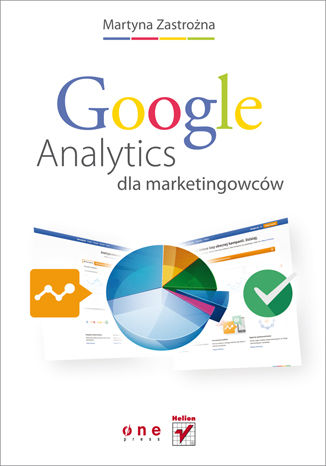
Google Analytics dla marketingowców
Martyna Zastrożna
Co i dlaczego klikają ludzie, na których Ci zależy? W świecie tradycyjnego, offline’owego marketingu na zbadanie potrzeb, nawyków i przekonań potencjalnych klientów wydaje się krocie. Organizowane są drogie testy, grupy fokusowe i badania ankietowe, które mają pomóc zajrzeć w umysły Twoich potencjalnych odbiorców. W końcu kampania reklamowa nie poparta solidną analityczną podbudową jest wielce ryzykowna, prawda? W internecie nie musisz uciekać się do tak kosztownych metod – Twoi odbiorcy sami powiedzą Ci, czego potrzebują, w najprostszy i najbardziej wiarygodny sposób - klikając to, co ich interesuje. Dzięki potężnemu, darmowemu narzędziu Google Analytics bez specjalistycznej wiedzy i dużych nakładów czasu możesz znaleźć odpowiedzi na wiele pytań nurtujących marketingowców. Między słupkami i wierszami tabel kryją się prawdziwe historie internautów, którzy odwiedzili kiedyś Twoją stronę. Śledząc na bieżąco statystyki, możesz w prosty sposób przetestować skuteczność przyjętej strategii, nieustannie podnosić użyteczność witryny i podejmować mądre decyzje biznesowe. Czy to działa? Zapytaj Amazon.com, który całą swoją potęgę zbudował na analizie i testowaniu nowych rozwiązań! Przeczytaj recenzję specjalistów z Future Processing >>
Google Analytics. Integracja i analiza danych
Daniel Waisberg
Aby podjąć dobrą decyzję o rozwoju firmy, trzeba dysponować dobrymi danymi. Zachowania użytkowników, decyzje, które podejmują, ich sposób korzystania z zasobów sieci to nieprzebrana kopalnia danych marketingowych. Ich zebranie, porównanie z danymi pochodzącymi z innych źródeł, a następnie przeanalizowanie dostarcza cennych informacji. Tymczasem wielu specjalistów wciąż analizuje tylko część danych o zachowaniu użytkowników korzystających z zasobów cyfrowych, nie mogąc uwzględnić wszystkich istotnych czynników. Problem polega na rozproszeniu różnych danych w różnych miejscach i przechowywaniu ich na różne sposoby. Konsekwencją są złe decyzje. Rozwiązaniem tego problemu jest narzędzie Google Analytics, wyjątkowo dobrze nadające się do utworzenia platformy analizy danych. Podobnie książka, którą masz przed sobą, wyjątkowo dobrze przedstawia wszystkie istotne informacje o integrowaniu danych za pomocą tego narzędzia. Odwołując się do praktycznych przykładów, szczegółowo opisano tu metody integracji i analizy danych z takich źródeł, jak AdWords, AdSense, systemy CRM i wiele innych. Autor zawarł tu też liczne wskazówki i porady, bazując na swoim ogromnym doświadczeniu. Dzięki tej książce: zaczniesz udoskonalać integrację danych pochodzących z analizy zachowań klientów i z wielu innych źródeł, będziesz stosował sprawdzone techniki umożliwiające zbieranie czytelnych i dokładnych danych, nauczysz się integrować i importować do Google Analytics wszystkie dane o rynku i klientach, wykorzystasz możliwości analityczne tego narzędzia do uzyskania pełniejszego obrazu zachowań klientów, uzyskasz spójny zestaw informacji wysokiej jakości, dzięki czemu umożliwisz managerom podejmowanie właściwych, racjonalnych decyzji biznesowych. Kluczem do sukcesu jest informacja. Kluczem do informacji jest Google Analytics.
Serge Gabet
This book is a simple step-by-step, example-oriented guide with a focus on providing the practical skills necessary to develop and customize apps with Apps Script. If you are an application developer with no knowledge of App Script, and would like to learn to build apps using Google Apps script from scratch, then this book is for you. Basic JavaScript knowledge is required.
Shelley Powers
Spraw, by Twoja strona wyglądała profesjonalnie! Jaki format wybrać dla plików graficznych? Jak tworzyć grafikę użytkową? Jak wykorzystać grafikę wektorową? Wszyscy doskonale wiemy o tym, że o wartości strony internetowej świadczą treści na niej umieszczone. Nie da się jednak zaprzeczyć, że forma, w jakiej są one podane, również ma znaczenie. Osiągnięcie równowagi w tym zakresie nie jest rzeczą łatwą. Jak sprawić, żeby nie doszło do przerostu formy nad treścią? Jak zapewnić optymalny stosunek jakości użytych grafik do ich objętości (w końcu przepustowość łączy nie jest nieskończona)? Przy dużej liczbie odwiedzających różnica kilku kilobajtów może przełożyć się na ogromny wzrost obciążenia łączy, a co za tym idzie, wzrost kosztów utrzymania strony. Wydawałoby się, że te i wiele innych kwestii mogą rozwiązać tylko profesjonaliści. Jednak wcale nie musi tak być! Każdy, kto przeczyta tę książkę, będzie czuł się swobodnie w zagadnieniach związanych z publikacją i wykorzystaniem grafiki w Internecie! Dzięki książce "Grafika w internecie" poznasz wszystkie aspekty pracy z obrazami umieszczanymi w globalnej sieci. Shelley Powers przedstawi Ci wykorzystywane formaty plików graficznych oraz pokaże, do czego każdy z nich nadaje się najlepiej. Zdobędziesz wiedzę na temat dostępnych narzędzi do obróbki grafiki -- zarówno tych płatnych, jak i darmowych. Ponadto nauczysz się tworzyć miniatury zdjęć i układać zdjęcia na stronie. Dowiesz się, jak tworzyć grafikę użytkową, jakie zasady obowiązują przy pracy z grafiką wektorową oraz jakie możliwości drzemią w formacie SVG. Na koniec zapoznasz się z tematami związanymi z projektowaniem stron internetowych -- zrozumiesz, jak wykorzystać kaskadowe arkusze stylów (CSS), jak przygotować dobrą i przejrzystą stronę oraz jak dynamicznie zmieniać właściwości grafiki! Jeżeli myślisz, że praktyczne wykorzystanie grafiki na stronach WWW to wiedza tajemna, ta książka z pewnością to zmieni! Formaty plików graficznych i ich zastosowanie Przygotowanie zdjęć do publikacji w Internecie Narzędzia do obróbki grafiki -- płatne i darmowe Edytory obrazów dostępne online Tworzenie miniatur Sposoby układania zdjęć na stronie Narzędzia do automatycznego generowania galerii oraz pokazów slajdów Tworzenie grafiki użytkowej Wykorzystanie grafiki wektorowej i formatu SVG Zastosowanie kaskadowych arkuszy stylów (CSS) Zasady tworzenia dobrych stron WWW Narzędzia ułatwiające projektowanie stron WWW Dynamiczna modyfikacja grafik Automatyzacja obróbki grafiki -- narzędzie ImageMagick oraz obróbka za pomocą PHP/GD Sposób wykorzystania serwisów Google Maps oraz Yahoo! Maps Łączenie danych z grafiką Poznaj wszystkie aspekty praktycznego wykorzystania grafiki w Internecie!
GraphQL Best Practices. Gain hands-on experience with schema design, security, and error handling
Artur Czemiel
In the ever-evolving landscape of web development, GraphQL has emerged as a powerful query language that addresses the limitations of traditional REST APIs. This guide delves deep into GraphQL, starting with its foundational principles and swiftly advancing to complex topics that will equip you with the skills you need to understand this technology.As you progress, you’ll cover advanced concepts such as schema design, security enhancements, and error handling. You'll also explore essential topics such as federation and the transition from REST to GraphQL, gaining a comprehensive understanding of these critical areas. The book helps you learn through practical examples in TypeScript, guiding you through building scalable and secure GraphQL backends. Additionally, you’ll get up to speed with the intricacies of frontend integration.By the end of this book, you’ll have the skills you need to implement real-world GraphQL solutions, creating efficient and robust applications that meet modern web development demands.
Gaston C. Hillar, Daron Yöndem
Cosmos DB is a NoSQL database service included in Azure that is continuously adding new features and has quickly become one of the most innovative services found in Azure, targeting mission-critical applications at a global scale. This book starts off by showing you the main features of Cosmos DB, their supported NoSQL data models and the foundations of its scalable and distributed architecture. You will learn to work with the latest available tools that simplify your tasks with Cosmos DB and reduce development costs, such as the Data Explorer in the Azure portal, Microsoft Azure Storage Explorer, and the Cosmos DB Emulator.Next, move on to working with databases and document collections. We will use the tools to run schema agnostic queries against collections with the Cosmos DB SQL dialect and understand their results. Then, we will create a first version of an application that uses the latest .NET Core SDK to interact with Cosmos DB. Next, we will create a second version of the application that will take advantage of important features that the combination of C# and the .NET Core SDK provides, such as POCOs and LINQ queries. By the end of the book, you will be able to build an application that works with a Cosmos DB NoSQL document database with C#, the .NET Core SDK, LINQ, and JSON.
Jason Morris
A great user interface (UI) can spell the difference between success and failure for any new application. This book will show you not just how to code great UIs, but how to design them as well. It will take novice Android developers on a journey, showing them how to leverage the Android platform to produce stunning Android applications. Begin with the basics of creating Android applications and then move on to topics such as screen and layout design. Next, learn about techniques that will help improve performance for your application. Also, explore how to create reactive applications that are fast, animated, and guide the user toward their goals with minimal distraction. Understand Android architecture components and learn how to build your application to automatically respond to changes made by the user. Great platforms are not always enough, so this book also focuses on creating custom components, layout managers, and 2D graphics. Also, explore many tips and best practices to ease your UI development process. By the end, you'll be able to design and build not only amazing UIs, but also systems that provide the best possible user experience.
Devangini Patel
With the emergence of big data and modern technologies, AI has acquired a lot of relevance in many domains. The increase in demand for automation has generated many applications for AI in fields such as robotics, predictive analytics, finance, and more.In this book, you will understand what artificial intelligence is. It explains in detail basic search methods: Depth-First Search (DFS), Breadth-First Search (BFS), and A* Search, which can be used to make intelligent decisions when the initial state, end state, and possible actions are known. Random solutions or greedy solutions can be found for such problems. But these are not optimal in either space or time and efficient approaches in time and space will be explored. We will also understand how to formulate a problem, which involves looking at it and identifying its initial state, goal state, and the actions that are possible in each state. We also need to understand the data structures involved while implementing these search algorithms as they form the basis of search exploration. Finally, we will look into what a heuristic is as this decides the quality of one sub-solution over another and helps you decide which step to take.
Sam Williams
Have you ever wondered how Alexa apps are made, how voice-enabled technologies work, or how chatbots function? And why tech giants such as Amazon and Google are investing in voice technologies? A better question is: why should I start developing on these platforms? Hands-On Chatbot Development with Alexa Skills and Amazon Lex covers all features of the Alexa Skills kit with real-world examples that help you develop skills to integrate Echo and chatbots into Facebook, Slack, and Twilio with the Amazon Lex platform.The book starts with teaching you how to set up your local environment and AWS CLI so that you can automate the process of uploading AWS Lambda from your local machine. You will then learn to develop Alexa Skills and Lex chatbots using Lambda functions to control functionality. Once you’ve come to grips with this, you will learn to create increasingly complex chatbots, integrate Amazon S3, and change the way Alexa talks to the user. In the concluding chapters, we shift our focus to Amazon Lex and messaging chatbots. We will explore Alexa, learn about DynamoDB databases, and add cards to user conversations.By the end of this book, you will have explored a full set of technologies that will enable you to create your own voice and messaging chatbots using Amazon.
Srini Janarthanam
Conversation as an interface is the best way for machines to interact with us using the universally accepted human tool that is language. Chatbots and voice user interfaces are two flavors of conversational UIs. Chatbots are real-time, data-driven answer engines that talk in natural language and are context-aware. Voice user interfaces are driven by voice and can understand and respond to users using speech. This book covers both types of conversational UIs by leveraging APIs from multiple platforms. We'll take a project-based approach to understand how these UIs are built and the best use cases for deploying them. We'll start by building a simple messaging bot from the Facebook Messenger API to understand the basics of bot building. Then we move on to creating a Task model that can perform complex tasks such as ordering and planning events with the newly-acquired-by-Google Dialogflow and Microsoft Bot framework. We then turn to voice-enabled UIs that are capable of interacting with users using speech with Amazon Alexa and Google Home. By the end of the book, you will have created your own line of chatbots and voice UIs for multiple leading platforms.
Tomasz Adamski
The book starts by introducing you to WildFly Swarm—a tool that allows you to create runnable microservices from Java EE components. You’ll learn the basics of Swarm operation—creating microservices containing only the parts of enterprise runtime needed in a specific case. Later, you’ll learn how to configure and test those services.In order to deploy our services in the cloud, we’ll use OpenShift. You’ll get to know basic information on its architecture, features, and relationship to Docker and Kubernetes. Later, you’ll learn how to deploy and configure your services to run in the OpenShift cloud.In the last part of the book, you’ll see how to make your application production-ready. You’ll find out how to configure continuous integration for your services using Jenkins, make your application resistant to network failures using Hystrix, and how to secure them using Keycloak. By the end of the book, you’ll have a functional example application and will have practical knowledge of Java EE cloud development that can be used as a reference in your other projects.
Kashyap Mukkamala
Data structures and algorithms are the fundamental building blocks of computer programming. They are critical to any problem, provide a complete solution, and act like reusable code. Using appropriate data structures and having a good understanding of algorithm analysis are key in JavaScript to solving crises and ensuring your application is less prone to errors.Do you want to build applications that are high-performing and fast? Are you looking for complete solutions to implement complex data structures and algorithms in a practical way? If either of these questions rings a bell, then this book is for you!You'll start by building stacks and understanding performance and memory implications. You will learn how to pick the right type of queue for the application. You will then use sets, maps, trees, and graphs to simplify complex applications. You will learn to implement different types of sorting algorithm before gradually calculating and analyzing space and time complexity. Finally, you'll increase the performance of your application using micro optimizations and memory management.By the end of the book you will have gained the skills and expertise necessary to create and employ various data structures in a way that is demanded by your project or use case.
Mateusz Grzesiukiewicz
React Native helps developers reuse code across different mobile platforms like iOS and Android.This book will show you effective design patterns in the React Native world and will make you ready for professional development in big teams.The book will focus only on the patterns that are relevant to JavaScript, ECMAScript, React and React Native. However, you can successfully transfer a lot of the skills and techniques to other languages. I call them “Idea patterns”.This book will start with the most standard development patterns in React like component building patterns, styling patterns in React Native and then extend these patterns to your mobile application using real world practical examples. Each chapter comes with full, separate source code of applications that you can build and run on your phone.The book is also diving into architectural patterns. Especially how to adapt MVC to React environment. You will learn Flux architecture and how Redux is implementing it. Each approach will be presented with its pros and cons. You will learn how to work with external data sources using libraries like Redux thunk and Redux Saga.The end goal is the ability to recognize the best solution for a given problem for your next mobile application.