
Bezpieczeństwo systemów
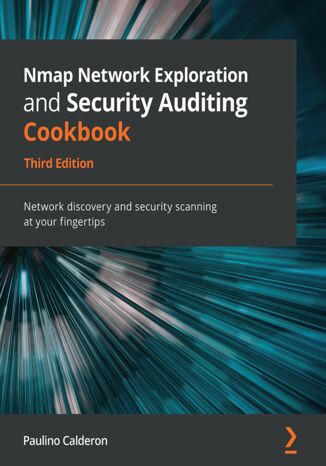
Paulino Calderon
Nmap is one of the most powerful tools for network discovery and security auditing used by millions of IT professionals, from system administrators to cybersecurity specialists. This third edition of the Nmap: Network Exploration and Security Auditing Cookbook introduces Nmap and its family - Ncat, Ncrack, Ndiff, Zenmap, and the Nmap Scripting Engine (NSE) - and guides you through numerous tasks that are relevant to security engineers in today’s technology ecosystems.The book discusses some of the most common and useful tasks for scanning hosts, networks, applications, mainframes, Unix and Windows environments, and ICS/SCADA systems. Advanced Nmap users can benefit from this book by exploring the hidden functionalities within Nmap and its scripts as well as advanced workflows and configurations to fine-tune their scans. Seasoned users will find new applications and third-party tools that can help them manage scans and even start developing their own NSE scripts. Practical examples featured in a cookbook format make this book perfect for quickly remembering Nmap options, scripts and arguments, and more.By the end of this Nmap book, you will be able to successfully scan numerous hosts, exploit vulnerable areas, and gather valuable information.
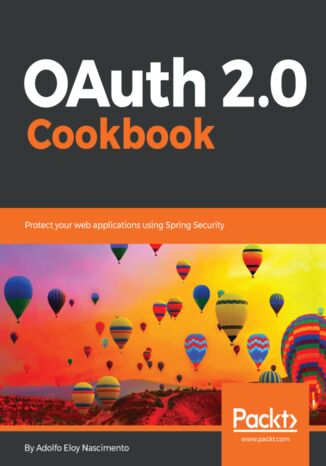
OAuth 2.0 Cookbook. Protect your web applications using Spring Security
Adolfo Eloy Nascimento
OAuth 2.0 is a standard protocol for authorization and focuses on client development simplicity while providing specific authorization flows for web applications, desktop applications, mobile phones, and so on. This book also provides useful recipes for solving real-life problems using Spring Security and creating Android applications.The book starts by presenting you how to interact with some public OAuth 2.0 protected APIs such as Facebook, LinkedIn and Google. You will also be able to implement your own OAuth 2.0 provider with Spring Security OAuth2. Next, the book will cover practical scenarios regarding some important OAuth 2.0 profiles such as Dynamic Client Registration, Token Introspection and how to revoke issued access tokens. You will then be introduced to the usage of JWT, OpenID Connect, and how to safely implement native mobile OAuth 2.0 Clients.By the end of this book, you will be able to ensure that both the server and client are protected against common vulnerabilities.
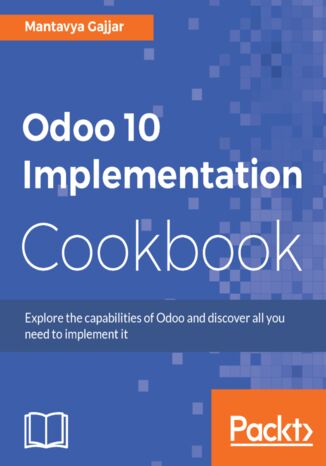
Mantavya Gajjar
Odoo is a Python-based ERP system and is completely open source. Odoo is a comprehensive suite of business applications offering a wealth of functionalities that can be deployed to meet your business needs.This book will help you manage the different functionalities of your business and optimize it. You will learn in detail about the various facets of the business process such as sales, accounting, purchases, manufacturing, and inventory. We will cover each of these topics in detail and learn how Odoo handles all these tasks with much ease. With its modular approach, you will be able to build customized solutions, take advantage of the Odoo 10 system in your organization, and master basic administration. We will cover modules and applications in Odoo that will help optimize quality checks. You will also be able to customize major reporting functions for your teams and set up forms and documents for sales, purchase, inventory, and so on. By the end of the book, you will be able to use the major functionalities of Odoo 10 and fully implement them into your business.

Dr. Ahmad MK Nasser, Dr. Dennis Kengo...
Offensive Automotive Cybersecurity is your practical guide to understanding how modern automotive vulnerabilities are exploited—so you can build resilient defenses against proven attack methods.As vehicles evolve into software-defined systems, their expanding attack surface increases exposure to sophisticated threats. This book examines the entire connected vehicle ecosystem—from cloud backends and wireless protocols to in-vehicle networks, HPCs, ECUs, and physical sensors—through an offensive security lens.Through a blend of theory and reviewing practical examples, you will learn to execute the full penetration testing lifecycle, encompassing active and passive reconnaissance, firmware reverse engineering, and the construction of complex attack chains. The book provides hands-on insights into exploiting memory corruption bugs in HPCs, abusing diagnostic protocols, and leveraging hardware-level vulnerabilities such as fault injection and side-channel leakage. These techniques are brought to life through detailed real-world case studies, including remote takeovers and exploits of well-known vehicle platforms.By the end of this book, you’ll be able to think like an adversary, uncover hidden risks before attackers do, apply secure-by-design principles, and implement layered defenses to reduce exploitable weaknesses.
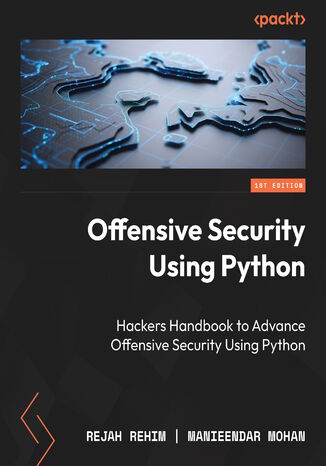
Rejah Rehim, Manindar Mohan, Grant Ongers
Offensive Security Using Python is your go-to manual for mastering the quick-paced field of offensive security. This book is packed with valuable insights, real-world examples, and hands-on activities to help you leverage Python to navigate the complicated world of web security, exploit vulnerabilities, and automate challenging security tasks.From detecting vulnerabilities to exploiting them with cutting-edge Python techniques, you’ll gain practical insights into web security, along with guidance on how to use automation to improve the accuracy and effectiveness of your security activities. You’ll also learn how to design personalized security automation tools. While offensive security is a great way to stay ahead of emerging threats, defensive security plays an equal role in protecting organizations from cyberattacks. In this book, you’ll get to grips with Python secure coding techniques to improve your ability to recognize dangers quickly and take appropriate action. As you progress, you’ll be well on your way to handling the contemporary challenges in the field of cybersecurity using Python, as well as protecting your digital environment from growing attacks.By the end of this book, you’ll have a solid understanding of sophisticated offensive security methods and be able to stay ahead in the constantly evolving cybersecurity space.
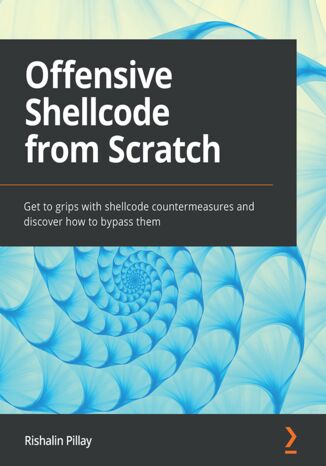
Rishalin Pillay
Shellcoding is a technique that is executed by many red teams and used in penetration testing and real-world attacks. Books on shellcode can be complex, and writing shellcode is perceived as a kind of dark art. Offensive Shellcode from Scratch will help you to build a strong foundation of shellcode knowledge and enable you to use it with Linux and Windows.This book helps you to explore simple to more complex examples of shellcode that are used by real advanced persistent threat (APT) groups. You'll get to grips with the components of shellcode and understand which tools are used when building shellcode, along with the automated tools that exist to create shellcode payloads. As you advance through the chapters, you'll become well versed in assembly language and its various components, such as registers, flags, and data types. This shellcode book also teaches you about the compilers and decoders that are used when creating shellcode. Finally, the book takes you through various attacks that entail the use of shellcode in both Windows and Linux environments.By the end of this shellcode book, you'll have gained the knowledge needed to understand the workings of shellcode and build your own exploits by using the concepts explored.
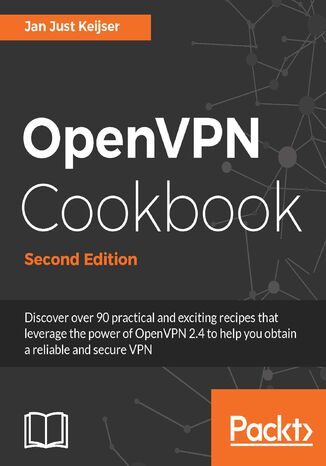
OpenVPN Cookbook. Get the most out of OpenVPN by exploring it's advanced features. - Second Edition
Jan Just Keijser
OpenVPN provides an extensible VPN framework that has been designed to ease site-specific customization, such as providing the capability to distribute a customized installation package to clients, and supporting alternative authentication methods via OpenVPN’s plugin module interface. This book provides you with many different recipes to help you set up, monitor, and troubleshoot an OpenVPN network. You will learn to configure a scalable, load-balanced VPN server farm that can handle thousands of dynamic connections from incoming VPN clients. You will also get to grips with the encryption, authentication, security, extensibility, and certifications features of OpenSSL. You will also get an understanding of IPv6 support and will get a demonstration of how to establish a connection via IPv64. This book will explore all the advanced features of OpenVPN and even some undocumented options, covering all the common network setups such as point-to-point networks and multi-client TUN-style and TAP-style networks. Finally, you will learn to manage, secure, and troubleshoot your virtual private networks using OpenVPN 2.4.
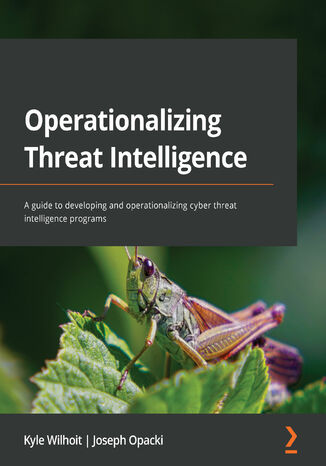
Kyle Wilhoit, Joseph Opacki
We’re living in an era where cyber threat intelligence is becoming more important. Cyber threat intelligence routinely informs tactical and strategic decision-making throughout organizational operations. However, finding the right resources on the fundamentals of operationalizing a threat intelligence function can be challenging, and that’s where this book helps.In Operationalizing Threat Intelligence, you’ll explore cyber threat intelligence in five fundamental areas: defining threat intelligence, developing threat intelligence, collecting threat intelligence, enrichment and analysis, and finally production of threat intelligence. You’ll start by finding out what threat intelligence is and where it can be applied. Next, you’ll discover techniques for performing cyber threat intelligence collection and analysis using open source tools. The book also examines commonly used frameworks and policies as well as fundamental operational security concepts. Later, you’ll focus on enriching and analyzing threat intelligence through pivoting and threat hunting. Finally, you’ll examine detailed mechanisms for the production of intelligence.By the end of this book, you’ll be equipped with the right tools and understand what it takes to operationalize your own threat intelligence function, from collection to production.