
Inne - Programowanie
Lee Zhi Eng
With the growing need to develop GUIs for multiple targets and multiple screens, improving the visual quality of your application becomes important so that it stands out from your competitors. With its cross-platform ability and the latest UI paradigms, Qt makes it possible to build intuitive, interactive, and user-friendly user interfaces for your applications.Qt5 C++ GUI Programming Cookbook, Second Edition teaches you how to develop functional and appealing user interfaces using the latest version of QT5 and C++. This book will help you learn a variety of topics such as GUI customization and animation, graphics rendering, implementing Google Maps, and more. You will also be taken through advanced concepts like asynchronous programming, event handling using signals and slots, network programming, various aspects of optimizing your application. By the end of the book, you will be confident to design and customize GUI applications that meet your clients' expectations and have an understanding of best practice solutions for common problems.
Srinjoy Ganguly, Thomas Cambier
Quantum computing is a growing field, with many research projects focusing on programming quantum computers in the most efficient way possible. One of the biggest challenges faced with existing languages is that they work on low-level circuit model details and are not able to represent quantum programs accurately. Developed by researchers at ETH Zurich after analyzing languages including Q# and Qiskit, Silq is a high-level programming language that can be viewed as the C++ of quantum computers! Quantum Computing with Silq Programming helps you explore Silq and its intuitive and simple syntax to enable you to describe complex tasks with less code. This book will help you get to grips with the constructs of the Silq and show you how to write quantum programs with it. You’ll learn how to use Silq to program quantum algorithms to solve existing and complex tasks. Using quantum algorithms, you’ll also gain practical experience in useful applications such as quantum error correction, cryptography, and quantum machine learning. Finally, you’ll discover how to optimize the programming of quantum computers with the simple Silq.By the end of this Silq book, you’ll have mastered the features of Silq and be able to build efficient quantum applications independently.
Lovisa Johansson, David Dossot
RabbitMQ is an open source message queuing software that acts as a message broker using the Advanced Message Queuing Protocol (AMQP). This book will help you to get to grips with RabbitMQ to build your own applications with a message queue architecture. You’ll learn from the experts from CloudAMQP as they share what they've learned while managing the largest fleet of RabbitMQ clusters in the world.Following the case study of Complete Car, you’ll discover how you can use RabbitMQ to provide exceptional customer service and user experience, and see how a message queue architecture makes it easy to upgrade the app and add features as the company grows. From implementing simple synchronous operations through to advanced message routing and tracking, you’ll explore how RabbitMQ streamlines scalable operations for fast distribution. This book will help you understand the advantages of message queue architecture, including application scalability, resource efficiency, and user reliability. Finally, you’ll learn best practices for working with RabbitMQ and be able to use this book as a reference guide for your future app development projects.By the end of this book, you’ll have learned how to use message queuing software to streamline the development of your distributed and scalable applications.
Ricardo Pereira, Paulo Moreira, Taiji Hagino
OutSystems is a software development platform that speeds up the build phase by abstracting code and making almost everything visual. This means replacing textual language with visual artifacts that avoid lexical errors and speed up code composition using accelerators and predefined templates.The book begins by walking you through the fundamentals of the technology, along with a general overview of end-to-end web and mobile software development. You'll learn how to configure your personal area in the cloud and use the OutSystems IDE to connect with it. The book then shows you how to build a web application based on the best architectural and developmental practices in the market, and takes the same approach for the mobile paradigm. As you advance, you'll find out how to develop the same application, and the great potential of reusing code from one paradigm in another and the symbiosis between them is showcased.The only application that'll differ from the application in the exercise is the one used in business process technology (BPT), with a focus on a common market use case.By the end of this OutSystems book, you'll be able to develop enterprise-level applications on the web and mobile, integrating them with third parties and other systems on the market. You'll also understand the concepts of performance, security, and software construction and be able to apply them effectively.
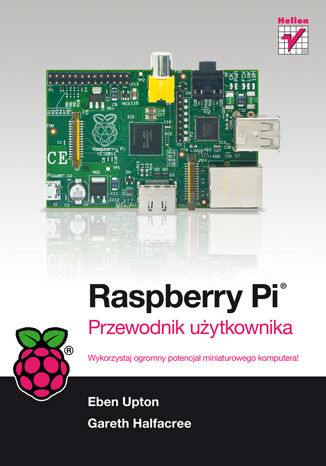
Raspberry Pi. Przewodnik użytkownika
Gareth Halfacree, Eben Upton
Wykorzystaj ogromny potencjał miniaturowego komputera! Prawdziwy komputer wielkości lekko przerośniętej karty kredytowej - czy to możliwe? Oczywiście! Do tego kosztuje on naprawdę niewiele. Początkowo miał służyć dzieciom do nauki programowania, jednak jego możliwości rozrosły się błyskawicznie. W tej chwili Raspberry Pi wykorzystywany jest często jako platforma do odtwarzania filmów, serwer WWW lub sterownik urządzeń. Masz już na niego jakiś własny pomysł? Recenzja książki na Forbot.pl >> Ta książka to instrukcja użytkownika. Dzięki niej poznasz wszystkie tajniki pracy z platformą Raspberry Pi. Na samym początku nauczysz się rozróżniać architekturę x86 i ARM oraz poznasz zalety systemu Linux, pod którym działa Raspberry Pi. Jak na porządną instrukcję przystało, poznasz każdy aspekt pracy z tym urządzeniem. Najpierw poczytasz o podłączaniu klawiatury i myszy, a pod koniec trafisz na tematy związane z zarządzaniem systemem operacyjnym Linux. Ponadto dowiesz się, jak przygotować to urządzenie do pracy w systemach produkcyjnych, pisać programy w językach Scratch i Python oraz sterować innymi urządzeniami. Raspberry Pi to gwarancja dobrej zabawy dla każdego pasjonata informatyki. Przekonaj się sam! Raspberry Pi to: interesujący i tani komputer platforma pozwalająca zrealizować różne projekty sterownik dla innych urządzeń świetna zabawa Kompletne źródło informacji o Raspberry Pi!
Raspberry Pi Zero Cookbook. Delve into the practical world of the Raspberry Pi Zero
Edward Snajder
The Raspberry Pi Zero, one of the most inexpensive, fully-functional computers available, is a powerful and revolutionary product developed by the Raspberry Pi Foundation. The Raspberry Pi Zero opens up a new world for the makers out there. This book will give you expertise with the Raspberry Pi Zero, providing all the necessary recipes that will get you up and running.In this book, you will learn how to prepare your own circuits rather than buying the expensive add–ons available in the market. We start by showing you how to set up and manage the Pi Zero and then move on to configuring the hardware, running it with Linux, and programming it with Python scripts. Later, we integrate the Raspberry Pi Zero with sensors, motors, and other hardware. You will also get hands-on with interesting projects in media centers, IoT, and more.
Emilio Rodriguez Martinez
React Native helps web and mobile developers to build cross-platform apps that perform at the same level as any other natively developed app. The range of apps that can be built using this library is huge. From e-commerce to games, React Native is a good fit for any mobile project due to its flexibility and extendable nature. This project-based book consists of four standalone projects. Each project will help you gain a sound understanding of the framework and build mobile apps with native user experience. Starting with a simple standalone car booking app, you will progressively move on to building advanced apps by adding connectivity with external APIs, using native features, such as the camera or microphone, in the mobile device, integrating with state management libraries such as Redux or MobX, or leveraging React Native’s performance by building a full-featured game.This book is ideal for developers who want to build amazing cross-platform apps with React Native.This book is embedded with useful assessments that will help you revise the concepts you have learned in this book. This book is repurposed for this specific learning experience from the content of Packt's React Native Blueprints by Emilio Rodriguez Martinez.
React Material-UI Cookbook. Build captivating user experiences using React and Material-UI
Adam Boduch
Material-UI is a component library for rendering UI elements, using modern best practices from React and Material Design. This book will show you how you can create impressive and captivating modern-day web apps by implementing Material Design considerations. The book is designed to help you use a variety of Material-UI components to enhance UI functionality, along with guiding you through React best practices, and using state, context, and other new React 16.8 features.You will start with layout and navigation, exploring the Grid component and understanding how it’s used to build layouts for your Material-UI apps. Using Material-UI components, you’ll then explore the technique of effectively presenting information. In later sections, you will also learn about the different components for user interactions such as the text input component and buttons. Finally, the book will get you up to speed with customizing the look and feel of your app, right from creating a Material-UI theme through to styling icons and text.By the end of this book, you will have developed the skills you need to improve the look and feel of your applications using Material-UI components.
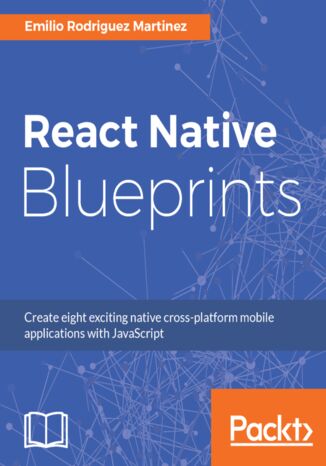
Emilio Rodriguez Martinez
Considering the success of the React framework, Facebook recently introduced a new mobile development framework called React Native. With React Native's game-changing approach to hybrid mobile development, you can build native mobile applications that are much more powerful, interactive, and faster by using JavaScriptThis project-based guide takes you through eight projects to help you gain a sound understanding of the framework and helps you build mobile apps with native user experience. Starting with a simple standalone groceries list app, you will progressively move on to building advanced apps by adding connectivity with external APIs, using native features, such as the camera or microphone, in the mobile device, integrating with state management libraries such as Redux or MobX, or leveraging React Native’s performance by building a full-featured game.This book covers the entire feature set of React Native, starting from the simplest (layout or navigation libraries) to the most advanced (integration with native code) features.By the end of this book, you’ll be able to build professional Android and iOS applications using React Native.
React Router Quick Start Guide. Routing in React applications made easy
Sagar Ganatra
React Router is the routing library for React, and it can be used in both React Web and React Native applications. This book is a simple way to get started with React Router and harness its full power for your applications.The book starts with an introduction to React Router and teaches you how to create your first route using the React component. You will then learn about configuring your routes, passing parameters, and creating nested routes. You will be introduced to various components in React-Router and learn different configuration options available for these components. You will then see how to use the Redirect and Switch components. For even greater ?exibility, you will learn about BrowserRouter, HashRouter, NativeRouter, and StaticRouter.By the end of the book, you will have set up a project with React Router and make routing configuration work in a server-side rendered React application, a mobile application built with React Native and also understand how Redux and React-Router can be used in the same application.
React, TypeScript i Node. Tworzenie aplikacji internetowych typu fullstack
David Choi
JavaScript i jego następca, TypeScript, od lat są ulubionymi językami programowania zawodowców. Mogą oni korzystać z całej gamy wspaniałych narzędzi i frameworków, takich jak React, Node.js czy też Redux, Express i GraphQL. Dają one możliwość pisania całych aplikacji, zarówno części klienckich, jak i serwerowych, w jednym języku. Programiści coraz częściej doceniają korzyści, jakie płyną z tworzenia rozwiązań obejmujących pełny stos technologiczny. Jest to o wiele efektywniejszy i bardziej satysfakcjonujący sposób pracy niż tworzenie klasycznych aplikacji internetowych. To książka przeznaczona dla osób, które posługują się językiem JavaScript i chcą wykorzystać jego możliwości do zbudowania kompletnej aplikacji internetowej. Prezentuje język TypeScript i opisuje jego najlepsze cechy, pokazuje także, w jaki sposób za pomocą takich frameworków jak React, Redux, Node, Express i GraphQL zbudować złożoną aplikację internetową o pełnej funkcjonalności. Wyjaśniono tu tajniki pracy z poszczególnymi elementami całego stosu technologicznego, a przy tym omówiono przydatne narzędzia, techniki i biblioteki. Przedstawiono również sposoby używania bazy danych na potrzeby aplikacji. Ważnym elementem jest dokładny opis wdrażania gotowej aplikacji w chmurze AWS. W książce między innymi: najważniejsze możliwości języka TypeScript stosowanie hooków Reacta i magazynu Redux wdrażanie funkcjonalnych aplikacji za pomocą Reacta i GraphQL mechanizm uwierzytelniania z użyciem Redisa praca z bazą danych Postgres przy użyciu TypeORM konfiguracja serwera NGINX w chmurze AWS wraz z wdrażaniem aplikacji Nowy wymiar programowania: pełny stos najnowszych technologii!
Paweł Kamiński
Reaguj z Reactem! Poznaj React od podszewki Naucz się stosować tę bibliotekę w praktyce Twórz atrakcyjne interfejsy użytkownika React to bez wątpienia jedna z najpopularniejszych bibliotek służących do tworzenia interfejsów użytkownika. Zawdzięcza to dużej elastyczności, łatwości adaptacji i... reklamie, którą bibliotece zapewniło użycie jej przez kilka najbardziej rozpoznawalnych serwisów internetowych na świecie, takich jak Netflix, PayPal czy Imgur. Nie bez znaczenia są oczywiście możliwości Reacta, prostota jego zastosowania i czytelność kodu. Liczba ofert pracy dla programistów znających tę bibliotekę stale rośnie i nic nie zapowiada, aby w najbliższym czasie się to zmieniło. Jeśli zatem marzy Ci się kariera frontendowca i stoisz przed wyborem technologii do nauki, bez wątpienia powinieneś się zainteresować Reactem! Sięgnij w tym celu po źródło wiedzy, które wprowadzi Cię w arkana tej biblioteki od strony praktycznej. Znajdziesz tu opis najważniejszych możliwości Reacta, nauczysz się tworzyć w nim aplikacje oraz pobierać i przechowywać dane. Poznasz też metodę uwierzytelniania i kontroli dostępu do aplikacji, a także dowiesz się, jak zapewnić właściwy routing i posługiwać się hookami. A wszystko to na podstawie praktycznych przykładów kodu. Podstawy języka TypeScript Tworzenie aplikacji React Przegląd możliwości biblioteki Posługiwanie się danymi Uwierzytelnianie i routing Korzystanie z hooków Użyteczne przykłady kodu Praktyczne rozwiązania Stosuj bibliotekę React w praktyce!
Rivu Chakraborty
In today's app-driven era, when programs are asynchronous, and responsiveness is so vital, reactive programming can help you write code that's more reliable, easier to scale, and better-performing. Reactive programming is revolutionary.With this practical book, Kotlin developers will first learn how to view problems in the reactive way, and then build programs that leverage the best features of this exciting new programming paradigm. You will begin with the general concepts of Reactive programming and then gradually move on to working with asynchronous data streams. You will dive into advanced techniques such as manipulating time in data-flow, customizing operators and provider and how to use the concurrency model to control asynchronicity of code and process event handlers effectively.You will then be introduced to functional reactive programming and will learn to apply FRP in practical use cases in Kotlin. This book will also take you one step forward by introducing you to Spring 5 and Spring Boot 2 using Kotlin. By the end of the book, you will be able to build real-world applications with reactive user interfaces as well as you'll learn to implement reactive programming paradigms in Android.
Redux Quick Start Guide. A beginner's guide to managing app state with Redux
James Lee, Tao Wei, Suresh Kumar Mukhiya
Starting with a detailed overview of Redux, we will follow the test-driven development (TDD) approach to develop single-page applications. We will set up JEST for testing and use JEST to test React, Redux, Redux-Sage, Reducers, and other components. We will then add important middleware and set up immutableJS in our application. We will use common data structures such as Map, List, Set, and OrderedList from the immutableJS framework. We will then add user interfaces using ReactJS, Redux-Form, and Ant Design.We will explore the use of react-router-dom and its functions. We will create a list of routes that we will need in order to create our application, and explore routing on the server site and create the required routes for our application. We will then debug our application and integrate Redux Dev tools.We will then set up our API server and create the API required for our application. We will dive into a modern approach to structuring our server site components in terms of Model, Controller, Helper functions, and utilities functions. We will explore the use of NodeJS with Express to build the REST API components. Finally, we will venture into the possibilities of extending the application for further research, including deployment and optimization.
Remote Usability Testing. Actionable insights in user behavior across geographies and time zones
Inge De Bleecker, Rebecca Okoroji
Usability testing is a subdiscipline of User Experience. Its goal is to ensure that a given product is easy to use and the user's experience with the product is intuitive and satisfying. Usability studies are conducted with study participants who are representative of the target users to gather feedback on a user interface. The feedback is then used to refine and improve the user interface.Remote studies involve fewer logistics, allow participation regardless of location and are quicker and cheaper to execute compared to in person studies, while delivering valuable insights. The users are not inhibited by being in a new environment under observation; they can act naturally in their familiar environment. Remote unmoderated studies additionally have the advantage of being independent of time zones.This book will teach you how to conduct qualitative remote usability studies, in particular remote moderated and unmoderated studies. Each chapter provides actionable tips on how to use each methodology and how to compensate for the specific nature of each methodology. The book also provides material to help with planning and executing each study type.
RS 232C - praktyczne programowanie. Od Pascala i C++ do Delphi i Buildera. Wydanie III
Andrzej Daniluk
Na uczelniach, w szkołach i biurach pojawia się coraz więcej zaawansowanych urządzeń komputerowych podłączanych przez port szeregowy. Czy koniecznie trzeba płacić wysokie stawki informatykom, aby wykorzystać pełnię możliwości tych nowoczesnych narzędzi? Na szczęście nie. Obsługa transmisji szeregowej przy użyciu standardu RS 232C może być na tyle łatwa, że uczniowie, studenci, nauczyciele, pracownicy naukowi czy inżynierowie mogą samodzielnie tworzyć potrzebne im oprogramowanie. Dzięki książce "RS 232C -- praktyczne programowanie. Od Pascala i C++ do Delphi i Buildera. Wydanie III" także i Ty szybko nauczysz się pisać programy sterujące urządzeniami podłączanymi przez port szeregowy. Dowiesz się, jak działa transmisja asynchroniczna oraz czym jest standard RS 232C. Poznasz interfejs RS 232C dla systemu Windows i nauczysz się go używać w środowiskach programistycznych Builder i Delphi, co pozwoli Ci pisać potrzebne oprogramowanie w języku Pascal lub C++. Najnowsze, poprawione wydanie zawiera jeszcze więcej przykładów, dzięki którym błyskawicznie będziesz mógł sprawdzić nabytą wiedzę w praktyce. Standard RS 232C Transmisja asynchroniczna Obsługa RS 232C w systemach MS-DOS i Windows Wykorzystanie elementów interfejsu Windows API w środowiskach Builder i Delphi Testowanie programów do obsługi transmisji szeregowej Tworzenie aplikacji wielowątkowych Narzędzia graficzne Przykładowe aplikacje i ich analiza Specyfikacje najważniejszych funkcji
Ivo Balbaert
Rust is the new, open source, fast, and safe systems programming language for the 21st century, developed at Mozilla Research, and with a steadily growing community. It was created to solve the dilemma between high-level, slow code with minimal control over the system, and low-level, fast code with maximum system control. It is no longer necessary to learn C/C++ to develop resource intensive and low-level systems applications. This book will give you a head start to solve systems programming and application tasks with Rust.We start off with an argumentation of Rust's unique place in today's landscape of programming languages. You'll install Rust and learn how to work with its package manager Cargo. The various concepts are introduced step by step: variables, types, functions, and control structures to lay the groundwork. Then we explore more structured data such as strings, arrays, and enums, and you’ll see how pattern matching works.Throughout all this, we stress the unique ways of reasoning that the Rust compiler uses to produce safe code. Next we look at Rust's specific way of error handling, and the overall importance of traits in Rust code. The pillar of memory safety is treated in depth as we explore the various pointer kinds. Next, you’ll see how macros can simplify code generation, and how to compose bigger projects with modules and crates. Finally, you’ll discover how we can write safe concurrent code in Rust and interface with C programs, get a view of the Rust ecosystem, and explore the use of the standard library.
Rust High Performance. Learn to skyrocket the performance of your Rust applications
Iban Eguia Moraza
This book teaches you how to optimize the performance of your Rust code so that it is at the same level as languages such as C/C++. You'll understand and fi x common pitfalls, learn how to improve your productivity by using metaprogramming, and speed up your code. You will master the features of the language, which will make you stand out, and use them to greatly improve the efficiency of your algorithms. The book begins with an introduction to help you identify bottlenecks when programming in Rust. We highlight common performance pitfalls, along with strategies to detect and resolve these issues early. We move on to mastering Rust's type system, which will enable us to optimize both performance and safety at compile time. You will learn how to effectively manage memory in Rust, mastering the borrow checker. We move on to measuring performance and you will see how this affects the way you write code. Moving forward, you will perform metaprogramming in Rust to boost the performance of your code and your productivity. Finally, you will learn parallel programming in Rust, which enables efficient and faster execution by using multithreading and asynchronous programming.
Guillaume Gomez, Antoni Boucher
Rust is an open source, safe, concurrent, practical language created by Mozilla. It runs blazingly fast, prevents segfaults, and guarantees safety. This book gets you started with essential software development by guiding you through the different aspects of Rust programming. With this approach, you can bridge the gap between learning and implementing immediately. Beginning with an introduction to Rust, you’ll learn the basic aspects such as its syntax, data types, functions, generics, control flows, and more. After this, you’ll jump straight into building your first project, a Tetris game. Next you’ll build a graphical music player and work with fast, reliable networking software using Tokio, the scalable and productive asynchronous IO Rust library. Over the course of this book, you’ll explore various features of Rust Programming including its SDL features, event loop, File I/O, and the famous GTK+ widget toolkit. Through these projects, you’ll see how well Rust performs in terms of concurrency—including parallelism, reliability, improved performance, generics, macros, and thread safety. We’ll also cover some asynchronous and reactive programming aspects of Rust.By the end of the book, you’ll be comfortable building various real-world applications in Rust.
Claus Matzinger
Rust 2018, Rust's first major milestone since version 1.0, brings more advancement in the Rust language. The Rust Programming Cookbook is a practical guide to help you overcome challenges when writing Rust code.This Rust book covers recipes for configuring Rust for different environments and architectural designs, and provides solutions to practical problems. It will also take you through Rust's core concepts, enabling you to create efficient, high-performance applications that use features such as zero-cost abstractions and improved memory management. As you progress, you'll delve into more advanced topics, including channels and actors, for building scalable, production-grade applications, and even get to grips with error handling, macros, and modularization to write maintainable code. You will then learn how to overcome common roadblocks when using Rust for systems programming, IoT, web development, and network programming. Finally, you'll discover what Rust 2018 has to offer for embedded programmers. By the end of the book, you'll have learned how to build fast and safe applications and services using Rust.
Rust Standard Library Cookbook. Over 75 recipes to leverage the power of Rust
Jan Hohenheim, Daniel Durante
Mozilla’s Rust is gaining much attention with amazing features and a powerful library. This book will take you through varied recipes to teach you how to leverage the Standard library to implement efficient solutions.The book begins with a brief look at the basic modules of the Standard library and collections. From here, the recipes will cover packages that support file/directory handling and interaction through parsing. You will learn about packages related to advanced data structures, error handling, and networking. You will also learn to work with futures and experimental nightly features. The book also covers the most relevant external crates in Rust. By the end of the book, you will be proficient at using the Rust Standard library.
Karuna Murti
Looking for a fast, powerful, and intuitive framework to build web applications? This Rust book will help you kickstart your web development journey and take your Rust programming skills to the next level as you uncover the power of Rocket - a fast, flexible, and fun framework powered by Rust.Rust Web Development with Rocket wastes no time in getting you up to speed with what Rust is and how to use it. You’ll discover what makes it so productive and reliable, eventually mastering all of the concepts you need to play with the Rocket framework while developing a wide set of web development skills. Throughout this book, you'll be able to walk through a hands-on project, covering everything that goes into making advanced web applications, and get to grips with the ins and outs of Rocket development, including error handling, Rust vectors, and wrappers. You'll also learn how to use synchronous and asynchronous programming to improve application performance and make processing user content easy.By the end of the book, you'll have answers to all your questions about creating a web application using the Rust language and the Rocket web framework.
Maxwell Flitton
Are safety and high performance a big concern for you while developing web applications?While most programming languages have a safety or speed trade-off, Rust provides memory safety without using a garbage collector. This means that with its low memory footprint, you can build high-performance and secure web apps with relative ease.This book will take you through each stage of the web development process, showing you how to combine Rust and modern web development principles to build supercharged web apps.You'll start with an introduction to Rust and understand how to avoid common pitfalls when migrating from traditional dynamic programming languages. The book will show you how to structure Rust code for a project that spans multiple pages and modules. Next, you'll explore the Actix Web framework and get a basic web server up and running. As you advance, you'll learn how to process JSON requests and display data from the web app via HTML, CSS, and JavaScript. You'll also be able to persist data and create RESTful services in Rust. Later, you'll build an automated deployment process for the app on an AWS EC2 instance and Docker Hub. Finally, you'll play around with some popular web frameworks in Rust and compare them.By the end of this Rust book, you'll be able to confidently create scalable and fast web applications with Rust.
Rzemiosło w czystej formie. Standardy i etyka rzetelnych programistów
Robert C. Martin
Rzemieślnik to osoba, która jest starannie wyszkolona, doskonale zna się na swoim fachu i czuje dumę z własnej pracy. Zawsze zachowuje właściwą dla zawodu godność i profesjonalizm. Społeczeństwo okazuje zaufanie rzemieślnikom, wierząc, że należycie dbają o wysoką jakość i postępują etycznie. Pisanie oprogramowania to też rzemiosło. I programiści, podobnie jak inni rzemieślnicy, również chcą czuć dumę i satysfakcję ze swojej pracy. Problem w tym, że świat zdaje się dziś wymagać od nich przede wszystkim produktywności, a nie wysokiej jakości kodu. W tej książce znajdziesz zasady definiujące rzemiosło, jakim jest wytwarzanie oprogramowania. Zebrano w niej procedury, standardy i normy etyczne, dzięki którym tworzony kod będzie niezawodny i efektywny, a całe oprogramowanie stanie się powodem do dumy. Zawarto tutaj szereg pragmatycznych wskazówek dotyczących procedur programistycznego rzemiosła. Omówiono też standardy, co powinno ułatwić zrozumienie oczekiwań wobec programistów. Ważnym zagadnieniem jest etyczny kontekst zawodu programisty, czyli fundamentalne zobowiązania, które programiści powinni podjąć względem swojego otoczenia i siebie samych. Istotą rzemiosła programistycznego bowiem jest tworzenie kodu, który budzi zaufanie użytkowników i całych społeczności. Najciekawsze zagadnienia: czym jest prawdziwe rzemiosło programistyczne pięć podstaw: programowanie sterowane testami, refaktoryzacja, prostota projektu, programowanie zespołowe i testy akceptacyjne produktywność, jakość i odwaga w zespołach programistów czym w rzeczywistości jest uczciwość i praca zespołowa dziesięć zobowiązań profesjonalnego programisty Szczyć się swoją pracą i utrzymuj wysoki standard!