
Inne
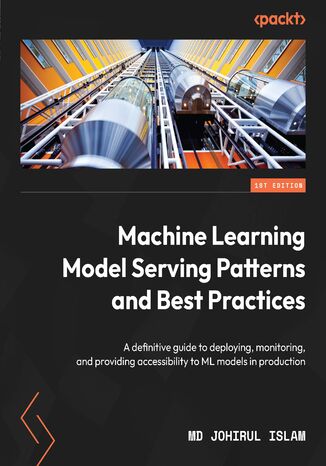
Johirul Islam
Serving patterns enable data science and ML teams to bring their models to production. Most ML models are not deployed for consumers, so ML engineers need to know the critical steps for how to serve an ML model. This book will cover the whole process, from the basic concepts like stateful and stateless serving to the advantages and challenges of each. Batch, real-time, and continuous model serving techniques will also be covered in detail. Later chapters will give detailed examples of keyed prediction techniques and ensemble patterns. Valuable associated technologies like TensorFlow severing, BentoML, and RayServe will also be discussed, making sure that you have a good understanding of the most important methods and techniques in model serving. Later, you’ll cover topics such as monitoring and performance optimization, as well as strategies for managing model drift and handling updates and versioning. The book will provide practical guidance and best practices for ensuring that your model serving pipeline is robust, scalable, and reliable. Additionally, this book will explore the use of cloud-based platforms and services for model serving using AWS SageMaker with the help of detailed examples. By the end of this book, you'll be able to save and serve your model using state-of-the-art techniques.
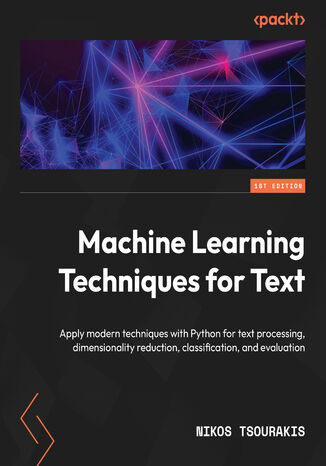
Nikos Tsourakis
With the ever-increasing demand for machine learning and programming professionals, it's prime time to invest in the field. This book will help you in this endeavor, focusing specifically on text data and human language by steering a middle path among the various textbooks that present complicated theoretical concepts or focus disproportionately on Python code.A good metaphor this work builds upon is the relationship between an experienced craftsperson and their trainee. Based on the current problem, the former picks a tool from the toolbox, explains its utility, and puts it into action. This approach will help you to identify at least one practical use for each method or technique presented. The content unfolds in ten chapters, each discussing one specific case study. For this reason, the book is solution-oriented. It's accompanied by Python code in the form of Jupyter notebooks to help you obtain hands-on experience. A recurring pattern in the chapters of this book is helping you get some intuition on the data and then implement and contrast various solutions.By the end of this book, you'll be able to understand and apply various techniques with Python for text preprocessing, text representation, dimensionality reduction, machine learning, language modeling, visualization, and evaluation.
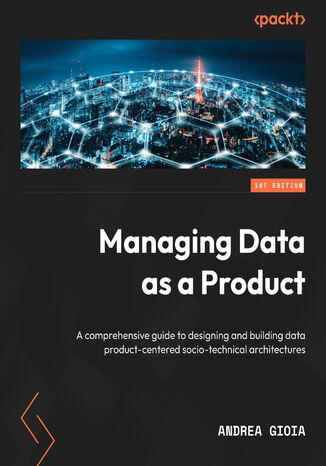
Managing Data as a Product. Design and build data-product-centered socio-technical architectures
Andrea Gioia, Giulio Scotti
Traditional monolithic data platforms struggle with scalability and burden central data teams with excessive cognitive load, leading to challenges in managing technological debt. As maintenance costs escalate, these platforms lose their ability to provide sustained value over time. With two decades of hands-on experience implementing data solutions and his pioneering work in the Open Data Mesh Initiative, Andrea Gioia brings practical insights and proven strategies for transforming how organizations manage their data assets.Managing Data as a Product introduces a modular and distributed approach to data platform development, centered on the concept of data products. In this book, you’ll explore the rationale behind this shift, understand the core features and structure of data products, and learn how to identify, develop, and operate them in a production environment. The book guides you through designing and implementing an incremental, value-driven strategy for adopting data product-centered architectures, including strategies for securing buy-in from stakeholders. It also covers data modeling in distributed environments and its role in enabling modern generative AI.By the end of this book, you’ll understand product-centric data architecture and how to adopt it.*Email sign-up and proof of purchase required
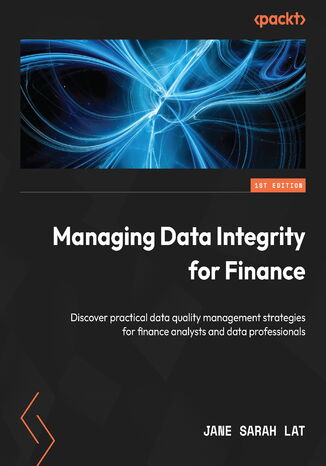
Jane Sarah Lat
Data integrity management plays a critical role in the success and effectiveness of organizations trying to use financial and operational data to make business decisions. Unfortunately, there is a big gap between the analysis and management of finance data along with the proper implementation of complex data systems across various organizations.The first part of this book covers the important concepts for data quality and data integrity relevant to finance, data, and tech professionals. The second part then focuses on having you use several data tools and platforms to manage and resolve data integrity issues on financial data. The last part of this the book covers intermediate and advanced solutions, including managed cloud-based ledger databases, database locks, and artificial intelligence, to manage the integrity of financial data in systems and databases.After finishing this hands-on book, you will be able to solve various data integrity issues experienced by organizations globally.
Megan Squire
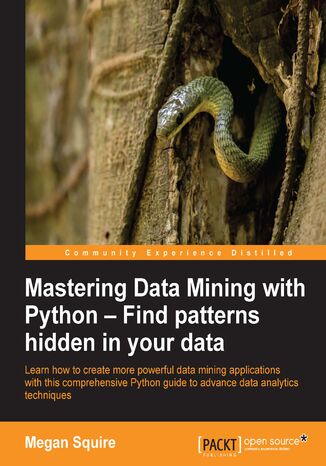
Data mining is an integral part of the data science pipeline. It is the foundation of any successful data-driven strategy – without it, you'll never be able to uncover truly transformative insights. Since data is vital to just about every modern organization, it is worth taking the next step to unlock even greater value and more meaningful understanding.If you already know the fundamentals of data mining with Python, you are now ready to experiment with more interesting, advanced data analytics techniques using Python's easy-to-use interface and extensive range of libraries. In this book, you'll go deeper into many often overlooked areas of data mining, including association rule mining, entity matching, network mining, sentiment analysis, named entity recognition, text summarization, topic modeling, and anomaly detection. For each data mining technique, we'll review the state-of-the-art and current best practices before comparing a wide variety of strategies for solving each problem. We will then implement example solutions using real-world data from the domain of software engineering, and we will spend time learning how to understand and interpret the results we get.By the end of this book, you will have solid experience implementing some of the most interesting and relevant data mining techniques available today, and you will have achieved a greater fluency in the important field of Python data analytics.
Greg Deckler, Brett Powell
Mastering Microsoft Power BI, Second Edition, provides an advanced understanding of Power BI to get the most out of your data and maximize business intelligence. This updated edition walks through each essential phase and component of Power BI, and explores the latest, most impactful Power BI features.Using best practices and working code examples, you will connect to data sources, shape and enhance source data, and develop analytical data models. You will also learn how to apply custom visuals, implement new DAX commands and paginated SSRS-style reports, manage application workspaces and metadata, and understand how content can be staged and securely distributed via Power BI apps. Furthermore, you will explore top report and interactive dashboard design practices using features such as bookmarks and the Power KPI visual, alongside the latest capabilities of Power BI mobile applications and self-service BI techniques. Additionally, important management and administration topics are covered, including application lifecycle management via Power BI pipelines, the on-premises data gateway, and Power BI Premium capacity.By the end of this Power BI book, you will be confident in creating sustainable and impactful charts, tables, reports, and dashboards with any kind of data using Microsoft Power BI.
Magnus Vilhelm Persson, Luiz Felipe Martins
Python, a multi-paradigm programming language, has become the language of choice for data scientists for data analysis, visualization, and machine learning. Ever imagined how to become an expert at effectively approaching data analysis problems, solving them, and extracting all of the available information from your data? Well, look no further, this is the book you want!Through this comprehensive guide, you will explore data and present results and conclusions from statistical analysis in a meaningful way. You’ll be able to quickly and accurately perform the hands-on sorting, reduction, and subsequent analysis, and fully appreciate how data analysis methods can support business decision-making.You’ll start off by learning about the tools available for data analysis in Python and will then explore the statistical models that are used to identify patterns in data. Gradually, you’ll move on to review statistical inference using Python, Pandas, and SciPy. After that, we’ll focus on performing regression using computational tools and you’ll get to understand the problem of identifying clusters in data in an algorithmic way. Finally, we delve into advanced techniques to quantify cause and effect using Bayesian methods and you’ll discover how to use Python’s tools for supervised machine learning.
Karl Pover
Just because you know how to swing a hammer doesn't mean you know how to build a house. Now that you've learned how to use QlikView, it's time to learn how to develop meaningful QlikView applications that deliver what your business users need.You will explore the requirements and the data from several business departments in order to deliver the most amazing analysis and data visualizations. In doing so, you will practice using advanced QlikView functions, chart object property options, and extensions to solve real-worldchallenges.