
Informatyka
Apache 2. Leksykon kieszonkowy
Andrew Ford
Podręczne źródło informacji na temat Apache! Jak wykorzystać mechanizm mod_rewrite? Jak kontrolować dostęp do zasobów? Jak stosować bezpieczny protokół SSL? Apache jest jednym z najpopularniejszych serwerów HTTP. Jego zalety to niezawodność, wydajność i elastyczność. Można go uruchomić praktycznie w dowolnym systemie. Istotny jest również fakt, że Apache to rozwiązanie całkowicie bezpłatne! Pierwsza oficjalna wersja tego serwera ukazała się w 1995 roku. Oznaczono ją numerem 0.6.2. Po blisko piętnastu latach rozwiązanie to zyskało ogromną rzeszę użytkowników. Społeczność związana z tym narzędziem jest niezwykle chętna do pomocy, co niewątpliwie stanowi jeszcze jeden niezmiernie ważny atut, przemawiający na korzyść Apache. Niniejszy leksykon jest świetną pozycją dla tych osób, które miały już styczność z serwerem Apache lub chcą szybko opanować konkretne zagadnienia związane z jego konfiguracją. Dzięki tej książce poznasz wszystkie dyrektywy, które mogą być przydatne w codziennej pracy. Dowiesz się, jak skonfigurować środowisko serwera, oraz poznasz zasady odwzorowywania adresów URL. Ponadto nauczysz się zapewniać odpowiednią kontrolę dostępu do poszczególnych zasobów i korzystać z takich mechanizmów, jak filtry, metadane lub procedury obsługi. Wiele cennych informacji, zawartych w tej poręcznej książce, sprawi, że codzienna praca z serwerem Apache będzie dla Ciebie przyjemnością! Ogólne zagadnienia związane z pracą i konfiguracją Apache Konfiguracja wirtualnych hostów (VirtualHost) Zarządzanie procesami Odwzorowanie adresów URL Przekształcanie adresów z wykorzystaniem mod_rewrite Kontrola dostępu Uwierzytelnianie z użyciem mechanizmów HTTP Basic, HTTP Digest Zastosowanie metadanych dokumentów Manipulowanie nagłówkami HTTP Wykorzystanie skryptów CGI Zastosowanie WebDAV Używanie filtrów Buforowanie treści Konfiguracja i wykorzystanie bezpiecznego protokołu SSL Logowanie zdarzeń Skonfiguruj Apache zgodnie ze swoimi potrzebami!
Nitin Padalia
Apache Cassandra Essentials takes you step-by-step from from the basics of installation to advanced installation options and database design techniques. It gives you all the information you need to effectively design a well distributed and high performance database. You’ll get to know about the steps that are performed by a Cassandra node when you execute a read/write query, which is essential to properly maintain of a Cassandra cluster and to debug any issues. Next, you’ll discover how to integrate a Cassandra driver in your applications and perform read/write operations. Finally, you’ll learn about the various tools provided by Cassandra for serviceability aspects such as logging, metrics, backup, and recovery.
Steven Hoffman
Apache Flume is a distributed, reliable, and available service for efficiently collecting, aggregating, and moving large amounts of log data. Its main goal is to deliver data from applications to Apache Hadoop's HDFS. It has a simple and flexible architecture based on streaming data flows. It is robust and fault tolerant with many failover and recovery mechanisms.Apache Flume: Distributed Log Collection for Hadoop covers problems with HDFS and streaming data/logs, and how Flume can resolve these problems. This book explains the generalized architecture of Flume, which includes moving data to/from databases, NO-SQL-ish data stores, as well as optimizing performance. This book includes real-world scenarios on Flume implementation.Apache Flume: Distributed Log Collection for Hadoop starts with an architectural overview of Flume and then discusses each component in detail. It guides you through the complete installation process and compilation of Flume.It will give you a heads-up on how to use channels and channel selectors. For each architectural component (Sources, Channels, Sinks, Channel Processors, Sink Groups, and so on) the various implementations will be covered in detail along with configuration options. You can use it to customize Flume to your specific needs. There are pointers given on writing custom implementations as well that would help you learn and implement them.By the end, you should be able to construct a series of Flume agents to transport your streaming data and logs from your systems into Hadoop in near real time.
Apache Hadoop 3 Quick Start Guide. Learn about big data processing and analytics
Hrishikesh Vijay Karambelkar
Apache Hadoop is a widely used distributed data platform. It enables large datasets to be efficiently processed instead of using one large computer to store and process the data. This book will get you started with the Hadoop ecosystem, and introduce you to the main technical topics, including MapReduce, YARN, and HDFS.The book begins with an overview of big data and Apache Hadoop. Then, you will set up a pseudo Hadoop development environment and a multi-node enterprise Hadoop cluster. You will see how the parallel programming paradigm, such as MapReduce, can solve many complex data processing problems.The book also covers the important aspects of the big data software development lifecycle, including quality assurance and control, performance, administration, and monitoring. You will then learn about the Hadoop ecosystem, and tools such as Kafka, Sqoop, Flume, Pig, Hive, and HBase. Finally, you will look at advanced topics, including real time streaming using Apache Storm, and data analytics using Apache Spark. By the end of the book, you will be well versed with different configurations of the Hadoop 3 cluster.
Hanish Bansal, Saurabh Chauhan, Shrey Mehrotra
Hive was developed by Facebook and later open sourced in Apache community. Hive provides SQL like interface to run queries on Big Data frameworks. Hive provides SQL like syntax also called as HiveQL that includes all SQL capabilities like analytical functions which are the need of the hour in today’s Big Data world.This book provides you easy installation steps with different types of metastores supported by Hive. This book has simple and easy to learn recipes for configuring Hive clients and services. You would also learn different Hive optimizations including Partitions and Bucketing. The book also covers the source code explanation of latest Hive version.Hive Query Language is being used by other frameworks including spark. Towards the end you will cover integration of Hive with these frameworks.
Apache Ignite Quick Start Guide. Distributed data caching and processing made easy
Sujoy Acharya
Apache Ignite is a distributed in-memory platform designed to scale and process large volume of data. It can be integrated with microservices as well as monolithic systems, and can be used as a scalable, highly available and performant deployment platform for microservices. This book will teach you to use Apache Ignite for building a high-performance, scalable, highly available system architecture with data integrity.The book takes you through the basics of Apache Ignite and in-memory technologies. You will learn about installation and clustering Ignite nodes, caching topologies, and various caching strategies, such as cache aside, read and write through, and write behind. Next, you will delve into detailed aspects of Ignite’s data grid: web session clustering and querying data.You will learn how to process large volumes of data using compute grid and Ignite’s map-reduce and executor service. You will learn about the memory architecture of Apache Ignite and monitoring memory and caches. You will use Ignite for complex event processing, event streaming, and the time-series predictions of opportunities and threats. Additionally, you will go through off-heap and on-heap caching, swapping, and native and Spring framework integration with Apache Ignite.By the end of this book, you will be confident with all the features of Apache Ignite 2.x that can be used to build a high-performance system architecture.
Apache Mesos Cookbook. Efficiently handle and manage tasks in a distributed environment
Marco Massenzio, David Blomquist, Tomasz Janiszewski
Apache Mesos is open source cluster sharing and management software. Deploying and managing scalable applications in large-scale clustered environments can be difficult, but Apache Mesos makes it easier with efficient resource isolation and sharing across application frameworks.The goal of this book is to guide you through the practical implementation of the Mesos core along with a number of Mesos supported frameworks. You will begin by installing Mesos and then learn how to configure clusters and maintain them. You will also see how to deploy a cluster in a production environment with high availability using Zookeeper.Next, you will get to grips with using Mesos, Marathon, and Docker to build and deploy a PaaS. You will see how to schedule jobs with Chronos. We’ll demonstrate how to integrate Mesos with big data frameworks such as Spark, Hadoop, and Storm. Practical solutions backed with clear examples will also show you how to deploy elastic big data jobs. You will find out how to deploy a scalable continuous integration and delivery system on Mesos with Jenkins. Finally, you will configure and deploy a highly scalable distributed search engine with ElasticSearch.Throughout the course of this book, you will get to know tips and tricks along with best practices to follow when working with Mesos.
Apache OfBiz Cookbook. Over 60 simple but incredibly effective recipes for taking control of OFBiz
Ruth Hoffman
Apache Open For Business (OFBiz) is an enterprise resource planning (ERP) system that provides a common data model and an extensive set of business processes. But without proper guidance on developing performance-critical applications, it is easy to make the wrong design and technology decisions. The power and promise of Apache OFBiz is comprehensively revealed in a collection of self-contained, quick, practical recipes in this Cookbook.This book covers a range of topics from initial system setup to web application and HTML page creation, Java development, and data maintenance tasks. Focusing on a series of the most commonly performed OFBiz tasks, it provides clear, cogent, and easy-to-follow instructions designed to make the most of your OFBiz experience.Let this book be your guide to enhancing your OFBiz productivity by saving you valuable time. Written specifically to give clear and straightforward answers to the most commonly asked OFBiz questions, this compendium of OFBiz recipes will show you everything you need to know to get things done in OFBiz.Whether you are new to OFBiz or an old pro, you are sure to find many useful hints and handy tips here. Topics range from getting started to configuration and system setup, security and database management through the final stages of developing and testing new OFBiz applications.
Rich Bowen, Ken Coar
Czy wiesz, jaki serwer HTTP jest najpopularniejszy w sieci? Właśnie tak, jest to Apache! W lipcu 2008 roku jego udział w rynku wynosił blisko 50% (według Netcraft). Historia tego serwera sięga roku 1995, kiedy ukazała się jego pierwsza oficjalna wersja, oznaczona numerem 0.6.2. Cechy, które zadecydowały o sukcesie tego rozwiązania, to bezpieczeństwo, skalowalność, wielowątkowość i obsługa różnorodnych języków skryptowych. Dzięki książce "Apache. Receptury" zapoznasz się z gotowymi przepisami na rozwiązanie ciekawych, specyficznych oraz intrygujących problemów. Nauczysz się instalować serwer z różnych źródeł oraz na różnych platformach. Dowiesz się, w jaki sposób zwiększyć jego bezpieczeństwo, jak uruchomić serwery wirtualne oraz poprawić wydajność Apache. Autorzy książki pokażą Ci, jak uruchomić obsługę języków skryptowych, tak aby serwowane strony stały się dynamiczne. Cała wiedza zostanie przedstawiona w sprawdzony w tej serii sposób: problem - rozwiązanie - analiza. Sposoby instalacji serwera Apache Dodawanie funkcjonalności dzięki modułom Możliwości rejestracji zdarzeń Konfiguracja serwerów wirtualnych Wykorzystanie aliasów, przekierowań oraz przepisań (mod_rewrite) Zarządzanie dostępem do serwowanych zasobów Bezpieczeństwo serwera Apache Wykorzystanie szyfrowanej transmisji - protokół SSL Zapewnienie wydajności Wykorzystanie języków skryptowych Oto książka z najlepszymi przepisami na Apache!
Alfonso Vidal Romero
Apache Roller enables you to build a fully-featured, multi-user blog server apt for all kinds of blogging sites. It is an ideal tool to create your own blogging network with unlimited users and blogs, forums, photo galleries, and more! While it is exciting to have a list of interesting features it can offer you, it might be a little difficult to get started with it by your self.This book will teach you how to get started with Apache Roller and make the most of all its features using step-by-step, detailed instructions. You will learn how to establish your internet presence with an Apache Roller blog and use the latest web tools to enhance your posts and attract visitors. You will also learn how to promote your blog on popular social bookmarking services and customize it to suit your need.This hands-on and practical book introduces you to Apache Roller. Starting off with the configuration and installation of your own blog, you'll then quickly learn how to add interesting content to your blog with the help of plenty of examples. You'll also learn how to change your blog's visual appearance with the help of Roller themes and templates and how to create a community of blogs for you and your colleagues or friends in your Apache Roller blog server. The book also looks at ways you can manage your community, and keep your site safe and secure, ensuring that it is a spam-free, enjoyable community for your users.
Sachin Handiekar, Anshul Johri
Apache Solr is a widely used, open source enterprise search server that delivers powerful indexing and searching features. These features help fetch relevant information from various sources and documentation. Solr also combines with other open source tools such as Apache Tika and Apache Nutch to provide more powerful features.This fast-paced guide starts by helping you set up Solr and get acquainted with its basic building blocks, to give you a better understanding of Solr indexing. You’ll quickly move on to indexing text and boosting the indexing time. Next, you’ll focus on basic indexing techniques, various index handlers designed to modify documents, and indexing a structured data source through Data Import Handler.Moving on, you will learn techniques to perform real-time indexing and atomic updates, as well as more advanced indexing techniques such as de-duplication. Later on, we’ll help you set up a cluster of Solr servers that combine fault tolerance and high availability. You will also gain insights into working scenarios of different aspects of Solr and how to use Solr with e-commerce data.By the end of the book, you will be competent and confident working with indexing and will have a good knowledge base to efficiently program elements.
Surendra Mohan
This book is an easy-to-follow guide, full of hands-on, real-world examples. Each topic is explained and demonstrated in a specific and user-friendly flow, from search optimization using Solr to Deployment of Zookeeper applications. This book is ideal for Apache Solr developers and want to learn different techniques to optimize Solr performance with utmost efficiency, along with effectively troubleshooting the problems that usually occur while trying to boost performance. Familiarity with search servers and database querying is expected.
Rishi Yadav
While Apache Spark 1.x gained a lot of traction and adoption in the early years, Spark 2.x delivers notable improvements in the areas of API, schema awareness, Performance, Structured Streaming, and simplifying building blocks to build better, faster, smarter, and more accessible big data applications. This book uncovers all these features in the form of structured recipes to analyze and mature large and complex sets of data.Starting with installing and configuring Apache Spark with various cluster managers, you will learn to set up development environments. Further on, you will be introduced to working with RDDs, DataFrames and Datasets to operate on schema aware data, and real-time streaming with various sources such as Twitter Stream and Apache Kafka. You will also work through recipes on machine learning, including supervised learning, unsupervised learning & recommendation engines in Spark.Last but not least, the final few chapters delve deeper into the concepts of graph processing using GraphX, securing your implementations, cluster optimization, and troubleshooting.
Apache Spark 2.x for Java Developers. Explore big data at scale using Apache Spark 2.x Java APIs
Sumit Kumar, Sourav Gulati
Apache Spark is the buzzword in the big data industry right now, especially with the increasing need for real-time streaming and data processing. While Spark is built on Scala, the Spark Java API exposes all the Spark features available in the Scala version for Java developers. This book will show you how you can implement various functionalities of the Apache Spark framework in Java, without stepping out of your comfort zone.The book starts with an introduction to the Apache Spark 2.x ecosystem, followed by explaining how to install and configure Spark, and refreshes the Java concepts that will be useful to you when consuming Apache Spark's APIs. You will explore RDD and its associated common Action and Transformation Java APIs, set up a production-like clustered environment, and work with Spark SQL. Moving on, you will perform near-real-time processing with Spark streaming, Machine Learning analytics with Spark MLlib, and graph processing with GraphX, all using various Java packages.By the end of the book, you will have a solid foundation in implementing components in the Spark framework in Java to build fast, real-time applications.
Siamak Amirghodsi, Mohammed Guller, Shuen Mei, Meenakshi...
Machine learning aims to extract knowledge from data, relying on fundamental concepts in computer science, statistics, probability, and optimization. Learning about algorithms enables a wide range of applications, from everyday tasks such as product recommendations and spam filtering to cutting edge applications such as self-driving cars and personalized medicine. You will gain hands-on experience of applying these principles using Apache Spark, a resilient cluster computing system well suited for large-scale machine learning tasks.This book begins with a quick overview of setting up the necessary IDEs to facilitate the execution of code examples that will be covered in various chapters. It also highlights some key issues developers face while working with machine learning algorithms on the Spark platform. We progress by uncovering the various Spark APIs and the implementation of ML algorithms with developing classification systems, recommendation engines, text analytics, clustering, and learning systems. Toward the final chapters, we’ll focus on building high-end applications and explain various unsupervised methodologies and challenges to tackle when implementing with big data ML systems.
Ahmed Sherif, Amrith Ravindra, Michal Malohlava, Adnan...
Organizations these days need to integrate popular big data tools such as Apache Spark with highly efficient deep learning libraries if they’re looking to gain faster and more powerful insights from their data. With this book, you’ll discover over 80 recipes to help you train fast, enterprise-grade, deep learning models on Apache Spark.Each recipe addresses a specific problem, and offers a proven, best-practice solution to difficulties encountered while implementing various deep learning algorithms in a distributed environment. The book follows a systematic approach, featuring a balance of theory and tips with best practice solutions to assist you with training different types of neural networks such as convolutional neural networks (CNNs) and recurrent neural networks (RNNs). You’ll also have access to code written in TensorFlow and Keras that you can run on Spark to solve a variety of deep learning problems in computer vision and natural language processing (NLP), or tweak to tackle other problems encountered in deep learning.By the end of this book, you'll have the skills you need to train and deploy state-of-the-art deep learning models on Apache Spark.
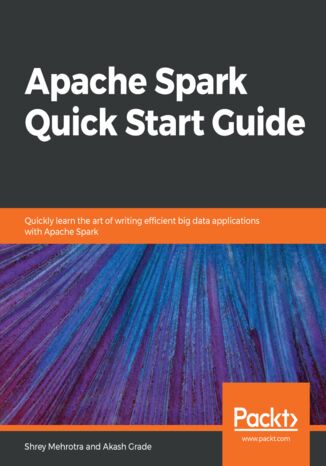
Shrey Mehrotra, Akash Grade
Apache Spark is a ?exible framework that allows processing of batch and real-time data. Its unified engine has made it quite popular for big data use cases. This book will help you to get started with Apache Spark 2.0 and write big data applications for a variety of use cases.It will also introduce you to Apache Spark – one of the most popular Big Data processing frameworks. Although this book is intended to help you get started with Apache Spark, but it also focuses on explaining the core concepts. This practical guide provides a quick start to the Spark 2.0 architecture and its components. It teaches you how to set up Spark on your local machine. As we move ahead, you will be introduced to resilient distributed datasets (RDDs) and DataFrame APIs, and their corresponding transformations and actions. Then, we move on to the life cycle of a Spark application and learn about the techniques used to debug slow-running applications. You will also go through Spark’s built-in modules for SQL, streaming, machine learning, and graph analysis.Finally, the book will lay out the best practices and optimization techniques that are key for writing efficient Spark applications. By the end of this book, you will have a sound fundamental understanding of the Apache Spark framework and you will be able to write and optimize Spark applications.
Tanuj Khare
Apache Tomcat (or simply Tomcat) is an open source servlet container developed by the Apache Software Foundation (ASF). The latest major stable release, Apache Tomcat version 7 implements the Servlet 3 and JavaServer Pages 2 specifications from the Java Community Process, and includes many additional features that make it a useful platform for developing and deploying web applications and web services.Apache Tomcat 7 Essentials follows a practical approach to teach installing, configuring, and maintaining Tomcat. It helps you to understand the middle architecture for hosting multiple websites and also provides the confidence to implement middleware support. It imparts to you the capacity to resolve migration issues and also provides regular maintenance solutions. This is the first and only book to cover upgrading to Tomcat 7 from previous versions.The journey of the reader starts at the beginner level and ends at the expert level. The content is designed in such a way that it balances the theory and practical approach for understanding concepts related to handling middle ware and web issues.In this book, you will go through a three-phase life cycle. The first cycle consists of installation, configuration of Tomcat 7 on different OS, and other configurations related to JDBC, port, deployment etc. The second phase deals with the building of enterprise application setup and high availability architecture (clustering load balancing). The third and critical phase will teach you to handle critical issues, performance tuning, and best practices for various environment stacks like dev/QA/stage/production.This book gives you a wider vision of using Tomcat 7 in web technologies and the skill to optimize their performance using Apache Tomcat 7.
Anshul Verma, Jitendra Zaa
Apex is an on-demand programming language providing a complete set of features for building business applications – including data models and objects to manage data. Apex being a proprietor programming language from Salesforce to be worked with multi tenant environment is a lot different than traditional OOPs languages like Java and C#. It acts as a workflow engine for managing collaboration of the data between users, a user interface model to handle forms and other interactions, and a SOAP API for programmatic access and integration.Apex Design Patterns gives you an insight to several problematic situations that can arise while developing on Force.com platform and the usage of Design patterns to solve them. Packed with real life examples, it gives you a walkthrough from learning design patterns that Apex can offer us, to implementing the appropriate ones in your own application. Furthermore, we learn about the creational patterns that deal with object creation mechanism and structural patterns that helps to identify the relationship between entities. Also, the behavioural and concurrency patterns are put forward explaining the communication between objects and multi-threaded programming paradigm respectively. We later on, deal with the issues regarding structuring of classes, instantiating or how to give a dynamic behaviour at a runtime, with the help of anti-patterns. We learn the basic OOPs principal in polymorphic and modular way to enhance its capability. Also, best practices of writing Apex code are explained to differentiate between the implementation of appropriate patterns. This book will also explain some unique patterns that could be applied to get around governor limits. By the end of this book, you will be a maestro in developing your applications on Force.com for Salesforce
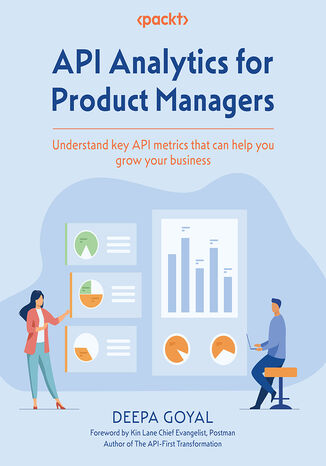
API Analytics for Product Managers. Understand key API metrics that can help you grow your business
Deepa Goyal
APIs are crucial in the modern market as they allow faster innovation. But have you ever considered your APIs as products for revenue generation?API Analytics for Product Managers takes you through the benefits of efficient researching, strategizing, marketing, and continuously measuring the effectiveness of your APIs to help grow both B2B and B2C SaaS companies. Once you've been introduced to the concept of an API as a product, this fast-paced guide will show you how to establish metrics for activation, retention, engagement, and usage of your API products, as well as metrics to measure the reach and effectiveness of documentation—an often-overlooked aspect of development.Of course, it's not all about the product—as any good product manager knows; you need to understand your customers’ needs, expectations, and satisfaction too. Once you've gathered your data, you’ll need to be able to derive actionable insights from it. This is where the book covers the advanced concepts of leading and lagging metrics, removing bias from the metric-setting process, and bringing metrics together to establish long- and short-term goals.By the end of this book, you'll be perfectly placed to apply product management methodologies to the building and scaling of revenue-generating APIs.
API nowoczesnej strony WWW. Usługi sieciowe w PHP
Lorna Jane Mitchell
Twój klucz do doskonałego API! Za sukcesem i siłą najpopularniejszych serwisów w sieci często stoi decyzja o szerokim udostępnieniu API (ang. Application Programming Interface). Dzięki temu programiści z całego świata mogą tworzyć rozwiązania oparte na istniejących usługach, integrować różne systemy oraz tworzyć rozszerzenia. Sięgnij po tę książkę, naucz się korzystać z udostępnionego API i zbuduj własne. Poznaj tajniki budowania przyjaznego interfejsu API. Ta książka pomoże Ci zorientować się, jak działa protokół HTTP, jakie metody udostępnia oraz jakie informacje możesz znaleźć w nagłówkach. Po opanowaniu podstaw przejdziesz do najpopularniejszych formatów wymiany informacji pomiędzy systemami — JSON oraz XML. Zaznajomisz się też z usługami SOAP, RPC i REST. Na sam koniec dowiesz się, jak projektować niezawodne usługi oraz obsługiwać błędy. Jeżeli chcesz, żeby Twoje API zainteresowało innych programistów, musisz zadbać o jego dobrą dokumentację. Zdobądź niezbędną wiedzę o PHP! Poznasz protokół HTTP, czasowniki cyklu żądań i odpowiedzi oraz nagłówki i ciasteczka. Dowiesz się, kiedy lepiej jest użyć formatu JSON, a kiedy XML. Nauczysz się tworzyć usługi typu RPC, SOAP i RESTful. Poznasz wiele narzędzi i technik diagnozowania usług sieciowych HTTP. Nauczysz się wybierać najlepszy rodzaj usługi dla swoich aplikacji i dowiesz się, jak tworzyć niezawodne usługi sieciowe. Nauczysz się dokumentować swoje interfejsy API — oraz projektować w nich mechanizmy obsługi błędów. Zbuduj API zgodne z oczekiwaniami innych programistów!

Confidence Staveley, Christopher Romeo
APIs have evolved into an essential part of modern applications, making them an attractive target for cybercriminals. Written by a multi-award-winning cybersecurity leader , this comprehensive guide offers practical insights into testing APIs, identifying vulnerabilities, and fixing them.With a focus on hands-on learning, this book guides you through securing your APIs in a step-by-step manner. You'll learn how to bypass authentication controls, circumvent authorization controls, and identify vulnerabilities in APIs using open-source and commercial tools. Moreover, you'll gain the skills you need to write comprehensive vulnerability reports and recommend and implement effective mitigation strategies to address the identified vulnerabilities. This book isn't just about hacking APIs; it's also about understanding how to defend them. You'll explore various API security management strategies and understand how to use them to safeguard APIs against emerging threats.By the end of this book, you'll have a profound understanding of API security and how to defend against the latest threats. Whether you're a developer, security professional, or ethical hacker, this book will ensure that your APIs are secure and your organization's data is protected.
Dave Westerveld
Postman is an invaluable tool for exploration and testing of web APIs and helping testers and developers figure out how an API works. With Postman, you can create effective test automation for any APIs, and this guide will help you unleash its full potential.API Testing and Development with Postman is an invaluable resource for anyone who wants to create a good quality API, but isn't sure how to go about it. This guide will help you unleash the full potential of Postman’s test automation capabilities.A combination of theory coupled with real-world examples will help you learn how to use Postman to create well-designed, documented, and tested APIs. After you’ve familiarized yourself with the theory, you’ll move on to hands-on projects that will teach you how to add test automation to an existing API. You’ll also learn some of the new and powerful features that Postman has that can help you avoid introducing bugs.This second, fully updated edition features new chapters on workflow testing, creating and using mock servers, API security testing, and performance testing. The new and expanded information in this edition will help you future-proof your APIs.By the end of this book, you'll be able to use Postman to set up and run API tests for any API that you are working with.
Aplikacje 3D. Przewodnik po HTML5, WebGL i CSS3
Tony Parisi
Twój przewodnik po grafice 3D w HTML! Do niedawna wywietlanie zaawansowanej grafiki 3D w przeglądarce internetowej wymagało zainstalowania dodatkowych wtyczek oraz poznawania nowych narzędzi. Dzięki HTML5 i WebGL te czasy powoli odchodzą w niepamięć! Teraz możesz wykorzystać niesamowite możliwoci tego duetu, by zaskoczyć użytkowników atrakcyjnymi efektami 3D! Ta wyjątkowa książka została w całoci powięcona włanie zagadnieniom związanym z grafiką 3D w przeglądarce internetowej. Sięgnij po nią i przekonaj się, jak wykorzystać API WebGL do renderowania trójwymiarowej grafiki w czasie rzeczywistym. W kolejnych rozdziałach poznasz bibliotekę języka JavaScript Three.js, która w znaczący sposób ułatwia życie programisty. Informacje zawarte w dalszych rozdziałach pozwolą Ci skorzystać z zaawansowanych efektów w CSS3 i tworzyć animacje trójwymiarowe. Zaznajomisz się też z detalami tworzenia aplikacji dla urządzeń mobilnych. Twoją uwagę z pewnocią przykuje przegląd narzędzi do tworzenia trójwymiarowych modeli i animacji zarówno tych klasycznych, jak i tych online. Książka ta jest doskonałą lekturą dla wszystkich deweloperów chcących wzbogacić swój warsztat o elementy grafiki 3D. Dzięki tej książce: zapoznasz się z podstawami teorii dla grafiki 3D poznasz API WebGL wykorzystasz bibliotekę Three.js w codziennej pracy odkryjesz narzędzia przydatne w codziennej pracy jeszcze bardziej uatrakcyjnisz Twoją stronę Poznaj potencjał HTML5 w zakresie grafiki 3D! "Tony Parisi od samego początku wiedzie prym w dziedzinie rewolucyjnych rozwiązań pozwalających zagościć interaktywnym aplikacjom trójwymiarowym w internecie. Jego nowa książka zawiera dogłębne informacje na temat tych technologii oraz tworzenia najnowocześniejszych trójwymiarowych aplikacji naprawdę działających w aktualnie dostępnych przeglądarkach". - Neil Trevett, wiceprezes ds. treści mobilnej w firmie NVIDIA i prezes organizacji Khronos Group