
Informatyka
Zajrzyj do kategorii Informatyka w księgarni internetowej Ebookpoint. Znajdziesz tutaj bestsellerowe książki, ebooki i kursy video z branży IT. Sięgnij po najlepszą literaturę dla specjalistów i rozwijaj doświadczenie, które już posiadasz, lub rozpocznij swoją przygodę z programowaniem, cyberbezpieczeństwem lub grafiką komputerową. Pogłębiaj swoją wiedzę tak, jak Ci wygodnie - z tradycyjną książką, wygodnym ebookiem lub nowoczesnym videokursem. Sprawdź, jakie tytuły znajdziesz w kategorii Informatyka!
Huage Chen, Yazid Akadiri, Shay Banon
Learn how to make the most of the Elastic Stack (ELK Stack) products—including Elasticsearch, Kibana, Elastic Agent, and Logstash—to take data reliably and securely from any source, in any format, and then search, analyze, and visualize it in real-time. This cookbook takes a practical approach to unlocking the full potential of Elastic Stack through detailed recipes step by step.Starting with installing and ingesting data using Elastic Agent and Beats, this book guides you through data transformation and enrichment with various Elastic components and explores the latest advancements in search applications, including semantic search and Generative AI. You'll then visualize and explore your data and create dashboards using Kibana. As you progress, you'll advance your skills with machine learning for data science, get to grips with natural language processing, and discover the power of vector search. The book covers Elastic Observability use cases for log, infrastructure, and synthetics monitoring, along with essential strategies for securing the Elastic Stack. Finally, you'll gain expertise in Elastic Stack operations to effectively monitor and manage your system.
Elasticsearch 5.x Cookbook. Distributed Search and Analytics - Third Edition
Alberto Paro
Elasticsearch is a Lucene-based distributed search server that allows users to index and search unstructured content with petabytes of data. This book is your one-stop guide to master the complete Elasticsearch ecosystem. We’ll guide you through comprehensive recipes on what’s new in Elasticsearch 5.x, showing you how to create complex queries and analytics, and perform index mapping, aggregation, and scripting. Further on, you will explore the modules of Cluster and Node monitoring and see ways to back up and restore a snapshot of an index. You will understand how to install Kibana to monitor a cluster and also to extend Kibana for plugins. Finally, you will also see how you can integrate your Java, Scala, Python, and Big Data applications such as Apache Spark and Pig with Elasticsearch, and add enhanced functionalities with custom plugins.By the end of this book, you will have an in-depth knowledge of the implementation of the Elasticsearch architecture and will be able to manage data efficiently and effectively with Elasticsearch.
Alberto Paro
Elasticsearch is a Lucene-based distributed search server that allows users to index and search unstructured content with petabytes of data. With this book, you'll be guided through comprehensive recipes on what's new in Elasticsearch 7, and see how to create and run complex queries and analytics.Packed with recipes on performing index mapping, aggregation, and scripting using Elasticsearch, this fourth edition of Elasticsearch Cookbook will get you acquainted with numerous solutions and quick techniques for performing both every day and uncommon tasks such as deploying Elasticsearch nodes, integrating other tools to Elasticsearch, and creating different visualizations. You will install Kibana to monitor a cluster and also extend it using a variety of plugins. Finally, you will integrate your Java, Scala, Python, and big data applications such as Apache Spark and Pig with Elasticsearch, and create efficient data applications powered by enhanced functionalities and custom plugins.By the end of this book, you will have gained in-depth knowledge of implementing Elasticsearch architecture, and you'll be able to manage, search, and store data efficiently and effectively using Elasticsearch.
Alberto Paro
Elasticsearch is a Lucene-based distributed search engine at the heart of the Elastic Stack that allows you to index and search unstructured content with petabytes of data. With this updated fifth edition, you'll cover comprehensive recipes relating to what's new in Elasticsearch 8.x and see how to create and run complex queries and analytics.The recipes will guide you through performing index mapping, aggregation, working with queries, and scripting using Elasticsearch. You'll focus on numerous solutions and quick techniques for performing both common and uncommon tasks such as deploying Elasticsearch nodes, using the ingest module, working with X-Pack, and creating different visualizations. As you advance, you'll learn how to manage various clusters, restore data, and install Kibana to monitor a cluster and extend it using a variety of plugins. Furthermore, you'll understand how to integrate your Java, Scala, Python, and big data applications such as Apache Spark and Pig with Elasticsearch and create efficient data applications powered by enhanced functionalities and custom plugins.By the end of this Elasticsearch cookbook, you'll have gained in-depth knowledge of implementing the Elasticsearch architecture and be able to manage, search, and store data efficiently and effectively using Elasticsearch.
Vineeth Mohan
If you are a data enthusiast and would like to explore and specialize on search technologies based on Elasticsearch, this is the right book for you. A compelling case-to-case mapping of features and implementation of Elasticsearch to solve many real-world use cases makes this book the right choice to start and specialize on Elasticsearch.
Alberto Paro
If you are a developer who implements ElasticSearch in your web applications and want to sharpen your understanding of the core elements and applications, this is the book for you. It is assumed that you’ve got working knowledge of JSON and, if you want to extend ElasticSearch, of Java and related technologies.
Bahaaldine Azarmi, Alexis Charveriat, Stephen Brown, Farbod...
Built to simplify high-scale data analytics in Elasticsearch, this practical guide will take you from foundational concepts to advanced applications across search, observability, and security. It will help you overcome common challenges such as efficiently querying large datasets, applying advanced analytics without deep prior knowledge, and resolving for a unique and consolidated query language.Written by senior experts at Elastic with extensive field experience, this book delivers actionable guidance rooted in solving today’s data challenges at scale. After introducing ESQL and its architecture, the chapters explore real-world applications across various domains, including analytics, raw log analysis, observability, and cybersecurity. Advanced topics such as scaling, optimization, and future developments are also covered to help you maximize your ESQL capabilities.By the end of this book, you’ll be able to leverage ESQL for comprehensive data management and analysis, optimizing your workflows and enhancing your productivity with Elasticsearch.
Rafal Kuc, Marek Rogozinski
ElasticSearch is an open source search server built on Apache Lucene. It was built to provide a scalable search solution with built-in support for near real-time search and multi-tenancy.Jumping into the world of ElasticSearch by setting up your own custom cluster, this book will show you how to create a fast, scalable, and flexible search solution. By learning the ins-and-outs of data indexing and analysis, ElasticSearch Server will start you on your journey to mastering the powerful capabilities of ElasticSearch. With practical chapters covering how to search data, extend your search, and go deep into cluster administration and search analysis, this book is perfect for those new and experienced with search servers.In ElasticSearch Server you will learn how to revolutionize your website or application with faster, more accurate, and flexible search functionality. Starting with chapters on setting up your own ElasticSearch cluster and searching and extending your search parameters you will quickly be able to create a fast, scalable, and completely custom search solution.Building on your knowledge further you will learn about ElasticSearch's query API and become confident using powerful filtering and faceting capabilities. You will develop practical knowledge on how to make use of ElasticSearch's near real-time capabilities and support for multi-tenancy.Your journey then concludes with chapters that help you monitor and tune your ElasticSearch cluster as well as advanced topics such as shard allocation, gateway configuration, and the discovery module.
Gerardo Barajas Puente
This book is aimed at those who want to learn how to set up an Elastix Unified Communications Server without losing ground on Unified Communications and Voice over IP.
E-learning w edukacji. Jak stworzyć multimedialną i w pełni interaktywną treść dydaktyczną
Zbigniew Zieliński
Książka ma wysoki poziom merytoryczny, zawiera aktualną i potrzebną wiedzę, która może być pomocna w edukacji na każdym szczeblu. Konkretne wskazówki, przykłady i analizy wykorzystania nowych technologii w edukacji pozwalają Czytelnikowi w prosty i skuteczny sposób przygotować własne multimedialne materiały edukacyjne oraz wdrażać autorskie kursy e-learningowe. Zaletą książki są odpowiednio dobrane i interesująco przedstawione przykłady wraz z ilustracjami, które dodatkowo wzmacniają atrakcyjny przekaz. prof. dr hab. nauk ekonomicznych Tadeusz Grabiński E-kstra e-fektywna e-dukacja Na naukę nigdy nie jest za późno. Nie powinno także być do niej za daleko albo zbyt niewygodnie - szczególnie teraz, kiedy dostęp do zdobyczy techniki, komputerów i internetu pozwala na pogłębianie wiedzy, dokształcanie się, a nawet kończenie studiów wyższych praktycznie bez wychodzenia z domu. Zdalne kształcenie, czyli e-learning, to świetna opcja dla osób, które nie mogą pozwolić sobie na dzienny czy nawet zaoczny tryb kształcenia. Jeśli interesuje Cię możliwość nauki na odległość lub myślisz o projektowaniu własnych modułów i kursów e-learningowych, sięgnij po tradycyjne nośniki wiedzy, zanim siądziesz przed komputerem. W pierwszej części tej książki znajdziesz zarys teoretyczny całości zagadnień związanych ze zdalną edukacją. Natomiast z rozdziałów praktycznych szybko dowiesz się, jak tworzyć multimedialną i w pełni interaktywną treść dydaktyczną, którą można wykorzystać w procesie nauczania na każdym poziomie ? od szkoły podstawowej po szkolenia dla osób dorosłych. Dodatkowo poznasz szerokie zastosowanie narzędzi teleinformatycznych, systemów e-learningowych i aplikacji do tworzenia multimedialnych treści wspomagających proces uczenia. Bliskie kształcenie na odległość Sposób na dokształcanie i podnoszenie kompetencji zgodnie z paradygmatem uczenia się przez całe życie Oszczędność czasu, zarówno zawodowego, jak i prywatnego Stałe doskonalenie programu szkoleniowego Nowoczesne sposoby i metody nauczania Krucjata przeciw analfabetyzmowi cyfrowemu Możliwość zdobycia dotacji unijnych w zakresie świadczenia e-usług
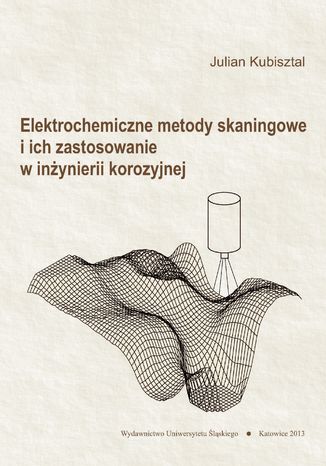
Elektrochemiczne metody skaningowe i ich zastosowanie w inżynierii korozyjnej
Julian Kubisztal
Podręcznik omawia elektrochemiczne metody skaningowe i ich zastosowanie w badaniach lokalnych procesów korozyjnych zachodzących na niejednorodnych pod względem chemicznym i fizycznym materiałach. Prezentuje metodę pomiaru lokalnego napięcia kontaktowego sondą Kelvina, metodę pomiaru lokalnego prądu jonowego sondą drgającą, metodę lokalnej elektrochemicznej spektroskopii impedancyjnej oraz metodę elektrochemicznej mikroskopii skaningowej. Charakteryzuje zjawisko powstawania napięcia kontaktowego, różnicy potencjałów na granicy faz metal – roztwór elektrolitu, prądu jonowego nad elektrochemicznie aktywnymi obszarami elektrody, mechanizmy transportu jonów w roztworze elektrolitu, impedancję granicy faz oraz makro- i mikroelektrody. Przedstawia również praktyczne aspekty zastosowania elektrochemicznych metod skaningowych w badaniach lokalnych zjawisk korozyjnych. Zebrane w niniejszym podręczniku informacje będą pomocne w pogłębianiu wiedzy o materiałach i ich właściwościach zarówno przez studentów i doktorantów kierunków technicznych, jak i osoby, które na co dzień zajmują się zagadnieniem korozji elektrochemicznej oraz metodami jej badania.
Elektronika bez oporu. 55 układów tranzystorowych
Witold Wrotek
Układy elektroniczne - od teorii do praktyki Najnowsza książka Witolda Wrotka liczy - jak sugeruje tytuł - 55 rozdziałów, które stanowią stopniowe wprowadzenie w świat elektroniki, a konkretnie tranzystorów i zbudowanych na ich podstawie układów. Treść zawarta w tym przystępnym przewodniku została zilustrowana licznymi schematami i niejednokrotnie żartobliwymi fotografiami z równie zabawnymi podpisami. Z wciągającej lektury czytelnik dowie się między innymi, jak czytać oznaczenia na schematach układów elektronicznych, a także czym są baza, Bootstrap, dziury, para różnicowa czy przebicia. Ponadto początkujący adepci elektroniki uzyskają odpowiedzi na różne, niejednokrotnie przekornie postawione pytania. Na przykład: czy warto poświęcać czas na zrozumienie zasady działania tranzystora? Lub: jak zwalczać pasożyty w tranzystorach? Zdobędą też wiedzę na temat budowy wzmacniaczy, sprzęgania układów cyfrowych z komparatorami i wzmacniaczami operacyjnymi czy sterowania ich z układu cyfrowego. Każdy rozdział kończy się zestawem pięciu pytań (wraz z odpowiedziami), sprawdzających stan wiedzy i poziom zrozumienia omawianych zagadnień. Zabezpieczenie tranzystora przed przebiciem Stabilizator napięcia z diodą Zenera Stabilizator napięcia z redukcją tętnień Wtórnik emiterowy, filtr dolnoprzepustowy Układy Darlingtona i Sziklaiego Przełącznik i multiplekser analogowy Przerzutnik bistabilny, uniwibrator, multiwibrator Generator Colpittsa i Hartleya, ogranicznik Bakera, przerzutnik Schmitta Funkcje: NOR, OR, AND Z tranzystorami i układami za pan brat
Elektronika bez oporu. Praktyczne przykłady
Witold Wrotek
Elektronika? To nic trudnego! Poznaj fizyczne podstawy działania elementów i układów elektronicznych Naucz się budować typowe układy analogowe i cyfrowe Eksperymentuj, aby pogłębić swoją wiedzę i zdobyć doświadczenie Urządzenia elektronicznie otaczają nas zewsząd. Nie sposób obecnie wykonać nawet najprostszej czynności, która nie wymagałaby użycia jakiegoś rodzaju sprzętu elektronicznego. Smartfony, mikrofalówki, pralki automatyczne czy bankomaty to tylko niektóre przykłady urządzeń, bez których trudno wyobrazić sobie codzienne życie. Tymczasem większość z nas nie ma nawet cienia pojęcia o tym, jak działają układy elektroniczne, a gdy cokolwiek zaczyna szwankować, potrzebujemy pomocy fachowca lub... rozglądamy się za nowszym modelem. Celem tej książki jest bezbolesne wprowadzenie czytelnika w niezwykle interesujący i tajemniczy świat elektroniki. Dzięki praktycznym przykładom może on w swoim tempie, w naturalny i bezpieczny sposób poznawać zjawiska fizyczne odpowiedzialne za działanie urządzeń elektronicznych i stopniowo odkrywać coraz bardziej zaawansowane zagadnienia, nie zniechęcając się nadmiarem teorii czy specjalistycznym żargonem. Nauka przed doświadczenie - to motyw przewodni tej książki, pora zatem zakasać rękawy i rozpocząć eksperymenty! Zjawiska elektryczne wokół nas Sposoby generowania energii elektrycznej Podstawowe elementy elektroniczne i ich zastosowanie Układy elektroniczne na bazie tranzystorów Generowanie sygnałów elektrycznych Sposób działania bramek logicznych Podstawy konstrukcji układów cyfrowych Praktyczne projekty urządzeń elektronicznych Zwalcz swój opór - naucz się elektroniki!
Elektronika bez oporu. Praktyczne układy elektroniczne
Witold Wrotek
Zabaw się w elektronika! Poznaj kolejne etapy powstawania układów Zaprojektuj układy analogowe i cyfrowe Zbuduj przydatne urządzenia elektroniczne Czy ktoś, kto pisze o bramkach (logicznych), opowiada o sporcie? Czy miejsce multiwibratora jest na półce w sklepie z gadżetami erotycznymi? Czy słowo "negator" oznacza osobę będącą zawsze na "nie"? Odpowiedzi na te (tendencyjne!) pytania znajdziesz w najnowszej, książce z serii Elektronika bez oporu. W okraszonych dużą dozą humoru jedenastu rozdziałach autor szczegółowo opisuje etapy powstawania przykładowych układów elektronicznych - od projektowania, poprzez montaż, po testowanie i określanie charakterystycznych wartości napięć. Ten przystępnie napisany podręcznik dla elektroników amatorów podzielono na dwie części: pierwsza jest poświęcona układom cyfrowym, a druga analogowym. Podstawy funkcjonowania bramek logicznych Rejestrator zdarzenia w alarmie chroniącym pomieszczenie Zastosowanie zatrzasków i przerzutników Sterowanie światłami i sygnałem dźwiękowym w samochodzie Przydatność wzmacniaczy operacyjnych Podstawy budowy miksera elektroakustycznego Praktyczne zastosowanie układów różniczkujących i całkujących Wykrywacz metali z... multimetru Poznaj praktyczny wymiar elektroniki!
Elektronika bez oporu. Schematy elektroniczne od podstaw
Witold Wrotek
Odkryj wspaniały świat elektroniki! Do czego służą różne części elektroniczne? Jak czytać poszczególne rodzaje schematów? Co sprawia, że układ działa tak, a nie inaczej? Rezystory, kondensatory, cewki, diody, tranzystory… Przeciętny zjadacz chleba traci wątek już w tym momencie, a to zaledwie kilka podstawowych typów elementów elektronicznych, z których można zbudować nieskończoną liczbę obwodów pełniących rozmaite funkcje. Urządzenia elektroniczne są wszędzie, mimo to niewielu z nas naprawdę rozumie ich działanie i potrafi naprawić choćby najprostsze z nich. Dlaczego? Powodów jest wiele. Elektronika wydaje się skomplikowana, działania poszczególnych elementów zwykle nie widać gołym okiem, a dodatkowo wiele z nich zdaje się wyglądać identycznie. Poza tym schematy ideowe nie odwzorowują wprost fizycznego rozmieszczenia części na płytkach drukowanych. Wszystko to sprawia, że elektronika wielu ludziom jawi się nowoczesnym rodzajem magii. Czy można coś na to poradzić? Oczywiście! Możesz się o tym przekonać dzięki tej książce! Autor udowadnia, że nikt nie przychodzi na świat z wiedzą tajemną, a elektroniki po prostu można się nauczyć. Podręcznik krok po kroku wprowadza w jej arkana, przedstawiając podstawowe informacje o elektryczności i połączeniach, wyjaśniając zjawiska oporu, pojemności i indukcyjności oraz tłumacząc zasadę działania podstawowych elementów półprzewodnikowych. Fizyczne podstawy elektroniki Połączenia elektryczne Zasilanie obwodów Rezystory i potencjometry Cewki i transformatory Różne rodzaje kondensatorów Diody i tranzystory Proste układy tranzystorowe Przekonaj się, że elektronika to nic trudnego!
Elektronika bez oporu. Układy cyfrowe
Witold Wrotek
Elektronika to dziedzina nauki, bez której trudno sobie wyobrazić funkcjonowanie współczesnego świata. Układy cyfrowe znajdziemy dziś dosłownie wszędzie, stosowane są na każdym polu ludzkiej działalności. Jednocześnie trudno uznać elektronikę za obszar wiedzy przystępnej dla każdego. Tym bardziej więc warto sięgnąć po wartościową pomoc ― pozycję, dzięki której można komfortowo zgłębiać arkana budowania, uruchamiania i naprawiania układów elektronicznych. Ta książka w dużej mierze opiera się na praktycznych przykładach. Od pomysłu na osiągnięcie celu, przez projekt sporządzony z użyciem konkretnych symboli podzespołów, po jego fizyczną realizację ― stanowi kompleksowe wprowadzenie w zagadnienia związane z tworzeniem układów cyfrowych, łącznie z uruchamianiem i testowaniem ich sprawności już po montażu, zgodnie ze schematem. Przemyślana struktura przewodnika, przystępny styl, a także liczne ilustracje, przykłady i zadania zdecydowanie ułatwiają przyswajanie wiedzy. W książce: omówienie układów logicznych kombinacyjnych i sekwencyjnych, informacje o funkcjach logicznych zasady łączenia otwartych kolektorów przydatne wyjaśnienia na praktycznych przykładach zastosowań
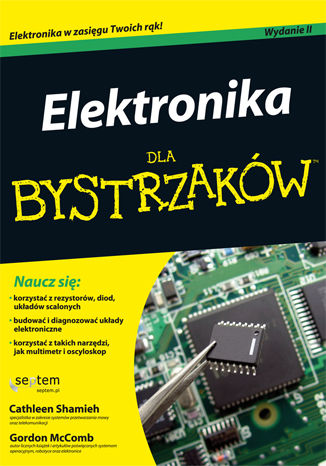
Elektronika dla bystrzaków. Wydanie II
Cathleen Shamieh, Gordon McComb
Elektronika w zasięgu Twoich rąk! Skąd bierze się prąd elektryczny? Jak czytać schematy? Jakie możliwości kryją układy scalone? Jeżeli zastanawiałeś się kiedyś nad tym, jak działają urządzenia elektryczne, a teraz chciałbyś spróbować swoich sił i zbudować własny układ elektroniczny, potrzebujesz wiedzy z zakresu elektroniki i elektryczności. Brzmi strasznie? Nie bój się! Ta książka nie ma nic wspólnego ze skomplikowanymi podręcznikami, które znasz ze szkoły lub studiów. Tutaj wszystko zostało wytłumaczone w jasny i przystępny sposób. Duża liczba przykładów oraz własnoręcznie wykonane i działające układy sprawią, że już za parę dni będziesz swobodnie poruszał się w świecie elektroniki! Wszystko to dzięki książce z serii "Dla bystrzaków". W trakcie lektury dowiesz się, jak działa Twój iPod, komputer i pilot do telewizora. Jednak najpierw poznasz elementarne zasady bezpieczeństwa oraz kilka istotnych cech prądu. Potem zobaczysz, jak zachowują się układy równoległe i szeregowe oraz przypomnisz sobie podstawowe prawo Ohma. Ponadto dowiesz się, jak wykorzystać potencjał kondensatorów, łączyć je oraz budować filtry. Mało? Kolejne strony to przydatna wiedza o cewkach, półprzewodnikach oraz układach scalonych. Po wstępie teoretycznym czas na praktykę, bo jak mówią autorzy: "Żeby się nauczyć, trzeba się ubrudzić". W tej części książki skompletujesz sprzęt potrzebny do pracy, zrozumiesz, jak trzeba czytać schematy, dokonywać pomiarów oraz lutować. Na sam koniec wykonasz samodzielnie projekty oraz sprawdzisz, gdzie najlepiej zaopatrzyć się w potrzebny sprzęt. Jeżeli zawsze marzyłeś o pobawieniu się elektroniką, świetnie trafiłeś. Ta książka jest właśnie dla Ciebie! Skąd się bierze prąd elektryczny Wykorzystanie energii elektrycznej do wykonania pracy Możliwości elektronów Sposoby na dostarczenie energii elektrycznej Opór, prawo Ohma Kondensatory, gromadzenie i wydobywanie ładunku Cewki indukcyjne i kryształy Świat półprzewodników Wykorzystanie układów scalonych Dobór potrzebnych części, gromadzenie narzędzi Bezpieczeństwo pracy z układami elektronicznymi Lutowanie Czytanie schematów Budowa układów elektronicznych Wykonywanie pomiarów Posługiwanie się multimetrem Praca z oscyloskopem Spełnij swoje marzenia i dołącz do grona elektroników!
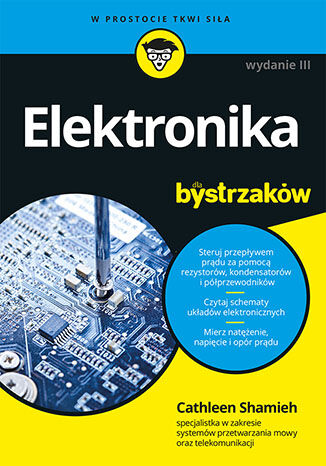
Elektronika dla bystrzaków. Wydanie III
Cathleen Shamieh
W kolorze! Dowiedz się, jak: sterować przepływem prądu za pomocą rezystorów, kondensatorów i półprzewodników, czytać schematy układów elektronicznych, mierzyć natężenie, napięcie i opór prądu, tworzyć miniaturowe klawiatury, błyskające lampy LED do roweru, alarmy i wiele więcej. Stwórz własny warsztat pracy elektronika Ta bogato ilustrowana kolorowymi schematami i zdjęciami książka zawiera szczegółowe instrukcje, jak przeprowadzać eksperymenty objaśniające zasadę działania różnych elementów elektronicznych, porady na temat sposobu posługiwania się podstawowymi narzędziami oraz ciekawe projekty, które można wykonać w pół godziny. Rozdział po rozdziale będziesz czuć przypływ energii, dzięki której przetworzysz teorię w praktykę! Podstawy układów elektronicznych — dowiesz się, czym jest napięcie prądu, gdzie prąd może (a gdzie nie może) płynąć oraz jak w układach jest wykorzystywana moc. Najważniejsze elementy elektroniczne — dowiesz się, jak za pomocą rezystorów, kondensatorów, cewek indukcyjnych, diod i tranzystorów można panować nad prądem elektrycznym. Wszechstronne układy — dowiesz się, jak przy użyciu analogowych i cyfrowych układów scalonych zrealizować wartościowy projekt, wykorzystując tylko kilka elementów. Analiza obwodów — poznasz prawa rządzące napięciem i natężeniem prądu elektrycznego oraz nauczysz się je wykorzystywać. Porady dotyczące bezpieczeństwa — dowiesz się, jak chronić siebie — i swoje układy — przed uszkodzeniem. Otwórz tę książkę i odkryj: jak drobne elementy zmieniają właściwości prądu, praktyczny przewodnik po popularnych elementach elektronicznych, jak ważne są prawo Ohma i inne prawa, w jaki sposób tranzystory wzmacniają i przełączają prąd, co potrafi układ czasowy 555 (a potrafi naprawdę dużo!), podstawy elektroniki cyfrowej, szczegółowe instrukcje budowy obwodów elektronicznych, zabawne projekty, które można szybko samodzielnie wykonać.
Elektronika dla każdego. Przewodnik
Harry Kybett, Earl Boysen
Czy zastanawiałeś się kiedykolwiek, jak działają otaczające Cię urządzenia elektroniczne? Kim są osoby, które potrafią je zaprojektować, wykonać i zagwarantować ich poprawne funkcjonowanie? A może marzysz, żeby zbudować swój własny układ elektroniczny? Aha, kiwasz twierdząco głową. Wobec tego ta książka musi znaleźć się w Twoim koszyku! Ma ona już blisko trzydziestoletnią historię i trzymało ją w rękach wielu hobbystów-elektroników. Dzięki przejrzystym opisom i licznym przykładom nawet kompletny laik błyskawicznie opanuje przedstawiony materiał. Równania opisujące prąd stały i zmienny, prawo Ohma, oporniki, diody i tranzystory to tylko część elementów świata elektroniki, które już za chwilę przestaną być Ci obce! Dołącz do grona elektroników i spełnij marzenia o zbudowaniu własnych układów elektronicznych! Poznaj świat elektroniki: równania opisujące prąd stały i zmienny prawo Ohma możliwości oporników zasady działania generatorów Zrozum działanie obwodów elektronicznych i projektuj układy samodzielnie! Earl Boysen to inżynier z wieloletnim doświadczeniem w zawodzie elektronika. Prowadzi dwie strony internetowe poświęcone zagadnieniom związanym z elektroniką i współczesną technologią -www.buildinggadgets.com i www.understandingnano.com. Jest współautorem Elektroniki dla bystrzaków, Electronics Projects for Dummies i Nanotechnology for Dummies, wydanych przez wydawnictwo Wiley. Harry Kybett jest autorem pierwszego i drugiego wydania Electronics Self-Teaching Guide, książki, która znakomicie się sprzedawała. Pracował jako kierownik działu technicznego w Columbia Pictures Corporation. Stworzył wiele systemów elektronicznych wykorzystywanych przez studio filmowe oraz nadawców programów radiowych czy telewizyjnych. Opracował system szkoleń dla Sony Corporation of America.
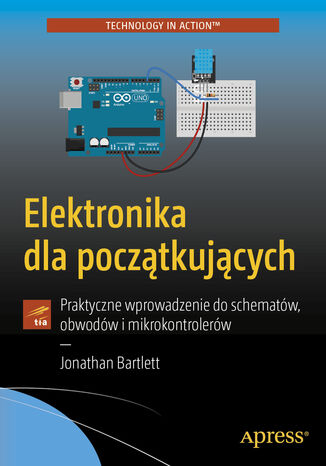
Elektronika dla początkujących. Praktyczne wprowadzenie do schematów, obwodów i mikrokontrolerów
Jonathan Bartlett
Rozpocznij swoją przygodę z elektroniką! Jeśli myślałeś o tym, by zająć się elektroniką, ale nie wiesz od czego zacząć, ta książka zawiera potrzebne informacje. Zaczynając od podstaw elektryczności i obwodów, zapoznasz się z elektroniką cyfrową i mikrokontrolerami, kondensatorami i cewkami indukcyjnymi oraz wzmacniaczami - a wszystko to podczas zdobywania podstawowych narzędzi i informacji potrzebnych do rozpoczęcia pracy nad elektroniką wykorzystującą niskie moce. Elektronika dla początkujących zapewnia równowagę, koncentrując się na nauce opartej na projektach, a jednocześnie stawiając na pierwszym miejscu elektronikę. W nieskomplikowany sposób nauczysz się matematyki stosowanej w obwodach i zobaczysz, jak schematy obwodów przekładają się na rzeczywiste projekty na płytkach stykowych. Ta książka, napisana z myślą o absolutnie początkujących, nie jest zbyt trudna pod względem matematycznym, dając czytelnikom kluczowe informacje, których potrzebują, aby rozpocząć swoją przygodę z elektroniką. Dzięki tej książce: - zapoznasz się z podstawowymi wzorcami użycia rezystorów - podciąganiem, ściąganiem, dzielnikiem napięcia i ogranicznikiem prądu - zrozumiesz wymagania dotyczące obwodów i występujących w nich połączeń - będziesz w stanie odczytać i rozróżnić, za co są odpowiedzialne różne części schematu - będziesz w stanie zdecydować, jakie względy należy wziąć pod uwagę przy wyborze komponentów - we wszystkich przedstawionych w niej obwodach będziesz stosował zasilanie bateryjne, aby projekty były bezpieczne Hobby - majsterkowanie Dla początkujących

Elektronika i internet rzeczy. Przewodnik dla ludzi z prawdziwą pasją
Audrey O'Shea
Nowe technologie, zwłaszcza te związane z elektroniką, mają w sobie coś onieśmielającego. Jeśli jednak zechcesz się im przyjrzeć bliżej, łatwo możesz się nimi zainteresować w sposób wykraczający poza suchą teorię. Być może masz świetny pomysł na nowy gadżet albo marzy Ci się choć trochę inteligentny dom? A może zastanawiasz się nad podjęciem pracy zawodowej związanej z elektroniką? Nawet jeśli chodzi tylko o wciągającą zabawę, przed zbudowaniem pierwszego obwodu koniecznie musisz zdobyć podstawową wiedzę i praktyczne umiejętności. Dzięki tej książce łatwo wkroczysz w pasjonujący świat elektroniki, nowych technologii i internetu rzeczy. Równolegle z poznawaniem podstaw teoretycznych będziesz tworzyć proste obwody i przełączniki, aby stopniowo zajmować się coraz bardziej złożonymi projektami. Dowiesz się, jak korzystać z płytki Arduino i tworzyć programy sterujące zbudowanymi przez Ciebie urządzeniami. Nauczysz się w bezpieczny sposób podłączać te urządzenia do internetu. Zawarte tutaj wskazówki nie tylko ułatwią Ci eksperymentowanie, ale także pozwolą uniknąć często popełnianych błędów. Wśród przykładów opisanych w książce znajdziesz projekty służące do poważnych zadań, ale również takie, które przede wszystkim są zabawne i pozwalają na rozwinięcie kreatywności! Dowiedz się, jak zbudować: jasno świecącą lampę turystyczną alarm laserowy gadżety elektroniczne dla dzieci obwody sterowane światłem watomierz z wykorzystaniem płytki Arduino wiele innych urządzeń, które można połączyć z internetem Lutownica? Świetnie pasuje do każdej dłoni!
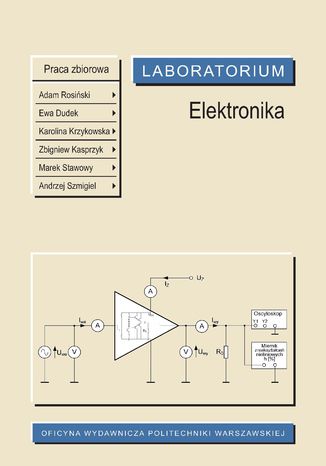
Adam Rosiński
Podręcznik jest przeznaczony dla studentów studiów I stopnia na kierunku Transport realizowanych na Wydziale Transportu Politechniki Warszawskiej. Zawarto w nim opis 14 ćwiczeń laboratoryjnych z zakresu elektroniki analogowej i cyfrowej. Celem zaprezentowanych ćwiczeń jest poznanie budowy, zasad działania, właściwości i podstawowych parametrów elementów i układów analogowych (tranzystory unipolarne, wzmacniacze operacyjne, wzmacniacze mocy, układy regulacyjne stabilizatorów, filtry aktywne, obwody rezonansowe), oraz cyfrowych (bramki logiczne, generatory cyfrowe, liczniki, przetworniki A/C i C/A, zakłócenia elektromagnetyczne sygnałów TTL, rejestry, modulacje AM i FM, modulacje ASK, FSK, PSK i QAM). Opis każdego ćwiczenia składa się omówienia podstaw teoretycznych działania badanych elementów i układów, opisu rzeczywistego stanowiska pomiarowego, przedstawienia badania z wykorzystywaniem programu komputerowego do symulacji działania omawianych elementów i układów oraz zbioru zagadnień do opracowania z wykazem bibliografii. Książka jest kontynuacją podręcznika "Podstawy elektroniki. Laboratorium", w której autorzy przedstawili podstawy wiedzy z obszaru elektroniki analogowej i cyfrowej.
Elektronika. Leksykon kieszonkowy
Witold Wrotek
Elektronika jest wszędzie. Zrozum ją! Jakie zjawiska fizyczne umożliwiają działanie urządzeń elektronicznych? Jak rozwiązywać obwody prądu stałego i zmiennego? W jaki sposób projektować układy elektroniczne? Elektronika jest wszędzie — dzięki niej każdego dnia robimy zakupy, bawimy się, komunikujemy i przemieszczamy. Mniej lub bardziej zaawansowane technicznie urządzenia elektroniczne otaczają nas ze wszystkich stron. Wkraczają również w te dziedziny życia, w których jeszcze niedawno nawet nie umieliśmy sobie ich wyobrazić. Telefony komórkowe, komputery, telewizory, sprzęt AGD, terminale płatnicze, bankomaty — wszystko to są urządzenia elektroniczne, a sterowane elektronicznie są już nawet tak proste z pozoru przedmioty codziennego użytku, jak żelazka, odkurzacze czy piekarniki. Tej wszechobecności elektroniki nie towarzyszy jednak nawet podstawowa znajomość zasad jej działania wśród użytkowników, ponieważ większości osób wiedza ta wydaje się zbędna, nudna i zbyt trudna do opanowania. Mit ten pomaga obalić książka „Elektronika. Leksykon kieszonkowy”, która prostym i zrozumiałym językiem prezentuje najważniejsze wielkości i jednostki elektryczne, wprowadza w świat zjawisk fizycznych leżących u podstaw działania rozmaitych urządzeń oraz przedstawia zasady funkcjonowania układów elektrycznych i elektronicznych. Lektura leksykonu pomoże Ci zrozumieć sposób działania obwodów prądu stałego i zmiennego oraz przybliży metody wyznaczania parametrów ich pracy. Książka prezentuje zarówno podstawy techniki analogowej, jak i cyfrowej — stanowi zwarty i skrótowy, lecz zadziwiająco kompletny przegląd osiągnięć ludzkiej pomysłowości na tym polu. Całość uzupełniają wiadomości na temat narzędzi matematycznych niezbędnych do właściwego zrozumienia przedstawionego materiału oraz projektowania i analizowania układów elektronicznych. Wielkości fizyczne i jednostki używane w elektronice Zjawiska związane z przepływem prądu elektrycznego Prawa fizyczne rządzące działaniem obwodów Analiza obwodów prądu stałego i zmiennego Zasada działania tranzystorów i prostych wzmacniaczy Budowa i działanie analogowych układów elektronicznych Kombinacyjne i sekwencyjne układy cyfrowe Elektronika? Z leksykonem kieszonkowym to nic trudnego!
Elektronika. Od analizy symbolicznej do obliczeń kwantowych
Anna Filipowska,Weronika Izydorczyk,Jacek Izydorczyk,Sławomir Lasota,Andrzej Malcher,Piotr Zawadzki
Elektronika towarzyszy nam na każdym kroku. Bez niej - dziedziny techniki i nauki zajmującej się wytwarzaniem i przetwarzaniem sygnałów w postaci prądów i napięć elektrycznych lub pól elektromagnetycznych - nie byłoby telefonu, radia, telewizora, radaru, komputera, smartfona, internetu i... Właściwie nie byłoby żadnego z urządzeń i udogodnień XXI wieku, z których korzystamy na co dzień, nie zastanawiając się nawet, jak działają ani jak są zbudowane. Tymczasem obwody elektroniczne przenikają każdy aspekt naszego życia. Bez nich cywilizacja w obecnym kształcie przestałaby istnieć. Zagrożenie wcale nie jest aż tak małe, jak się wydaje. Elektronika to niebanalna dziedzina, wykształcenie specjalistów i przekazanie im odpowiedniej wiedzy wymaga wysiłku. Należy zacząć od podstaw - i stąd pomysł na cykl publikacji poświęconych najważniejszym zagadnieniom związanym z elektroniką. W tej książce znalazły się takie zagadnienia jak: Analiza symboliczna i analiza wrażliwości Teoria szumów Filtry pasywne Linie transmisyjne i anteny Propagacja fal EM Chemorezystancyjne sensory gazów na bazie tlenków metali i biosensory Obliczenia kwantowe