
Uczenie maszynowe
Uczenie maszynowe (ang. machine learning) zajmuje się teorią i praktycznym zastosowaniem algorytmów analizujących dane — stanowi najciekawszą dziedzinę informatyki. Żyjemy w czasach przetwarzania olbrzymiej ilości informacji; za pomocą samouczących się algorytmów będących częścią uczenia maszynowego informacje te są przekształcane w rzeczywistą wiedzę. Dzięki licznym i potężnym bibliotekom o jawnym kodzie źródłowym, które powstały w ostatnich latach, prawdopodobnie teraz jest najlepszy czas, aby zainteresować się uczeniem maszynowym i nauczyć się wykorzystywać potężne algorytmy do wykrywania wzorców w przetwarzanych danych oraz prognozować przyszłe zdarzenia. Przykładami zastosowania Machine Learning są np. mechanizmy wyszukiwarek internetowych, GPS, autokorekta w edytorze tekstu czy boty w komunikatorach. Jedną z dziedzin uczenia maszynowego jest deep learning, podczas którego komputer uczy się procesów naturalnych dla ludzkiego mózgu (tworzy sieci neuronowe). Technologia ta jest wykorzystywana np. przy identyfikacji głosu i obrazów.
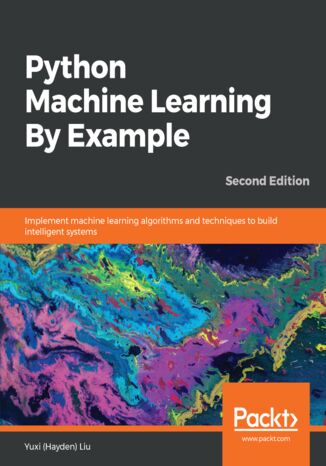
Yuxi (Hayden) Liu
The surge in interest in machine learning (ML) is due to the fact that it revolutionizes automation by learning patterns in data and using them to make predictions and decisions. If you’re interested in ML, this book will serve as your entry point to ML.Python Machine Learning By Example begins with an introduction to important ML concepts and implementations using Python libraries. Each chapter of the book walks you through an industry adopted application. You’ll implement ML techniques in areas such as exploratory data analysis, feature engineering, and natural language processing (NLP) in a clear and easy-to-follow way.With the help of this extended and updated edition, you’ll understand how to tackle data-driven problems and implement your solutions with the powerful yet simple Python language and popular Python packages and tools such as TensorFlow, scikit-learn, gensim, and Keras. To aid your understanding of popular ML algorithms, the book covers interesting and easy-to-follow examples such as news topic modeling and classification, spam email detection, stock price forecasting, and more.By the end of the book, you’ll have put together a broad picture of the ML ecosystem and will be well-versed with the best practices of applying ML techniques to make the most out of new opportunities.
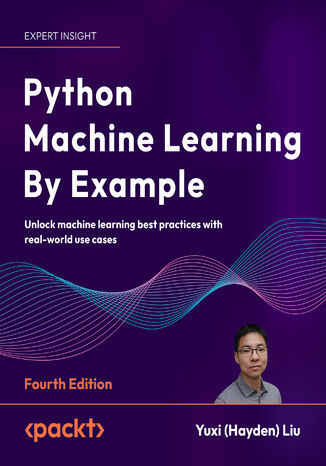
Yuxi (Hayden) Liu
The fourth edition of Python Machine Learning By Example is a comprehensive guide for beginners and experienced machine learning practitioners who want to learn more advanced techniques, such as multimodal modeling. Written by experienced machine learning author and ex-Google machine learning engineer Yuxi (Hayden) Liu, this edition emphasizes best practices, providing invaluable insights for machine learning engineers, data scientists, and analysts.Explore advanced techniques, including two new chapters on natural language processing transformers with BERT and GPT, and multimodal computer vision models with PyTorch and Hugging Face. You’ll learn key modeling techniques using practical examples, such as predicting stock prices and creating an image search engine.This hands-on machine learning book navigates through complex challenges, bridging the gap between theoretical understanding and practical application. Elevate your machine learning and deep learning expertise, tackle intricate problems, and unlock the potential of advanced techniques in machine learning with this authoritative guide.*Email sign-up and proof of purchase required
Giuseppe Ciaburro, Prateek Joshi
This eagerly anticipated second edition of the popular Python Machine Learning Cookbook will enable you to adopt a fresh approach to dealing with real-world machine learning and deep learning tasks.With the help of over 100 recipes, you will learn to build powerful machine learning applications using modern libraries from the Python ecosystem. The book will also guide you on how to implement various machine learning algorithms for classification, clustering, and recommendation engines, using a recipe-based approach. With emphasis on practical solutions, dedicated sections in the book will help you to apply supervised and unsupervised learning techniques to real-world problems. Toward the concluding chapters, you will get to grips with recipes that teach you advanced techniques including reinforcement learning, deep neural networks, and automated machine learning.By the end of this book, you will be equipped with the skills you need to apply machine learning techniques and leverage the full capabilities of the Python ecosystem through real-world examples.
Python. Machine learning i deep learning. Biblioteki scikit-learn i TensorFlow 2. Wydanie III
Sebastian Raschka, Vahid Mirjalili
Uczenie maszynowe jest jedną z najbardziej fascynujących technologii naszych czasów - rozwojem jego najróżniejszych zastosowań zajmują się tacy giganci jak Google, Facebook, Apple, Amazon czy IBM. Uczenie maszynowe otwiera zupełnie nowe możliwości i powoli staje się nieodzowne: wystarczy wymienić asystenty głosowe w smartfonach, chatboty ułatwiające klientom wybór produktu, a także sieci ułatwiające podejmowanie decyzji o inwestycjach giełdowych, filtrujące niechciane wiadomości e-mail czy wspomagające diagnostykę medyczną. Oto obszerny przewodnik po uczeniu maszynowym i uczeniu głębokim w Pythonie. Zawiera dokładne omówienie najważniejszych technik uczenia maszynowego oraz staranne wyjaśnienie zasad rządzących tą technologią. Poszczególne zagadnienia zilustrowano mnóstwem wyjaśnień, wizualizacji i przykładów, co znakomicie ułatwia zrozumienie materiału i sprawne rozpoczęcie samodzielnego budowania aplikacji i modeli, takich jak te służące do klasyfikacji obrazów, odkrywania ukrytych wzorców czy wydobywania dodatkowych informacji z danych. Wydanie trzecie zostało zaktualizowane - znalazł się w nim opis biblioteki TensorFlow 2 i najnowszych dodatków do biblioteki scikit-learn. Dodano również wprowadzenie do dwóch nowatorskich technik: uczenia przez wzmacnianie i budowy generatywnych sieci przeciwstawnych (GAN). W książce między innymi: platformy, modele i techniki uczenia maszynowego wykorzystywanie biblioteki scikit-learn i TensorFlow sieci neuronowe, sieci GAN i inne przygotowywanie danych dla modeli uczenia maszynowego ocena i strojenie modeli analizy: regresyjna, skupień i sentymentów Uczenie głębokie z Pythonem: zrozum i zastosuj!
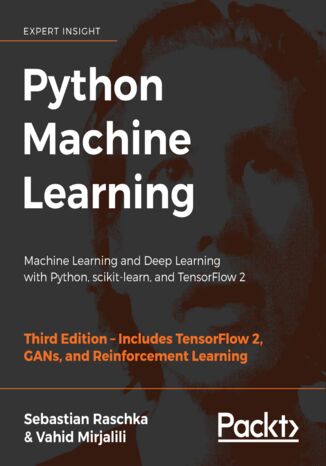
Sebastian Raschka, Vahid Mirjalili
Python Machine Learning, Third Edition is a comprehensive guide to machine learning and deep learning with Python. It acts as both a step-by-step tutorial, and a reference you'll keep coming back to as you build your machine learning systems.Packed with clear explanations, visualizations, and working examples, the book covers all the essential machine learning techniques in depth. While some books teach you only to follow instructions, with this machine learning book, Raschka and Mirjalili teach the principles behind machine learning, allowing you to build models and applications for yourself.Updated for TensorFlow 2.0, this new third edition introduces readers to its new Keras API features, as well as the latest additions to scikit-learn. It's also expanded to cover cutting-edge reinforcement learning techniques based on deep learning, as well as an introduction to GANs. Finally, this book also explores a subfield of natural language processing (NLP) called sentiment analysis, helping you learn how to use machine learning algorithms to classify documents.This book is your companion to machine learning with Python, whether you're a Python developer new to machine learning or want to deepen your knowledge of the latest developments.
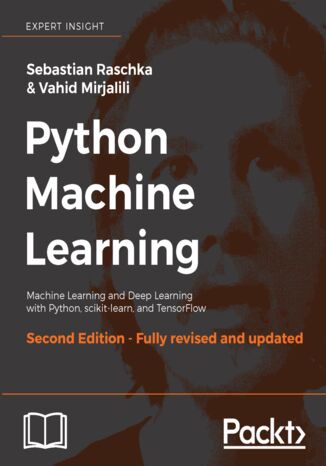
Sebastian Raschka, Jared Huffman, Vahid Mirjalili, Ryan...
Publisher's Note: This edition from 2017 is outdated and is not compatible with TensorFlow 2 or any of the most recent updates to Python libraries. A new third edition, updated for 2020 and featuring TensorFlow 2 and the latest in scikit-learn, reinforcement learning, and GANs, has now been published.Machine learning is eating the software world, and now deep learning is extending machine learning. Understand and work at the cutting edge of machine learning, neural networks, and deep learning with this second edition of Sebastian Raschka’s bestselling book, Python Machine Learning. Using Python's open source libraries, this book offers the practical knowledge and techniques you need to create and contribute to machine learning, deep learning, and modern data analysis.Fully extended and modernized, Python Machine Learning Second Edition now includes the popular TensorFlow 1.x deep learning library. The scikit-learn code has also been fully updated to v0.18.1 to include improvements and additions to this versatile machine learning library. Sebastian Raschka and Vahid Mirjalili’s unique insight and expertise introduce you to machine learning and deep learning algorithms from scratch, and show you how to apply them to practical industry challenges using realistic and interesting examples. By the end of the book, you’ll be ready to meet the new data analysis opportunities.If you’ve read the first edition of this book, you’ll be delighted to find a balance of classical ideas and modern insights into machine learning. Every chapter has been critically updated, and there are new chapters on key technologies. You’ll be able to learn and work with TensorFlow 1.x more deeply than ever before, and get essential coverage of the Keras neural network library, along with updates to scikit-learn 0.18.1.
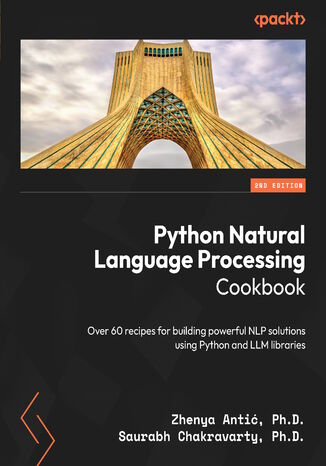
Zhenya Antić, Saurabh Chakravarty, Edward A. Fox
Harness the power of Natural Language Processing (NLP) to overcome real-world text analysis challenges with this recipe-based roadmap written by two seasoned NLP experts with vast experience transforming various industries with their NLP prowess.You’ll be able to make the most of the latest NLP advancements, including large language models (LLMs), and leverage their capabilities through Hugging Face transformers. Through a series of hands-on recipes, you’ll master essential techniques such as extracting entities and visualizing text data. The authors will expertly guide you through building pipelines for sentiment analysis, topic modeling, and question-answering using popular libraries like spaCy, Gensim, and NLTK. You’ll also learn to implement RAG pipelines to draw out precise answers from a text corpus using LLMs.This second edition expands your skillset with new chapters on cutting-edge LLMs like GPT-4, Natural Language Understanding (NLU), and Explainable AI (XAI)—fostering trust in your NLP models.By the end of this book, you'll be equipped with the skills to apply advanced text processing techniques, use pre-trained transformer models, build custom NLP pipelines to extract valuable insights from text data to drive informed decision-making.
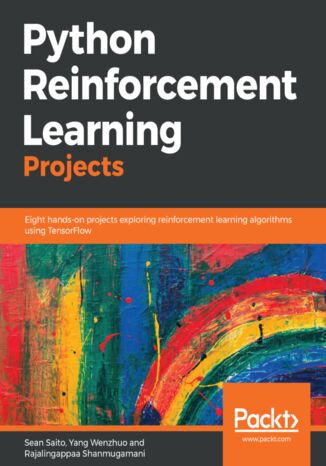
Sean Saito, Yang Wenzhuo , Rajalingappaa Shanmugamani
Reinforcement learning is one of the most exciting and rapidly growing fields in machine learning. This is due to the many novel algorithms developed and incredible results published in recent years.In this book, you will learn about the core concepts of RL including Q-learning, policy gradients, Monte Carlo processes, and several deep reinforcement learning algorithms. As you make your way through the book, you'll work on projects with datasets of various modalities including image, text, and video. You will gain experience in several domains, including gaming, image processing, and physical simulations. You'll explore technologies such as TensorFlow and OpenAI Gym to implement deep learning reinforcement learning algorithms that also predict stock prices, generate natural language, and even build other neural networks.By the end of this book, you will have hands-on experience with eight reinforcement learning projects, each addressing different topics and/or algorithms. We hope these practical exercises will provide you with better intuition and insight about the field of reinforcement learning and how to apply its algorithms to various problems in real life.