
Budowa sieci
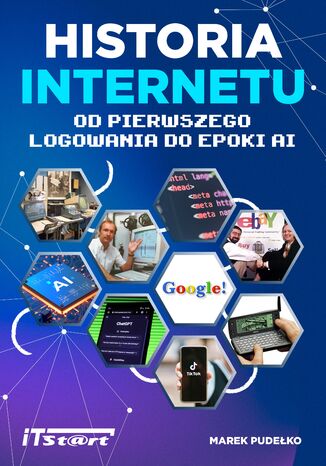
Historia Internetu: Od pierwszego logowania do Epoki AI
Marek Pudełko
a jednocześnie niezwykle bogata opowieść o narodzinach i ewolucji globalnej sieci. Książka prowadzi czytelnika od koncperpzcejłią czania pakietów i pierwszego logowania w ARPANET cie, przez rozwój kluczowych protokołów (NCP, TCP/IP, DNdSo),k umentację RFC, ekspansję sieci NSFNET i komercyjnych dostawców, aż po moment, w którym Internet ogarnął cały świat - od Europy i USA po Azję, Afrykę i Amerykę Łacińską. Autor szczegółowo omawia powstanie najważniejszych usług i narzędzi: FTP, e maila, Telnetu, Usenetu, BBS ów, Gophera, WWW, wyszukiwarek, portali, komunikatorów, blogów, CMS ów, serwisów społecznościowych, platform wideo, handlu internetowego i sieci P2P. Osobny rozdział poświęcony jest początkom Internetu w Polsce - od KASK i PLEARN po pierwsze portale i rozwój usług komercyjnych.
Piti Champeethong, Roberto Mardeni
Continuous integration and continuous delivery (CI/CD) are ubiquitous concepts in modern development. Azure Pipelines is one of the most popular services that you can utilize for CI/CD, and this book shows you how it works by taking you through the process of building and automating CI/CD systems using Azure Pipelines and YAML, simplifying integration with Azure resources and reducing human error.You’ll begin by getting an overview of Azure Pipelines and why you should use it. Next, the book helps you get to grips with build and release pipelines, and then builds upon this by introducing the extensive power of YAML syntax, which you can use to implement and configure any task you can think of. As you advance, you’ll discover how to integrate Infrastructure as Code tools, such as Terraform, and perform code analysis with SonarQube. In the concluding chapters, you’ll delve into real-life scenarios and hands-on implementation tasks with Microsoft Azure services, AWS, and cross-mobile application with Flutter, Google Firebase, and more.By the end of this book, you’ll be able to design and build CI/CD systems using Azure Pipelines with consummate ease, write code using YAML, and configure any task that comes to mind.
Bekim Dauti
The Installing and Configuring Windows 10: 70-698 Exam Guide is designed to confirm what you already know, while also updating your knowledge of Windows 10. With its easy-to-follow guidance, you will quickly learn the user interface and discover steps to work efficiently in Windows 10 to rule out delays and obstacles.This book begins by covering various ways of installing Windows 10, followed by instructions on post-installation tasks. You will learn about the deployment of Windows 10 in Enterprise and also see how to configure networking in Windows 10. You’ll understand how to leverage Disk Management and Windows PowerShell to configure disks, volumes, and file system options. As you progress through the chapters, you will be able to set up remote management in Windows 10 and learn more about Windows update usage, behavior, and settings. You will also gain insights that will help you monitor and manage data recovery and explore how to configure authentication, authorization, and advanced management tools in Windows 10.By the end of this book, you will be equipped with enough knowledge to take the 70-698 exam and explore different study methods to improve your chances of passing the exam with ease.
Agus Kurniawan
ESP32 is a low-cost MCU with integrated Wi-Fi and BLE. Various modules and development boards-based on ESP32 are available for building IoT applications easily. Wi-Fi and BLE are a common network stack in the Internet of Things application. These network modules can leverage your business and projects needs for cost-effective benefits.This book will serve as a fundamental guide for developing an ESP32 program. We will start with GPIO programming involving some sensor devices. Then we will study ESP32 development by building a number of IoT projects, such as weather stations, sensor loggers, smart homes, Wi-Fi cams and Wi-Fi wardriving. Lastly, we will enable ESP32 boards to execute interactions with mobile applications and cloud servers such as AWS.By the end of this book, you will be up and running with various IoT project-based ESP32 chip.

IoT Projects with Bluetooth Low Energy. Harness the power of connected things
Madhur Bhargava
Bluetooth Low Energy, or Bluetooth Smart, is Wireless Personal Area networking aimed at smart devices and IoT applications. BLE has been increasingly adopted by application developers and IoT enthusiasts to establish connections between smart devices.This book initially covers all the required aspects of BLE, before you start working on IoT projects. In the initial stages of the book, you will learn about the basic aspects of Bluetooth Low Energy—such as discovering devices, services, and characteristics—that will be helpful for advanced-level projects. This book will guide you through building hands-on projects using BLE and IoT. These projects include tracking health data, using a mobile App, and making this data available for health practitioners; Indoor navigation; creating beacons using the Raspberry Pi; and warehouse weather Monitoring. This book also covers aspects of Bluetooth 5 (the latest release) and its effect on each of these projects.By the end of this book, you will have hands-on experience of using Bluetooth Low Energy to integrate with smart devices and IoT projects.
IT Governance Publishing, Claire Agutter
This book offers a thorough guide to ITIL® 4’s Create, Deliver, and Support (CDS) module, covering key concepts and practices for IT service management. It begins with foundational aspects of the service value system (SVS), highlighting organizational structures, roles, and collaborative cultures essential for successful service delivery. The early chapters focus on adopting a shift-left approach to resource management, helping teams prioritize efficiency and proactive problem-solving.As the book progresses, it explores the strategic planning and management of resources within the SVS, stressing the importance of continual improvement and leveraging technology to optimize service management. It also provides insight into managing value streams for new services, guiding readers on how to create, manage, and measure service value chains for improved service delivery and innovation.The later chapters address specific ITIL® practices, such as service design, incident management, problem management, and knowledge management. The book concludes with exam preparation for ITIL® 4 CDS, offering practical case studies and real-world scenarios.By the end, readers will be equipped to enhance service management processes and ensure the delivery of high-quality IT services aligned with business objectives.
Java Web Internals. Unlock the secrets of Java web servers, frameworks, and application architecture
Francisco Isidro Massetto, Bruno Souza
Ever wondered how web servers like Tomcat process requests, or what really happens behind frameworks such as Spring? This book takes you beneath the surface of Java web development to uncover the why behind the tools you use every day. Rather than focusing solely on coding recipes, this book emphasizes the underlying concepts and design principles that govern how web servers and frameworks operate. Starting with low-level socket programming, you’ll build a multithreaded HTTP server from the ground up and extend it into a lightweight application server capable of handling dynamic content. Along the way, you’ll master HTTP request parsing, response generation, servlet-like request handling, and Java reflection and annotations for metaprogramming. As you progress, you’ll evolve this infrastructure into your own Java framework with embedded Tomcat, annotation-driven routing, object serialization with Jackson, and basic dependency injection modeled on Jakarta CDI. By the end of this journey, you’ll understand the principles behind them, enabling you to reason about system design, troubleshoot complex issues, and apply these concepts across frameworks and programming languages.*Email sign-up and proof of purchase required

Komunikowanie danych i zastosowanie sieci komputerowych w biznesie. Wydanie XIII
Jerry FitzGerald, Alan Dennis, Alexandra Durcikova
Połączenie komputerów w sieć zapoczątkowało prawdziwy skok cywilizacyjny. Dziś zarządzanie przepływem danych między komunikującymi się urządzeniami stanowi jeden z fundamentalnych czynników rozwoju współczesnego biznesu. Wraz z upowszechnianiem się kolejnych nowinek, takich jak internet rzeczy, nasze życie coraz bardziej staje się życiem online. W konsekwencji zrozumienie zagadnień dotyczących mobilności, bezpieczeństwa, skalowalności i zarządzania siecią może mieć niebagatelne znaczenie dla pomyślnej realizacji celów biznesowych. Dotyczy to nie tylko inżynierów, lecz także twórczych jednostek, które dzięki kreatywnemu zagospodarowaniu technologii zwiększają konkurencyjność swoich firm. To kolejne wydanie znakomitego podręcznika dla inżynierów i menedżerów, którzy chcą dogłębnie zrozumieć fundamentalne koncepcje związane z sieciami i komunikowaniem danych. Wyczerpująco omówiono tu podstawy funkcjonowania sieci komputerowych - szczególną uwagę zwrócono na różnorodne aspekty projektowania niezawodnej sieci i zarządzania nią. Książka została zaktualizowana i uzupełniona o najnowsze zalecenia w dziedzinie cyberbezpieczeństwa zarówno dla starszych rozwiązań, jak i dla architektur chmurowych czy sieci wykorzystujących urządzenia mobilne. Znakomitym uzupełnieniem treści są analizy przypadków oraz praktyczne zestawy ćwiczeń, dzięki którym można lepiej zrozumieć opisane koncepcje i techniki. W tej książce między innymi: modele sieci i standardy sieciowe funkcje poszczególnych warstw sieci rodzaje sieci, w tym sieci szkieletowe, LAN i bezprzewodowe bezpieczeństwo sieci i zapobieganie włamaniom zarządzanie ruchem w sieci i kontrolowanie awarii Komunikacja w sieci: być albo nie być współczesnego biznesu!