Python
W kategorii Python zostały zebrane podręczniki poruszające tematykę programowania z zastosowaniem praktycznie niezależnego sprzętowo, dostępnego na licencji Open Source języka. Książki przedstawią Wam wszechstronności i elastyczności Pythona a także różne typy tworzenia kodu poprzez programowanie strukturalne, obiektowe czy funkcjonalne.
Nauczycie się tworzyć aplikacje sieciowe o dowolnym przeznaczeniu, komunikujące się z systemami operacyjnymi, lub korzystające z baz danych. Techniki analizy składni, przetwarzanie tekstu czy rozłożenie obciążenia programu na wiele wątków i procesów przestanie być problematyczne.
Python Machine Learning By Example. The easiest way to get into machine learning
Yuxi (Hayden) Liu
Data science and machine learning are some of the top buzzwords in the technical world today. A resurging interest in machine learning is due to the same factors that have made data mining and Bayesian analysis more popular than ever. This book is your entry point to machine learning. This book starts with an introduction to machine learning and the Python language and shows you how to complete the setup. Moving ahead, you will learn all the important concepts such as, exploratory data analysis, data preprocessing, feature extraction, data visualization and clustering, classification, regression and model performance evaluation. With the help of various projects included, you will find it intriguing to acquire the mechanics of several important machine learning algorithms – they are no more obscure as they thought. Also, you will be guided step by step to build your own models from scratch. Toward the end, you will gather a broad picture of the machine learning ecosystem and best practices of applying machine learning techniques. Through this book, you will learn to tackle data-driven problems and implement your solutions with the powerful yet simple language, Python. Interesting and easy-to-follow examples, to name some, news topic classification, spam email detection, online ad click-through prediction, stock prices forecast, will keep you glued till you reach your goal.
Giuseppe Ciaburro, Prateek Joshi
This eagerly anticipated second edition of the popular Python Machine Learning Cookbook will enable you to adopt a fresh approach to dealing with real-world machine learning and deep learning tasks.With the help of over 100 recipes, you will learn to build powerful machine learning applications using modern libraries from the Python ecosystem. The book will also guide you on how to implement various machine learning algorithms for classification, clustering, and recommendation engines, using a recipe-based approach. With emphasis on practical solutions, dedicated sections in the book will help you to apply supervised and unsupervised learning techniques to real-world problems. Toward the concluding chapters, you will get to grips with recipes that teach you advanced techniques including reinforcement learning, deep neural networks, and automated machine learning.By the end of this book, you will be equipped with the skills you need to apply machine learning techniques and leverage the full capabilities of the Python ecosystem through real-world examples.
Python. Machine learning i deep learning. Biblioteki scikit-learn i TensorFlow 2. Wydanie III
Sebastian Raschka, Vahid Mirjalili
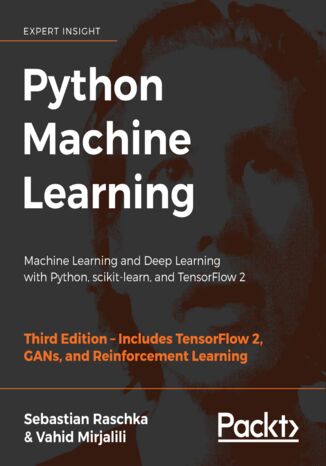
Uczenie maszynowe jest jedną z najbardziej fascynujących technologii naszych czasów - rozwojem jego najróżniejszych zastosowań zajmują się tacy giganci jak Google, Facebook, Apple, Amazon czy IBM. Uczenie maszynowe otwiera zupełnie nowe możliwości i powoli staje się nieodzowne: wystarczy wymienić asystenty głosowe w smartfonach, chatboty ułatwiające klientom wybór produktu, a także sieci ułatwiające podejmowanie decyzji o inwestycjach giełdowych, filtrujące niechciane wiadomości e-mail czy wspomagające diagnostykę medyczną. Oto obszerny przewodnik po uczeniu maszynowym i uczeniu głębokim w Pythonie. Zawiera dokładne omówienie najważniejszych technik uczenia maszynowego oraz staranne wyjaśnienie zasad rządzących tą technologią. Poszczególne zagadnienia zilustrowano mnóstwem wyjaśnień, wizualizacji i przykładów, co znakomicie ułatwia zrozumienie materiału i sprawne rozpoczęcie samodzielnego budowania aplikacji i modeli, takich jak te służące do klasyfikacji obrazów, odkrywania ukrytych wzorców czy wydobywania dodatkowych informacji z danych. Wydanie trzecie zostało zaktualizowane - znalazł się w nim opis biblioteki TensorFlow 2 i najnowszych dodatków do biblioteki scikit-learn. Dodano również wprowadzenie do dwóch nowatorskich technik: uczenia przez wzmacnianie i budowy generatywnych sieci przeciwstawnych (GAN). W książce między innymi: platformy, modele i techniki uczenia maszynowego wykorzystywanie biblioteki scikit-learn i TensorFlow sieci neuronowe, sieci GAN i inne przygotowywanie danych dla modeli uczenia maszynowego ocena i strojenie modeli analizy: regresyjna, skupień i sentymentów Uczenie głębokie z Pythonem: zrozum i zastosuj!
Sebastian Raschka, Vahid Mirjalili
Python Machine Learning, Third Edition is a comprehensive guide to machine learning and deep learning with Python. It acts as both a step-by-step tutorial, and a reference you'll keep coming back to as you build your machine learning systems.Packed with clear explanations, visualizations, and working examples, the book covers all the essential machine learning techniques in depth. While some books teach you only to follow instructions, with this machine learning book, Raschka and Mirjalili teach the principles behind machine learning, allowing you to build models and applications for yourself.Updated for TensorFlow 2.0, this new third edition introduces readers to its new Keras API features, as well as the latest additions to scikit-learn. It's also expanded to cover cutting-edge reinforcement learning techniques based on deep learning, as well as an introduction to GANs. Finally, this book also explores a subfield of natural language processing (NLP) called sentiment analysis, helping you learn how to use machine learning algorithms to classify documents.This book is your companion to machine learning with Python, whether you're a Python developer new to machine learning or want to deepen your knowledge of the latest developments.
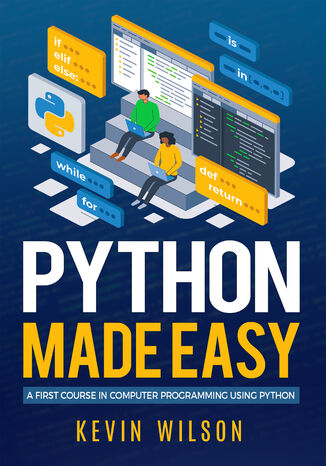
Python Made Easy. A First Course in Computer Programming Using Python
Kevin Wilson
Python Made Easy is designed to transform beginners into proficient Python programmers. The journey begins with an introduction to Python, covering basic concepts and syntax that lay the foundation for your coding skills. As you progress, you'll dive into essential programming constructs like data structures, functions, and file handling.In the second phase of the course, you'll explore more complex topics such as object-oriented programming, modules, and libraries. These sections will give you the tools to write efficient, reusable, and modular code. You'll also learn how to handle exceptions, ensuring your programs are robust and error-resistant. Special attention is given to graphical user interfaces (GUIs) and game development, making your Python skills applicable to a wide range of projects.The final part of the course covers advanced topics like debugging, testing, and deploying Python applications. You'll also delve into web development, where you'll learn to build and deploy web applications using Python. The course concludes with valuable video resources to reinforce your learning and provide additional insights. By the end of this course, you'll have a solid understanding of Python and be ready to tackle real-world programming challenges.
Python: Master the Art of Design Patterns. Click here to enter text
Dusty Phillips, Chetan Giridhar, Sakis Kasampalis
Python is an object-oriented scripting language that is used in everything from data science to web development. Known for its simplicity, Python increases productivity and minimizes development time. Through applying essential software engineering design patterns to Python, Python code becomes even more efficient and reusable from project to project. This learning path takes you through every traditional and advanced design pattern best applied to Python code, building your skills in writing exceptional Python. Divided into three distinct modules, you’ll go from foundational to advanced concepts by following a series of practical tutorials.Start with the bedrock of Python programming – the object-oriented paradigm. Rethink the way you work with Python as you work through the Python data structures and object-oriented techniques essential to modern Python programming. Build your confidence as you learn Python syntax, and how to use OOP principles with Python tools such as Django and Kivy.In the second module, run through the most common and most useful design patterns from a Python perspective. Progress through Singleton patterns, Factory patterns, Façade patterns and more all with detailed hands-on guidance. Enhance your professional abilities in in software architecture, design, and development.In the final module, run through the more complex and less common design patterns, discovering how to apply them to Python coding with the help of real-world examples. Get to grips with the best practices of writing Python, as well as creating systems architecture and troubleshooting issues.This Learning Path combines some of the best that Packt has to offer in one complete, curated package. It includes content from the following Packt products:? Python 3 Object-Oriented Programming - Second Edition by Dusty Phillips? Learning Python Design Patterns - Second Edition by Chetan Giridhar? Mastering Python Design Patterns by Sakis Kasampalis
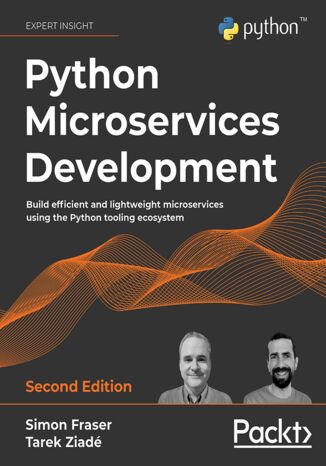
Simon Fraser, Tarek Ziadé
The small scope and self-contained nature of microservices make them faster, cleaner, and more scalable than code-heavy monolithic applications. However, building microservices architecture that is efficient as well as lightweight into your applications can be challenging due to the complexity of all the interacting pieces.Python Microservices Development, Second Edition will teach you how to overcome these issues and craft applications that are built as small standard units using proven best practices and avoiding common pitfalls. Through hands-on examples, this book will help you to build efficient microservices using Quart, SQLAlchemy, and other modern Python toolsIn this updated edition, you will learn how to secure connections between services and how to script Nginx using Lua to build web application firewall features such as rate limiting. Python Microservices Development, Second Edition describes how to use containers and AWS to deploy your services. By the end of the book, you’ll have created a complete Python application based on microservices.
Python Microservices Development. Build, test, deploy, and scale microservices in Python
Tarek Ziadé
We often deploy our web applications into the cloud, and our code needs to interact with many third-party services. An efficient way to build applications to do this is through microservices architecture. But, in practice, it's hard to get this right due to the complexity of all the pieces interacting with each other.This book will teach you how to overcome these issues and craft applications that are built as small standard units, using all the proven best practices and avoiding the usual traps. It's a practical book: you’ll build everything using Python 3 and its amazing tooling ecosystem. You will understand the principles of TDD and apply them. You will use Flask, Tox, and other tools to build your services using best practices. You will learn how to secure connections between services, and how to script Nginx using Lua to build web application firewall features such as rate limiting. You will also familiarize yourself with Docker’s role in microservices, and use Docker containers, CoreOS, and Amazon Web Services to deploy your services.This book will take you on a journey, ending with the creation of a complete Python application based on microservices. By the end of the book, you will be well versed with the fundamentals of building, designing, testing, and deploying your Python microservices.
Python na maturze. Rozwiązania i analiza wybranych zadań programistycznych
Roland Zimek
Matura z Pythonem to nic trudnego! Ucz się! Analizuj! Programuj! Nauka programowania na dobre zadomowiła się w szkołach, a umiejętności informatyczne są od lat sprawdzane na egzaminach maturalnych. Jej adepci zapewne zdają sobie sprawę, jakim wzięciem na rynku cieszą się osoby, które mogą się pochwalić znajomością Pythona. To język, który dzięki swoim możliwościom i wszechstronności znajduje zastosowanie w najróżniejszych dziedzinach nauki, przemysłu i biznesu. Książka Python na maturze. Rozwiązania i analiza wybranych zadań programistycznych pozwoli Ci zapoznać się z prawdziwymi zadaniami maturalnymi z kilku ostatnich lat. Będziesz mógł je przeanalizować, a także opracować prawidłowe rozwiązania w języku Python. W efekcie nie tylko zdobędziesz i utrwalisz umiejętności programistyczne, lecz również - co nie mniej ważne - rozwiniesz zdolności w zakresie analizy problemów i wyboru właściwych rozwiązań. Treść zadań maturalnych Analiza problemów Praktyczne rozwiązania Uzasadnienie wybranych technik Typowe pułapki w zadaniach Składnia i instrukcje Pythona Zastosowanie języka w praktyce Naucz się Pythona i zdaj maturę jak prymus!
Python na start! Programowanie dla nastolatków
Michał Wiszniewski
Zacznij od skryptów, a skończysz na szczycie! Pierwsze kroki, czyli od czego zacząć przygodę z Pythonem Niezbędne gadżety, czyli z czego i jak budować programy w Pythonie Wędrówka przez style, czyli jak programować strukturalnie, obiektowo i funkcyjnie Czy kiedykolwiek zastanawiałeś się nad tym, dlaczego na świecie istnieje aż tyle języków programowania i czym różnią się one od siebie? I których z tych języków warto się nauczyć? Na pewno co najmniej kilku, ale na Twojej krótkiej liście nie może zabraknąć Pythona! Ten język ma dwie potężne zalety: po pierwsze, jest znacznie łatwiejszy w nauce i bardziej intuicyjny niż choćby C czy C++, a po drugie, umożliwia tworzenie skryptów, czyli funkcjonalnych programów, przydających się na co dzień programistom wszelkiej maści, administratorom sieci i wielu innym ludziom. Python to także fantastyczne narzędzie do tworzenia rozbudowanych projektów. Zresztą, możesz się o tym szybko przekonać. W tej książce znadziesz omówienie wszystkich najważniejszych funkcji i możliwości Pythona. Zobaczysz, jak pracować w środowisku tego języka, jak używać zmiennych, instrukcji warunkowych, funkcji i typów danych. Zobaczysz, w jakich sytuacjach warto wykorzystywać pętle i moduły, jak wykonywać operacje na plikach i jak obsługiwać wyjątki. Sprawdzisz, do czego przydaje się programowanie strukturalne, a do czego obiektowe, i zobaczysz, jak łatwo połączyć je w Pythonie! Krótko mówiąc, zanim się obejrzysz, zaczniesz samodzielnie pisać zaawansowane skrypty. Sprawdź, programuj i baw się dobrze! Pierwszy program, czyli jak zostałem programistą Zmienne są niezbędne... a zmienne znakowe jeszcze bardziej Operacje wejścia – przekaż skryptowi dowolne informacje Instrukcje warunkowe – początek prawdziwego programowania Funkcje – to jest to! Zasięg zmiennych i nieco więcej o instrukcjach warunkowych – trzeba uważać Pętle – czyli jak ułatwić sobie życie Zaawansowane typy danych – to tylko groźnie brzmi! Operacje na plikach – w końcu ciekawy rozdział! Moduły – one są wspaniałe! Wyjątki – czyli błędy w języku Python Obiekty, klasy i metody – czyli programowanie obiektowe Zaklinaj węża, czyli programuj w Pythonie!
Jalaj Thanaki
This book starts off by laying the foundation for Natural Language Processing and why Python is one of the best options to build an NLP-based expert system with advantages such as Community support, availability of frameworks and so on. Later it gives you a better understanding of available free forms of corpus and different types of dataset. After this, you will know how to choose a dataset for natural language processing applications and find the right NLP techniques to process sentences in datasets and understand their structure. You will also learn how to tokenize different parts of sentences and ways to analyze them. During the course of the book, you will explore the semantic as well as syntactic analysis of text. You will understand how to solve various ambiguities in processing human language and will come across various scenarios while performing text analysis. You will learn the very basics of getting the environment ready for natural language processing, move on to the initial setup, and then quickly understand sentences and language parts. You will learn the power of Machine Learning and Deep Learning to extract information from text data.By the end of the book, you will have a clear understanding of natural language processing and will have worked on multiple examples that implement NLP in the real world.
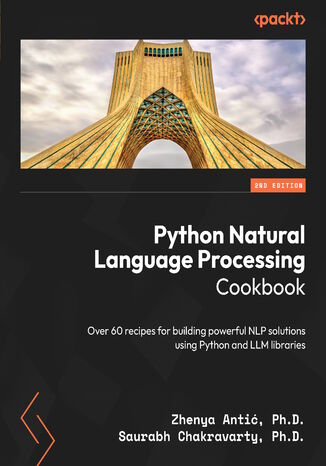
Zhenya Antić
Python is the most widely used language for natural language processing (NLP) thanks to its extensive tools and libraries for analyzing text and extracting computer-usable data. This book will take you through a range of techniques for text processing, from basics such as parsing the parts of speech to complex topics such as topic modeling, text classification, and visualization.Starting with an overview of NLP, the book presents recipes for dividing text into sentences, stemming and lemmatization, removing stopwords, and parts of speech tagging to help you to prepare your data. You’ll then learn ways of extracting and representing grammatical information, such as dependency parsing and anaphora resolution, discover different ways of representing the semantics using bag-of-words, TF-IDF, word embeddings, and BERT, and develop skills for text classification using keywords, SVMs, LSTMs, and other techniques. As you advance, you’ll also see how to extract information from text, implement unsupervised and supervised techniques for topic modeling, and perform topic modeling of short texts, such as tweets. Additionally, the book shows you how to develop chatbots using NLTK and Rasa and visualize text data.By the end of this NLP book, you’ll have developed the skills to use a powerful set of tools for text processing.
Zhenya Antić, Saurabh Chakravarty, Edward A. Fox
Harness the power of Natural Language Processing (NLP) to overcome real-world text analysis challenges with this recipe-based roadmap written by two seasoned NLP experts with vast experience transforming various industries with their NLP prowess.You’ll be able to make the most of the latest NLP advancements, including large language models (LLMs), and leverage their capabilities through Hugging Face transformers. Through a series of hands-on recipes, you’ll master essential techniques such as extracting entities and visualizing text data. The authors will expertly guide you through building pipelines for sentiment analysis, topic modeling, and question-answering using popular libraries like spaCy, Gensim, and NLTK. You’ll also learn to implement RAG pipelines to draw out precise answers from a text corpus using LLMs.This second edition expands your skillset with new chapters on cutting-edge LLMs like GPT-4, Natural Language Understanding (NLU), and Explainable AI (XAI)—fostering trust in your NLP models.By the end of this book, you'll be equipped with the skills to apply advanced text processing techniques, use pre-trained transformer models, build custom NLP pipelines to extract valuable insights from text data to drive informed decision-making.
Python Network Programming. Conquer all your networking challenges with the powerful Python language
Abhishek Ratan, Eric Chou, Pradeeban Kathiravelu, Dr....
This Learning Path highlights major aspects of Python network programming such as writing simple networking clients, creating and deploying SDN and NFV systems, and extending your network with Mininet. You’ll also learn how to automate legacy and the latest network devices. As you progress through the chapters, you’ll use Python for DevOps and open source tools to test, secure, and analyze your network. Toward the end, you'll develop client-side applications, such as web API clients, email clients, SSH, and FTP, using socket programming.By the end of this Learning Path, you will have learned how to analyze a network's security vulnerabilities using advanced network packet capture and analysis techniques. This Learning Path includes content from the following Packt products:• Practical Network Automation by Abhishek Ratan • Mastering Python Networking by Eric Chou • Python Network Programming Cookbook, Second Edition by Pradeeban Kathiravelu, Dr. M. O. Faruque Sarker
Pradeeban Kathiravelu, Gary Berger, Dr. M. O....
Python Network Programming Cookbook - Second Edition highlights the major aspects of network programming in Python, starting from writing simple networking clients to developing and deploying complex Software-Defined Networking (SDN) and Network Functions Virtualization (NFV) systems. It creates the building blocks for many practical web and networking applications that rely on various networking protocols. It presents the power and beauty of Python to solve numerous real-world tasks in the area of network programming, network and system administration, network monitoring, and web-application development.In this edition, you will also be introduced to network modelling to build your own cloud network. You will learn about the concepts and fundamentals of SDN and then extend your network with Mininet. Next, you’ll find recipes on Authentication, Authorization, and Accounting (AAA) and open and proprietary SDN approaches and frameworks. You will also learn to configure the Linux Foundation networking ecosystem and deploy and automate your networks with Python in the cloud and the Internet scale.By the end of this book, you will be able to analyze your network security vulnerabilities using advanced network packet capture and analysis techniques.
Marcel Neidinger
Network automation offers a powerful new way of changing your infrastructure network. Gone are the days of manually logging on to different devices to type the same configuration commands over and over again. With this book, you'll find out how you can automate your network infrastructure using Python.You'll get started on your network automation journey with a hands-on introduction to the network programming basics to complement your infrastructure knowledge. You'll learn how to tackle different aspects of network automation using Python programming and a variety of open source libraries. In the book, you'll learn everything from templating, testing, and deploying your configuration on a device-by-device basis to using high-level REST APIs to manage your cloud-based infrastructure. Finally, you'll see how to automate network security with Cisco’s Firepower APIs.By the end of this Python network programming book, you'll have not only gained a holistic overview of the different methods to automate the configuration and maintenance of network devices, but also learned how to automate simple to complex networking tasks and overcome common network programming challenges.
Python ninja. 70 sekretnych receptur i taktyk programistycznych
Cody Jackson
Python jest językiem, którego można się nauczyć stosunkowo łatwo - a potem dość szybko przejść do praktyki. To duża zaleta: nic tak nie motywuje do dalszej pracy, jak pierwsze sukcesy na wczesnym etapie. Niemniej wielu nawet dość doświadczonych programistów Pythona nie wykorzystuje najlepszych cech tego języka. Ich aplikacje mogłyby być bardziej niezawodne, a kod - czystszy. Co gorsza, wiele ze znakomitych narzędzi i technologii powiązanych z Pythonem nie przebiło się do ogólnej świadomości społeczności skupionej wokół języka, przez co nie wykorzystuje się w pełni ich możliwości. Celem tej książki jest rozwiązanie tego problemu. To rzecz przeznaczona dla programistów Pythona, którzy chcą znacząco poprawić jakość swoich aplikacji. Wyjaśniono tu mało znane lub błędnie rozumiane aspekty implementacji modułów standardowej biblioteki Pythona. Starannie opisano dekoratory, menedżery kontekstu, współprogramy i generatory oraz szczegóły wewnętrznego działania metod specjalnych. Pokazano alternatywne powłoki interaktywne, które mogą okazać się dużym ułatwieniem podczas kodowania. Ciekawym elementem książki jest prezentacja projektu PyPy, dzięki któremu można zapewnić współbieżność kodu. Nie zabrakło przydatnych informacji o tworzeniu dokumentacji kodu Pythona. Dzięki tej książce między innymi: zrozumiesz różnice między plikami .py i .pyc wykorzystasz współprogramy do symulowania wielowątkowości zastosujesz moduł decimal do lepszego prowadzenia działań na liczbach zmiennoprzecinkowych zgłębisz tajniki podinterpreterów poprawiających współbieżność w Pythonie poprawisz funkcjonalność programu za pomocą dekoratorów Python - łatwiejszy, niż sądzisz, potężniejszy, niż myślisz!
Python. Nowoczesne programowanie w prostych krokach. Wydanie II
Bill Lubanovic
Python nie jest językiem idealnym, jednak przybywa programistów, którzy uważają go za bliski ideału. Wyróżnia się prostotą i wszechstronnością. Jest wdzięcznym narzędziem do badania danych i tworzenia systemów sztucznej inteligencji, uwielbiają go analitycy, ekonomiści i naukowcy. Może posłużyć do tworzenia stron WWW czy aplikacji specjalnego przeznaczenia. Python należy do najbardziej spójnych i czytelnych języków programowania. Jest przykładem całkiem udanego kompromisu pomiędzy prostotą, łatwością przyswajania i wyjątkową skutecznością. Z pewnością warto się go nauczyć, jednak od początku dobrze jest wpoić sobie nawyki pisania kodu nowoczesnego, wysokiej jakości, zgodnego z dobrą praktyką. Oto znakomity, przystępny i świetnie napisany podręcznik do nauki Pythona. Opisuje podstawy kodu i struktur danych i stopniowo wprowadza bardziej zaawansowane zagadnienia, takie jak praca z bazami danych i stronami WWW, podstawy działania chmury obliczeniowej, uczenia maszynowego i strumieniowania zdarzeń. Poza standardową biblioteką Pythona przedstawiono tu przydatne zewnętrzne pakiety, dokładniej opisano te najbardziej pomocne. Omówiono dobre praktyki tworzenia, testowania i diagnozowania kodu. Książka zawiera też mnóstwo wskazówek i przykładów kodu. Wyjaśnia pewne szczególne funkcjonalności Pythona, których stosowanie jest o wiele lepszym rozwiązaniem niż adaptowanie technik z innych języków. Nawet jeśli dziś o programowaniu wiesz mniej niż niewiele, dzięki temu podręcznikowi staniesz się prawdziwym pythonowcem! W tej książce między innymi: podstawy Pythona oraz funkcje, moduły i pakiety programowanie zorientowane obiektowo praca z bazami danych: relacyjnymi i NoSQL klienty internetowe, serwery, interfejsy API i usługi zarządzanie programami, procesami i wątkami implementacja współbieżności i komunikacji sieciowej Problemy? Rozwiąż je po pythonowsku!
Steven F. Lott, Dusty Phillips
Python Object-Oriented Programming, Fourth Edition is a practical guide to advancing your OOP skills with modern Python. Going beyond the fundamentals, it helps you work with Python as an OOP language, explore both common and advanced design patterns, and apply these concepts to data manipulation and testing of complex OOP systems. Each chapter features newly written open-ended exercises as well as a real-world case study, aligned with the improvements in Python 3.11—bringing faster execution and memory efficiency to your applications.Authors Steven F. Lott and Dusty Phillips provide a comprehensive, illustrative tour of important OOP concepts, such as inheritance, composition, and polymorphism, showing how they integrate with Python’s classes and data structures to facilitate good design. The book also introduces two powerful automated testing systems, unittest and pytest, and explores Python's concurrent programming ecosystem in depth.By the end of the book, you’ll have a thorough understanding of how to think about and apply object-oriented principles using Python syntax to create robust and reliable programs.
Python Penetration Testing Essentials. Techniques for ethical hacking with Python - Second Edition
Mohit Raj
This book gives you the skills you need to use Python for penetration testing (pentesting), with the help of detailed code examples. We start by exploring the basics of networking with Python and then proceed to network hacking. Then, you will delve into exploring Python libraries to perform various types of pentesting and ethical hacking techniques. Next, we delve into hacking the application layer, where we start by gathering information from a website. We then move on to concepts related to website hacking—such as parameter tampering, DDoS, XSS, and SQL injection.By reading this book, you will learn different techniques and methodologies that will familiarize you with Python pentesting techniques, how to protect yourself, and how to create automated programs to find the admin console, SQL injection, and XSS attacks.
Christopher Duffy, Mohit Raj, Cameron Buchanan, Andrew...
Cybercriminals are always one step ahead, when it comes to tools and techniques. This means you need to use the same tools and adopt the same mindset to properly secure your software. This course shows you how to do just that, demonstrating how effective Python can be for powerful pentesting that keeps your software safe. Comprising of three key modules, follow each one to push your Python and security skills to the next level.In the first module, we’ll show you how to get to grips with the fundamentals. This means you’ll quickly find out how to tackle some of the common challenges facing pentesters using custom Python tools designed specifically for your needs. You’ll also learn what tools to use and when, giving you complete confidence when deploying your pentester tools to combat any potential threat.In the next module you’ll begin hacking into the application layer. Covering everything from parameter tampering, DDoS, XXS and SQL injection, it will build on the knowledge and skills you learned in the first module to make you an even more fluent security expert.Finally in the third module, you’ll find more than 60 Python pentesting recipes. We think this will soon become your trusted resource for any pentesting situation.This Learning Path combines some of the best that Packt has to offer in one complete, curated package. It includes content from the following Packt products:? Learning Penetration Testing with Python by Christopher Duffy? Python Penetration Testing Essentials by Mohit? Python Web Penetration Testing Cookbook by Cameron Buchanan,Terry Ip, Andrew Mabbitt, Benjamin May and Dave Mound
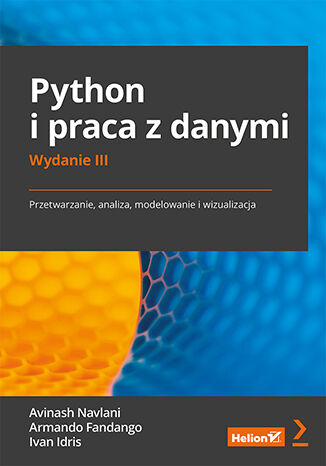
Python. Podstawy nauki o danych. Wydanie II
Alberto Boschetti, Luca Massaron
Nauka o danych jest nową, interdyscyplinarną dziedziną, funkcjonującą na pograniczu algebry liniowej, modelowania statystycznego, lingwistyki komputerowej, uczenia maszynowego oraz metod akumulacji danych. Jest przydatna między innymi dla analityków biznesowych, statystyków, architektów oprogramowania i osób zajmujących się sztuczną inteligencją. Szczególnie praktycznym narzędziem dla tych specjalistów jest język Python, który zapewnia doskonałe środowisko do analizy danych, uczenia maszynowego i algorytmicznego rozwiązywania problemów. Niniejsza książka jest doskonałym wprowadzeniem do nauki o danych. Jej autorzy wskażą Ci prostą i szybką drogę do rozwiązywania różnych problemów z tego obszaru za pomocą Pythona oraz powiązanych z nim pakietów do analizy danych i uczenia maszynowego. Dzięki lekturze przejdziesz przez kolejne etapy modyfikowania i wstępnego przetwarzania danych, poznając przy tym podstawowe operacje związane z wczytywaniem danych, przekształcaniem ich, poprawianiem na potrzeby analiz, eksplorowaniem i przetwarzaniem. Poza podstawami opanujesz też zagadnienia uczenia maszynowego, w tym uczenia głębokiego, techniki analizy grafów oraz wizualizacji danych. Najważniejsze zagadnienia przedstawione w książce: konfiguracja środowiska Jupyter Notebook najważniejsze operacje stosowane w nauce o danych potoki danych i uczenie maszynowe wprowadzenie do grafów i wizualizacje biblioteki i pakiety Pythona służące do badań danych Nauka o danych — fascynujące algorytmy i potężne grafy! Alberto Boschetti specjalizuje się w przetwarzaniu sygnałów i statystyce. Jest doktorem inżynierii telekomunikacyjnej. Zajmuje się przetwarzaniem języków naturalnych, analityką behawioralną, uczeniem maszynowym i przetwarzaniem rozproszonym. Luca Massaron specjalizuje się w statystycznych analizach wieloczynnikowych, uczeniu maszynowym, statystyce, eksploracji danych i algorytmice. Pasjonuje się potencjałem, jaki drzemie w nauce o danych.
Daniel Furtado, Marcus Pennington
Python is a very powerful, high-level, object-oriented programming language. It's known for its simplicity and huge community support. Python Programming Blueprints will help you build useful, real-world applications using Python.In this book, we will cover some of the most common tasks that Python developers face on a daily basis, including performance optimization and making web applications more secure. We will familiarize ourselves with the associated software stack and master asynchronous features in Python. We will build a weather application using command-line parsing. We will then move on to create a Spotify remote control where we'll use OAuth and the Spotify Web API. The next project will cover reactive extensions by teaching you how to cast votes on Twitter the Python way. We will also focus on web development by using the famous Django framework to create an online game store. We will then create a web-based messenger using the new Nameko microservice framework. We will cover topics like authenticating users and, storing messages in Redis.By the end of the book, you will have gained hands-on experience in coding with Python.
Sai Yamanoor, Srihari Yamanoor
Raspberry Pi Zero is a super-small and super-affordable product from Raspberry Pi that is packed with a plethora of features and has grabbed the notice of programmers, especially those who use Python. This step-by-step guide will get you developing practical applications in Python using a Raspberry Pi Zero. It will become a valuable resource as you learn the essential details of interfacing sensors and actuators to a Raspberry Pi, as well as acquiring and displaying data. You will get started by writing a Python program that blinks an LED at 1-second intervals. Then you will learn to write simple logic to execute tasks based upon sensor data (for example, to control a motor) and retrieve data from the web (such as to check e-mails to provide a visual alert). Finally, you will learn to build a home automation system with Python where different appliances are controlled using the Raspberry Pi. The examples discussed in each chapter of this book culminate in a project that help improve the quality of people’s lives.