
Python
W kategorii Python zostały zebrane podręczniki poruszające tematykę programowania z zastosowaniem praktycznie niezależnego sprzętowo, dostępnego na licencji Open Source języka. Książki przedstawią Wam wszechstronności i elastyczności Pythona a także różne typy tworzenia kodu poprzez programowanie strukturalne, obiektowe czy funkcjonalne.
Nauczycie się tworzyć aplikacje sieciowe o dowolnym przeznaczeniu, komunikujące się z systemami operacyjnymi, lub korzystające z baz danych. Techniki analizy składni, przetwarzanie tekstu czy rozłożenie obciążenia programu na wiele wątków i procesów przestanie być problematyczne.
Michael Dorman
This book is intended for anyone who wants to learn how to efficiently analyze geospatial data with R, including GIS analysts, researchers, educators, and students who work with spatial data and who are interested in expanding their capabilities through programming. The book assumes familiarity with the basic geographic information concepts (such as spatial coordinates), but no prior experience with R and/or programming is required. By focusing on R exclusively, you will not need to depend on any external software—a working installation of R is all that is necessary to begin.
Lentin Joseph
Robot Operating System (ROS) is one of the most popular robotics software frameworks in research and industry. It has various features for implementing different capabilities in a robot without implementing them from scratch.This book starts by showing you the fundamentals of ROS so you understand the basics of differential robots. Then, you'll learn about robot modeling and how to design and simulate it using ROS. Moving on, we'll design robot hardware and interfacing actuators. Then, you'll learn to configure and program depth sensors and LIDARs using ROS. Finally, you'll create a GUI for your robot using the Qt framework. By the end of this tutorial, you'll have a clear idea of how to integrate and assemble everything into a robot and how to bundle the software package.
Joshua N. Milligan
Tableau 2025 marks a new era in data visualization and analysis, bringing together advanced AI integrations and dynamic user experiences. This sixth edition, written by Tableau Visionary and Zen Master Joshua Miligan, is an end-to-end guide to mastering the latest innovations in Tableau that transform raw data into actionable insights.This edition introduces groundbreaking features like Tableau AI (including Tableau Pulse and Tableau Agent), enhancing your analytical capabilities with AI-driven data exploration and automated insights. With detailed walkthroughs, you’ll learn to build dynamic dashboards that respond to your data in real time and work with sophisticated AI functionalities that predict trends and model scenarios.Whether you're a seasoned data professional or new to Tableau, this book provides the tools you need to leverage Tableau’s full potential. From integrating diverse data sources using the enhanced data model to employing advanced geospatial functions for detailed mapping, every chapter is packed with expert knowledge and practical applications designed to put powerful analytics at your fingertips.*Email sign-up and proof of purchase required
Learning Website Development with Django
Ayman Hourieh
Being a beginner's guide this book has a very simple and clear approach. It is a practical guide that will help you learn the features of Django and help you build a dynamic website using those features. This book is for web developers who want to see how to build a complete site with Web 2.0 features, using the power of a proven and popular development system, but do not necessarily want to learn how a complete framework functions in order to do this. Basic knowledge of Python development is required for this book, but no knowledge of Django is expected.
Lepszy kod w Pythonie. Przewodnik dla aspirujących ekspertów
David Mertz
Wyjdź poza kod Pythona, który "w dużej mierze działa", do kodu, który jest ekspresyjny, solidny i wydajny Python jest zapewne najczęściej używanym językiem programowania na świecie, od nauczania w szkołach podstawowych, przez codzienne tworzenie stron internetowych, aż po najbardziej zaawansowane badania naukowe. Choć każde zadanie w Pythonie można wykonać na wiele różnych sposobów, niektóre z nich są błędne, nieeleganckie lub nieefektywne. Lepszy kod w Pythonie to przewodnik po programowaniu "pythonicznym", zbiór najlepszych praktyk, technik i niuansów, które łatwo przeoczyć, zwłaszcza gdy mamy nawyki zapożyczone z innych języków programowania. Autor David Mertz prezentuje konkretne i zwięzłe przykłady rozmaitych nieporozumień, pułapek i złych nawyków. Wyjaśnia, dlaczego niektóre praktyki są lepsze od innych, bazując na swoim ponad 25-letnim doświadczeniu jako uznany członek społeczności Pythona. Rozdziały ułożone są w kolejności rosnącej według stopnia zaawansowania, a każdy z nich szczegółowo omawia powiązane grupy pojęć. Nie ma znaczenia, czy dopiero zaczynasz pracę z Pythonem, czy też jesteś doświadczonym deweloperem przesuwającym granice swojego kodu w Pythonie. Ta książka jest dla każdego, kto chce być bardziej pythoniczny pisząc lepszy kod w języku Python. Dr David Mertz od ponad 25 lat jest członkiem społeczności Pythona i uczył Pythona naukowców, deweloperów z doświadczeniem w innych językach, a także początkujących programistów. David przez sześć lat był dyrektorem organizacji Python Software Foundation (PSF) i nadal przewodniczy lub należy do różnych grup roboczych PSF. Jest autorem kilku książek technicznych i wygłaszał wykłady na licznych międzynarodowych konferencjach programistycznych. "Moje wysokie oczekiwania wobec tej wciągającej książki o Pythonie zostały przekroczone: oferuje ona mnóstwo cennych informacji dla średnich i zaawansowanych programistów pozwalając im udoskonalić swoje umiejętności w Pythonie, obszernie dzieli się cennym doświadczeniem związanym z wykorzystywaniem i nauczaniem języka, a przy tym jest zwięzła, łatwa w czytaniu i pisana stylem konwersacyjnym. Alex Martelli Używaj właściwego rodzaju pętli w Pythonie Poznaj tajniki obiektów zmiennych i niezmiennych Uzyskaj porady od ekspertów w celu uniknięcia kłopotów w Pythonie Zbadaj zaawansowane tematy dotyczące Pythona Poruszaj się po "atrakcyjnych uciążliwościach", które istnieją w Pythonie Poznaj najbardziej przydatne struktury danych w Pythonie i dowiedz się, jak uniknąć ich niewłaściwego wykorzystywania Unikaj błędów związanych z bezpieczeństwem Poznaj podstawy obliczeń numerycznych, w tym liczby zmiennoprzecinkowe i numeryczne typy danych
Prashant Kumar Mishra
Azure Synapse Analytics, which Microsoft describes as the next evolution of Azure SQL Data Warehouse, is a limitless analytics service that brings enterprise data warehousing and big data analytics together. With this book, you'll learn how to discover insights from your data effectively using this platform.The book starts with an overview of Azure Synapse Analytics, its architecture, and how it can be used to improve business intelligence and machine learning capabilities. Next, you'll go on to choose and set up the correct environment for your business problem. You'll also learn a variety of ways to ingest data from various sources and orchestrate the data using transformation techniques offered by Azure Synapse. Later, you'll explore how to handle both relational and non-relational data using the SQL language. As you progress, you'll perform real-time streaming and execute data analysis operations on your data using various languages, before going on to apply ML techniques to derive accurate and granular insights from data. Finally, you'll discover how to protect sensitive data in real time by using security and privacy features.By the end of this Azure book, you'll be able to build end-to-end analytics solutions while focusing on data prep, data management, data warehousing, and AI tasks.
Linear Regression With Python. A Tutorial Introduction to the Mathematics of Regression Analysis
James V Stone
This book offers a detailed yet approachable introduction to linear regression, blending mathematical theory with Python-based practical applications. Beginning with fundamentals, it explains the best-fitting line, regression and causation, and statistical measures like variance, correlation, and the coefficient of determination. Clear examples and Python code ensure readers can connect theory to implementation.As the journey continues, readers explore statistical significance through concepts like t-tests, z-tests, and p-values, understanding how to assess slopes, intercepts, and overall model fit. Advanced chapters cover multivariate regression, introducing matrix formulations, the best-fitting plane, and methods to handle multiple variables. Topics such as Bayesian regression, nonlinear models, and weighted regression are explored in depth, with step-by-step coding guides for hands-on practice.The final sections tie together these techniques with maximum likelihood estimation and practical summaries. Appendices provide resources such as matrix tutorials, key equations, and mathematical symbols. Designed for both beginners and professionals, this book ensures a structured learning experience. Basic mathematical knowledge or foundation is recommended.
Paul Iusztin, Maxime Labonne, Julien Chaumond, Hamza...
Artificial intelligence has undergone rapid advancements, and Large Language Models (LLMs) are at the forefront of this revolution. This LLM book offers insights into designing, training, and deploying LLMs in real-world scenarios by leveraging MLOps best practices. The guide walks you through building an LLM-powered twin that’s cost-effective, scalable, and modular. It moves beyond isolated Jupyter notebooks, focusing on how to build production-grade end-to-end LLM systems.Throughout this book, you will learn data engineering, supervised fine-tuning, and deployment. The hands-on approach to building the LLM Twin use case will help you implement MLOps components in your own projects. You will also explore cutting-edge advancements in the field, including inference optimization, preference alignment, and real-time data processing, making this a vital resource for those looking to apply LLMs in their projects.By the end of this book, you will be proficient in deploying LLMs that solve practical problems while maintaining low-latency and high-availability inference capabilities. Whether you are new to artificial intelligence or an experienced practitioner, this book delivers guidance and practical techniques that will deepen your understanding of LLMs and sharpen your ability to implement them effectively.*Email sign-up and proof of purchase required
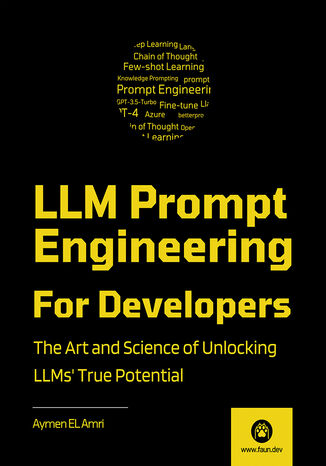
LLM Prompt Engineering for Developers. The Art and Science of Unlocking LLMs' True Potential
Aymen El Amri
LLM Prompt Engineering For Developers begins by laying the groundwork with essential principles of natural language processing (NLP), setting the stage for more complex topics. It methodically guides readers through the initial steps of understanding how large language models work, providing a solid foundation that prepares them for the more intricate aspects of prompt engineering.As you proceed, the book transitions into advanced strategies and techniques that reveal how to effectively interact with and utilize these powerful models. From crafting precise prompts that enhance model responses to exploring innovative methods like few-shot and zero-shot learning, this resource is designed to unlock the full potential of language model technology.This book not only teaches the technical skills needed to excel in the field but also addresses the broader implications of AI technology. It encourages thoughtful consideration of ethical issues and the impact of AI on society. By the end of this book, readers will master the technical aspects of prompt engineering & appreciate the importance of responsible AI development, making them well-rounded professionals ready to focus on the advancement of this cutting-edge technology.
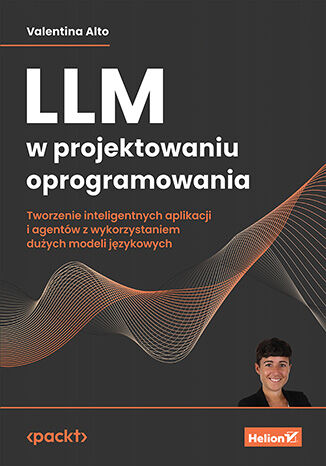
Valentina Alto
Duże modele językowe (LLM) stały się technologicznym przełomem. Ich wszechstronność i funkcjonalność sprawiły, że coraz częściej mówi się o nowej erze inteligentnie działających urządzeń i aplikacji. Umiejętność zastosowania LLM we własnych projektach już dziś jest koniecznością dla wielu projektantów i programistów. Dzięki tej książce opanujesz podstawowe koncepcje związane z użyciem LLM. Poznasz unikatowe cechy i mocne strony kilku najważniejszych modeli (w tym GPT, Gemini, Falcon). Następnie dowiesz się, w jaki sposób LangChain, lekki framework Pythona, pozwala na projektowanie inteligentnych agentów do przetwarzania danych o nieuporządkowanej strukturze. Znajdziesz tu również informacje dotyczące dużych modeli podstawowych, które wykraczają poza obsługę języka i potrafią wykonywać różne zadania związane na przykład z grafiką i dźwiękiem. Na koniec zgłębisz zagadnienia dotyczące ryzyka związanego z LLM, a także poznasz techniki uniemożliwiania tym modelom potencjalnie szkodliwych działań w aplikacji. Najciekawsze zagadnienia: architektura dużych modeli językowych unikatowe funkcje LLM komponenty służące do koordynacji sztucznej inteligencji, w tym tworzenia frontendu użycie wiedzy nieparametrycznej i wektorowych baz danych dostrajanie dużych modeli językowych do własnych potrzeb odpowiedzialność i etyka w systemach korzystających z LLM Odkryj, jak łatwo model generatywnej AI zintegruje się z Twoją aplikacją! O książce w mediach: Eksperyment Myślowy - recenzja książki
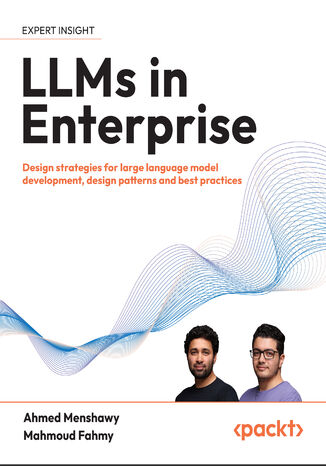
Ahmed Menshawy, Mahmoud Fahmy
The integration of large language models (LLMs) into enterprise applications is transforming how businesses use AI to drive smarter decisions and efficient operations. LLMs in Enterprise is your practical guide to bringing these capabilities into real-world business contexts. It demystifies the complexities of LLM deployment and provides a structured approach for enhancing decision-making and operational efficiency with AI.Starting with an introduction to the foundational concepts, the book swiftly moves on to hands-on applications focusing on real-world challenges and solutions. You’ll master data strategies and explore design patterns that streamline the optimization and deployment of LLMs in enterprise environments. From fine-tuning techniques to advanced inferencing patterns, the book equips you with a toolkit for solving complex challenges and driving AI-led innovation in business processes.By the end of this book, you’ll have a solid grasp of key LLM design patterns and how to apply them to enhance the performance and scalability of your generative AI solutions.*Email sign-up and proof of purchase required
Giuseppe Bonaccorso
In this book, you will learn all the important machine learning algorithms that are commonly used in the field of data science. These algorithms can be used for supervised as well as unsupervised learning, reinforcement learning, and semi-supervised learning. The algorithms that are covered in this book are linear regression, logistic regression, SVM, naïve Bayes, k-means, random forest, TensorFlow and feature engineering.In this book, you will how to use these algorithms to resolve your problems, and how they work. This book will also introduce you to natural language processing and recommendation systems, which help you to run multiple algorithms simultaneously.On completion of the book, you will know how to pick the right machine learning algorithm for clustering, classification, or regression for your problem
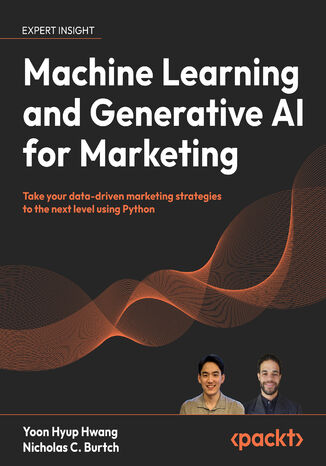
Yoon Hyup Hwang, Nicholas C. Burtch
In the dynamic world of marketing, the integration of artificial intelligence (AI) and machine learning (ML) is no longer just an advantage—it's a necessity. Moreover, the rise of generative AI (GenAI) helps with the creation of highly personalized, engaging content that resonates with the target audience.This book provides a comprehensive toolkit for harnessing the power of GenAI to craft marketing strategies that not only predict customer behaviors but also captivate and convert, leading to improved cost per acquisition, boosted conversion rates, and increased net sales.Starting with the basics of Python for data analysis and progressing to sophisticated ML and GenAI models, this book is your comprehensive guide to understanding and applying AI to enhance marketing strategies. Through engaging content & hands-on examples, you'll learn how to harness the capabilities of AI to unlock deep insights into customer behaviors, craft personalized marketing messages, and drive significant business growth. Additionally, you'll explore the ethical implications of AI, ensuring that your marketing strategies are not only effective but also responsible and compliant with current standardsBy the conclusion of this book, you'll be equipped to design, launch, and manage marketing campaigns that are not only successful but also cutting-edge.
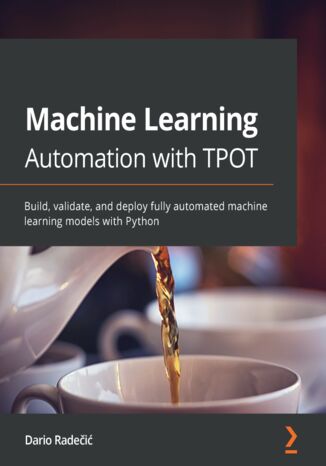
Dario Radečić
The automation of machine learning tasks allows developers more time to focus on the usability and reactivity of the software powered by machine learning models. TPOT is a Python automated machine learning tool used for optimizing machine learning pipelines using genetic programming. Automating machine learning with TPOT enables individuals and companies to develop production-ready machine learning models cheaper and faster than with traditional methods.With this practical guide to AutoML, developers working with Python on machine learning tasks will be able to put their knowledge to work and become productive quickly. You'll adopt a hands-on approach to learning the implementation of AutoML and associated methodologies. Complete with step-by-step explanations of essential concepts, practical examples, and self-assessment questions, this book will show you how to build automated classification and regression models and compare their performance to custom-built models. As you advance, you'll also develop state-of-the-art models using only a couple of lines of code and see how those models outperform all of your previous models on the same datasets.By the end of this book, you'll have gained the confidence to implement AutoML techniques in your organization on a production level.
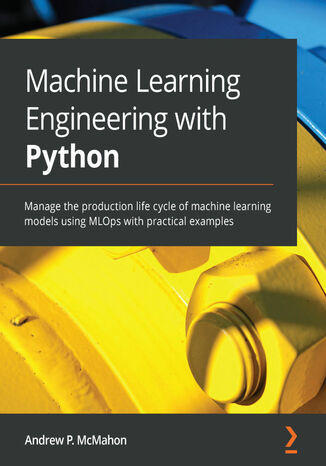
Andrew P. McMahon
Machine learning engineering is a thriving discipline at the interface of software development and machine learning. This book will help developers working with machine learning and Python to put their knowledge to work and create high-quality machine learning products and services.Machine Learning Engineering with Python takes a hands-on approach to help you get to grips with essential technical concepts, implementation patterns, and development methodologies to have you up and running in no time. You'll begin by understanding key steps of the machine learning development life cycle before moving on to practical illustrations and getting to grips with building and deploying robust machine learning solutions. As you advance, you'll explore how to create your own toolsets for training and deployment across all your projects in a consistent way. The book will also help you get hands-on with deployment architectures and discover methods for scaling up your solutions while building a solid understanding of how to use cloud-based tools effectively. Finally, you'll work through examples to help you solve typical business problems.By the end of this book, you'll be able to build end-to-end machine learning services using a variety of techniques and design your own processes for consistently performant machine learning engineering.
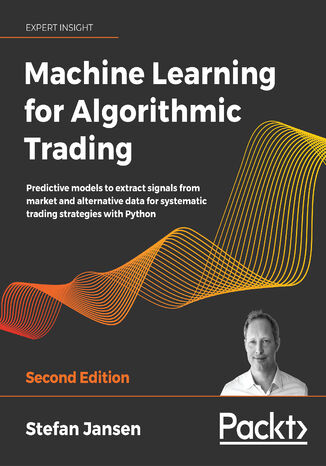
Stefan Jansen
The explosive growth of digital data has boosted the demand for expertise in trading strategies that use machine learning (ML). This revised and expanded second edition enables you to build and evaluate sophisticated supervised, unsupervised, and reinforcement learning models.This book introduces end-to-end machine learning for the trading workflow, from the idea and feature engineering to model optimization, strategy design, and backtesting. It illustrates this by using examples ranging from linear models and tree-based ensembles to deep-learning techniques from cutting edge research.This edition shows how to work with market, fundamental, and alternative data, such as tick data, minute and daily bars, SEC filings, earnings call transcripts, financial news, or satellite images to generate tradeable signals. It illustrates how to engineer financial features or alpha factors that enable an ML model to predict returns from price data for US and international stocks and ETFs. It also shows how to assess the signal content of new features using Alphalens and SHAP values and includes a new appendix with over one hundred alpha factor examples.By the end, you will be proficient in translating ML model predictions into a trading strategy that operates at daily or intraday horizons, and in evaluating its performance.
Emmanuel Tsukerman
Organizations today face a major threat in terms of cybersecurity, from malicious URLs to credential reuse, and having robust security systems can make all the difference. With this book, you'll learn how to use Python libraries such as TensorFlow and scikit-learn to implement the latest artificial intelligence (AI) techniques and handle challenges faced by cybersecurity researchers.You'll begin by exploring various machine learning (ML) techniques and tips for setting up a secure lab environment. Next, you'll implement key ML algorithms such as clustering, gradient boosting, random forest, and XGBoost. The book will guide you through constructing classifiers and features for malware, which you'll train and test on real samples. As you progress, you'll build self-learning, reliant systems to handle cybersecurity tasks such as identifying malicious URLs, spam email detection, intrusion detection, network protection, and tracking user and process behavior. Later, you'll apply generative adversarial networks (GANs) and autoencoders to advanced security tasks. Finally, you'll delve into secure and private AI to protect the privacy rights of consumers using your ML models. By the end of this book, you'll have the skills you need to tackle real-world problems faced in the cybersecurity domain using a recipe-based approach.
Ben Auffarth
The Python time-series ecosystem is huge and often quite hard to get a good grasp on, especially for time-series since there are so many new libraries and new models. This book aims to deepen your understanding of time series by providing a comprehensive overview of popular Python time-series packages and help you build better predictive systems.Machine Learning for Time-Series with Python starts by re-introducing the basics of time series and then builds your understanding of traditional autoregressive models as well as modern non-parametric models. By observing practical examples and the theory behind them, you will become confident with loading time-series datasets from any source, deep learning models like recurrent neural networks and causal convolutional network models, and gradient boosting with feature engineering.This book will also guide you in matching the right model to the right problem by explaining the theory behind several useful models. You’ll also have a look at real-world case studies covering weather, traffic, biking, and stock market data.By the end of this book, you should feel at home with effectively analyzing and applying machine learning methods to time-series.
Hyatt Saleh
As machine learning algorithms become popular, new tools that optimize these algorithms are also developed. Machine Learning Fundamentals explains you how to use the syntax of scikit-learn. You'll study the difference between supervised and unsupervised models, as well as the importance of choosing the appropriate algorithm for each dataset. You'll apply unsupervised clustering algorithms over real-world datasets, to discover patterns and profiles, and explore the process to solve an unsupervised machine learning problem.The focus of the book then shifts to supervised learning algorithms. You'll learn to implement different supervised algorithms and develop neural network structures using the scikit-learn package. You'll also learn how to perform coherent result analysis to improve the performance of the algorithm by tuning hyperparameters.By the end of this book, you will have gain all the skills required to start programming machine learning algorithms.
Machine Learning Hero. Master Data Science with Python Essentials
Cuantum Technologies LLC
This book takes you on a journey through the world of machine learning, beginning with foundational concepts such as supervised and unsupervised learning, and progressing to advanced topics like feature engineering, hyperparameter tuning, and dimensionality reduction. Each chapter blends theory with practical exercises to ensure a deep understanding of the material.The book emphasizes Python, introducing essential libraries like NumPy, Pandas, Matplotlib, and Scikit-learn, along with deep learning frameworks like TensorFlow and PyTorch. You’ll learn to preprocess data, visualize insights, and build models capable of tackling complex datasets. Hands-on coding examples and exercises reinforce concepts and help bridge the gap between knowledge and application.In the final chapters, you'll work on real-world projects like predictive analytics, clustering, and regression. These projects are designed to provide a practical context for the techniques learned and equip you with actionable skills for data science and AI roles. By the end, you'll be prepared to apply machine learning principles to solve real-world challenges with confidence.
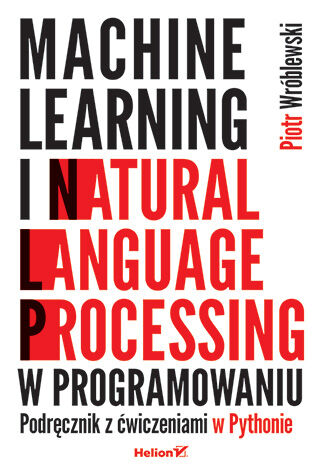
Machine learning i natural language processing w programowaniu. Podręcznik z ćwiczeniami w Pythonie
Piotr Wróblewski
Wejdź na nowy poziom programowania z ML i NLP Sztuczna inteligencja stale się rozwija. Właściwie codziennie słyszymy o jej rosnących możliwościach, nowych osiągnięciach i przyszłości, jaką nam przyniesie. Jednak w tej książce skupiamy się nie na przyszłości, a na teraźniejszości i praktycznym obliczu AI - na usługach, które świadczy już dziś. Większość najciekawszych zastosowań sztucznej inteligencji bazuje na ML (uczenie maszynowe, ang. machine learning), NLP (przetwarzanie języka naturalnego, ang. natural language processing) i architekturze RAG (ang. retrieval augmented generation) zwiększającej możliwości tzw. dużych modeli językowych (LLM, ang. large language model). Stanowią one podwaliny budowy systemów AI, bez których te systemy często wcale nie mogłyby powstać. Do niedawna ML i NLP pozostawały domeną badaczy i specjalistów - znajdowały się poza zasięgiem praktyków programowania. Aktualnie jest inaczej, szybkie komputery, pojemne pamięci RAM i zaawansowane procesory pozwalają stosować te technologie w codziennej pracy programisty. Szczególnie programisty języka Python, do którego są one niemal "naturalnie" przypisane. Mało tego, od kodujących w Pythonie coraz częściej wręcz wymaga się umiejętności znajomości obszaru AI. Tym bardziej warto sięgnąć po ten podręcznik z ćwiczeniami, dzięki któremu między innymi: Dowiesz się, jak używać Pythona do rozwiązywania problemów AI Poznasz tajniki analizy tekstów, analizy sentymentu Zrozumiesz, jak skutecznie używać algorytmów klasyfikacji, regresji i grupowania do rozwiązywania problemów biznesowych Pokonwersujesz z ChatGPT - i to bez wchodzenia na stronę internetową tego serwisu
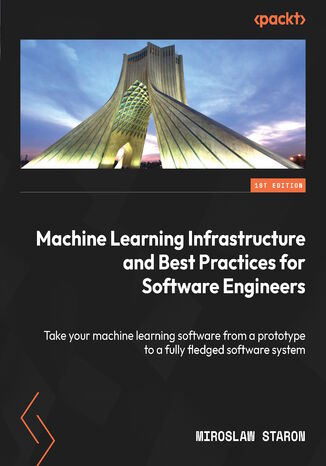
Miroslaw Staron
Although creating a machine learning pipeline or developing a working prototype of a software system from that pipeline is easy and straightforward nowadays, the journey toward a professional software system is still extensive. This book will help you get to grips with various best practices and recipes that will help software engineers transform prototype pipelines into complete software products.The book begins by introducing the main concepts of professional software systems that leverage machine learning at their core. As you progress, you’ll explore the differences between traditional, non-ML software, and machine learning software. The initial best practices will guide you in determining the type of software you need for your product. Subsequently, you will delve into algorithms, covering their selection, development, and testing before exploring the intricacies of the infrastructure for machine learning systems by defining best practices for identifying the right data source and ensuring its quality.Towards the end, you’ll address the most challenging aspect of large-scale machine learning systems – ethics. By exploring and defining best practices for assessing ethical risks and strategies for mitigation, you will conclude the book where it all began – large-scale machine learning software.
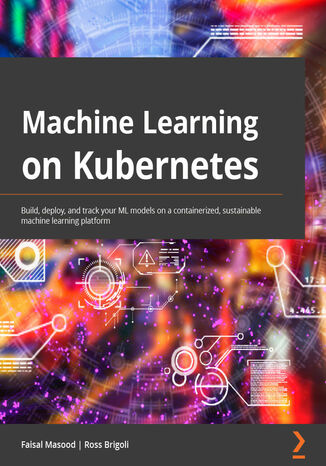
Faisal Masood, Ross Brigoli
MLOps is an emerging field that aims to bring repeatability, automation, and standardization of the software engineering domain to data science and machine learning engineering. By implementing MLOps with Kubernetes, data scientists, IT professionals, and data engineers can collaborate and build machine learning solutions that deliver business value for their organization.You'll begin by understanding the different components of a machine learning project. Then, you'll design and build a practical end-to-end machine learning project using open source software. As you progress, you'll understand the basics of MLOps and the value it can bring to machine learning projects. You will also gain experience in building, configuring, and using an open source, containerized machine learning platform. In later chapters, you will prepare data, build and deploy machine learning models, and automate workflow tasks using the same platform. Finally, the exercises in this book will help you get hands-on experience in Kubernetes and open source tools, such as JupyterHub, MLflow, and Airflow.By the end of this book, you'll have learned how to effectively build, train, and deploy a machine learning model using the machine learning platform you built.
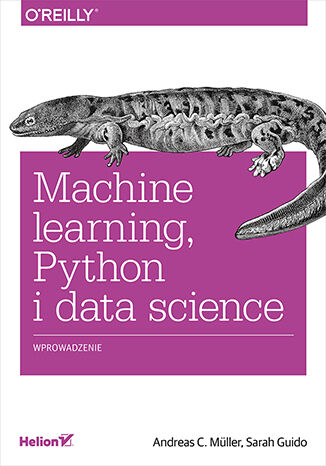
Machine learning, Python i data science. Wprowadzenie
Andreas Müller, Sarah Guido
Uczenie maszynowe kojarzy się z dużymi firmami i rozbudowanymi zespołami. Prawda jest taka, że obecnie można samodzielnie budować zaawansowane rozwiązania uczenia maszynowego i korzystać do woli z olbrzymich zasobów dostępnych danych. Trzeba tylko mieć pomysł i... trochę podstawowej wiedzy. Tymczasem większość opracowań na temat uczenia maszynowego i sztucznej inteligencji wymaga biegłości w zaawansowanej matematyce. Utrudnia to naukę tego zagadnienia, mimo że uczenie maszynowe jest coraz powszechniej stosowane w projektach badawczych i komercyjnych. Ta praktyczna książka ułatwi Ci rozpoczęcie wdrażania rozwiązań rzeczywistych problemów związanych z uczeniem maszynowym. Zawiera przystępne wprowadzenie do uczenia maszynowego i sztucznej inteligencji, a także sposoby wykorzystania Pythona i biblioteki scikit-learn, uwzględniające potrzeby badaczy i analityków danych oraz inżynierów pracujących nad aplikacjami komercyjnymi. Zagadnienia matematyczne ograniczono tu do niezbędnego minimum, zamiast tego skoncentrowano się na praktycznych aspektach algorytmów uczenia maszynowego. Dokładnie opisano, jak konkretnie można skorzystać z szerokiej gamy modeli zaimplementowanych w dostępnych bibliotekach. W książce między innymi: podstawowe informacje o uczeniu maszynowym najważniejsze algorytmy uczenia maszynowego przetwarzanie danych w uczeniu maszynowym ocena modelu i dostrajanie parametrów łańcuchy modeli i hermetyzacja przepływu pracy przetwarzanie danych tekstowych Python i uczenie maszynowe: programowanie do zadań specjalnych!