
Biznes IT
Czy myśleliście kiedyś, w jaki sposób rozpocząć swój biznes w branży IT? Może już prowadzicie własną firmę i Chcecie, aby zaistniała ona w sieci? W tej kategorii znajdziecie książki, w których zawarty jest know-how związany z wieloma rodzajami działalności prowadzonych poprzez internet, czy w inny sposób związanych z nowoczesnymi technologiami w biznesie.
Znajdziecie informacje o systemach zarządzania informacjami o Klientach - popularnych CRM'ach, o zarządzaniu projektami IT, wykorzystaniu potencjału popularnych teraz portali społecznościowych do promocji swojej działalności, czy też poradniki, które pomogą Wam rozwinąć umiejętności pozatechniczne - równie ważne dla Waszych przedsięwzięć.
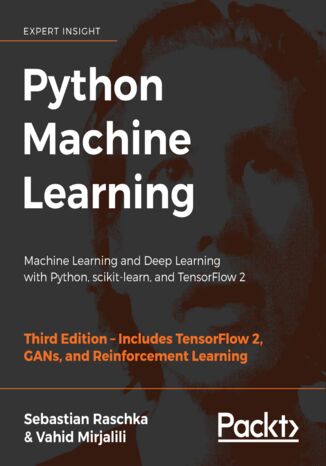
Sebastian Raschka, Vahid Mirjalili
Python Machine Learning, Third Edition is a comprehensive guide to machine learning and deep learning with Python. It acts as both a step-by-step tutorial, and a reference you'll keep coming back to as you build your machine learning systems.Packed with clear explanations, visualizations, and working examples, the book covers all the essential machine learning techniques in depth. While some books teach you only to follow instructions, with this machine learning book, Raschka and Mirjalili teach the principles behind machine learning, allowing you to build models and applications for yourself.Updated for TensorFlow 2.0, this new third edition introduces readers to its new Keras API features, as well as the latest additions to scikit-learn. It's also expanded to cover cutting-edge reinforcement learning techniques based on deep learning, as well as an introduction to GANs. Finally, this book also explores a subfield of natural language processing (NLP) called sentiment analysis, helping you learn how to use machine learning algorithms to classify documents.This book is your companion to machine learning with Python, whether you're a Python developer new to machine learning or want to deepen your knowledge of the latest developments.
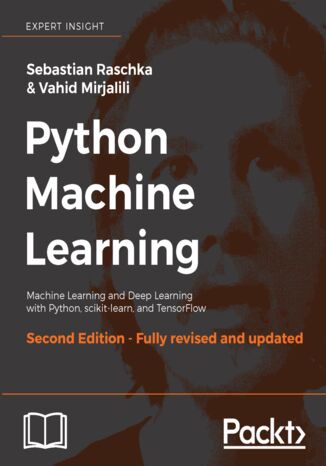
Sebastian Raschka, Jared Huffman, Vahid Mirjalili, Ryan...
Publisher's Note: This edition from 2017 is outdated and is not compatible with TensorFlow 2 or any of the most recent updates to Python libraries. A new third edition, updated for 2020 and featuring TensorFlow 2 and the latest in scikit-learn, reinforcement learning, and GANs, has now been published.Machine learning is eating the software world, and now deep learning is extending machine learning. Understand and work at the cutting edge of machine learning, neural networks, and deep learning with this second edition of Sebastian Raschka’s bestselling book, Python Machine Learning. Using Python's open source libraries, this book offers the practical knowledge and techniques you need to create and contribute to machine learning, deep learning, and modern data analysis.Fully extended and modernized, Python Machine Learning Second Edition now includes the popular TensorFlow 1.x deep learning library. The scikit-learn code has also been fully updated to v0.18.1 to include improvements and additions to this versatile machine learning library. Sebastian Raschka and Vahid Mirjalili’s unique insight and expertise introduce you to machine learning and deep learning algorithms from scratch, and show you how to apply them to practical industry challenges using realistic and interesting examples. By the end of the book, you’ll be ready to meet the new data analysis opportunities.If you’ve read the first edition of this book, you’ll be delighted to find a balance of classical ideas and modern insights into machine learning. Every chapter has been critically updated, and there are new chapters on key technologies. You’ll be able to learn and work with TensorFlow 1.x more deeply than ever before, and get essential coverage of the Keras neural network library, along with updates to scikit-learn 0.18.1.
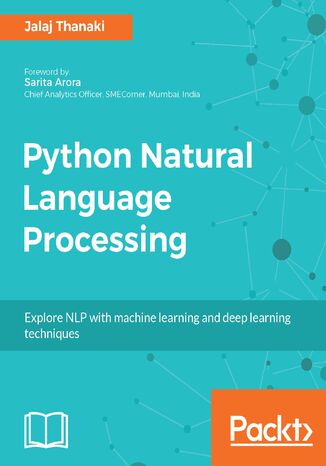
Jalaj Thanaki
This book starts off by laying the foundation for Natural Language Processing and why Python is one of the best options to build an NLP-based expert system with advantages such as Community support, availability of frameworks and so on. Later it gives you a better understanding of available free forms of corpus and different types of dataset. After this, you will know how to choose a dataset for natural language processing applications and find the right NLP techniques to process sentences in datasets and understand their structure. You will also learn how to tokenize different parts of sentences and ways to analyze them. During the course of the book, you will explore the semantic as well as syntactic analysis of text. You will understand how to solve various ambiguities in processing human language and will come across various scenarios while performing text analysis. You will learn the very basics of getting the environment ready for natural language processing, move on to the initial setup, and then quickly understand sentences and language parts. You will learn the power of Machine Learning and Deep Learning to extract information from text data.By the end of the book, you will have a clear understanding of natural language processing and will have worked on multiple examples that implement NLP in the real world.
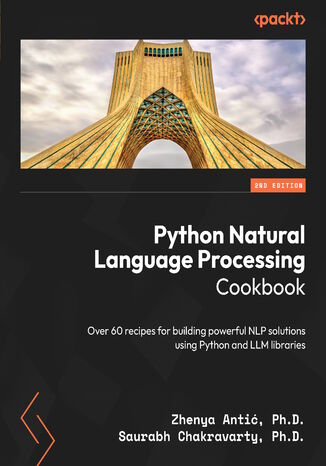
Zhenya Antić, Saurabh Chakravarty, Edward A. Fox
Harness the power of Natural Language Processing (NLP) to overcome real-world text analysis challenges with this recipe-based roadmap written by two seasoned NLP experts with vast experience transforming various industries with their NLP prowess.You’ll be able to make the most of the latest NLP advancements, including large language models (LLMs), and leverage their capabilities through Hugging Face transformers. Through a series of hands-on recipes, you’ll master essential techniques such as extracting entities and visualizing text data. The authors will expertly guide you through building pipelines for sentiment analysis, topic modeling, and question-answering using popular libraries like spaCy, Gensim, and NLTK. You’ll also learn to implement RAG pipelines to draw out precise answers from a text corpus using LLMs.This second edition expands your skillset with new chapters on cutting-edge LLMs like GPT-4, Natural Language Understanding (NLU), and Explainable AI (XAI)—fostering trust in your NLP models.By the end of this book, you'll be equipped with the skills to apply advanced text processing techniques, use pre-trained transformer models, build custom NLP pipelines to extract valuable insights from text data to drive informed decision-making.
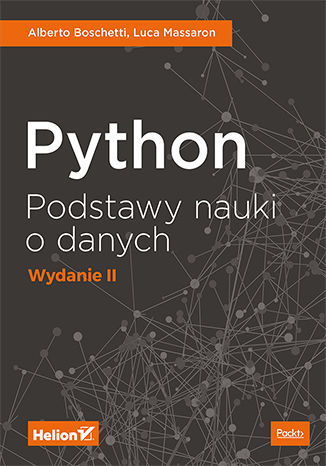
Python. Podstawy nauki o danych. Wydanie II
Alberto Boschetti, Luca Massaron
Nauka o danych jest nową, interdyscyplinarną dziedziną, funkcjonującą na pograniczu algebry liniowej, modelowania statystycznego, lingwistyki komputerowej, uczenia maszynowego oraz metod akumulacji danych. Jest przydatna między innymi dla analityków biznesowych, statystyków, architektów oprogramowania i osób zajmujących się sztuczną inteligencją. Szczególnie praktycznym narzędziem dla tych specjalistów jest język Python, który zapewnia doskonałe środowisko do analizy danych, uczenia maszynowego i algorytmicznego rozwiązywania problemów. Niniejsza książka jest doskonałym wprowadzeniem do nauki o danych. Jej autorzy wskażą Ci prostą i szybką drogę do rozwiązywania różnych problemów z tego obszaru za pomocą Pythona oraz powiązanych z nim pakietów do analizy danych i uczenia maszynowego. Dzięki lekturze przejdziesz przez kolejne etapy modyfikowania i wstępnego przetwarzania danych, poznając przy tym podstawowe operacje związane z wczytywaniem danych, przekształcaniem ich, poprawianiem na potrzeby analiz, eksplorowaniem i przetwarzaniem. Poza podstawami opanujesz też zagadnienia uczenia maszynowego, w tym uczenia głębokiego, techniki analizy grafów oraz wizualizacji danych. Najważniejsze zagadnienia przedstawione w książce: konfiguracja środowiska Jupyter Notebook najważniejsze operacje stosowane w nauce o danych potoki danych i uczenie maszynowe wprowadzenie do grafów i wizualizacje biblioteki i pakiety Pythona służące do badań danych Nauka o danych — fascynujące algorytmy i potężne grafy! Alberto Boschetti specjalizuje się w przetwarzaniu sygnałów i statystyce. Jest doktorem inżynierii telekomunikacyjnej. Zajmuje się przetwarzaniem języków naturalnych, analityką behawioralną, uczeniem maszynowym i przetwarzaniem rozproszonym. Luca Massaron specjalizuje się w statystycznych analizach wieloczynnikowych, uczeniu maszynowym, statystyce, eksploracji danych i algorytmice. Pasjonuje się potencjałem, jaki drzemie w nauce o danych.
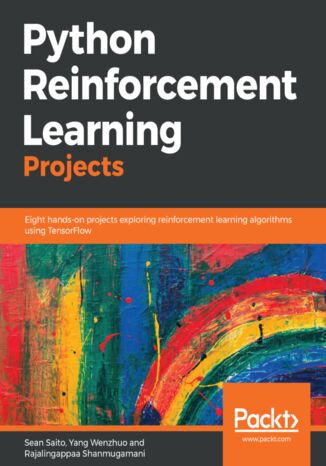
Sean Saito, Yang Wenzhuo , Rajalingappaa Shanmugamani
Reinforcement learning is one of the most exciting and rapidly growing fields in machine learning. This is due to the many novel algorithms developed and incredible results published in recent years.In this book, you will learn about the core concepts of RL including Q-learning, policy gradients, Monte Carlo processes, and several deep reinforcement learning algorithms. As you make your way through the book, you'll work on projects with datasets of various modalities including image, text, and video. You will gain experience in several domains, including gaming, image processing, and physical simulations. You'll explore technologies such as TensorFlow and OpenAI Gym to implement deep learning reinforcement learning algorithms that also predict stock prices, generate natural language, and even build other neural networks.By the end of this book, you will have hands-on experience with eight reinforcement learning projects, each addressing different topics and/or algorithms. We hope these practical exercises will provide you with better intuition and insight about the field of reinforcement learning and how to apply its algorithms to various problems in real life.
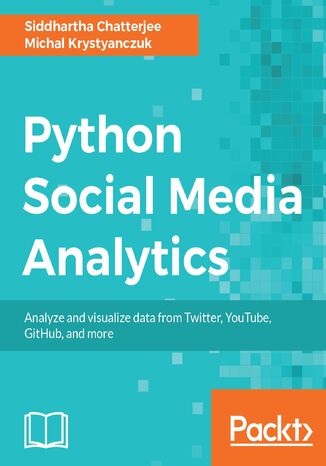
Python Social Media Analytics. Analyze and visualize data from Twitter, YouTube, GitHub, and more
Siddhartha Chatterjee, Michal Krystyanczuk
Social Media platforms such as Facebook, Twitter, Forums, Pinterest, and YouTube have become part of everyday life in a big way. However, these complex and noisy data streams pose a potent challenge to everyone when it comes to harnessing them properly and benefiting from them. This book will introduce you to the concept of social media analytics, and how you can leverage its capabilities to empower your business.Right from acquiring data from various social networking sources such as Twitter, Facebook, YouTube, Pinterest, and social forums, you will see how to clean data and make it ready for analytical operations using various Python APIs. This book explains how to structure the clean data obtained and store in MongoDB using PyMongo. You will also perform web scraping and visualize data using Scrappy and Beautifulsoup. Finally, you will be introduced to different techniques to perform analytics at scale for your social data on the cloud, using Python and Spark. By the end of this book, you will be able to utilize the power of Python to gain valuable insights from social media data and use them to enhance your business processes.
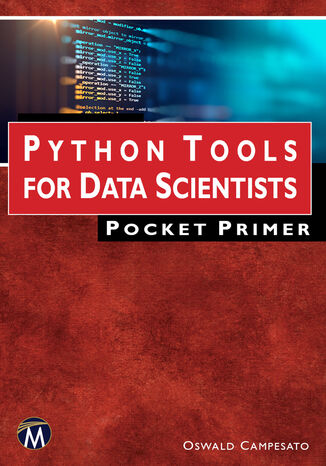
Mercury Learning and Information, Oswald Campesato
This book, part of the best-selling Pocket Primer series, offers a comprehensive introduction to essential Python tools for data scientists. It begins with an overview of Python basics, followed by in-depth coverage of NumPy and Pandas, focusing on their features and applications. The text also addresses the critical tasks of writing regular expressions and performing data cleaning.Further sections delve into data visualization techniques and the use of Sklearn and SciPy, providing practical knowledge and skills for handling complex data analysis tasks. This structured approach ensures that readers gain a complete understanding of the tools and techniques necessary for effective data science.Designed to be accessible yet thorough, this book includes numerous code samples to reinforce learning. Companion files with source code are available for download, making it an invaluable resource for anyone looking to master Python for data science and enhance their data analysis capabilities.
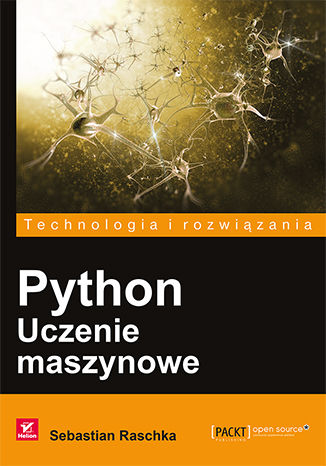
Sebastian Raschka
Sprawdź drugie wydanie tej książki >> --- Uczenie maszynowe, zajmujące się algorytmami analizującymi dane, stanowi chyba najciekawszą dziedzinę informatyki. W czasach, w których generuje się olbrzymie ilości danych, samouczące się algorytmy maszynowe stanowią wyjątkową metodę przekształcania tych danych w wiedzę. W ten sposób powstało wiele innowacyjnych technologii, a możliwości uczenia maszynowego są coraz większe. Nieocenioną pomoc w rozwijaniu tej dziedziny stanowią liczne nowe biblioteki open source, które pozwalają na budowanie algorytmów w języku Python, będącym ulubionym, potężnym i przystępnym narzędziem naukowców i analityków danych. Niniejsza książka jest lekturą obowiązkową dla każdego, kto chce rozwinąć swoją wiedzę o danych naukowych i zamierza w tym celu wykorzystać język Python. Przystępnie opisano tu teoretyczne podstawy dziedziny i przedstawiono wyczerpujące informacje o działaniu algorytmów uczenia maszynowego, sposobach ich wykorzystania oraz metodach unikania poważnych błędów. Zaprezentowano również biblioteki Theano i Keras, sposoby przewidywania wyników docelowych za pomocą analizy regresywnej oraz techniki wykrywania ukrytych wzorców metodą analizy skupień. Nie zabrakło opisu technik przetwarzania wstępnego i zasad oceny modeli uczenia maszynowego. W tej książce: podstawowe rodzaje uczenia maszynowego i ich zastosowanie, biblioteka scikit-learn i klasyfikatory uczenia maszynowego, wydajne łączenie różnych algorytmów uczących, analiza sentymentów — przewidywanie opinii osób na podstawie sposobu pisania, praca z nieoznakowanymi danymi — uczenie nienadzorowane, tworzenie i trenowanie sieci neuronowych. Uczenie maszynowe — odkryj wiedzę, którą niosą dane!
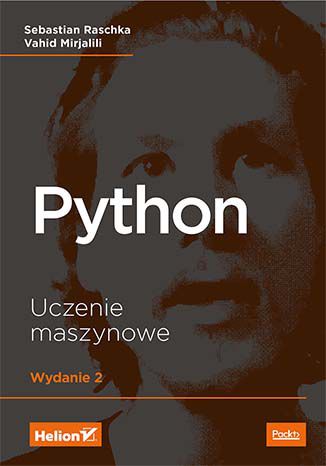
Python. Uczenie maszynowe. Wydanie II
Sebastian Raschka, Vahid Mirjalili
Uczenie maszynowe jest wyjątkowo fascynującą dziedziną inżynierii. Coraz częściej spotykamy się z praktycznym wykorzystaniem tego rodzaju innowacyjnych technologii. Samouczące algorytmy maszynowe pozwalają na uzyskiwanie wiedzy z ogromnych ilości danych. Dla osoby planującej rozwój kariery osiągnięcie biegłości w rozwiązywaniu problemów uczenia maszynowego jest nadzwyczaj atrakcyjną ścieżką. Użycie do tego celu Pythona pozwala dodatkowo skorzystać z bardzo przystępnego, wszechstronnego i potężnego narzędzia przeznaczonego do analizowania danych naukowych. Ta książka jest drugim, wzbogaconym i zaktualizowanym wydaniem znakomitego podręcznika do nauki o danych. Wyczerpująco opisano tu teoretyczne podwaliny uczenia maszynowego. Sporo uwagi poświęcono działaniu algorytmów uczenia głębokiego, sposobom ich wykorzystania oraz metodom unikania istotnych błędów. Dodano rozdziały prezentujące zaawansowane informacje o sieciach neuronowych: o sieciach splotowych, służących do rozpoznawania obrazów, oraz o sieciach rekurencyjnych, znakomicie nadających się do pracy z danymi sekwencyjnymi i danymi szeregów czasowych. Poszczególne zagadnienia zostały zilustrowane praktycznymi przykładami kodu napisanego w Pythonie, co ułatwi bezpośrednie zapoznanie się z tematyką uczenia maszynowego. W tej książce: struktury używane w analizie danych, uczeniu maszynowym i uczeniu głębokim metody uczenia sieci neuronowych implementowanie głębokich sieci neuronowych analiza sentymentów i analiza regresywna przetwarzanie obrazów i danych tekstowych najwartościowsze biblioteki Pythona przydatne w uczeniu maszynowym Uczenie maszynowe: oto droga do wiedzy ukrytej w oceanie danych!
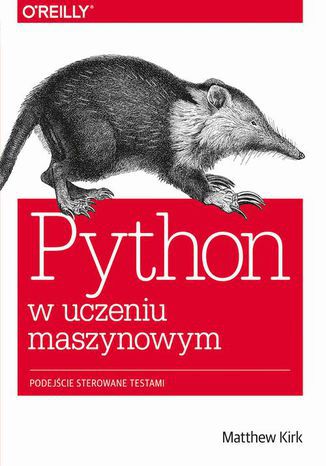
Matthew Kirk
Ten praktyczny przewodnik pozwoli osiągnąć biegłość w stosowaniu uczenia maszynowego w codziennej pracy. Autor, Matthew Kirk, bez akademickich rozważań pokazuje, jak integrować i testować algorytmy uczenia maszynowego w swoim kodzie. Książka przedstawia wykorzystanie testów z użyciem bibliotek naukowych NumPy, Pandas, Scikit-Learn oraz SciPy dla języka Python, ilustrując je licznymi wykresami oraz przykładami kodu. Książka ta pomoże programistom i analitykom biznesowym zainteresowanym badaniem danych w: Zapoznaniu się z rzeczywistymi przykładami testowania poszczególnych algorytmów poprzez zajmujące ćwiczenia praktyczne. Stosowaniu programowania sterowanego testami do pisania i uruchamiania testów przed rozpoczęciem kodowania. Badaniu technik poprawiających nasze modele uczenia maszynowego poprzez wydobywanie danych i opracowywanie funkcjonalności. Zwracaniu uwagi na ryzyka związane z uczeniem maszynowym takie jak niedopasowanie danych. Pracy z algorytmem K najbliższych sąsiadów, sieciami neuronowymi, klastrami i innymi technikami. Matthew Kirk jest konsultantem, autorem i międzynarodowym prelegentem, specjalizującym się w uczeniu maszynowym i analizie danych z wykorzystaniem języków Ruby i Python. Mieszka w Seattle i lubi pomagać innym programistom w integrowaniu analizy danych ze stosowanymi przez nich technologiami. Więcej zasobów dotyczących uczenia maszynowego można znaleźć pod adresem www.matthewkirk.com.
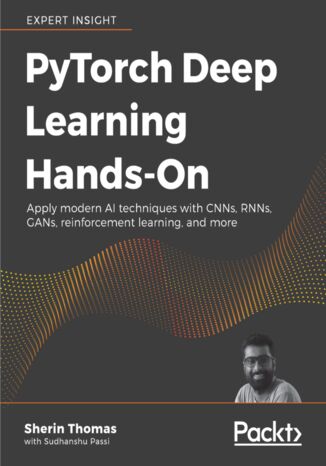
Sherin Thomas , Sudhanshu Passi , Xingyu...
PyTorch Deep Learning Hands-On is a book for engineers who want a fast-paced guide to doing deep learning work with PyTorch. It is not an academic textbook and does not try to teach deep learning principles. The book will help you most if you want to get your hands dirty and put PyTorch to work quickly.PyTorch Deep Learning Hands-On shows how to implement the major deep learning architectures in PyTorch. It covers neural networks, computer vision, CNNs, natural language processing (RNN), GANs, and reinforcement learning. You will also build deep learning workflows with the PyTorch framework, migrate models built in Python to highly efficient TorchScript, and deploy to production using the most sophisticated available tools.Each chapter focuses on a different area of deep learning. Chapters start with a refresher on how the model works, before sharing the code you need to implement it in PyTorch.This book is ideal if you want to rapidly add PyTorch to your deep learning toolset.
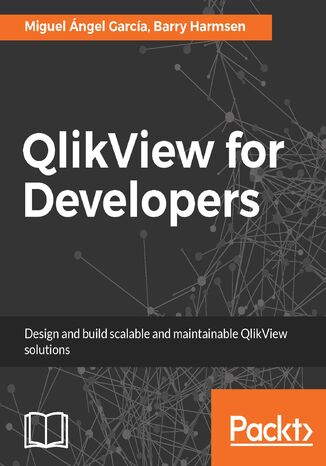
QlikView for Developers. Design and build scalable and maintainable BI solutions
Miguel Angel Garcia, Barry Harmsen
QlikView is one of the most flexible and powerful Business Intelligence platforms around. If you want to build data into your organization, build it around QlikView. Don't get caught in the gap between data and knowledge – find out how QlikView can help you unlock insights and data potential with ease. Whether you're new to QlikView or want to get up to speed with the features and functionality of QlikView, this book starts at a basic level and delves more deeply to demonstrate how to make QlikView work for you, and make it meet the needs of your organization. Using a real-world use-case to highlight the extensive impact of effective business analytics, this book might well be your silver bullet for success.A superb hands-on guide to get you started by exploring the fundamentals of QlikView before learning how to successfully implement it, technically and strategically. You'll learn valuable tips, tricks, and insightful information on loading different types of data into QlikView, and how to model it effectively.You will also learn how to write useful scripts for QlikView to handle potentially complex data transformations in a way that is simple and elegant. From ensuring consistency and clarity in your data models, to techniques for managing expressions using variables, this book makes sure that your QlikView projects are organized in a way that's most productive for you and key stakeholders.
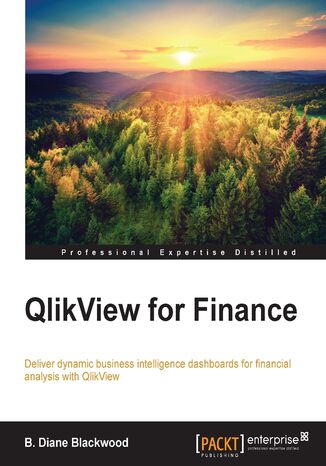
Diane B Blackwood
This book is an effective step-by-step tutoring guide for financial analysis using Qlikview.It begins by teaching you the crucial concepts of Qlikview Finance to help you develop an effective understanding of financial data analysis and finance. The book then goes on to cover real-world, practical examples on the use of Qlikview for financial planning and analysis, expense management, risk management, and more. Moving on, topics such as Asset Management QlikView Dashboard and Retail Sales Analysis are covered in a strategic way. We then shift the focus to deal with the concepts of Inventory, Supply Chain, and Plant Coverage Dashboards. The book then reaches its conclusion by dealing with ways to share your QlikView insights. By the end of this book, you will have a good understanding of how to use Qlikview for numerous applications in finance.
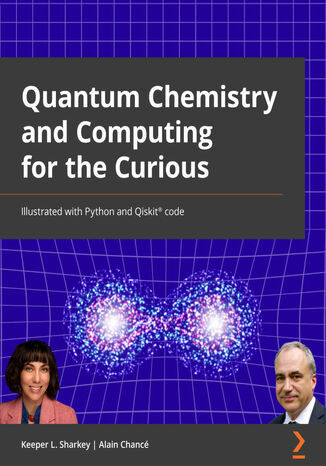
Quantum Chemistry and Computing for the Curious. Illustrated with Python and Qiskit® code
Keeper Layne Sharkey, Alex Khan, Alain Chancé
Explore quantum chemical concepts and the postulates of quantum mechanics in a modern fashion, with the intent to see how chemistry and computing intertwine. Along the way you’ll relate these concepts to quantum information theory and computation. We build a framework of computational tools that lead you through traditional computational methods and straight to the forefront of exciting opportunities. These opportunities will rely on achieving next-generation accuracy by going further than the standard approximations such as beyond Born-Oppenheimer calculations.Discover how leveraging quantum chemistry and computing is a key enabler for overcoming major challenges in the broader chemical industry. The skills that you will learn can be utilized to solve new-age business needs that specifically hinge on quantum chemistry
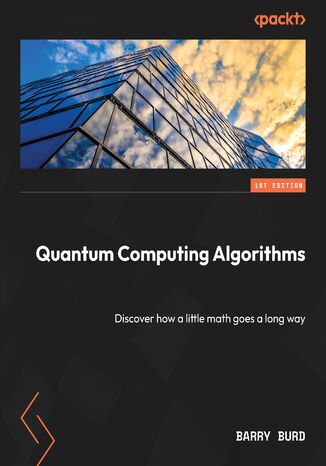
Quantum Computing Algorithms. Discover how a little math goes a long way
Barry Burd
Navigate the quantum computing spectrum with this book, bridging the gap between abstract, math-heavy texts and math-avoidant beginner guides. Unlike intermediate-level books that often leave gaps in comprehension, this all-encompassing guide offers the missing links you need to truly understand the subject.Balancing intuition and rigor, this book empowers you to become a master of quantum algorithms. No longer confined to canned examples, you'll acquire the skills necessary to craft your own quantum code. Quantum Computing Algorithms is organized into four sections to build your expertise progressively.The first section lays the foundation with essential quantum concepts, ensuring that you grasp qubits, their representation, and their transformations. Moving to quantum algorithms, the second section focuses on pivotal algorithms — specifically, quantum key distribution and teleportation.The third section demonstrates the transformative power of algorithms that outpace classical computation and makes way for the fourth section, helping you to expand your horizons by exploring alternative quantum computing models.By the end of this book, quantum algorithms will cease to be mystifying as you make this knowledge your asset and enter a new era of computation, where you have the power to shape the code of reality.