
Sztuczna inteligencja
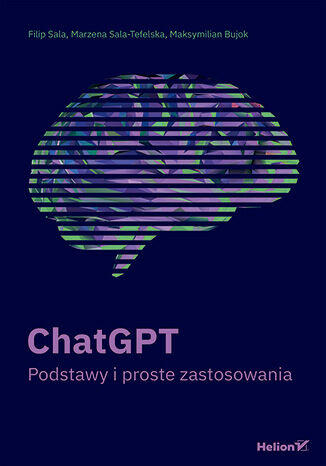
ChatGPT. Podstawy i proste zastosowania
Filip Sala, Marzena Sala-Tefelska, Maksymilian Bujok
Twój nowy, nad wyraz inteligentny współpracownik ChatGPT, czyli flagowy produkt firmy OpenAI, jest dziś na ustach wszystkich. Przyglądamy się dotychczasowym zastosowaniom sztucznej inteligencji, ale nasze myśli najbardziej zaprzątają przewidywania co do jej przyszłości. Autorzy udowadniają, że nie mamy się czego obawiać. Co więcej, pokazują, że najlepszym sposobem na pokonanie strachu przed nieznanym jest zrozumienie, czego się boimy. A możemy to osiągnąć dzięki praktycznym wskazówkom udzielonym w tej książce. Współpraca z ChatGPT wymaga pewnego przygotowania. Niewątpliwą zaletą tej technologii jest to, że można się z nią porozumieć za pomocą języka naturalnego ― takiego, jakim komunikujemy się ze sobą na co dzień. Rzecz w tym, by nauczyć się w odpowiedni sposób zadawać pytania i wydawać polecenia, czyli tworzyć tak zwane prompty. W trakcie lektury prześledzisz różne metody tworzenia zapytań i poznasz konkretne przykłady ich zastosowania. Dowiesz się między innymi, jak pracować z tekstem, grafiką i analizą danych, a także jak skorzystać z ChatGPT do celów dydaktycznych. Zrozumiesz również, jak sztuczna inteligencja może Cię wesprzeć w programowaniu i projektowaniu. Dzięki temu będziesz w stanie osiągnąć wszystkie cele, jakie sobie wyznaczasz ― i to zarówno w życiu osobistym, jak i zawodowym. Już dziś rozpocznij przygodę z ChatGPT! Książka jest przeznaczona przede wszystkim dla osób początkujących i tych, które ze sztuczną inteligencją nie miały dotychczas do czynienia. Zachęcamy również do odwiedzenia kanału naukowego Sala Science prowadzonego przez autorów na platformie YouTube.
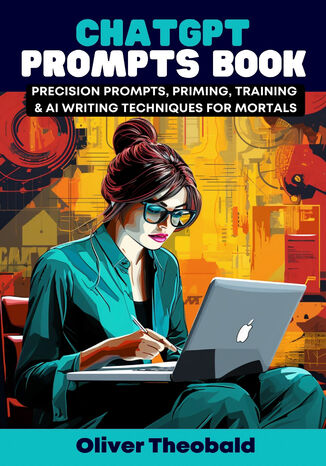
Oliver Theobald
The course embarks on an enlightening journey through the world of ChatGPT, starting from the very basics of understanding what ChatGPT is, to delving deep into the mechanics of crafting precision prompts that unlock its full potential. From the outset, you'll be introduced to the foundational elements that make ChatGPT an indispensable tool for a wide range of applications, setting the stage for a comprehensive exploration of its capabilities.As we progress, the course meticulously unfolds the layers of prompt writing techniques, priming strategies, and training methodologies that are designed to enhance your interaction with AI. You'll learn how to craft prompts for common use cases, navigate the nuances of content creation, translation tasks, and personalized tutoring, all while leveraging ChatGPT's advanced AI art capabilities.The course culminates by focusing on practical applications and exploring advanced prompt training and role prompting techniques. This final stretch is designed to solidify your understanding and empower you with the confidence to employ ChatGPT across various scenarios, from professional content writing to creative explorations.
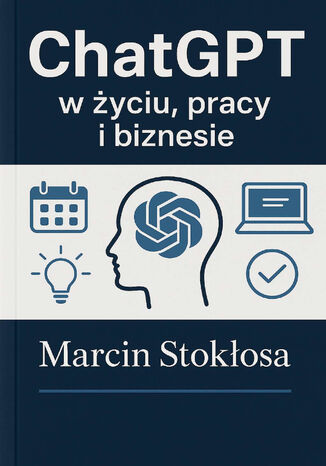
ChatGPT w życiu, pracy i biznesie
Marcin Stokłosa
ChatGPT to nie tylko chatbot - to osobisty asystent, organizator, edytor i pomysłodawca w jednym. Ten e-book pokazuje krok po kroku, jak korzystać z jego możliwości w praktyce: w codziennym życiu, zawodowo oraz w rozwoju własnych projektów. Znajdziesz tu ponad 50 gotowych promptów, checklisty, narzędzia, ćwiczenia i historie z życia. Niezależnie od tego, czy dopiero zaczynasz, czy już testujesz AI - ten przewodnik jest dla Ciebie. Marcin Stokłosa Pasjonat technologii, entuzjasta rozwiązań smart home i autor praktycznych poradników dla każdego, kto chce lepiej wykorzystywać nowoczesne narzędzia w życiu codziennym i zawodowym. Od ponad 10 lat mieszka w Niemczech, gdzie łączy pracę zawodową z własnymi projektami online. Tworzy treści edukacyjne, które tłumaczą złożone tematy prostym językiem - bez zbędnego żargonu i teorii. Jego celem jest pomagać zwykłym ludziom skutecznie korzystać z potencjału sztucznej inteligencji - w pracy, nauce, biznesie i domowych obowiązkach. W swoich materiałach stawia na konkret, klarowność i natychmiastową użyteczność.
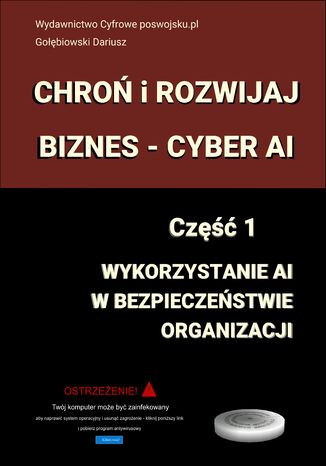
CHROŃ I ROZWIJAJ BIZNES - CYBER AI Część 1 Wykorzystanie AI w bezpieczeństwie organizacji
Dariusz Gołębiowski
Masz firmę, fundację, albo inną organizację, którą chcesz ochronić przed cyberzagrożeniami? Świetnie, bo właśnie trzymasz wirtualną broń do walki z cyfrowymi złoczyńcami! Pierwsza część serii "CHROŃ I ROZWIJAJ BIZNES - CYBER AI" to Twoje kompendium wiedzy o tym, jak nie tylko wywinąć się z rąk hakerów, ale też sprytnie wdrożyć sztuczną inteligencję, która pomoże Ci spać spokojnie... no, przynajmniej dopóki AI nie zacznie przejmować kontroli nad światem. 😉 W tej książce dowiesz się, dlaczego malware to coś więcej niż problem komputera wujka Janka, jak unikać pułapek phishingowych, które są bardziej podstępne niż zaproszenie na "darmową pizzę", oraz dlaczego dyrektywa NIS 2 nie jest tylko kolejnym nudnym prawniczym dokumentem, który gdzieś tam podpisano. A teraz najlepsza część: sztuczna inteligencja (tak, ta od filmów sci-fi!) może być Twoim najlepszym przyjacielem w walce z zagrożeniami. Dzięki AI Twój system zabezpieczeń będzie niczym Sherlock Holmes, który znajdzie każdą podejrzaną aktywność, zanim jeszcze pomyślisz o kawie. W książce znajdziesz konkretne przykłady, jak AI może ochronić Twoje dane, monitorować pracowników (bez robienia z tego kolejnego odcinka live-streaam badziewnych seriali dla samotnych ludzi) i automatyzować reakcje na zagrożenia. Jeśli myślisz, że to koniec... to niespodzianka! Druga część serii, zaplanowana na przyszły rok, będzie o tym, jak sztuczna inteligencja nie tylko ochroni Twoją organizację, ale także pomoże Ci ją rozwijać - kto wie, może nawet stworzy dla Ciebie plan na podbój świata (w granicach prawa, oczywiście). Nie przegap okazji, żeby zabezpieczyć swój biznes przed zagrożeniami, które krążą w sieci szybciej niż memy z kotami. Zrób to z uśmiechem i nutą technologicznej magii!
CHROŃ I ROZWIJAJ BIZNES CYBER AI Księga 1 Sztuczna Inteligencja
Gołębiowski Dariusz
Sztuczna inteligencja nie jest przyszłością. Jest teraźniejszością - pytanie brzmi: czy Twoja firma jest na nią gotowa? Ten ebook to praktyczny przewodnik po świecie AI dla właścicieli firm, zarządów, dyrektorów i liderów, którzy: nie chcą "bawić się technologią", nie mają czasu na marketingowy bełkot, chcą konkretnie wiedzieć: co wdrożyć, po co, jak i gdzie są granice bezpieczeństwa. Nie znajdziesz tu futurystycznych wizji ani skomplikowanych algorytmów. Znajdziesz za to AI pokazane "poswojsku" - z perspektywy decyzji, ryzyka, pieniędzy i odpowiedzialności. 🔍 Czego się dowiesz? gdzie AI realnie pomaga firmom (zarządzanie, cyberbezpieczeństwo, marketing, sprzedaż, usługi), gdzie AI może zaszkodzić, jeśli zostanie wdrożona bez refleksji, jak oddzielić modne narzędzia od faktycznej wartości biznesowej, jakie obowiązki prawne wynikają z AI Act i co to oznacza dla MŚP, jak wdrażać AI bezpiecznie, odpowiedzialnie i zgodnie z prawem, jak przygotować organizację krok po kroku - bez chaosu i kosztownych błędów. 🧭 Dla kogo jest ta książka? dla właścicieli małych i średnich firm, dla prezesów, dyrektorów, menedżerów, dla osób odpowiedzialnych za bezpieczeństwo, IT, dane lub rozwój, dla tych, którzy chcą rozumieć AI, a nie tylko jej używać. ✅ Co ją wyróżnia? konkretne przykłady zastosowań, jasny język, bez technicznego żargonu, aktualne prawo (AI Act), checklisty AI-READY i AI-SAFE, mini-kompas decyzyjny dla zarządu, nacisk na człowieka, odpowiedzialność i zdrowy rozsądek. To nie jest książka o tym, jak "zachwycić się AI". To książka o tym, jak używać AI mądrze - i nie żałować tej decyzji za rok lub dwa. ⭐ Recenzja czytelnika - Pan Kazimierz, Prezes i Właściciel firmy usługowej "W końcu ktoś napisał o AI normalnie." Prowadzę niewielką firmę usługową od ponad 20 lat. O sztucznej inteligencji słyszałem wszędzie - w mediach, na konferencjach, od handlowców. Problem był jeden: nikt nie potrafił mi jasno powiedzieć, czy ja w ogóle jej potrzebuję i gdzie są zagrożenia. Ta książka trafiła do mnie w idealnym momencie. Autor nie próbuje mnie przekonać, że "muszę mieć AI, bo wszyscy mają". Zamiast tego pokazuje: gdzie AI ma sens, gdzie lepiej się zatrzymać, i co najważniejsze - kto za to wszystko odpowiada. Bardzo doceniam podejście zarządcze i prawne. AI Act był dla mnie kompletnie nieczytelny - tutaj dostałem konkretne wyjaśnienie, bez straszenia i bez bagatelizowania tematu. Checklisty na końcu? Złoto. Usiadłem z nimi razem z kierownikiem i w godzinę mieliśmy jasny obraz: co możemy zrobić teraz, a czego na razie nie ruszamy. To nie jest książka dla informatyków. To książka dla ludzi, którzy podejmują decyzje i biorą za nie odpowiedzialność. Polecam każdemu właścicielowi firmy, który chce spać spokojnie, a nie gonić za modą. - Kazimierz, Prezes i Właściciel firmy usługowej
Claude Code in Action. From zero to deployed apps with AI-assisted development
Taeho Jo
You no longer need traditional programming experience to create real applications. This book introduces you to building software using Claude Code, where you will collaborate with AI to design, develop, and deploy applications from scratch.Starting with the basics, you’ll learn how to work effectively with AI assistants, structure prompts, and translate ideas into working software. As you progress, you’ll build a range of real-world projects from personal websites and portfolio apps to interactive tools and AI-powered applications. Each project is designed to reinforce practical skills while exposing you to modern development workflows.The book emphasizes a structured, step-by-step learning approach, guiding you through planning, iteration, debugging, and deployment. You’ll also explore advanced capabilities such as API integration, automation workflows, and AI agent-based development. Later chapters introduce MCP, plugins, and skills to extend Claude Code into a powerful development environment.By the end of this book, you won’t just understand AI-assisted development, you’ll confidently build, customize, and deploy your own applications.
Angelica Lo Duca
This book provides concepts and practical use cases which can be used to quickly build, monitor, and optimize data science projects. Using Comet, you will learn how to manage almost every step of the data science process from data collection through to creating, deploying, and monitoring a machine learning model.The book starts by explaining the features of Comet, along with exploratory data analysis and model evaluation in Comet. You’ll see how Comet gives you the freedom to choose from a selection of programming languages, depending on which is best suited to your needs. Next, you will focus on workspaces, projects, experiments, and models. You will also learn how to build a narrative from your data, using the features provided by Comet. Later, you will review the basic concepts behind DevOps and how to extend the GitLab DevOps platform with Comet, further enhancing your ability to deploy your data science projects. Finally, you will cover various use cases of Comet in machine learning, NLP, deep learning, and time series analysis, gaining hands-on experience with some of the most interesting and valuable data science techniques available.By the end of this book, you will be able to confidently build data science pipelines according to bespoke specifications and manage them through Comet.
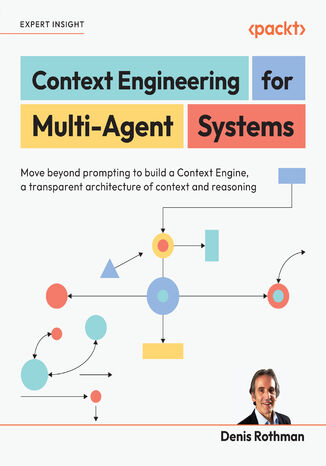
Denis Rothman
Generative AI is powerful, yet often unpredictable. This guide shows you how to turn that unpredictability into reliability by thinking beyond prompts and approaching AI like an architect. At its core is the Context Engine, a glass-box, multi-agent system you’ll learn to design and apply across real-world scenarios.Written by an AI guru and author of various cutting-edge AI books, this book takes you on a hands-on journey from the foundations of context design to building a fully operational Context Engine. Instead of relying on brittle prompts that give only simple instructions, you’ll begin with semantic blueprints that map goals and roles with precision, then orchestrate specialized agents using the Model Context Protocol. As the engine evolves, you’ll integrate memory and high-fidelity retrieval with citations, implement safeguards against data poisoning and prompt injection, and enforce moderation to keep outputs aligned with policy. You’ll also harden the system into a resilient architecture, then see it pivot across domains, from legal compliance to strategic marketing, proving its domain independence.By the end of this book, you’ll be equipped with the skills to engineer an adaptable, verifiable architecture you can repurpose across domains and deploy with confidence.*Email sign-up and proof of purchase required